





 Portuguese
  English
  Spanish
  5 min of reading
  0 comments


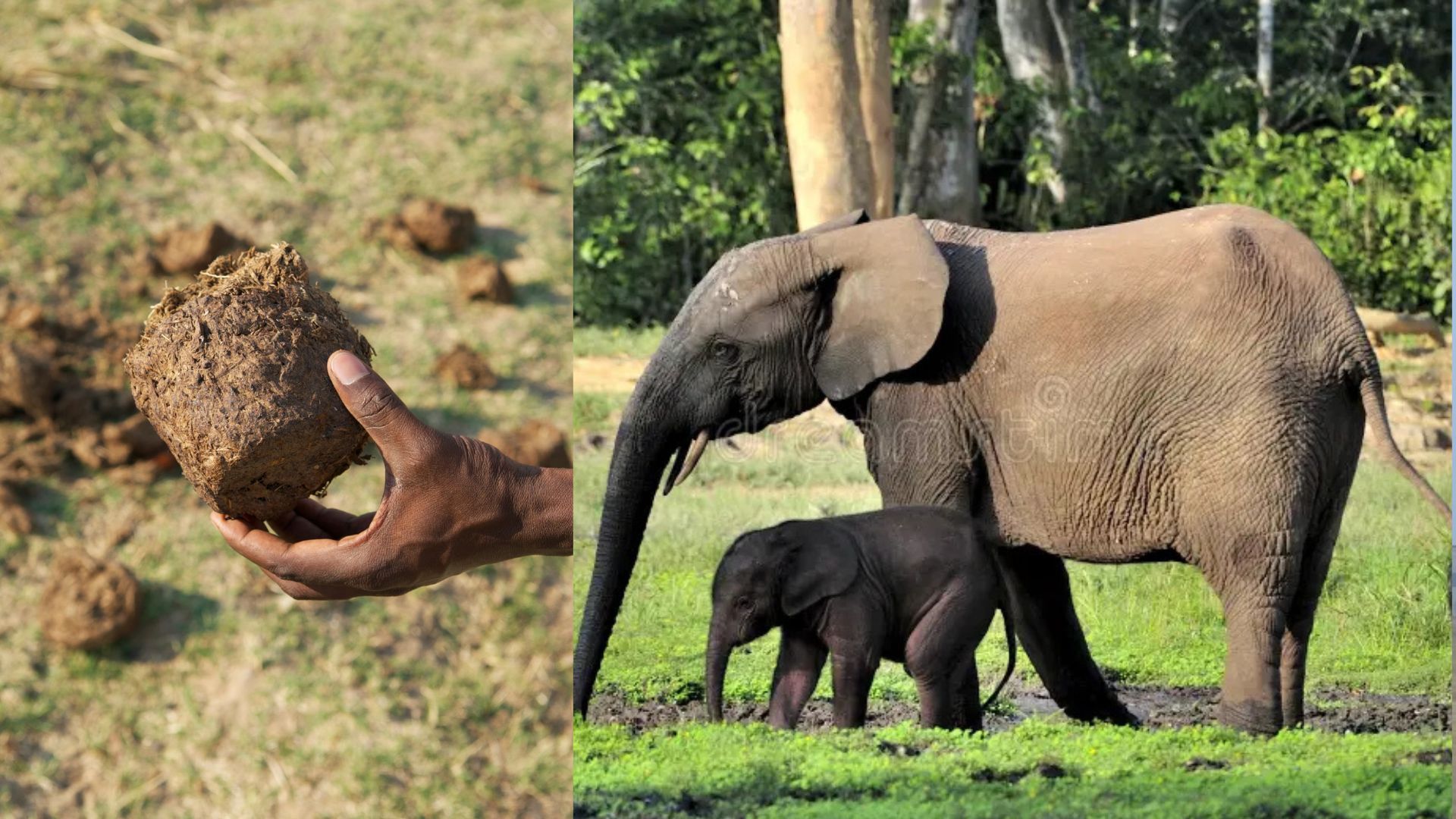
Genetic Technique Based on Traces in the Forest Reveals Real Dimension of a Rare Species, Difficult to Monitor and Essential for the Regeneration of the African Tropical Ecosystem, Even Under Continuous Pressure from Illegal Hunting and Accelerated Habitat Loss.
Within the African tropical forests, one of the largest terrestrial mammals on the planet is rarely seen.
Nevertheless, analyzing DNA from dung has allowed researchers to “see” the African forest elephant without relying on rare encounters, which improves estimates and reduces common errors in surveys conducted under dense vegetation.
With the most recent reassessment, the population was estimated at around 135,690 individuals in areas with data considered robust, and the species remains classified as critically endangered.
-
Goodbye iron: new technology from Xiaomi promises to revolutionize the way we iron clothes with 500 kPa steam, continuous flow of 120 g/min, heating in 65 seconds, and six smart modes for different fabrics.

-
Rio Pardo, the most mysterious city in Rio Grande do Sul: untouched Pampas castle, the missing treasure of the Devil Boy, bride’s saint, invisible tunnels, and a 200-year curse today.

-
China retires the J-7 fighter after years of military protection and can now transform military items into drones, following more than 60 years of operation of the J-7, derived from the MiG-21, with thousands of units produced and strategic use in the PLAAF and PLANAF.

-
Volunteers are sought to live in the mountains for a month: a study pays people to stay at 2,500 meters, with 24-hour monitoring of sleep, metabolism, and blood pressure.


In addition to these well-monitored locations, the review recognizes that there are still regions with incomplete information.
For these sections, projections indicate an additional contingent that could vary from thousands of animals, raising the total estimated to around 145,000 elephants, albeit with greater uncertainty than observed in areas with more consistent sampling.
Dung DNA Transforms Traces into Scientific Data
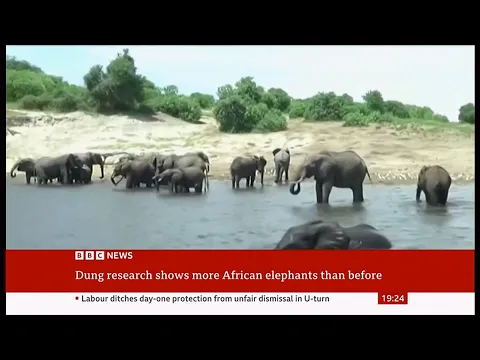

Monitoring the forest elephant is difficult because the forest itself acts as a permanent obstacle.
With closed canopies, aerial images lose precision, while rivers and swamps interrupt land movements, and safety does not always allow for a continuous presence of teams in remote areas.
In these conditions, indirect signs left along the way gain prominence, such as footprints, broken branches, and dung.
This material, in particular, has become central to recent assessments.
By collecting samples from different points and extracting DNA, researchers identify individuals as if applying a genetic fingerprint.
Thus, samples separated by kilometers may belong to the same animal, avoiding counting an elephant with a large home range more than once.
This is also why estimates of population density and geographic distribution are more consistent than those obtained solely from visual cues.
When collection is repeated over time, the method helps detect trends and guide enforcement and protection actions in areas considered strategic.
Physical Differences Explain Adaptation to Dense Forests
Between the forest elephant and the savanna elephant, the difference is not only in the type of environment.
Recent conservation assessments have begun to clarify the separation between the two species, reinforcing the need for specific data for each.
In the body, the contrasts are easily observable.
Smaller than its open-area relative, the forest elephant has more rounded ears and displays straighter tusks, often pointing downwards.
This anatomy is associated with movement in closed undergrowth, where more curved and opened tusks could hinder passage.
When camera traps capture the animal, these traits help confirm species identification.
The rarity of images, however, explains why methods designed for open areas often fail when adapted to the tropical forest.
Broad Distribution and Limited Monitoring

The occurrence of the forest elephant extends across large blocks of tropical forest in different countries in Central Africa.
Although its presence is known in many locations, the infrastructure for continuous research is limited, restricting long data series.
For years, population estimates have relied on extrapolations based on indirect signs and models with high margins of error.
With the incorporation of DNA, the proportion of evaluated areas with data considered reliable has increased, decreasing uncertainties compared to previous surveys.
According to the International Union for Conservation of Nature, the current picture is the most accurate ever produced for this group, as it combines a review of old data, expanded monitoring, and a genetic methodology capable of reducing typical biases of closed environments.
Hunting, Deforestation, and Fragmentation Remain Threats
Despite the revised count increasing, the risk level remains high.
The species continues to be pressured by habitat loss, driven by deforestation and the expansion of infrastructure related to mining, agriculture, and transport.
When the forest fragments, historical routes are interrupted, contact with areas occupied by humans tends to grow, and animals become more exposed to conflicts and hunters.
In regions where small and isolated groups remain, any further reduction can jeopardize local survival.
In addition, hunting associated with the ivory trade persists as a historical threat.
In some locations, recent reports indicate a decline in kill rates, attributed to strengthened enforcement and national bans.
Still, illegal networks remain active in extensive and hard-to-patrol territories.
As the forest elephant has a slow reproduction rate, losses of adults can take decades to compensate.
Forest Elephant Acts as a Seed Disperser

The importance of the species is not limited to the effort to avoid extinction.
Researchers describe the forest elephant as a forest regeneration agent, as its fruit-rich diet makes the animal a seed transporter.
By moving over long distances and eliminating seeds along with organic matter, it promotes germination and helps connect areas of the forest.
This role is significant because many tropical trees depend on large-seed dispersers for spreading larger seeds.
Without this process, renewal may become slower and less diverse, impacting plant composition.
Consequently, changes affect birds, primates, and other mammals that rely on the structure and resources provided by the forest.
Genetic Monitoring Guides Conservation Policies
The use of dung DNA goes beyond a laboratory advancement.
In practice, the methodology offers a more solid foundation for conservation decisions, allowing for the identification of priority areas and tracking population trends with greater accuracy.
In an environment where the species can disappear without being seen, relying on fragile estimates increases the risk of delayed responses.
By transforming common traces into scientific data, genetic monitoring brings what happens in the forest closer to the decisions made by governments and regulatory agencies.
If science can now reveal thousands of elephants hidden by the jungle, what concrete responses in territorial protection and combating deforestation will define the future of this essential species for the African forest?









-

-

-

4 pessoas reagiram a isso.