





 Portuguese
  English
  Spanish
 3 min of reading
  14 comments


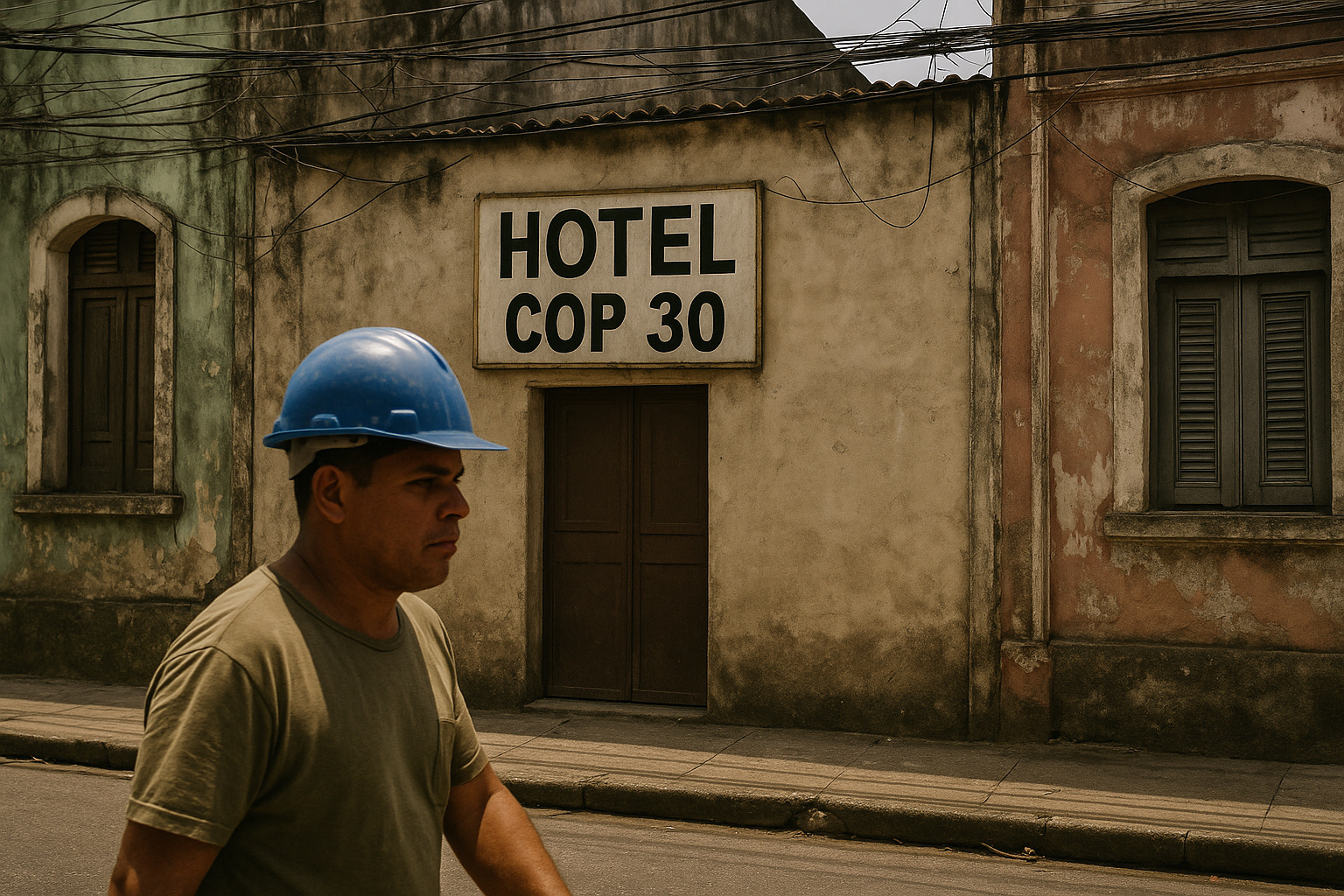


Ipsos-Ipec Survey Shows That 43% Disagree With the Choice of Belém to Host COP30 in November, Citing Poor Logistics, High Accommodation Costs, and Doubts About the City’s Capacity
An Ipsos-Ipec survey revealed that 43% of Brazilians reject Belém (PA) as the host city for COP30, an international conference on climate change scheduled for November 2025. The most recurring justification is related to logistical difficulties and lack of adequate infrastructure to accommodate international delegations.
Despite the significant resistance, 33% of respondents consider the choice of Belém appropriate, while 24% preferred not to comment on the issue. The data highlights a significant division in public opinion, bringing to light concerns about holding the summit in the capital of Pará.
Profile of Those Who Reject Holding COP30
The study indicated that rejection is more pronounced among men aged 35 to 44, with complete high school education, income above five minimum wages, and residents of large cities or capitals. Moreover, the survey noted greater resistance among Black, mixed-race, evangelical individuals, and those poorly informed about COP30.
-
Inflation in March reaches 0.88% according to IBGE and pressures the Brazilian economy, impacting family budgets and requiring more strategic decisions to maintain financial control.

-
In Paraná, distributor Pacto connects 100% of the load in Coronel Vivida to batteries: a BES of 10 MW and 20 MWh costs just over R$ 30 million and lowers the local tariff now.

-
With a dependence of up to 80% on gas imported from the United States, Mexico is responding with a robust energy strategy, betting on shale gas, creating a scientific committee, and preparing to expand natural gas production to reduce vulnerability and strengthen its energy security in the coming years.

-
The United States proposes to Brazil a critical minerals agreement with a minimum price to combat Chinese dumping and priority for investment, but the Planalto is blocking the signing out of fear of upsetting China and due to electoral calculations in a year of competition.

According to the survey, released on September 14, there is also a relevant subset: 62% of those advocating for the event to be held in cities with better infrastructure do not support COP30 taking place in Brazil. The survey interviewed 2,000 people over the age of 16, in 132 municipalities, between September 4 and 8, with a margin of error of 2 percentage points and confidence level of 95%.
High Costs and Criticism of Accommodation
Another contentious point regarding COP30 is the high accommodation costs in Belém. Reports indicate that daily rates exceed R$ 5 thousand, and in some cases, budgets reached R$ 238 thousand per night. This situation has raised questions about the city’s ability to provide adequate conditions for the stay of international delegations during the eleven days of the event, from November 10 to 21.
In fact, establishments have adapted to profit from the demand. One example is a former motel converted into a hotel, which underwent renovations, gained air conditioning, new furniture, and now charges around R$ 7 thousand per night. Critics argue that the exorbitant prices jeopardize Brazil’s image as the host of the conference.
International Reactions and Risk of Withdrawals
Criticism is not limited to the national scenario. Representatives from some countries have formally requested the transfer of COP30 to another Brazilian city, according to the conference president, André Corrêa do Lago, in July.
The controversy gained further momentum when, in August, the President of Austria, Alexander Van der Bellen, announced that he would not participate in the meeting due to “particularly high costs” and budgetary restrictions faced by his country. This stance increased the risk of further withdrawals until November, which concerns the organizers.
Lula’s Government Seeks Alternatives
In light of the criticism, the Brazilian government conducted price consultations with hotels early in the year. To mitigate the impact of high prices charged by the private sector, the strategy will be to accommodate part of the national delegation in renovated military facilities, which offer approximately 2,000 beds.
Still, internal and external pressures persist. According to information released by Revista Oeste, the negative perception could undermine not only the logistics of the meeting but also Brazil’s image in hosting an event of such global significance.
Do you agree with the 43% of Brazilians who reject Belém as the host city for COP30 or do you believe the event could bring lasting benefits to the region?









O estado do Rio de janeiro se acostumou com as mordomias de receber todos os eventos realizados no Brasil que agora está morrendo de inveja de Belém receber a COP 30.
Na minha humilde opinião a OPÇÃO DA COP 30 Em Belém do Pará só poderia e pode ser de um cara **** ignóbil e sem razão, considerando que será um FRACASSO, este ignorante tem o nome de LULA, junto com a quadrilha que ele comanda. Mas tudo está listrado em que???? PROPINAS. Aceita quem quiser.
Eita Parazão ,é de dar inveja mesmo ,povo hospitaleiro ,terra do açai ,coisa boa e uma riqueza tamanha .Pra quem não sabe ,aquela estrelinha na bandeira do Brasil representa nosso pará ,nossa amazônia .A COP 30 é nessa terra cheia de beleza ,aproveitem ,passe na maior feira a céu aberto do mundo ,nosso ver-o-peso e tome um delicioso açai com peixe frito e aquela farinha bem torrada lá de bragança.