Portuguese
  Spanish


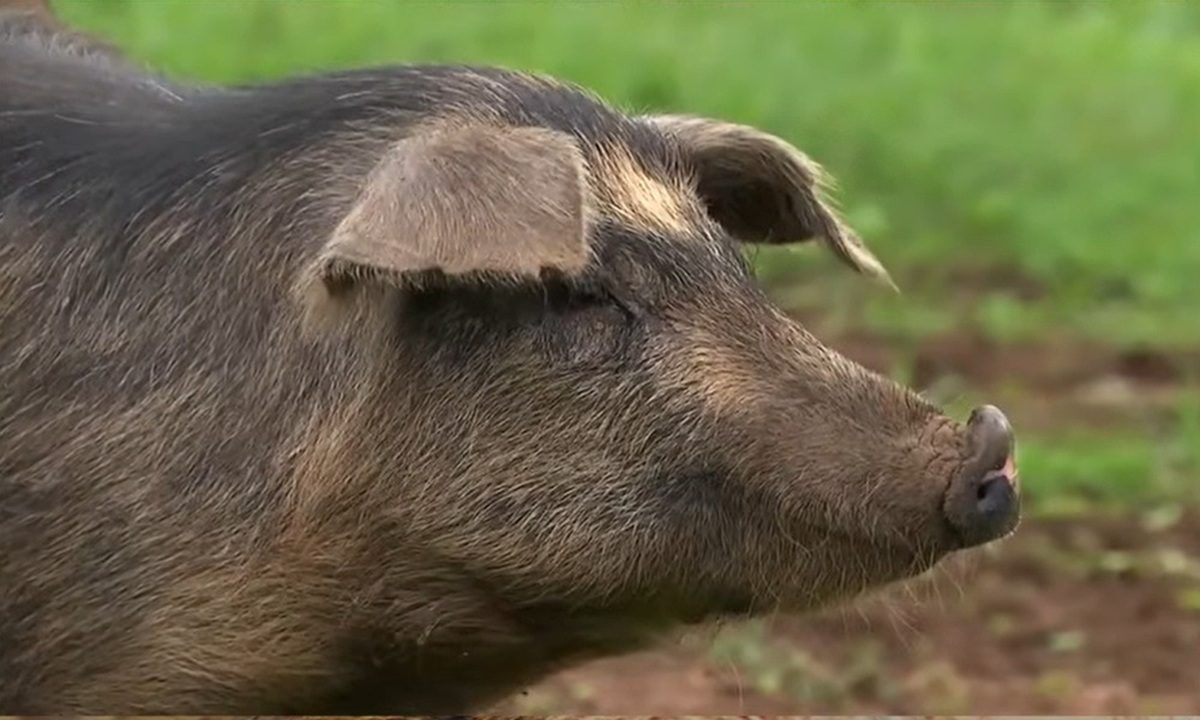

Moura Breed Raised Free Range in Forest Areas in Southern Brazil Combines Hardiness, Sustainability, and Marbled Meat Valued by Artisan Charcuterie.
The Brazilian pig farming industry holds unique stories, and one of them is that of the Moura pig, an animal descended from the famous Iberians brought by Portuguese and Spanish colonizers.
The breed, now recognized as native to Brazil, underwent a natural selection process in the southern part of the country and has become a symbol of hardiness, flavor, and integration with the environment.
Raised in areas of native forest, this pig offers unique characteristics for charcuterie and revives practices that unite tradition, agriculture, and preservation.
-
High School-Educated Farmer in India Converts 40 Hectares of Arid Land into Native Forest with 900 Species and Up to 40,000 Trees

-
After Two Years of Water Scarcity, Brazilian Farmer Finds Well on Her Land, Boosting Mango and Passion Fruit Production in Central Brazil

-
Cashew Becomes Billion-Dollar ‘Superfood’ in Ivory Coast: 1.6 Million Hectares of Monoculture Encroach on Forests as Families Trade Food for Nuts
-
In Rural Brazil, José Sirval Operates a Water-Powered Mill Grinding 125 Kilograms of Corn Daily Using His Great-Grandfather’s Century-Old Monjolo


Origin and Natural Adaptation
The Moura pig arrived in Brazil along with the Iberian colonizers. Portuguese and Spanish settlers brought animals that descended from the traditional “pata negra,” famous in Europe for their marbled meat and distinct flavor.
In the southern part of the country, these pigs were subjected to specific conditions of the climate and subtropical vegetation. The result was a natural selection that gave rise to a rustic and adapted breed, now considered wholly Brazilian.
This transformation did not occur through planned breeding, but rather through the strength of the environment.
The animals adjusted to the habitat, developed resilience, and retained traits reminiscent of the Iberians, such as thick skin, marbled fat, and docility.
In a little over two years of dedicated raising, producers have already noted the robustness of the Moura, with no reported diseases or weaknesses.
Raising in Native Forest
Unlike industrial confinement models, the Moura pig is raised in preserved forest areas.
On the properties, the animals roam freely in designated paddocks, divided by age, with access to springs of pure water and natural mud spaces that serve as medicinal baths. This routine reduces stress and maintains a balanced environment, free from predator pressure.
The diet also reflects this integration with the forest. In addition to a balanced feed with soybean meal, the pigs consume local fruits and seeds, such as pine nuts, guaviroba, pitanga, and especially, embuia seeds.
This food contains oil similar to the acorns that nourish the Iberians in Spain, giving Brazilian meat a characteristic nutty flavor, highly valued for charcuterie.
Differentiated Meat for Charcuterie
The meat of the Moura pig stands out for its marbling, intense red color, and unique flavor. The cuts show visual similarities with beef, but maintain the unique texture of pork.
Furthermore, the animal possesses superior-quality lard, much appreciated in artisanal curing and smoking products.
Because of these characteristics, Brazilian charcuterie already considers the Moura a reference.
The final product fetches differentiated prices compared to common pork, and there is an ongoing effort, supported by Sebrae and Amabel, to register the breed’s designation of origin, following the example of Italians and Spaniards.
Simple Structure and Preserved Tradition
The facilities for raising the Moura maintain simplicity, in harmony with the proposal of integration into the natural environment.
The shelters serve only for rainy days or intense cold, preserving the forest as the central landscape. This practice resembles the European family model, where small producers keep animals free-range in the fields, alongside various agricultural crops.
The management also values close contact with the animals.
The females, for example, allow the presence of the caretakers during giving birth, which occurs in natural settings and with human oversight. This docility reinforces the idea that the Moura is an intelligent, adaptable, and easy-to-live-with breed.
Production Cycle and Feeding Management
The production cycle of the Moura is completed around eight months of age when the animals reach a weight close to 95 kilograms. The process includes clear stages: weighing at birth, additional monitoring at weaning at 35 days, and growth in paddocks with enhanced feeding. The rations, prepared according to age, include ingredients like limestone, common salt, and pumpkin, along with the natural diet of the forest.
This careful management ensures that the piglets reach weaning already strong, with an average weight of 12 kilograms, highlighting their hardiness and optimal use of the balanced diet.
Agriculture, Environment, and Cultural Valuation
The example of the Moura pig shows that agriculture can walk hand in hand with the environment. Raised in the shade of the Atlantic Forest, with respect for the natural cycle and use of local biodiversity, the pig reinforces the idea that production and preservation are not mutually exclusive.
On the contrary, they become allies in building added value for the countryside.
The meat of the Moura is not just a differentiated product: it carries the history of adaptation, hardiness, and the animal’s integration into Brazilian territory.
This combination transforms pig farming into something more than just an economic activity — into a heritage that unites tradition, sustainability, and national identity.