





 Portuguese
  English
  Spanish
  4 min of reading
  0 comments


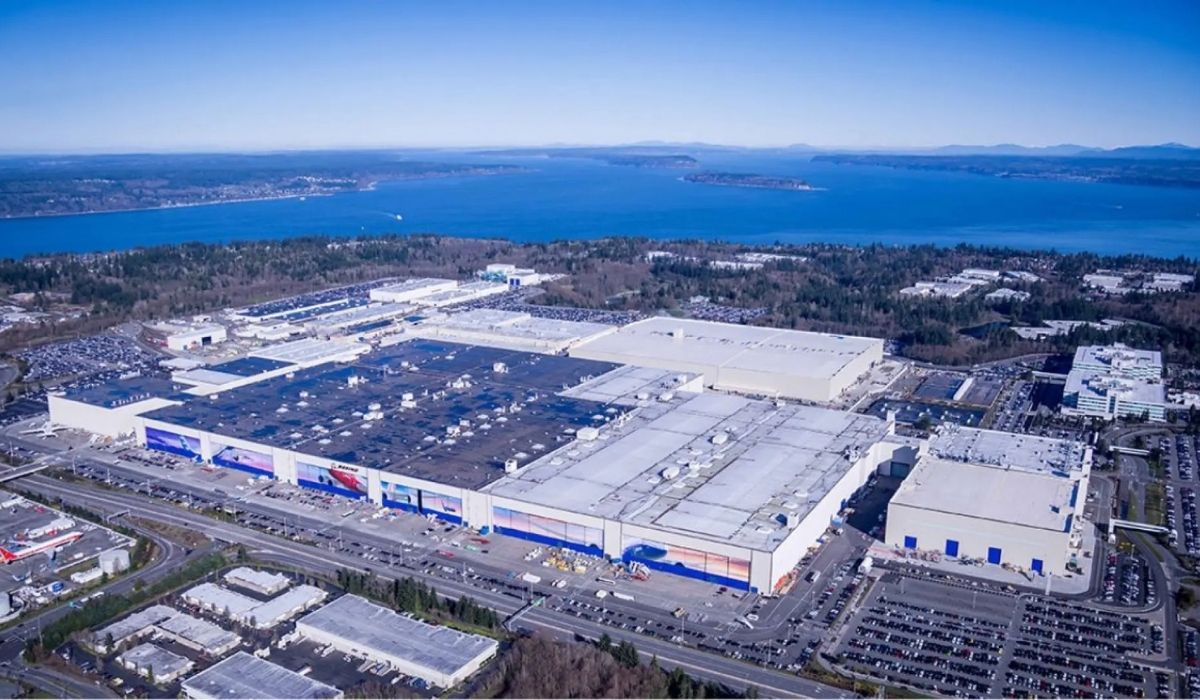
Recognized by Guinness, the Boeing Factory in Everett brings record dimensions, thousands of employees, and a large-scale industrial operation, in addition to a history tied to the production of emblematic aircraft and controlled opening for public visits over the decades.
Recognized by the Guinness World Records as the largest building in the world by volume, the Boeing Everett Factory is located in the state of Washington, USA, and is one of the main industrial complexes for commercial aviation.
The main building has 13,385,378 cubic meters and approximately 399,480 square meters of internal floor area, concentrating a significant portion of Boeing’s large aircraft production.
The complex employs approximately 30,000 people on the Everett site, according to corporate data from the company, making it one of the largest industrial hubs in the region.
-
An island of 7,500 people received 38,000 bananas by mistake, was left unsure where to store everything, and turned the error into a viral case with donations, hustle, and fruit overflowing everywhere.

-
A promise made to their father led three men to unearth a forgotten house that had been swallowed by time for over 70 years, in a story of memory, abandonment, and reconstruction that seems straight out of a movie.

-
A strong earthquake in Indonesia affects houses and schools, causes panic, triggers a tsunami alert, and records a rise in sea level of up to 30 centimeters in some areas.

-
The Argentine government celebrates the lowest poverty rate in 7 years, but experts warn that the methodology has changed, real wages have fallen, unemployment has risen, and the number of people on the streets of Buenos Aires has increased by 57% since Milei took office.

The unit is located near Paine Field airport and includes a campus that extends over approximately 1,000 acres, considering operational areas, internal roads, and support buildings.
Built in the late 1960s, the factory was designed to meet the demand for large aircraft during a period of expansion in commercial air transport.
The structure began operations in 1967, shortly before the launch of the Boeing 747, a model that marked the history of aviation and helped consolidate the strategic importance of the location.
World Record Based on Internal Volume
The title awarded by Guinness takes into account the internal volume of the building, rather than criteria such as height or total built area.
According to the record book, it is the building with the largest internal capacity ever recorded, an indicator that reflects the usable space available under the same roof.
This parameter helps explain why the factory has become a worldwide reference.
The inside of the building can simultaneously accommodate different assembly lines, testing areas, logistics sectors, and team circulation, operating continuously over several shifts.
The dimensions allow for the movement of large sections of fuselage and structural components without the need for external disassembly.
Aircraft Production and Operational Changes Over Time
Although historically associated with the Boeing 747, whose production has ended, the Everett factory has undergone significant changes over the decades.
Currently, the site is primarily linked to the Boeing 777 and 777X programs, as well as activities related to the 767, including cargo and military versions, according to public records from the company.
The Boeing 787 Dreamliner, which for years was also assembled in Everett, has had its production consolidated at another company unit.
Nevertheless, the Washington complex remains involved in specific stages of support, completion, or maintenance, depending on the period and operational demands.
Internal logistics keep pace with this industrial scale.
The campus is intersected by State Route 526, known as Boeing Freeway, a highway that runs through the factory area and connects the complex to the local road system.
Factory Dimensions Compared to Known Landmarks
To convey the size of the building, institutional materials and historical records often resort to comparisons with widely known public spaces.
One of the most cited analogies is that the building has enough volume to house an entire Disneyland, a reference used to illustrate the scale of the construction.
Other comparisons include sports fields, such as dozens of American football fields placed side by side.
However, these parallels vary depending on the adopted criterion and serve only as illustrative resources.
The technical data that remains as the official reference is the internal volume recorded by Guinness.
Industrial Tourism and Visits to Boeing Everett Factory
From the early years of operation, the factory sparked interest from the external public.
Still in the late 1960s, Boeing began to organize official visits to the complex, especially during the launch of the 747.
Institutional records indicate that, in 1968, about 39,000 people participated in tours during the first full year of the program’s operation.
With the increase in demand, the company structured a specific center to welcome visitors, with a theater, exhibitions, and a themed store.
Throughout the following decades, visitation remained constant, with annual numbers that, according to Boeing itself, exceeded 100,000 people in what were considered typical years.
In March 2020, guided tours were suspended due to the Covid-19 pandemic, following health restrictions adopted during that period.
The traditional tour was only resumed in October 2023, after operational and security adaptations, according to information released about the reopening of the visitor center.
Regional Impact and Economic Role of the Factory
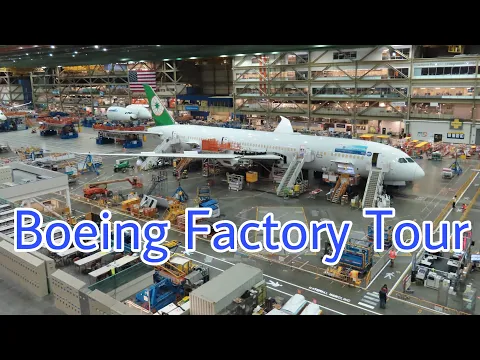
The tour of the Boeing Everett Factory allows the public to observe, from controlled areas, different stages of the aircraft assembly process.
Guides explain technical, historical, and logistical aspects of production, without direct access to the work lines.
According to promotional materials and local reports, the interest in the tour is linked to the scale of the operation and the role of the complex in the regional economy.
Experts in industrial tourism point out that this type of visit helps bring the public closer to production processes that are typically restricted to technical environments.
In addition to functioning as a manufacturing unit, the Everett complex has become part of the tourist circuit in the Seattle area, attracting visitors interested in aviation, engineering, and industrial history.
Even with changes in aircraft programs over time, the building remains one of the most recognized symbols of the American aerospace industry.







-

-

-

-

-

-

139 pessoas reagiram a isso.