





 Portuguese
  English
  Spanish
  6 min of reading
  8 comments


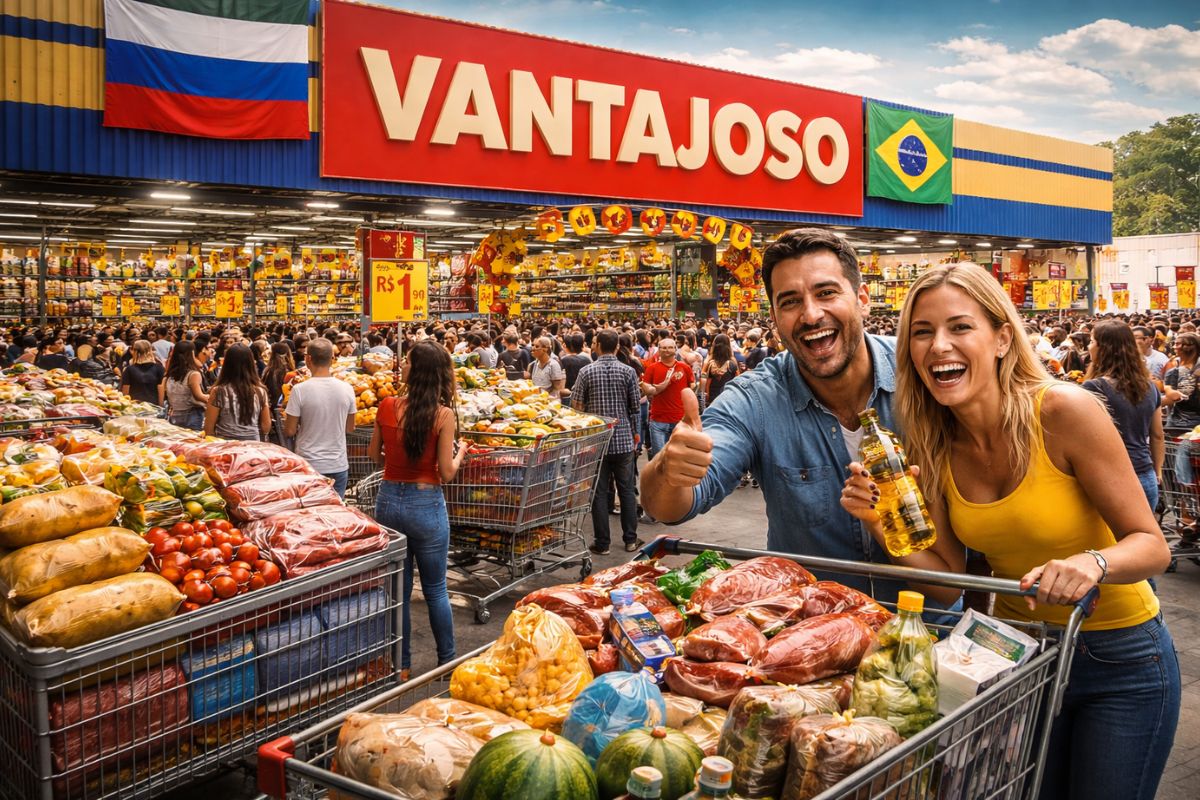


Without Packagers, Without Decoration, and With Products on Pallets, the Russian Chain Vantajoso Debuts in Americana in a Hard Discount Model, Limits the Mix, Focuses on Cheap Brands, and Promises to Lower Prices by Up to Thirty Percent in the Day-to-Day Shopping for Families on a Tight Budget in Major Cities
The Russian chain Vantajoso confirmed the opening of its first store in Brazil, in Americana, in the interior of São Paulo, officially launching its ultra-simple supermarket model in the Brazilian market with a declared promise of prices up to 30 percent lower than competitors. Owned by the Russian giant Svetofor, the retailer bets on aggressive cost cuts, limited assortment, and spartan stores to directly compete for the consumer’s wallet who tracks every cent of the receipt.
The debut in Americana serves as a laboratory to test whether Brazilians, pressured by rising food inflation, are willing to give up comfort, atmosphere, and excessive variety for real savings on basic grocery and cleaning products. If Vantajoso’s strategy works as it has in other countries, the planned expansion to São Paulo, Minas Gerais, and Rio de Janeiro is expected to ignite a historic price war in self-service retail.
How the Radical Model of the Russian Chain Vantajoso Works
The proposal of the Russian chain Vantajoso follows the hard discount concept, a format where the supermarket gives up practically everything that is not strictly necessary to sell at low prices.
-
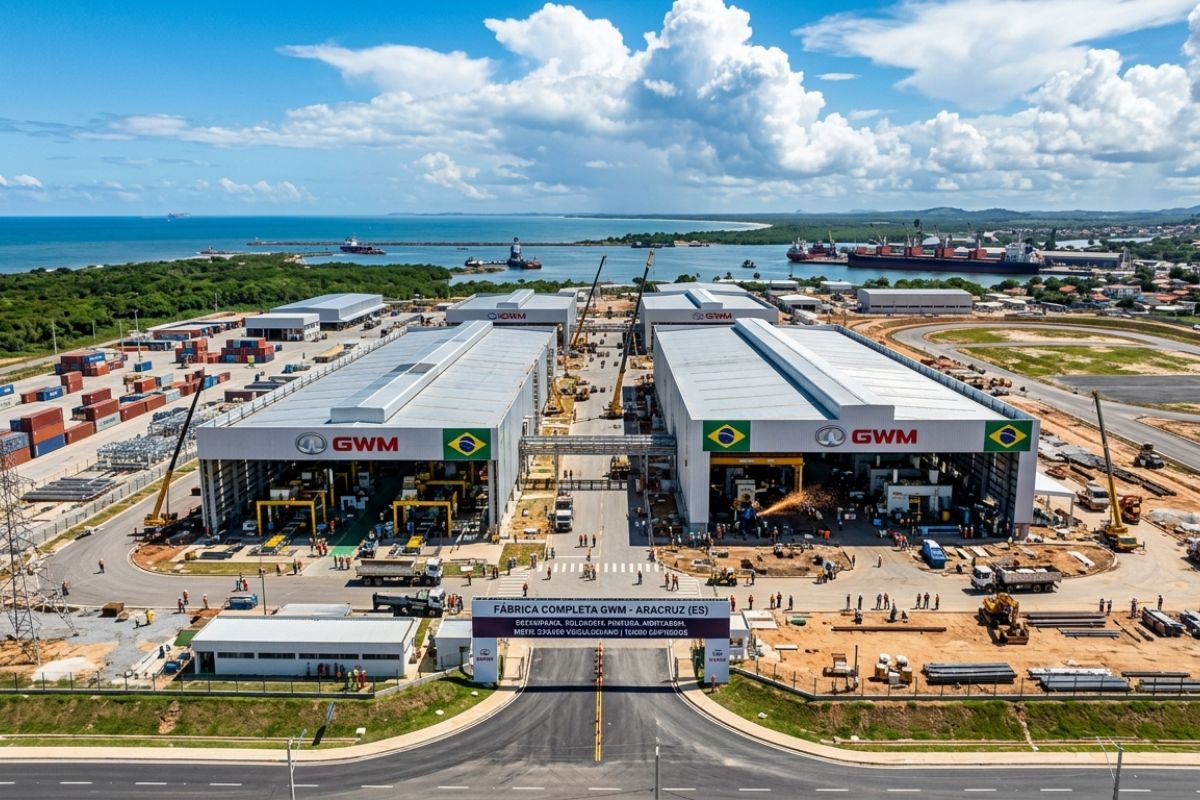
GWM chooses Aracruz and puts Espírito Santo on the automotive map: a complete factory in the Americas, with stamping, welding, painting, and assembly, aiming for 200,000 vehicles per year and up to 10,000 jobs.
-
Labor shortages are prompting Portugal, Spain, Germany, and Canada to open up opportunities for foreigners in 2026, with salaries ranging from 920 euros in Portugal to 50,700 euros per year in Germany.

-
The government is considering a temporary subsidy for cooking gas following the spike in oil prices due to the war in Iran and warns about the impact of 20% of imports on the prices paid by families.

-
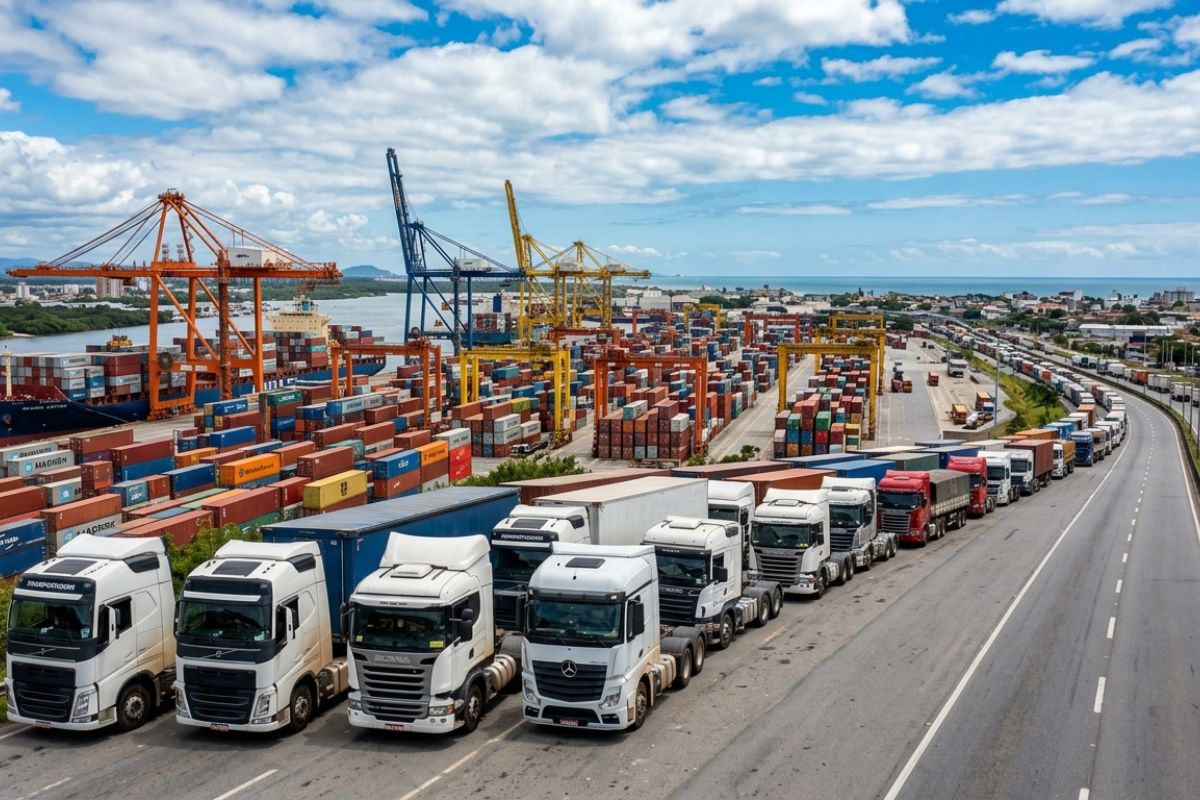
The lack of truck drivers in the country is already halting shipments and threatening deadlines: 88% of transport companies are unable to hire, with an average of eight trucks idle, and the port complex of Itajaí is now feeling the impact.

There are no packagers, no elaborate decoration, no neatly arranged shelves with a thousand details, and the layout is designed to minimize the cost per square meter.
Products are placed directly in transport boxes or on pallets, eliminating manual restocking stages on the shelves and reducing the number of employees needed per shift.
The stores are simple, with few categories displayed, functional lighting, and a total focus on the rotation of essential items.
The message to the consumer is clear: you pay for the product, not for the environment.
In practice, this means abandoning the idea of shopping strolls in colorful aisles and betting on an almost industrial space, where the customer enters, grabs what they need, and leaves.
The Russian chain Vantajoso operates with this radical simplicity as an asset, turning every avoided cost into cents off the final price.
Less Variety on the Shelves, More Negotiating Power in Inventory
One of the pillars of the model is the drastic reduction in product mix.
While a traditional supermarket can have more than twenty thousand different items, the Russian chain Vantajoso operates with around one thousand five hundred to two thousand items, concentrating inventory on few brands per category.
Instead of offering forty types of olive oil, the store works with very few options, often favoring private labels or cheaper regional brands.
This increases purchasing power in volume because the retailer negotiates large quantities of fewer products, squeezing relevant discounts from manufacturers and distributors.
The smaller the shelf of options, the greater the pressure power over the supplier.
For the consumer, the practical effect is finding more limited choices in each section, but with consistently lower prices.
Instead of navigating between countless similar packages, the customer of the Russian chain Vantajoso sees few alternatives, knows that all have been negotiated to compete on price, and decides faster, with less room for impulse and more focus on the final cost of the basket.
Main Differences Compared to Traditional Brazilian Supermarkets
The arrival of the Russian chain Vantajoso exposes a direct contrast with the dominant supermarket model in Brazil.
In large groups, the focus is on variety, services, and shopping experience, with bakeries, butchers, and dairy sections served at the counter, and an atmosphere designed to encourage prolonged stays inside the store.
In the format imported by the Russians, the path is the opposite.
Everything is pre-packaged, service is minimal, and self-service is absolute, with no butcher counters or individualized bakery service.
Display on pallets replaces decorated shelves, and visual communication prioritizes simple signage focused on price.
In comparative terms, the traditional supermarket offers a kind of food shopping mall, with thousands of items and multiple complementary services.
On the other hand, the Russian chain Vantajoso delivers something closer to an organized warehouse for the end consumer, with fewer conveniences, yet structured to reduce every superfluous cent.
It is an explicit trade-off between comfort and direct savings in the cart.
Planned Expansion in São Paulo, Minas Gerais, and Rio de Janeiro
The first unit in Americana is presented as a pilot store, a testing center to measure sales volume, average ticket, layout acceptance, and public sensitivity to the hard discount proposal of the Russian chain Vantajoso.
Based on the results of this initial operation, the company plans to open about fifty stores in São Paulo, Minas Gerais, and Rio de Janeiro in the coming months.
The plan targets both medium-sized cities and peripheral neighborhoods of large centers, where space for traditional hypermarkets is limited and the population’s income demands very aggressive prices on basic items such as rice, beans, oil, pasta, and cleaning products.
Smaller and cheaper-to-build stores offer the Russian chain Vantajoso the agility to quickly occupy areas where large groups encounter high fixed costs.
Competitors like Carrefour and Assaí are closely monitoring the movement, assessing whether it will be necessary to strengthen entry lines, expand private labels, and revise price campaigns to protect market share.
In a scenario of penny wars, any structural cost advantage can decide where the flow of more inflation-sensitive customers migrates.
How Brazilian Consumers Respond to Cutting Comfort for Savings
Behavioral research indicates that Brazilians, pressured by successive food price increases, have become more disloyal to traditional brands and more attentive to the final value of the receipt.
In this context, the Russian chain Vantajoso bets on the perception that most people are willing to give up sophisticated atmospheres, background music, and decorated corridors if it means paying less for the basics.
If the quality of the chosen products is consistent, especially in dry grocery, hygiene, and cleaning lines, consumer migration may occur quickly, repeating the pattern observed in European markets, where hard discount chains expanded their market share in just a few years.
The real test will be whether the customer returns to the store after the first comparative purchase, when they already know the simple space and the prices practiced.
At the same time, neighborhoods that currently rely on local markets with higher margins may feel the direct pressure from the new competition.
Neighborhood stores are likely to be forced to reduce prices, invest in specific niches, or reinforce personalized service to maintain relevance in the face of the Russian chain Vantajoso’s expansion in more densely populated areas.
Price War, Impact on Competitors, and Silent Revolution in Retail
The entry of the Russian chain Vantajoso into Brazil serves as a trigger for a new round of price wars in food retail.
By eliminating layers of costs that have become standard in traditional supermarkets, the model forces competitors to reassess where the perceived value lies for consumers and where there are merely image expenses.
If the concept of paying only for the product, not the environment, gains traction, large groups will have to choose between protecting margins and risking losing customers or sacrificing part of profitability to defend volume, especially in high-turnover categories.
The reality shock imposed by the Russian chain Vantajoso is likely to expose, in practice, how much of what the customer sees in the store is benefit and how much is flab added to the price.
For the consumer, the most likely scenario is an increase in the number of buying options, with varied formats coexisting in the same neighborhood.
The final decision becomes less about the beauty of the store and more about the concrete difference in the receipt at the end of the month, especially for families that track every cent of the kitchen budget.
In light of the arrival of the Russian chain Vantajoso and the promise of prices up to 30 percent lower in exchange for simple, no-frills stores, would you be willing to give up comfort and variety to focus your shopping on a supermarket model almost exclusively centered on real savings?







Eu adoraria uma loja assim perto de mim
Concordo, empresas atacadistas principalmente monopolizam demais os produtos por serem elas mesmas as acionistas de progressoe expansão deste nixo. E nosso pais é rico demais em pequenas marcas com exelente entrega de satisfação. Espero e faço votos para o sucesso desta ambição estratégica de mercado. Nosso país precisa de algo novo e que realmente este nixo de mercado caia na satisfação e reconhecimento dos consumidores.
Já tivemos a tarde Dia no mesmo formato e não deu resultado.