





 Portuguese
  English
  Spanish
  8 min of reading
  0 comments


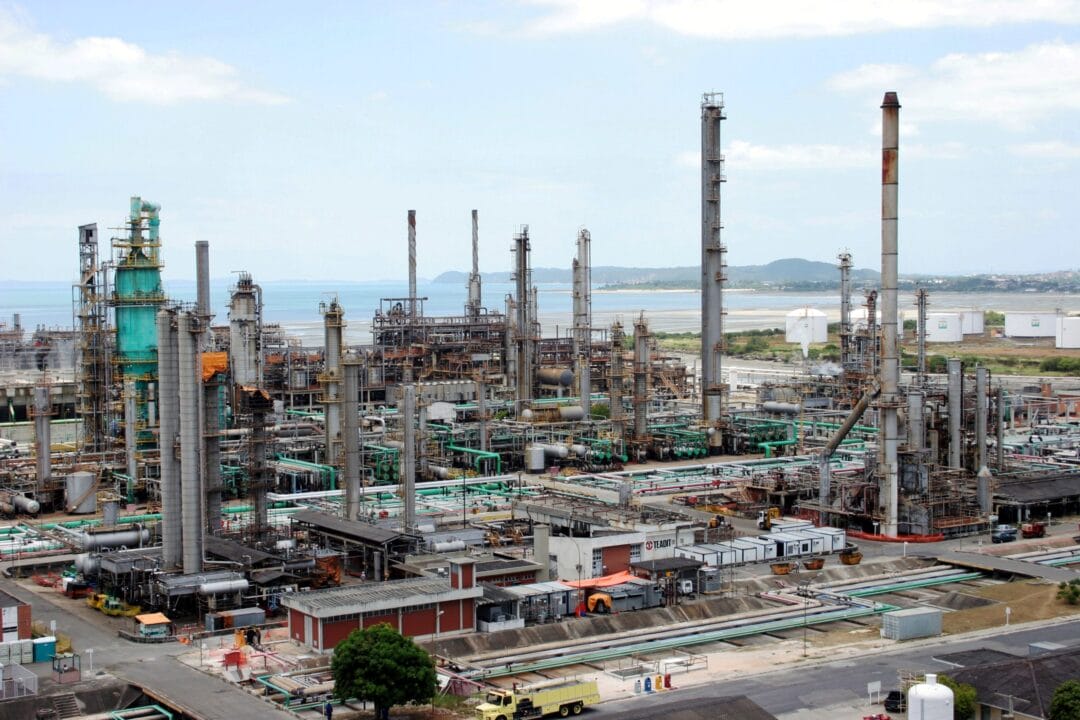
Oil Refining Still Relevant Despite Pressure to Reduce Fossil Fuels. Transitioning Energy, Global Demand, and Climate Change Influence the Scenario.
Refineries play a crucial role in extracting and processing oil, converting it into a variety of products such as gasoline, diesel, and other fuels. The growing demand for renewable energy has prompted refineries to seek cleaner and more sustainable alternatives for energy production, reducing carbon emissions and pollution associated with traditional oil.
Refineries and Carbon Emission Reduction
According to the International Energy Agency (IEA), the consumption of fossil fuels, such as diesel and gasoline, for example, has not yet peaked, which is expected to occur in 2026.
Since demand is not falling, but climate change imposes an effort to cut emissions of greenhouse gases, it becomes even more important to reduce the carbon intensity of oil refining and fuel production.
-
Offshore industrial demand in Macaé skyrockets with the recovery of oil and gas and could grow by up to 396% by 2026 in the Campos Basin.
-
Offshore industrial demand in Macaé surges with the recovery of oil and gas and could grow by up to 396% by 2026 in the Campos Basin.
-
Brazilian giant expands borders in the Southeast: Petrobras confirms new oil discovery in ultra-deep waters in the pre-salt of the Campos Basin.

-
Alert in the global energy market: Severe tropical cyclone hits the coast and disrupts gas production at major plants in Australia, threatening global supply.


Learn how this is possible and what has been done in Brazil.
- When will the world stop using fossil fuels?
- Why not end fossil production all at once?
- How do refineries decide what to do to reduce environmental impacts?
- What is already underway in Brazil?
- What else can be done?
- How far is it possible to decarbonize traditional oil refining?
- How will this industry adapt in the long term?
At the last United Nations Climate Change Conference (COP28), in Dubai, the final declaration from the countries was the first to include a ‘transition away from’ fossil fuels, but it did not set any specific target for phasing out the use of coal, oil, and gas.
Most countries still do not have a clear target for ending the use of these products and prefer to focus on achieving net-zero emissions, which does not necessarily mean the end of fossil fuels, as it allows for continued emissions as long as they are compensated.
Brazil, for example, aims to achieve net-zero emissions by 2050. As part of Brazil’s contribution to the Paris Agreement, the increase in the share of bioenergy in the energy matrix is expected to reach 18% by 2030, the year the country hopes to achieve an estimated 45% share of renewable energy in the matrix.
In other words, there is still no concrete outlook for ending the use of fossil fuels in the coming decades.
As demand continues to exist, ceasing to produce fuels without replacing them with another energy source will create shortages and drive up prices.
Reducing the supply of products such as diesel, gasoline, and liquefied petroleum gas (LPG) without other alternatives being available at the same scale could lead to increased inflation and energy poverty.
In recent years, one of the factors that contributed to the rise in crack spread (the refining margin, measured by the difference between the derivative price and crude oil price) for diesel globally was precisely the deactivation of old refineries, especially in Europe.
Consultancies point out that 75% of products consumed in Brazil are transported by trucks, most of which are still diesel-powered.
‘The transition will occur, but while we have to ensure an energy transition at a good pace, we have to do this with energy security, which ensures social well-being for the population. In other words, preserve social well-being and not generate global energy inflation,’ summarizes Marcelo Lyra, Vice President of Communication, ESG, and Institutional Relations at Acelen, owner of the Mataripe refinery in Bahia.
The main initiatives currently underway in the world include increasing efficiency in the use of energy and water, as well as the reuse of pollutants by-products.
There are already technologies capable of converting gases from hydrotreater units into fertilizers, for example. In the case of energy, there are initiatives to replace fossil sources with renewables.
Decisions regarding the technologies adopted are based, above all, on the analysis of which equipment within the refineries are the most polluting and what the potential curve for reducing emissions is compared to costs. In addition, studies are conducted on the integration between different units within the refinery and the possibilities of optimizing it to deliver more products using less raw material and energy, resulting in lower emissions generation.
‘The initial step involves sending the right molecules to the right units within the refinery—optimizing the refining configuration. We call this concept ‘molecular precision’’, says Leon Melli, Sales Director at Honeywell UOP, an American company that provides technologies for refineries.
These efforts are occurring both in new units and in reconfiguring existing ones. Older plants that have not undergone technological upgrades tend to present greater opportunities for emission reductions, says Melli. According to him, it is also necessary to evaluate the potential to optimize the configuration of the plants.
‘It is important not only to have technological upgrades but also to analyze a change in strategic objectives for the refining assets as a whole. A study that evaluates whether what is being consumed as a crude oil slate is being converted to a mix of products in the most economically efficient manner possible,’ he asserts.
The major refining companies in the country are betting on efficiency gains and the use of solar energy. details the following initiatives:
Petrobras
The state-owned company is responsible for the majority of the country’s refining capacity and leads the RefTOP initiative, an operational efficiency program for refining launched in 2021. The project is expected to receive US$ 1.1 billion in investments by 2030.
The company states that the goal is to have the refining capacity performing similarly to the best in the world, using US refineries as a benchmark, but has not yet detailed the parameters used to measure these advances.
The program was initially focused on refineries in the Southeast, assets that the company intended to keep after the divestment program conducted during the administrations of Michel Temer and Jair Bolsonaro. In the first two years, the project generated US$ 589 million in gains, according to the company. After abandoning the sale of refining assets, the initiative was extended to the entire capacity in 2023.
Recently, Petrobras announced its intention to replace the use of fossil hydrogen in refining processes with renewable hydrogen, but has not yet detailed how. The oil company is one of the largest consumers of hydrogen in the country, with a demand of approximately 500,000 tons per year.
The state-owned company is also studying the installation of photovoltaic solar generation cells at four refineries.
The first photovoltaic installation will be at the Gabriel Passos Refinery (Regap), in Betim, the metropolitan region of Belo Horizonte. It is expected that a solar plant with a capacity of 11 megawatts (MW) will start operating in 2025. The other three units being evaluated for the project are the Paulínia Refinery (Replan) and the Henrique Lage Refinery (Revap), both in São Paulo, and the Abreu e Lima Refinery (Rnest), in Pernambuco.
When asked about the potential for emission reductions using renewable sources, the company stated, in a note, that ‘a decrease in emissions is expected due to the operational integrations that the projects allow, among them the reduction of natural gas consumption.’
Refineries: Acelen Invests in Efficiency and Emission Reduction
On the other hand, Acelen, which operates the Mataripe Refinery (BA), has been investing in operational improvements since it took over the asset in December 2021. The plant was purchased during Petrobras’s divestment process.
With investments in operational improvements leading to increased efficiency at the refinery, the company estimates that it has reduced 273,000 tons of CO2 in processed feed since taking over the plant.
The efforts included replacing motors and generators, as well as improvements to boilers and pipeline reviews to reduce leaks, for example, alongside processes to decrease particulate emissions. In 2022, Acelen invested R$ 1.4 billion in operational improvements and reducing environmental impacts.
To mitigate emissions from the imported oil feed processed at the unit, the company also purchased carbon credits.
Marcelo Lyra explains that when the company took over the asset, the processed crude was about 200,000 barrels/day, a volume that today is close to 290,000 barrels/day due to efficiency gains.
In the last year, the company reduced electricity consumption by 7%, equivalent to the demand of the state of Acre, and increased water reuse operations by 7%.
In a move similar to Petrobras, Acelen announced this year a partnership with the Perfin fund and Ilian Renováveis, part of the Electra group, for the construction of a photovoltaic solar plant in Bahia with an installed capacity of 161 megawatts at peak. The agreement includes the sale of the energy generated by the plant to Acelen in a self-production model.
Carbon capture and storage in geological reservoirs (CCS) is one of the key bets of experts to reduce the impacts of pollutants generated in traditional refining. ‘It is a model that could benefit Brazilian refineries,’ says the director of Honeywell.
The establishment of a legal framework for CCS activities is still under discussion in the National Congress. Petrobras itself has indicated that it is interested in the activity considering the decarbonization of its own operations, as well as providing this service to other companies.
Efforts to reduce the impacts of traditional refining focus on scope 1 emissions, which are direct results of operational activities, and scope 2 emissions, which come from energy consumption.
This is because it is more difficult to decarbonize scope 3, which pertains to the supply chain and products, as it is based on fossil fuels. However, this is precisely where the highest carbon intensity in the sector is concentrated: about 80 to 95% of total emissions from oil and gas companies are scope 3.
According to the director of Honeywell UOP, one way to reduce scope 3 impacts is to advance the integration between refining and petrochemicals. ‘This is essential for us to gradually migrate from pure fuel production to high-value-added products, such as polymers and elastomers,’ he explains.
The trend is the migration to biorefining, replacing oil with biomass in fuel production.
As part of this movement, Petrobras has initiatives to implement plants dedicated to the production of aviation biofuels and 100% renewable diesel at the Presidente Bernardes Refinery (RPBC) in São Paulo and the Gaslub Polo in Rio de Janeiro, which will be completed after 2028.
The company is also collaborating with Ultra and Braskem to transform the Refineria Riograndense, in Rio Grande (RS), into a biorefinery by 2026.
Another initiative is the development of diesel R, a technology capable of processing petroleum diesel together with a portion of renewable content, such as vegetable oil or animal fat. In other words, it is still a product with fossil content, but with lower emissions.
The company has two refineries that process diesel with 5% renewable content (R5), the Presidente Getúlio Vargas Refinery (Repar) in Paraná and the RPBC in São Paulo. By the end of the year, this product will also be delivered at Replan and the Duque de Caxias Refinery (Reduc) in Rio de Janeiro.
The first tests using diesel R5 in a bus fleet occurred in 2022.
Acelen is also eyeing biorefining. The company plans to invest US$ 2.5 billion to enter the sustainable fuel production market.
Source: EPBR










Seja o primeiro a reagir!