





 Portuguese
  English
  Spanish
  9 min of reading
  12 comments


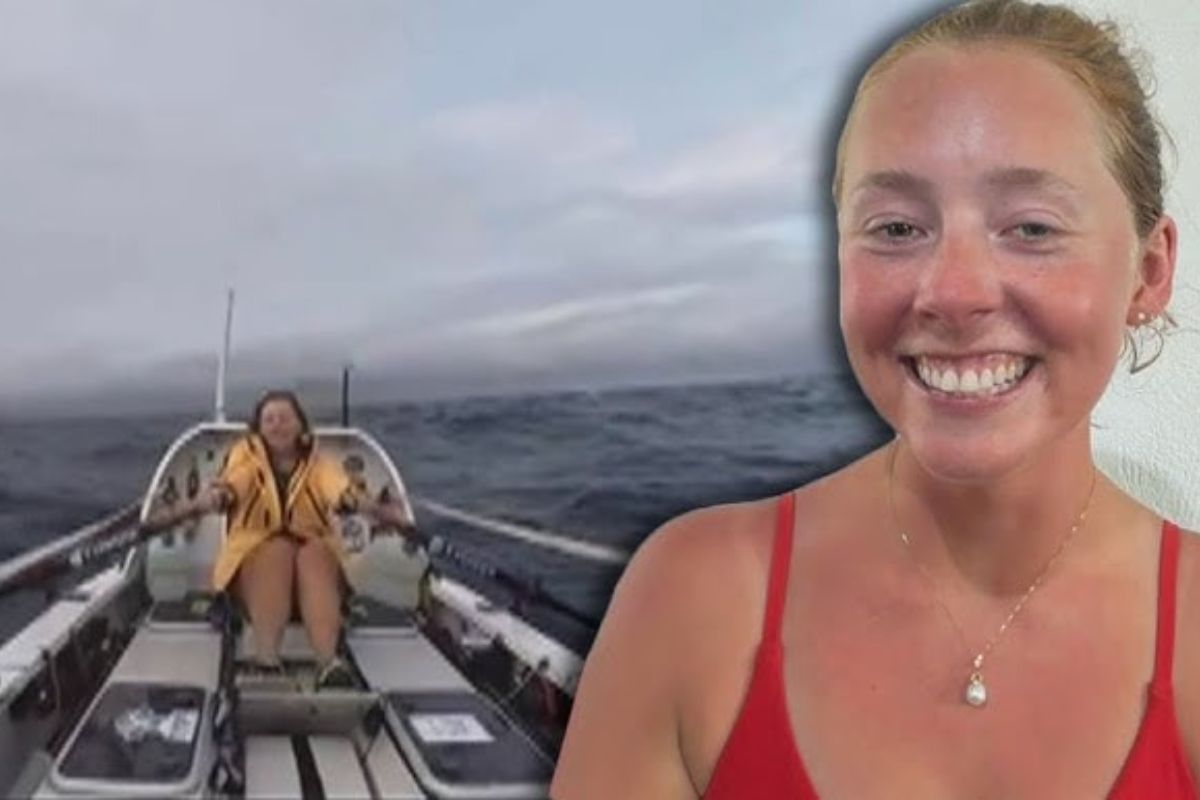


While American Rower Taryn Smith, 25, Completes 4,800 Kilometers Rowing Between The Canaries And Antigua, Her Arrival In English Harbor Exposes The Physical, Emotional And Personal Side Of The World’s Most Difficult Ocean Crossing, A Mix Of Solitude, Extreme Nature, Feminist Activism And A Message Of Empowerment For Young Girls
The American rower Taryn Smith, who left San Sebastián de La Gomera in the Canary Islands and arrived in English Harbor, Antigua and Barbuda, didn’t just cross the Atlantic. In 46 days, 3 hours and 37 minutes, she also pushed the boundaries of human endurance, female visibility in sports, and public perception of what it means to be alone in the middle of the ocean. Sitting in a tiny boat facing 3,000 miles of open sea, without a motor, sail, or support boat, the athlete transformed a niche challenge into an event followed by hundreds of thousands of people in real time.
As she touched the historic Nelson’s Dockyard, already under applause, tears, and red flares, the American rower became the first woman from the United States to complete solo the Atlantic 2025 edition of the challenge known as “the toughest rowing crossing in the world.” What appeared to the public as a festive arrival was merely the final chapter of a routine that combined 4,800 kilometers of rowing, sleepless nights, constant rain, real risk, and a discipline that started well before the official start.
Who Is The American Rower Who Left Omaha And Ended Up In The Middle Of The Atlantic

Taryn Smith was born and raised in Omaha, Nebraska, a landlocked city far from any traditional image associated with the sea.
-
Goodbye iron: new technology from Xiaomi promises to revolutionize the way we iron clothes with 500 kPa steam, continuous flow of 120 g/min, heating in 65 seconds, and six smart modes for different fabrics.

-
Rio Pardo, the most mysterious city in Rio Grande do Sul: untouched Pampas castle, the missing treasure of the Devil Boy, bride’s saint, invisible tunnels, and a 200-year curse today.

-
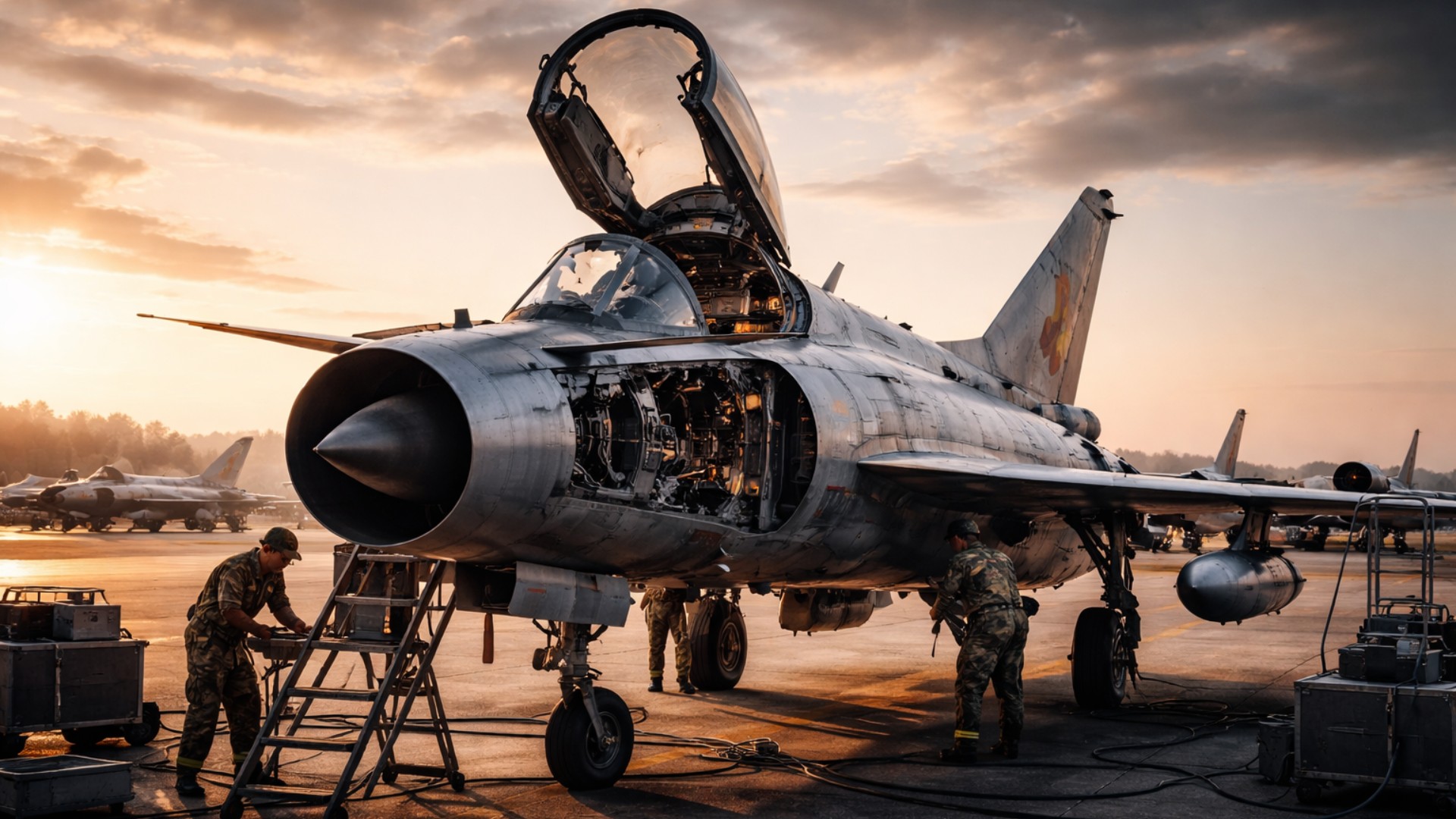
China retires the J-7 fighter after years of military protection and can now transform military items into drones, following more than 60 years of operation of the J-7, derived from the MiG-21, with thousands of units produced and strategic use in the PLAAF and PLANAF.
-
Volunteers are sought to live in the mountains for a month: a study pays people to stay at 2,500 meters, with 24-hour monitoring of sleep, metabolism, and blood pressure.

Instead of forming her sporting identity in boating clubs, the American rower came from a background in land endurance sports: marathon running, trail running, competitive figure skating, and working professionally as a movement and yoga teacher.
Her contact with the ocean came in an unlikely way, flipping through a fashion magazine. It was in a report in Vogue that she saw for the first time a team rowing across the Pacific. The image didn’t just spark curiosity.
From that moment, the American rower decided she would face an ocean herself. This decision, made long before any specific training, is the starting point of a preparation that would include months of practice in the UK and adapting to a boat designed to be a home, office, and shelter in the midst of the Atlantic.
How Far She Rowed, How Long She Stayed At Sea And What It Costs Her Body

Between the departure from the Canaries on December 14 and the arrival in Antigua on January 29, 2026, the American rower spent 46 consecutive days living in just a few meters of fiber. During this time, she didn’t step off the boat even once.
The 3,000 miles of the official route translate, in practical terms, to about 1.5 million strokes, distributed in almost continuous cycles of “eat, sleep, row, repeat.”
The impact on the body is cumulative. At the end of the crossing, the American rower had to be weighed at the finish line, a protocol that serves both for sports records and health monitoring.
Weight loss, chronic muscle fatigue, and joint wear are expected consequences in a challenge where the effort extends for weeks with little variation in movement and almost no possibility of complete recovery.
Where This Crossing Takes Place And How The Atlantic 2025 Race Works
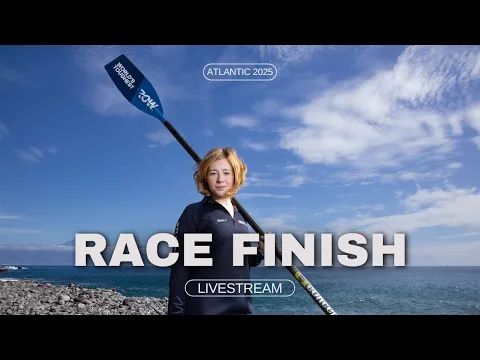

The event that the American rower entered follows a consolidated format in the ocean rowing circuit. The start occurs in San Sebastián de La Gomera in the Canary Islands, a strategic point due to the prevailing currents and winds that push boats toward the Caribbean.
The final destination is English Harbor in Antigua and Barbuda, a historic port now transformed into a stage for emotional arrivals under rain, calm, or strong winds.
In 2025, climatic conditions delayed the official start due to a storm, forcing teams and solo athletes to prolong the pre-race tension for a few days.
The American rower, who had planned to complete the crossing in about 60 days, crossed the Atlantic in 46, becoming the 33rd team to arrive and the fifth solo competitor of the edition, as well as the first solo woman from the United States to finish the route that year.
The competition, however, can hardly be reduced to rankings: the organization itself defines the challenge as “the ultimate adventure of a lifetime.”
How A Fiber Igloo Becomes Home, Office And Survival Capsule
The boat that took the American rower from one side of the Atlantic to the other is a survival capsule designed to be self-sufficient. Without a motor, sail, or external support, the vessel is powered solely by the oars and the athlete’s strength.
Aboard, all vital functions depend on precise choices: storage of freeze-dried food, energy production via solar panels, communication through satellite systems, and constant checks of structure, rudder, and safety equipment.
Every day, in addition to rowing, the American rower had to inspect screws, lines, compartments, and electronics. Any failure in a rudder, hatch, or panel could compromise navigation, positioning, and safety.
The reduced internal space, which from the outside appears as a cocoon, is at the same time a bedroom, improvised kitchen, communication station, and shelter against waves and storms.
The race organization requires strict safety protocols, but execution ultimately relies on the discipline and clarity of someone alone hundreds of kilometers from shore.
Why Solitude, Rain And Even Rainbows Become Part Of The Mental Equation
Throughout the 46 nights that the boat advanced in darkness, the American rower had to learn to coexist with emotional cycles ranging from enchantment to exhaustion.
On some days, the experience was marked by completely starry skies, sunrises and sunsets on an open horizon, and encounters with seabirds that accompanied the boat for long stretches, like the bird she nicknamed Joe March.
At other times, the landscape was dominated by incessant rain, cold, and constantly soaked clothing.
Even elements associated with beauty, such as rainbows in the middle of the Atlantic, turned into signs of frustration. For the American rower, rainbows were the visual reminder that the rain continued or was returning, prolonging the feeling of moisture and discomfort.
In the final weeks, the frequency of cold fronts and downpours was so great that she described the sixth week as the toughest of the entire crossing.
In this context, mental balance doesn’t depend on romanticizing the sea but on the ability to accept that the weather changes, passes, and changes again without any human control.
Digital Tools, Video Diary, And An Audience That Never Left Her Alone
Although she was physically isolated in the middle of the Atlantic, the American rower was not completely alone. Thanks to satellite connection, she was able to send daily videos, report progress, fears, small incidents, and reflections on nature, fatigue, and motivation.
Her mother took over the management of social media on land, filtering comments and relaying to her, in messages, the support of strangers and public figures who began following the crossing.
For the American rower herself, recording on video what happened each day served as a structured diary.
By mentally organizing the facts before speaking to the camera, she transformed tense episodes into comprehensible narratives. On the toughest days, the comments sent by family and supporters acted as triggers for perseverance.
This experience shows how technology, when used purposefully, amplifies the social dimension of a challenge that, historically, has been marked by the invisibility of what happens between the start and finish.
Fatigue, Patience, And The Learning To Wait For Storms To Pass
In the public speech she made once on solid ground, the American rower admitted that she started the challenge with fear. In the first hours, the feeling was akin to being thrown into a survival film set, with the Atlantic stretching out in all directions.
Once past this initial phase, she reported that she activated a kind of automatic mode and began to treat the ocean as a scenario to be managed, not as an insurmountable enemy.
One of the main lessons she shared was the development of environmental patience. Rather than reacting with despair to each cold front, the American rower learned to observe storms approaching, hitting the boat, and then moving away.
The idea that “bad weather always passes” shifted from an abstract phrase to concrete experience. This change in perspective, according to the athlete herself, is something she intends to take beyond sports, as a reference for other pressure-filled and uncertain situations in daily life.
Atlantic As A Stage For Discreet Activism And Empowerment By Example
The crossing was not just an individual physical experiment. The American rower rowed associated with a specific cause, aimed at funding projects that use sports to strengthen the self-confidence of girls and young women, encouraging leadership and responsible risk-taking.
Throughout the weeks, she invited supporters to donate to initiatives focused on expanding girls’ access to organized sports.
More than speeches, the mere presence of a solo American rower in the middle of the Atlantic serves as a strong symbolic message.
Rather than just talking about female empowerment, she placed herself in the role of a concrete example of a woman who takes a calculated risk, prepares technically, and completes a crossing that has historically seen much greater male participation.
The impact of this is reflected not only in audience metrics but in the accounts of young girls who see, there, confirmation that “big” projects can be pursued.
What This Crossing Says About Human Limits And The Future Of Ocean Races
By crossing the Atlantic in 46 days, the American rower also helps to reposition ocean rowing races in the sports imagination.
The combination of digital broadcast, personal narrative, and sporting milestone makes the crossing less invisible and more tangible to the general public, without erasing the inherent risks.
At the same time, the organization emphasizes that despite records and statistics, the central goal remains to complete the route safely.
From now on, the discussion shifts to post-race. The American rower has already been questioned about the possibility of participating in the future in the Pacific crossing, a route that is even longer and features different wind, current, and isolation characteristics.
Her immediate response was one of caution. Before considering another challenge, she wants to recover her body, process the experience, and live, for a time, at the pace of dry land. The central question, however, remains open: how many other athletes, especially women, will feel encouraged to occupy this space after following her journey.
When A Solitary Rower Becomes A Collective Mirror
The image of the American rower stepping onto the historic Nelson’s Dockyard in Antigua encapsulates in a few seconds a journey of weeks.
Hugs with parents and friends, tears of relief, shaky legs after 46 days without land, a crowd applauding someone who, until recently, was anonymous outside her closest circle.
Between the first contact with a magazine article and the official certificate from World’s Toughest Row Atlantic 2025, what exists is a long interval of training, sacrifice, planning, and calculated risk.
By stating that “if I can row an ocean, so can you,” the American rower is not simplifying the effort involved, but inviting others to reconsider their perceived limits.
In a scenario where great feats tend to be attributed to exceptional talents, the fact that a young woman from Omaha, landlocked, used discipline and knowledge to cross 4,800 kilometers of sea opens space for a direct question to the reader: faced with a challenge that seems too big, are you closer to giving up at the start or adjusting your pace, accepting the bad weather, and continuing to row until you see your own finish line?









Feito de grande admiração. Confirma a “máxima” de que querer é poder.
Demais!! Sempre quis fazer algo parecido! Além de uma prova de superação é também uma put@ duma aventura!
Parabéns!!
Parabéns pela sua vitória,Taryn, eu acho fascinante, remar, e gostaria de te estado com você nesse feito.Me convida na próxima vez para ir com você.