





 Portuguese
  English
  Spanish
  5 min of reading
  0 comments


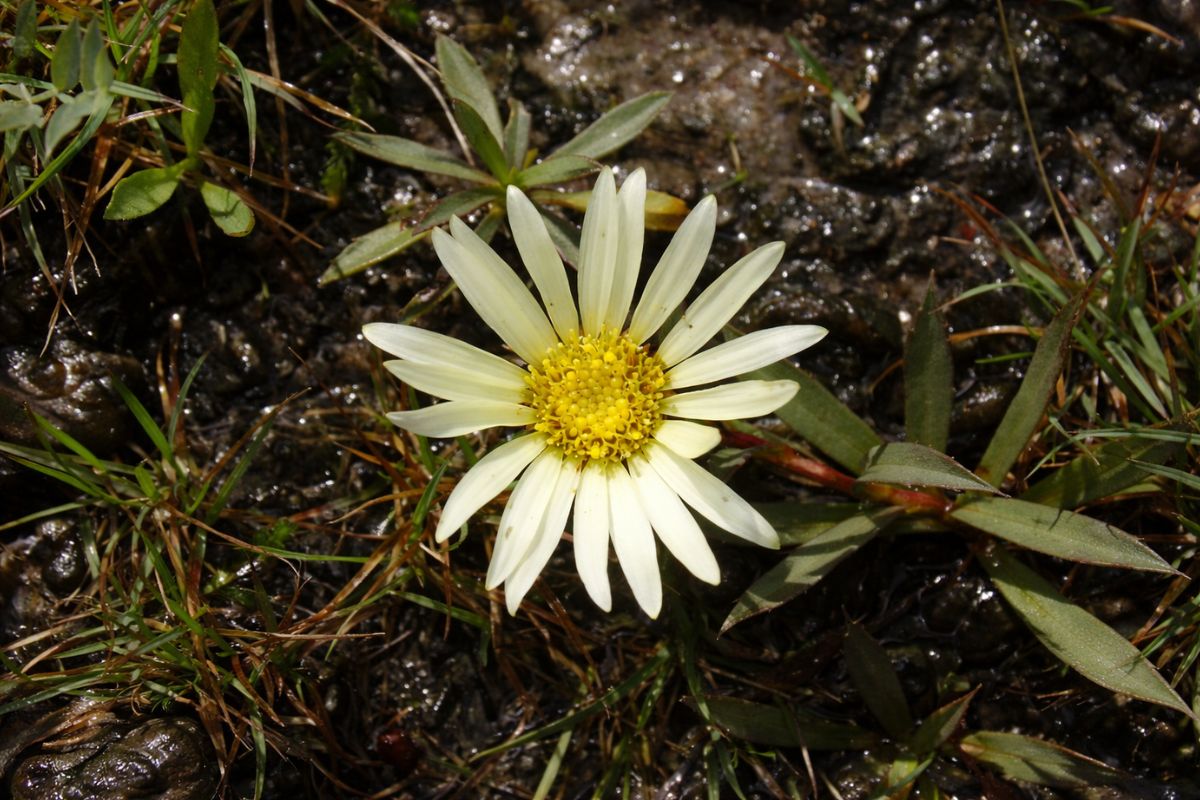
A new species of plant called Grindelia mutabilis was discovered by researchers from UFRGS in the Espinilho State Park, in Barra do Quaraí, in the far west of Rio Grande do Sul, with only 35 known adult individuals and classified as critically endangered.
A plant that science did not know existed has just been identified in one of the most remote corners of Brazil. Researchers affiliated with the Federal University of Rio Grande do Sul (UFRGS) discovered Grindelia mutabilis, a plant species that occurs exclusively in the Espinilho State Park, located in Barra do Quaraí, in the far west of Rio Grande do Sul. The discovery was published in the international scientific journal Plants and reveals that this plant, although it had been collected in the 1940s, had been confused with another similar species for over eight decades.
What makes the case even more urgent is the scale of the discovery. The researchers estimate that there are only about 35 adult individuals of this plant, all concentrated in a very small area within the park. Therefore, Grindelia mutabilis is already classified as critically endangered, the highest level of risk according to international criteria. The plant that no one knew about may disappear before most people even know it exists.
How the plant was discovered by researchers from Rio Grande do Sul after decades of confusion

According to the Government of the State of RS, the story of the discovery begins with an identification error that lasted over 80 years.
-
More than 411 helicopters, 11.9 million inhabitants, and a trillion-dollar GDP place the largest city in Brazil and the Southern Hemisphere in a league of its own, with figures that already rival giant countries like Morocco, Hungary, and Ecuador.

-
Mysterious rock formation found in the interior of Paraná does not follow any natural erosion pattern, and now specialists are investigating whether humans carved those cavities centuries ago.
-
The Brazilian Air Force has been in Sudan for a year coordinating drone operations, distributing humanitarian aid, and training military personnel from seven countries on a UN peacekeeping mission in one of the most unstable regions of the planet.

-
In Japan, there is a very common piece of furniture made with foam, fibers, cotton, and ancient artisanal techniques that transform the item into a variety of options for modern and small homes.

Biologist Fernando Fernandes, who conducted studies for his master’s degree in Botany at UFRGS, was investigating the genus Grindelia in Brazil when he realized that the species recorded in the Espinilho State Park as Grindelia scorzonerifolia actually did not correspond to that classification. A thorough analysis revealed that it was a completely distinct plant that had not yet been described by science.
The taxonomic revision conducted by Fernandes and researchers from partner institutions identified differences in growth form, leaves, flowers, and fruits of the plant. The genus Grindelia belongs to the Asteraceae family, which includes daisies, sunflowers, and chrysanthemums.
The new species has characteristics that distinguish it from all other known species in the group, confirming that it is not a variation, but a genuinely new plant for science.
What makes this plant unique among all species of the genus

Grindelia mutabilis has a characteristic that no other species of its genus possesses. The ligules of this plant, small structures located on the leaves, have a light yellow color that changes to a salmon hue as they mature, something unprecedented for the entire genus.
It was precisely this ability to change color that inspired the name “mutabilis,” derived from Latin for “mutable” or “that changes.”
In addition to its unique coloration, the plant has a singular morphology that allowed researchers to resolve an old taxonomic problem within the daisies of South America. “In addition to describing this unique species, the work solved an old taxonomic problem within the daisies of South America,” explained Fernandes.
The discovery not only adds a new plant to the scientific catalog but also reorganizes the classification of an entire group of species that had been causing confusion among botanists.
The extremely specific habitat where this plant survives
Grindelia mutabilis does not grow just anywhere. Its habitat is restricted to sandy and slightly saline soils, in open areas of vegetation known as espinilho or ñandubay, a rare type of savanna that in Brazilian territory survives practically only within the limits of the Espinilho State Park.
This vegetation is one of the most threatened in the Pampa biome and represents an ecosystem that is not found in any other region of the country.
The combination of specific soil, particular climate, and type of vegetation means that the plant depends on conditions that exist in an extremely limited area. If the habitat disappears, the species disappears along with it.
The 35 known adult individuals are concentrated in a small section of the park, which means that any adverse event, whether a fire, a prolonged drought, or a change in land use, can put the entire known population of this plant on the planet at risk.
Why the Espinilho State Park is essential for the survival of this plant
The Espinilho State Park, managed by the Secretary of the Environment and Infrastructure (Sema) of Rio Grande do Sul, is the only known location where Grindelia mutabilis exists. “The discovery further highlights the importance of the Espinilho State Park, created to protect the Pampa biome,” commented Cátia Viviane Gonçalves, director of the Biodiversity Department of Sema.
The park protects a set of ecosystems unique to Rio Grande do Sul that do not exist in any other Brazilian state.
Without the protection offered by the conservation unit, the plant would likely have already disappeared without anyone knowing it existed.
Grindelia mutabilis becomes yet another concrete argument in favor of maintaining and strengthening protected areas, especially in biomes like the Pampa, which historically receives less attention than the Amazon or the Atlantic Forest, but harbors unique and irreplaceable biodiversity.
What the discovery of this plant means for science and conservation in Brazil
More than just a new name in scientific catalogs, Grindelia mutabilis is a symbol of the hidden biodiversity in the fields of southern Brazil.
The plant proves that even in regions studied for decades, unknown species may be living discreetly, confused with other species or simply ignored due to a lack of dedicated research. If one plant has been confused with another for over 80 years, how many more might be in the same situation in other Brazilian biomes?
The researchers hope that the publication in the journal Plants will draw attention to the need for more studies in the Pampa and to the importance of maintaining field teams investigating biodiversity in conservation units.
For a plant with only 35 known individuals and classified as critically endangered, every day of protection counts. Grindelia mutabilis was born for science already asking for help.
Did you know that a plant exclusive to the entire planet lives in a single park in Rio Grande do Sul? What do you think of a species that is already critically endangered with only 35 individuals? Let us know in the comments. Discoveries like this show that Brazil’s nature holds secrets that science has not even begun to catalog.







Seja o primeiro a reagir!