





Orchids transformed João Batista’s retirement into a business with 20,000 plants, monthly sales, and expanding revenue in Brasília.
At over 60 years old, João Batista decided that retirement would not mean interrupting his professional life. After a decades-long career in public service, he turned his interest in orchids into a business that now gathers around 20,000 specimens, occupies an area of 2,000 square meters, and sells approximately 100 plants per month in Brasília.
Orquidário Batista is close to completing 15 years of activity and ended last year with a revenue of R$ 50,000. For the current period, the entrepreneur expects to reach R$ 70,000, a result supported by custom orders, participation in fairs, presence in exhibitions, and a rental service aimed at clients who prefer not to commit to the permanent cultivation of the plants.
Orchid business was born after 45 years of work
The career change occurred after João Batista retired, ending a 45-year professional journey. With a degree in Administration, he had worked for more than three decades in public service and began to look for an activity that would keep his routine productive after leaving the position.
-
At 16 years old, a young Brazilian with unemployed parents found a wallet with R$ 1,600 on his way to school, returned every cent to a retired construction worker, and turned the act of honesty into full scholarships for him and his sister to study for free at a private school.

-
From cleaning to lab coat, a fisherman’s son started as an office boy, spent 20 years in hospital sanitation in Maranhão, went back to school, and today Edeilson fulfills his dream of working as a nursing technician in the same unit.

-
At the age of 15, a welder bought land without water or electricity in Colorado and spent five decades practically building the Bishop Castle by himself, a 49-meter castle made with a thousand tons of stones, suspension bridges, iron towers, stained glass, and a metal dragon capable of breathing fire over the mountains.
-
In 2025, São Paulo inaugurated in Brás the country’s first textile ecopoint, open 24 hours and prepared to receive 300 tons of clothes, blankets, and scraps per month, transforming improperly discarded waste into fuel for industrial furnaces and helping to reduce floods and pollution.


The answer came in a Sebrae course aimed at retirement preparation. With business guidance, training, and consultancy, Batista realized that his orchid collection could become more than just a hobby and take on a commercial structure.
João Batista’s experience is part of a broader movement in the country. Sebrae data indicates that Brazil has 4.5 million entrepreneurs over 60 years old. In a decade, the number of people in this age group leading businesses increased by 56.6%.
In the case of Orquidário Batista, the decision to venture did not start with the immediate pursuit of revenue. The business was built on knowledge accumulated over years of cultivation, observation, and plant purchases.
Interest in orchids began as a gift for his mother
Batista’s connection with the plants began within the family. His mother maintained a collection with approximately 50 specimens, and he used to buy new flowers to gift her. On the same occasions, he would also bring other units home, until his own collection became larger.
Over time, the orchids acquired without commercial intent formed the basis of the collection that would later be utilized by the company. What once occupied space as a private collection began to function as a catalog and stock for a specialized enterprise.

The contact with cultivation, however, predates the collection. Batista arrived in Brasília during his childhood, at a time when his family produced vegetables for their own consumption. Participation in this routine sparked his interest in planting and daily care of plant species.
When explaining how he keeps so many plants in good condition, the entrepreneur does not point to a complex formula. For him, care depends mainly on consistency and sensitivity. “Having the care and attention that every living being needs,” says Batista.
Orchids are sold at fairs, exhibitions, and by order
The operation was organized to serve clients through different channels. Part of the sales is made according to demand, while fairs and exhibitions serve as points of contact with consumers interested in seeing the available specimens.
On average, the Orquidário Batista sells 100 orchids per month. Prices range from R$ 60 to R$ 250, a difference related to the specimens offered within the collection maintained by the entrepreneur.
The company reached R$ 50,000 in revenue last year and is working with the projection of adding R$ 20,000 to this result. If the estimate is reached, the annual revenue will reach R$ 70,000.
Although financial return is part of the activity, Batista describes the business as a source of supplementary income. “We sell, cover the costs, and there’s still a little extra to take trips and improve household income,” he comments.
Orchid rental creates an alternative for those who do not want to cultivate
In addition to traditional sales, the orchid nursery started working with plant rentals. The service was designed for people who like to keep flowering pots at home or in other spaces but do not wish to take permanent responsibility for cultivation.
When the flowers fall, the client can return the pot and receive another plant in the flowering stage. Thus, the orchids remain under the care of the nursery during periods when they require maintenance, while the consumer uses the specimens during the stage of greatest visual prominence.
The new format expands the possibilities of service without abandoning the main activity. Batista remains responsible for plant management and now offers not only the possession of the pot but also temporary access to flowering specimens.
This modality also takes advantage of the size of the collection. With approximately 20,000 plants available, the entrepreneur can organize exchanges and cater to consumers seeking variety without maintaining their own collection.
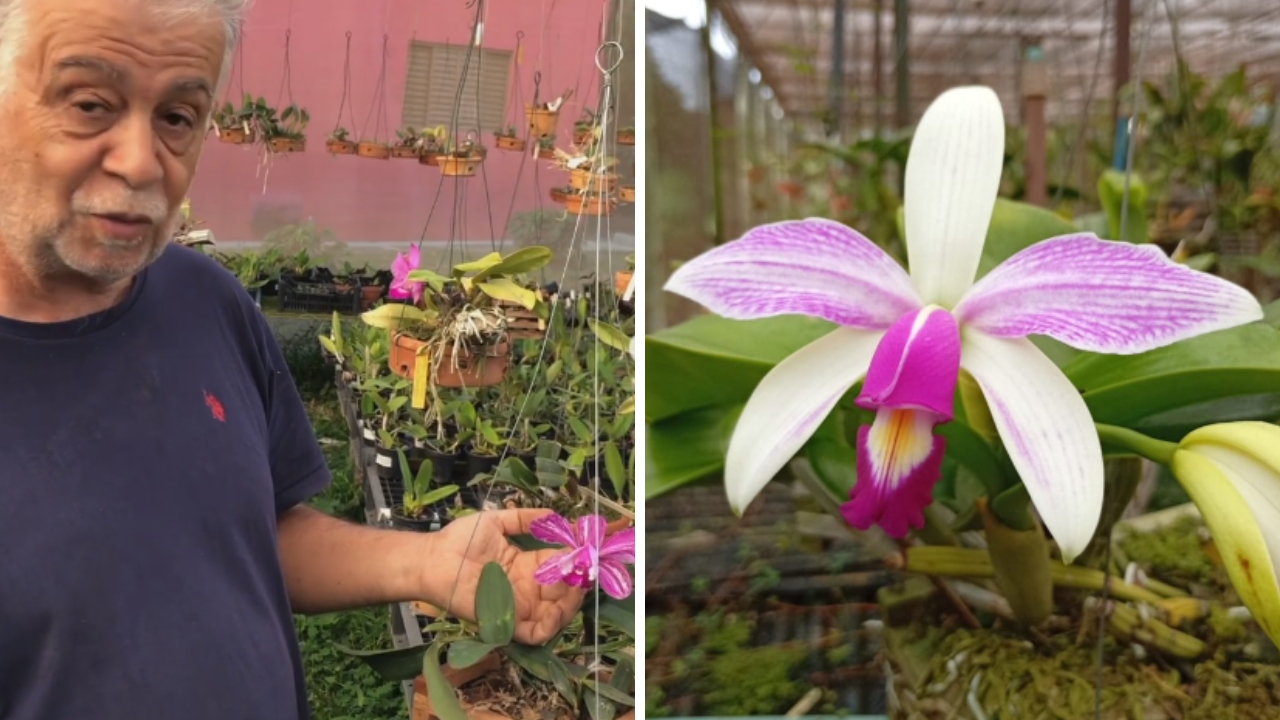
Entrepreneurship after 60 brought a new routine
João Batista’s case shows how an experience built outside the business environment can be transformed into a source of work. The knowledge about cultivation, developed over a lifetime, was combined with administrative training and the guidance received before the company opened.
About to turn 15 years old, the business now occupies a structure that would hardly have been imagined when Batista was buying orchids for his mother. The family collection grew, gained commercial purpose, and began to support regular sales across different channels.
More than supplementing income, the company created a new purpose for the period after retirement. Summarizing the meaning of this phase, Batista chooses a short phrase: “I am alive.”
Among thousands of plants, fairs, orders, and clients, the orchids ceased to represent just a family memory. They became the center of a business that combines experience, autonomy, and the possibility of starting over professionally after 60.
With information from Revista PEGN


