





 English
  Francês
  Alemão
  Italiano
  Japonês
  Norueguês
  Portuguese
  Spanish
 2 min of reading


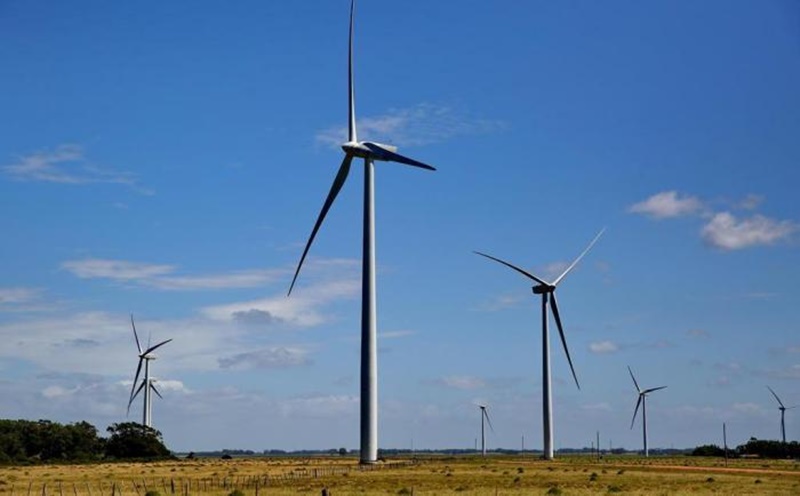
The Implementation of Wind Power Plants in Rio Grande do Sul Has Contributed to Maintaining the Predominance of Renewable Sources in Brazil’s Electric Matrix
Considered a promising state for the development of clean energy, Rio Grande do Sul has increasingly attracted investments for projects in this sector, some still unprecedented in Brazil, with the generation of offshore wind energy. Recently, it was announced that the city of Capão da Canoa (RS) will build an offshore wind farm 7 kilometers from the coast.
Read Also
- Nuclear Fusion for Clean Electricity Production May Become Reality in 2025
- FGV Discusses the Role of Renewable Energies in Brazil’s Energy Transition
- Demand for Equipment for Biogas Generation Increases Due to New Sanitation Concessions
The company Omega Geração also announced that it is expanding its investment portfolio and operations in the wind energy market and was authorized, without restrictions, by the Administrative Council for Economic Defense (Cade) to acquire wind farms in RS.
The deal of 1.5 billion reais involved the purchase of all of Eletrobras‘s stake in the Santa Vitória do Palmar wind power plant, located in Rio Grande do Sul, along with other ventures totaling 583 megawatts of installed capacity.
-
Rio Grande do Sul accelerates energy transition: State invests in renewable technologies and consolidates decarbonization strategies and pathways to attract billions in new industrial investments.

-
With 160,000 m² of collectors, an area larger than 20 football fields, Silkeborg, in Denmark, hosts a solar thermal plant that heats 19,500 homes and could become the largest solar heating plant in the world.

-
A study reveals the expansion of renewable energy procurement in Brazil and shows how companies are taking advantage of opportunities to reduce expenses, ensure energy efficiency, and strengthen strategic environmental commitments.

-
Mato Grosso do Sul excels in the sugar-energy sector: the state reaches a milestone of 22 operating mills and accelerates the production of clean energy in MS with a focus on sustainability.


The continental characteristics of Brazil and its geographic location are important support points for harnessing wind energy from appropriate wind regimes. On the other hand, as this source is intermittent and therefore uncontrollable, meeting demand at all times is not an easy task.
However, examples such as the expansion of transmission, energy storage, load management, the adjustment of current plants’ operations, and load flexibility arise to assist in the integration of this alternative source.
Therefore, the implementation of wind power plants in Rio Grande do Sul, as well as in other states in Brazil, has contributed to maintaining the predominance of renewable sources in the country’s electric matrix for the coming years, as the process of energy transition and decarbonization is becoming increasingly consolidated.






Seja o primeiro a reagir!