Portuguese
  Spanish



Have You Heard About Nuclear Fusion? Know That a Nuclear Fusion Reactor Can Be Created in the Next 05 Years
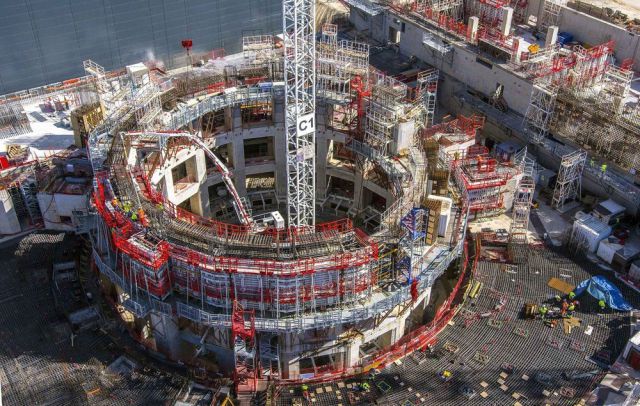
MIT scientists are designing a nuclear fusion reactor to produce clean electrical energy. Their goal is to make it efficient in energy production by 2025. This way, we would have a new form of clean electricity.
Clean Electrical Energy
The SPARC project started two years ago, when MIT struck a deal with the startup Commonwealth Fusion Systems for the development of a prototype of a new generation of reactors.
The researchers in charge, after intensive work to enable the physics behind the project, brought good news. With the theoretical basis, the project, and the challenges laid out on paper, the construction of the nuclear fusion reactor is expected to begin in 2021. They hope to achieve the feat of the first reactor to maintain a self-sustaining fusion. In other words, a reactor that does not consume much energy but produces energy.
-
Giant Batteries Take Center Stage in Chile Auction as Company Offers 960 GWh of Solar Energy for Nighttime Use, Aiming to Stabilize Solar Power Supply

-
After a Year of Success in Switzerland, Solar Railway Attracts Italy’s Interest for Clean Energy Transformation
-
Robots Clean Solar Panels in Desert Power Plants Without Water, Preventing Energy Losses
-
Brazil’s Offshore Wind Energy Potential Worth $1 Trillion Stalled by Long-Delayed Agreement



Fusion and Fission
We already master nuclear fission. However, it is not the ideal way to harness nuclear energy. Although it produces less waste than, for example, coal, nuclear waste is more difficult to dispose of. In this process, some neutrons are released to initiate the reaction. This causes new neutrons to come out of atoms, hitting other nuclei. This causes atomic nuclei to “split” and release energy. That is why radioactive materials are necessary.
Fusion is completely different from fission. The first point is that radioactive material is not needed. Consequently, there is a much simpler disposal. Moreover, the safety and efficiency of a fusion reactor are much greater than that of a fission reactor. When we master nuclear fission, it may open many doors.
Nuclear fusion consists of the fusion of atomic nuclei. It is the nuclear fusion that occurs in the Sun; yes, the Sun is a giant nuclear reactor. In this case, deuterium and tritium are used, two isotopes of hydrogen. When you apply sufficient pressure and heat to “squeeze them together,” fusion occurs. This releases a neutron, a helium atom, and energy.