





 Portuguese
  English
  Spanish
  3 min of reading
  0 comments


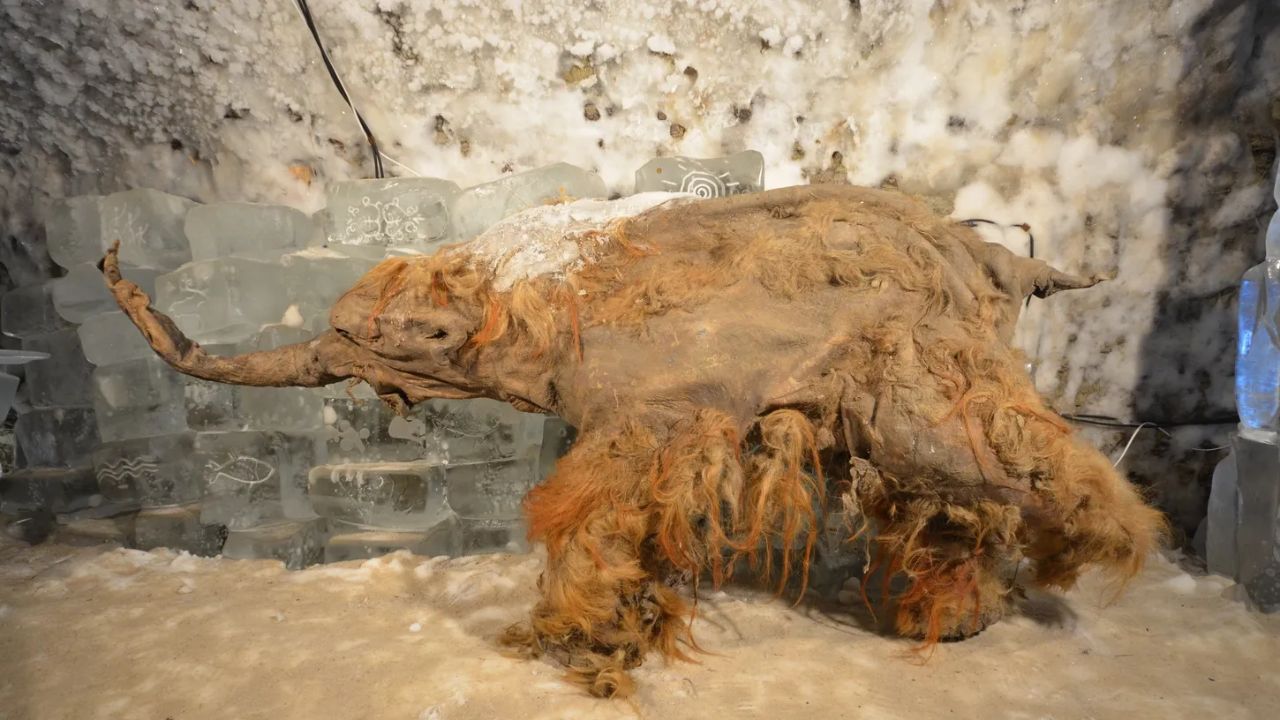
Researchers Discover The Oldest RNA In The World In A Frozen Woolly Mammoth About 40 Thousand Years Ago, Offering New Insights Into Genetics And Health Of Prehistoric Species.
Researchers discovered the oldest RNA in the world in a juvenile woolly mammoth, nicknamed Yuka, that was frozen about 40 thousand years ago in Siberia, Russia.
The permafrost preserved impressive details of the animal, including reddish fur, a twisted trunk, and even its intact brain.
The find offers a unique opportunity to study genetic molecules that typically deteriorate rapidly after death.
-
They were brilliant! Scientists discover that our ancestors in China were already making super advanced tools 160,000 years ago, changing everything we knew.

-
Scientists unveil 3 million years of climate secrets hidden in the ice of Antarctica.

-
Ancient farmers created “aggressive plants” that changed nature forever.

-
Astronomers find a “backward” solar system that ignores all the rules of space and leaves scientists scratching their heads!


The ancient RNA reveals which genes were active in the mammoth’s tissues shortly before its death, something impossible to identify with DNA alone.
The Importance Of RNA In Understanding Prehistoric Life
RNA is an essential genetic molecule for creating proteins and activating genes.
Unlike DNA, it is more fragile and rare in ancient fossils. According to Love Dalén from Stockholm University, “Ancient RNA gives us a view of which genes are active in a specific tissue, it’s something we could never see with DNA alone.”
In addition to clarifying the genetics of the woolly mammoth, RNA also allows for the study of ancient viruses, similar to the flu or SARS-CoV-2, that may have coexisted with the Ice Age megafauna.
How The Oldest RNA In The World Was Found?
The pup Yuka was discovered in 2010 by hunters on the bank of a river near the Arctic coast of Siberia.
Since then, scientists have analyzed its genetic material, along with that of nine other Siberian mammoths.
Only Yuka presented the longest RNA strands, essential for activating muscle genes.
The research challenges the idea that RNA cannot survive for thousands of years.
Previous studies had recovered RNA from a thylacine with 130 years of preservation and from mummies over 5,300 years old, but nothing compares to the 40 thousand years of the woolly mammoth.
What Ancient RNA Reveals About Yuka?
The RNA molecules provide information about the last moments of the young mammoth’s life.
Researchers found that Yuka was generally healthy, but the genetic data allows for the reconstruction of muscle development patterns and possible vulnerabilities to prehistoric diseases.
According to Dalén, this approach paves the way for future analyses of ancient viruses, enabling the detection of pathogens that circulated among extinct species.
Lessons From The Oldest RNA In The World
The discovery of the oldest RNA in the world not only revolutionizes paleogenetics but also expands the understanding of the life of Ice Age megafauna.
The exceptional preservation of Yuka offers an almost instantaneous record of the genetic activity of a woolly mammoth, something that DNA alone could not reveal.
With the advancement of these techniques, scientists hope to study other frozen specimens in Siberia, such as saber-toothed cats and more mammoths, increasing knowledge about the biology and ecology of species that went extinct thousands of years ago.
With information from National Geographic.








-

Uma pessoa reagiu a isso.