





 Portuguese
  English
  Spanish
  3 min of reading
  0 comments



Measure Announced by the President Directly Impacts Products from Europe, Asia, and Mexico; Understand Who Will Be the Main Targets of Trump’s New Tariff Starting on October 1st.
Announced last Thursday (25) by President Donald Trump, the new Trump tariff promises to reconfigure important global supply chains starting on October 1st. According to CNN, the measure imposes a surcharge of 100% on imported pharmaceuticals, 50% on certain types of furniture, and 25% on heavy trucks, directly affecting major trading partners of the United States.
The justification for the action, detailed by Trump on his social media platform Truth Social, is to protect the national industry and force the relocation of manufacturing plants to American territory, especially in the pharmaceutical sector. The decision creates a strong shock in trade relations, with immediate economic repercussions for exporting countries and for consumers in the U.S.
Pharmaceuticals from Europe Targeted by the 100% Tariff
The sector most drastically affected by the new policy is pharmaceuticals, which will face a 100% tariff on brand-name or patented medications. According to the announcement, this rate will only be lifted if the responsible pharmaceutical company decides to build or expand its factories in the United States, a condition that directly pressures the European giants of the sector.
-
Inflation in March reaches 0.88% according to IBGE and pressures the Brazilian economy, impacting family budgets and requiring more strategic decisions to maintain financial control.

-
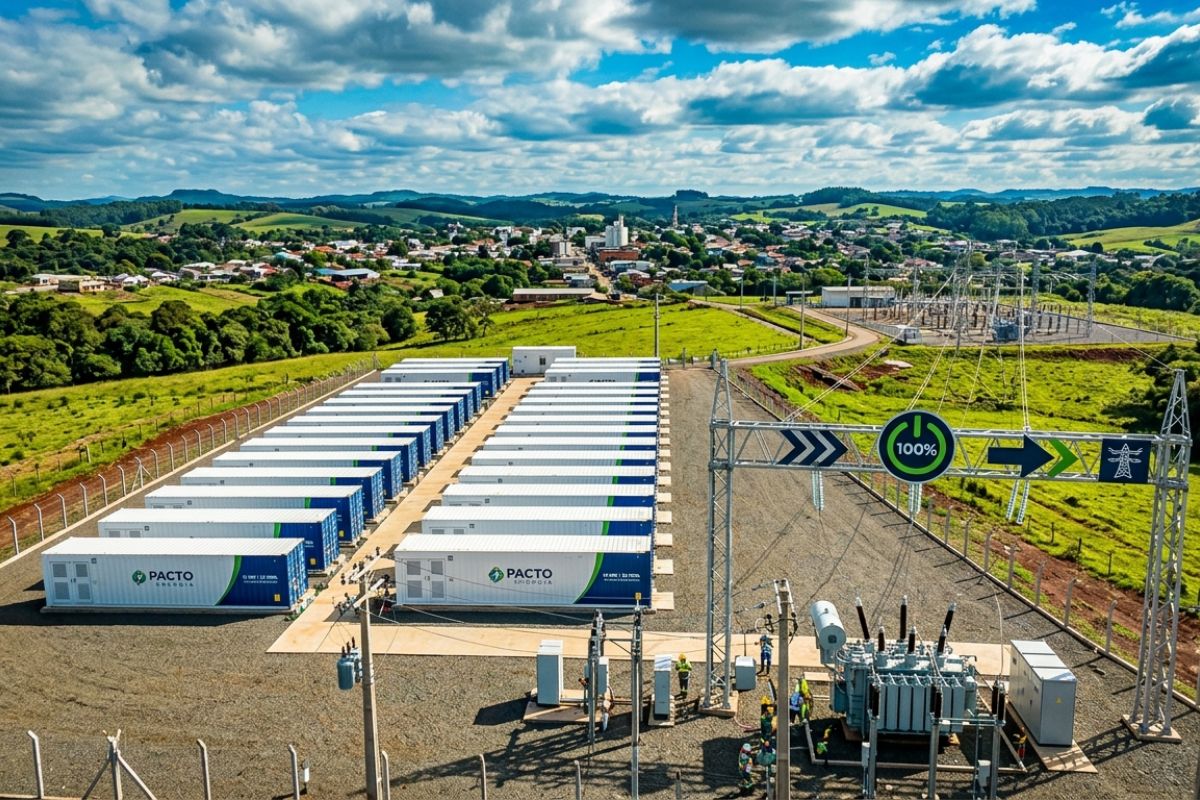
In Paraná, distributor Pacto connects 100% of the load in Coronel Vivida to batteries: a BES of 10 MW and 20 MWh costs just over R$ 30 million and lowers the local tariff now.
-
With a dependence of up to 80% on gas imported from the United States, Mexico is responding with a robust energy strategy, betting on shale gas, creating a scientific committee, and preparing to expand natural gas production to reduce vulnerability and strengthen its energy security in the coming years.

-
The United States proposes to Brazil a critical minerals agreement with a minimum price to combat Chinese dumping and priority for investment, but the Planalto is blocking the signing out of fear of upsetting China and due to electoral calculations in a year of competition.
According to data from Eurostat, cited by Reuters and highlighted by CNN, the supply chains between Europe and the U.S. are deeply interconnected. In 2024, exports of medicines from the European Union to the U.S. totaled US$ 134 billion. Countries such as Ireland, Switzerland, and Germany, which are among the largest suppliers, will be the most impacted. Ireland alone accounted for about 37% of that volume, demonstrating the strong mutual dependence that is now in question.
Heavy Trucks and the Protection of the American Industry
Another central target of the tariff package is heavy trucks, which will be subjected to a 25% surcharge on imports. The main declared motivation for this measure by Trump is to combat what he classifies as “unfair external competition”, which would be harming manufacturers located in the United States.
In this segment, the geographical impact is more concentrated. The primary affected will be Mexico, which today stands as one of the largest exporters of heavy trucks to the North American market. The 25% tariff aims to make Mexican products more expensive, making local production more competitive and, in theory, preserving jobs in the heavy automotive sector in the U.S., a recurring theme in his political platform.
Furniture from Asia Facing Tariffs of Up to 50%
The furniture sector has also been included in the package, with varying rates. Starting on October 1st, the U.S. will apply a 50% tariff on imports of kitchen cabinets, bathroom furniture, and related products. Additionally, imported upholstered furniture will face a 30% tax. The measure represents a significant challenge for exporters and may result in price increases for the end consumer.
Market analysis, as published by the specialized magazine Furniture Today and highlighted by CNN, shows that Asia will be the most affected region. In 2024, about 60% of the US$ 25.5 billion in furniture imports to the U.S. came from Vietnam and China. These two nations, which dominate the supply for the American market, will have to reassess the viability of their exports in light of the new and heavy tariff barriers.
Do you agree with this change? Do you think this impacts the market? Leave your opinion in the comments, we want to hear from those who experience this in practice.







-

-

-

-

-

5 pessoas reagiram a isso.