






 Portuguese
  Spanish


Underwater robotics allowed Colombia to retrieve from the San José galleon a bronze cannon, cob coins, and porcelain pieces preserved at about 600 meters. The objects began scientific conservation, while the Spanish ship sunk in 1708 remains surrounded by economic, diplomatic, archaeological, and historical claims still open internationally.
The San José galleon revealed its first set of artifacts retrieved from the Caribbean seabed more than three centuries after the shipwreck. In November 2025, Colombian researchers and institutions employed underwater robotics systems to collect a cannon, coins, and porcelains from the archaeological site located approximately 600 meters deep, near Cartagena.
The information was published by the Daily Galaxy on July 15, 2026. The core data is also included in statements from the Colombian Ministry of Cultures and the General Maritime Directorate, which officially presented the objects in Cartagena and detailed the procedures adopted to remove, transport, and begin their conservation.
First objects broke silence maintained for three centuries
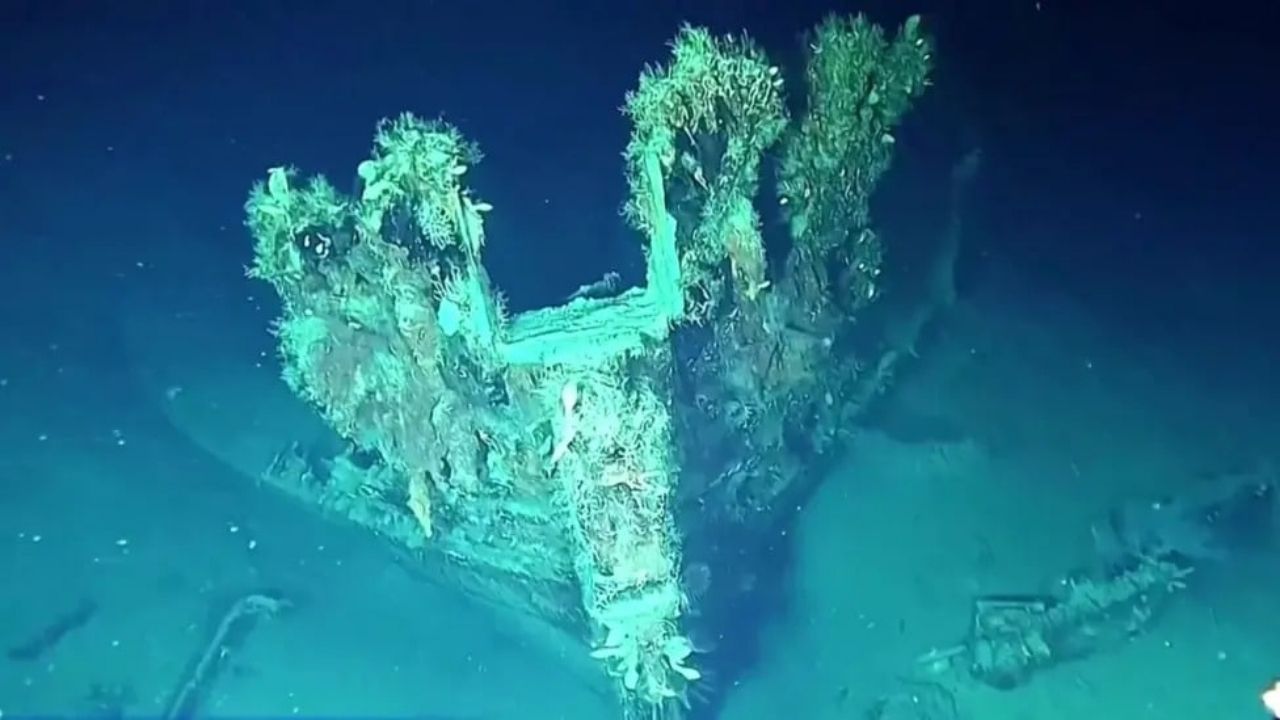
The retrieved set includes three cob coins, colonial coins produced by manual minting, a bronze cannon, porcelain containers, and fragments associated with the site. Small samples of wood, metal, sediments, and rope were also preserved because they can provide information about the ship and the conditions of its sinking.
-
Scientists discover “invisible” underground process that may explain Earth’s largest mass extinctions and how extreme climate changes destroyed the planet’s biodiversity

-
The future of war? A terrifying drone spins so fast that it disappears before your eyes.

-
Epson changes the manufacturing of printers produced in Brazil by incorporating recycled plastic, accelerating the circular economy, increasing the reuse of industrial materials, and establishing an important milestone for sustainability in national technology.
-
Researchers find “yellow brick road” at a depth of 1,029 meters in the Pacific, but the formation that appears man-made is naturally fractured volcanic rock, revealing how heat and cooling created almost rectangular blocks in a protected marine area north of Hawaii during the E/V Nautilus expedition.


The retrieval was not presented by Colombia as an operation aimed at selling or dividing a treasure. The project was structured as archaeological research, focused on analyzing the composition of the materials, identifying their origins, and studying the technologies used in the manufacture of the objects transported by the galleon San José.
Robots needed to operate where divers could not reach
The depth of nearly 600 meters imposes darkness, high pressure, and access incompatible with conventional human dives. Therefore, the research relies on remotely operated vehicles, high-resolution cameras, sensors, and mechanical arms capable of approaching the wreckage without unnecessarily moving the structure or sediments.
Since 2021, the Colombian Navy has been using a Lynx Saab Seaeye submarine vehicle to observe the site. Before any retrieval, non-invasive campaigns mapped the distribution of the remains and checked the conservation status of the site, allowing the selection of pieces compatible with the technical capacity of the available robotics.
Cannon required delicate maneuver before leaving the ocean
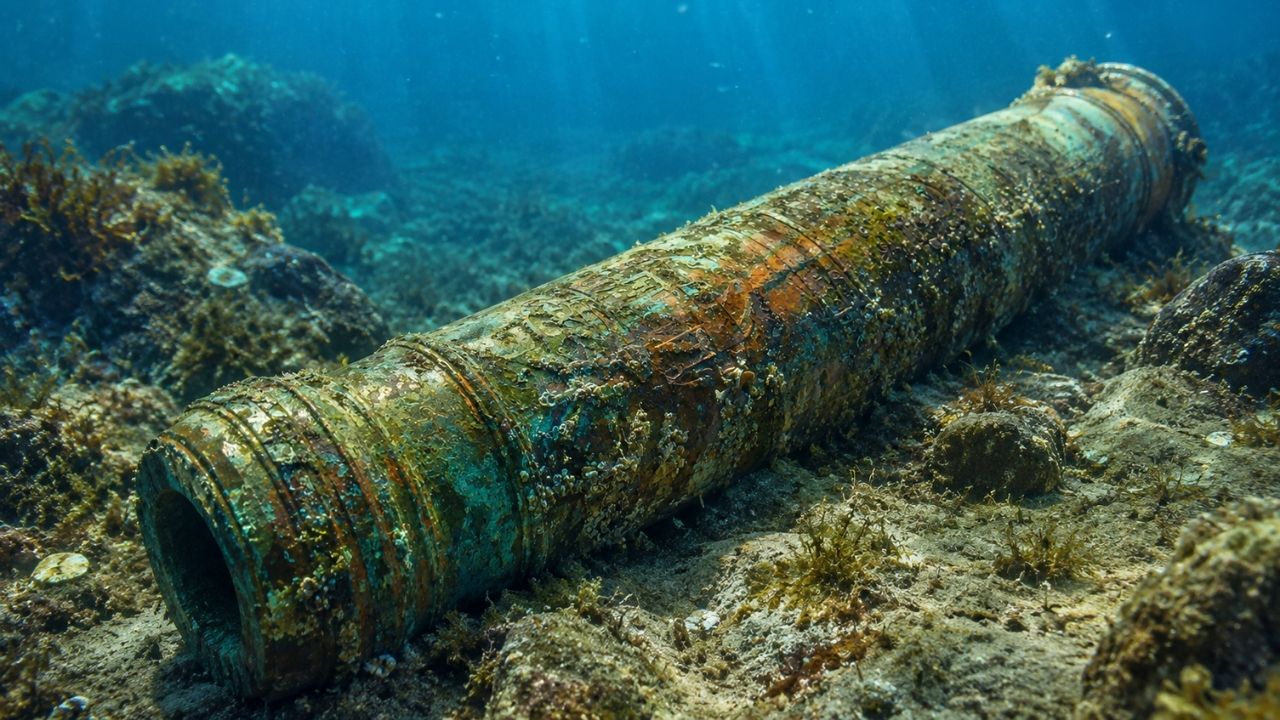
The bronze cannon was exposed for centuries to saltwater, pressure, and corrosion processes. Its retrieval required control of the robotic equipment’s movements and planning to ensure the object did not suffer impacts or abrupt changes during the transition from the marine environment to the surface.
After arriving at the ARC Caribe ship, the cannon remained wet and was placed in a refrigerated container at 4 °C. This measure prevented accelerated drying and reduced risks of deterioration, while coins and porcelains were kept in seawater to temporarily preserve the chemical balance acquired at the ocean floor.
Conservation may last longer than the retrieval itself
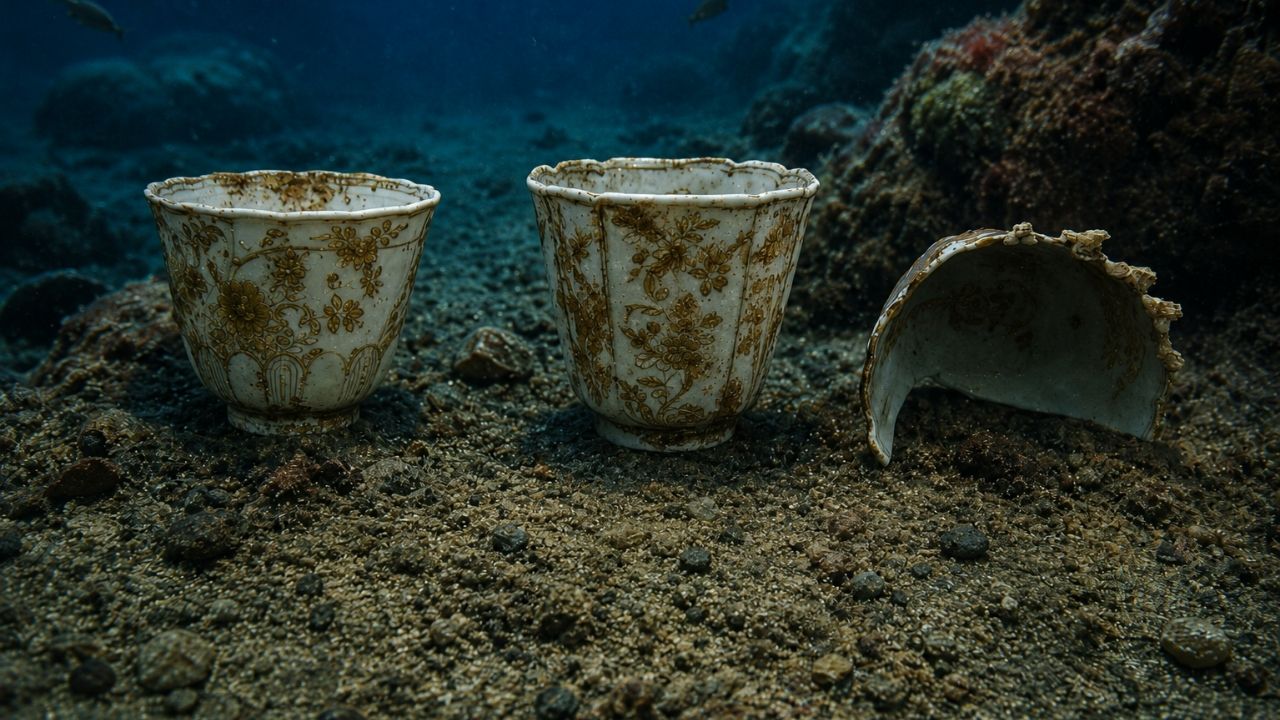
Objects submerged for centuries accumulate salts and chlorides in their structure. When they are removed from the water without proper treatment, these compounds can cause cracks, deformations, and rapid corrosion, destroying precisely the details that researchers intend to examine.
The cannon, porcelains, and associated materials were sent to the laboratory of the Caribbean Oceanographic and Hydrographic Research Center in Cartagena. The three coins were sent to the National Museum of Colombia, where they will remain under controlled environmental conditions during studies and stabilization treatments.
Galleon San José disappeared during battle in 1708
The galleon San José was a Spanish three-masted ship with dozens of cannons, used to connect the American territories and Europe. In 1708, it was carrying gold, silver, emeralds, and other goods when it encountered a British squadron during the War of the Spanish Succession.
The ship sank near the coast of Cartagena and remained missing until November 2015. Its identification was confirmed by images of the bronze cannons, which featured characteristic engravings, including dolphin figures recorded by a REMUS 6000 autonomous vehicle.
Coins help reconstruct colonial economic routes
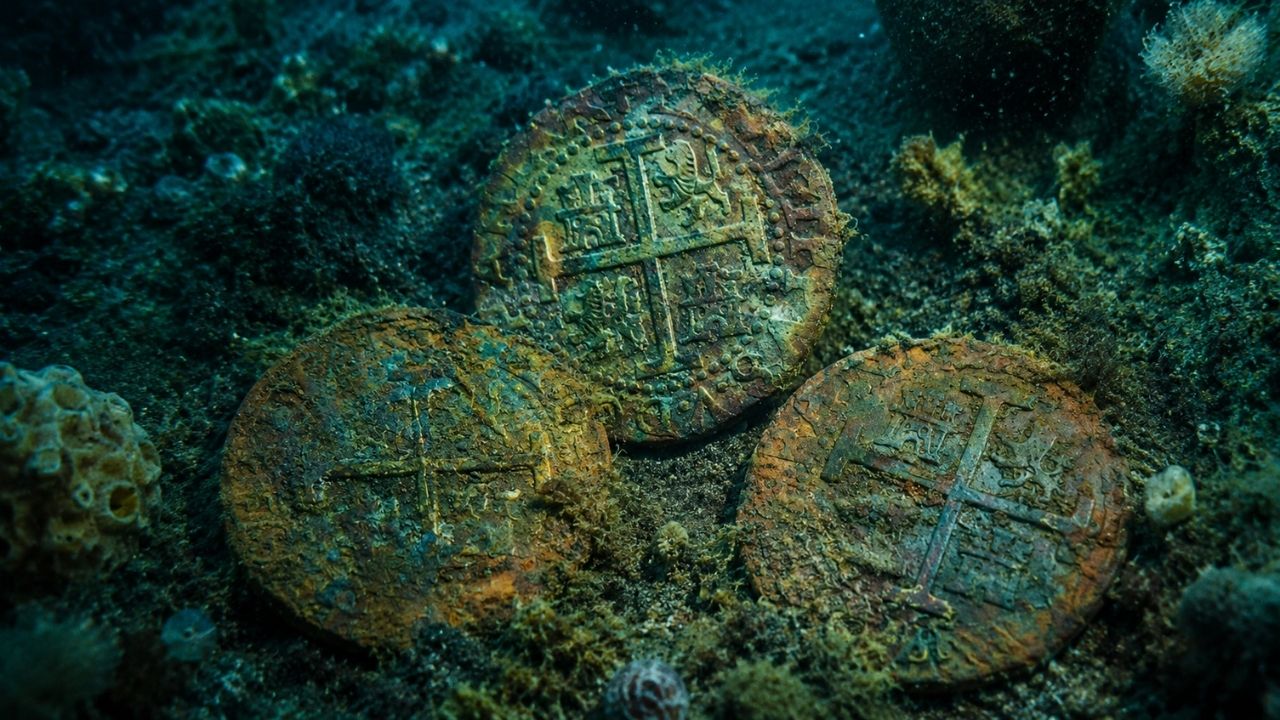
The macuquinas have an irregular shape because they were manually produced from cut and struck metal. Despite their uneven appearance, inscriptions, crosses, heraldic symbols, and mint marks allow investigation of where and when they were manufactured.
Researchers used high-resolution photographs and photogrammetry to create three-dimensional reconstructions of coins still at the archaeological site. The study identified specimens related to the Lima mint and showed how the cargo of the galleon San José was connected to the trade networks linking South America to the Spanish Empire.
Billion-dollar value alone does not explain the importance of the shipwreck
Estimates released over the years place the potential value of the gold, silver, emeralds, and coins that could be on the ship in the billions of dollars. This economic dimension helped transform the San José into the so-called “Holy Grail of shipwrecks”, an expression used to highlight its wealth and rarity.
However, the quantity and exact state of the cargo have not yet been confirmed by a full retrieval. The archaeological value does not depend solely on precious metals, as porcelains, tools, cannons, woods, and sediments can reveal consumption habits, naval technologies, trade circuits, and colonial relations from the early 18th century.
Dispute involves heritage, sovereignty, and economic interests
Colombia considers the San José galleon part of its submerged cultural heritage and argues that the site should remain protected for research. Spain has already expressed interest as it is a vessel from its former fleet, while Bolivian indigenous groups relate part of the wealth to the mines and exploited labor during the colonial period.
The American company Sea Search Armada also maintains an arbitration against Colombia, claiming economic rights linked to a previous identification of the shipwreck. The procedure appears as active in the registry of the Permanent Court of Arbitration, which provides administrative support to the case initiated in 2022.
Artifacts open a new stage without solving the mystery
The retrieval of the first pieces allows for comparing observations made by cameras with direct analyses in the laboratory. Composition of the metals, origin of the porcelains, manufacturing marks, and alterations caused by the environment may help clarify the trajectory of the cargo and even hypotheses about the ship’s destruction.
Even so, much of the San José galleon remains at the bottom of the Caribbean, surrounded by technical difficulties and competing claims. In your opinion, should such objects remain protected in the ocean, be displayed in museums, or be shared among the countries and peoples connected to their history? Leave your stance in the comments.


