Portuguese
  Spanish


Cultivation on sandbanks in Bangladesh takes advantage of areas exposed after floods, concentrates nutrients in cavities, increases food production, and allows pumpkins to be stored for several months, even when the river covers the land again.
Hundreds of pumpkins occupy a landscape that, a few months earlier, was under a river. When the floods end in Bangladesh, farmers take advantage of the sandbanks left by the receding water to set up temporary pumpkin plantations.
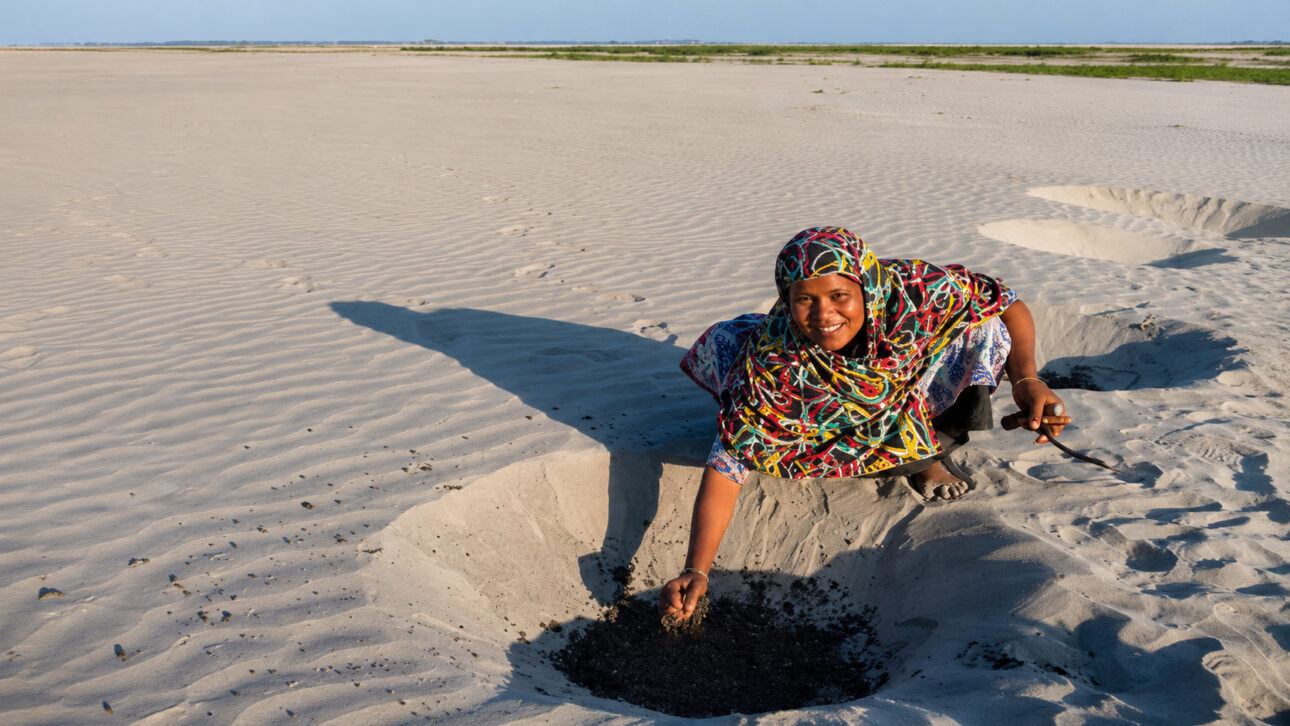
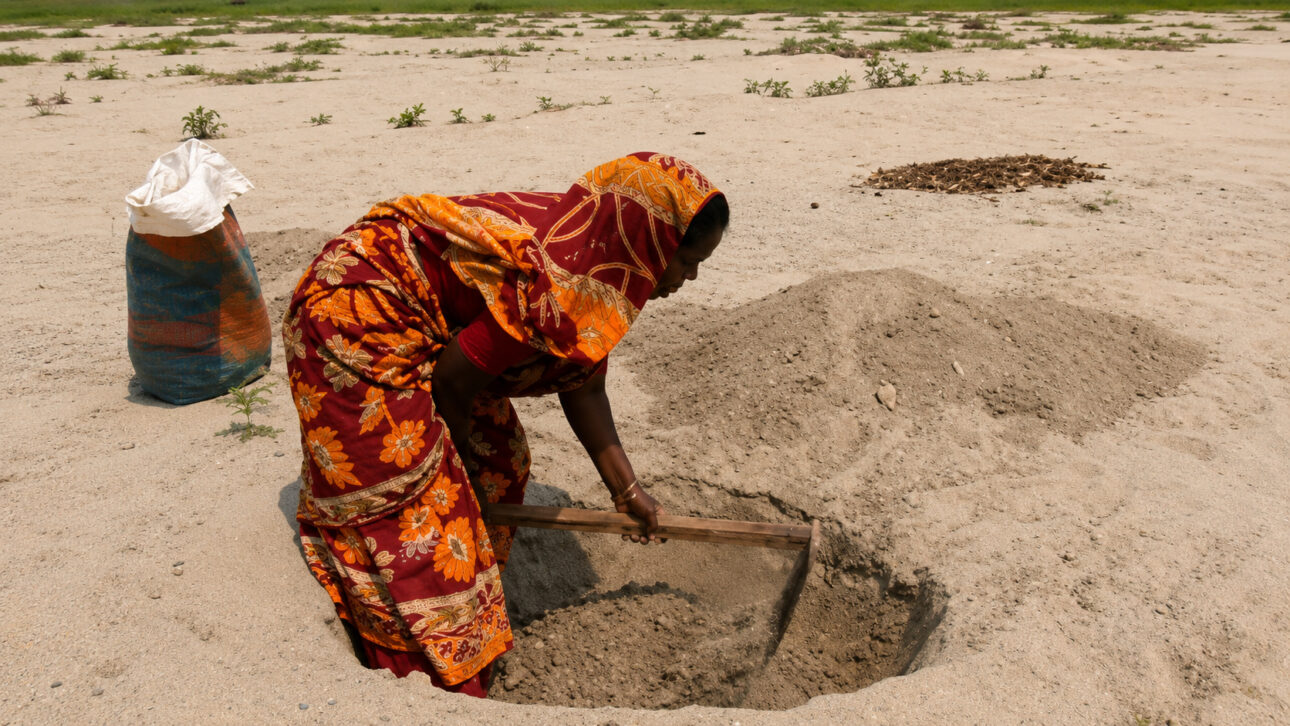
There is no need to spread fertile soil over the entire area. Producers open cavities in the sand, reach a moister layer, and place manure, organic compost, and seeds in each hole.
The information was released by FAO, the United Nations agency for food and agriculture. The report published on June 27, 2019 shows that the technique started in 2005 reached more than 20,000 families.
-
14.6-liter hydrogen engine surprises by delivering 600 horsepower, using more than 90% of the diesel engine structure, and still functioning with less pure fuel, reducing changes in manufacturing and installation in heavy vehicles.
-
14.6-liter hydrogen engine surprises by delivering 600 horsepower, using more than 90% of the diesel engine structure, and still functioning with less pure fuel, reducing changes in manufacturing and installation in heavy vehicles.
-
14.6-liter hydrogen engine surprises by delivering 600 horsepower, using more than 90% of the diesel engine structure, and still functioning with less pure fuel, reducing changes in manufacturing and installation in heavy vehicles.
-
An old ferry rusted for more than 10 years in New York, almost sank after the engine room was flooded, and now volunteers are rushing to clean the hull, remove wires, life jackets, and loose paint before sinking it in the Atlantic to become an artificial reef full of marine life.
Lands appear when the floods end
The movement of rivers continuously modifies the banks and the riverbed itself. After the flood, large stretches of sand are exposed and form areas available for only a few months.
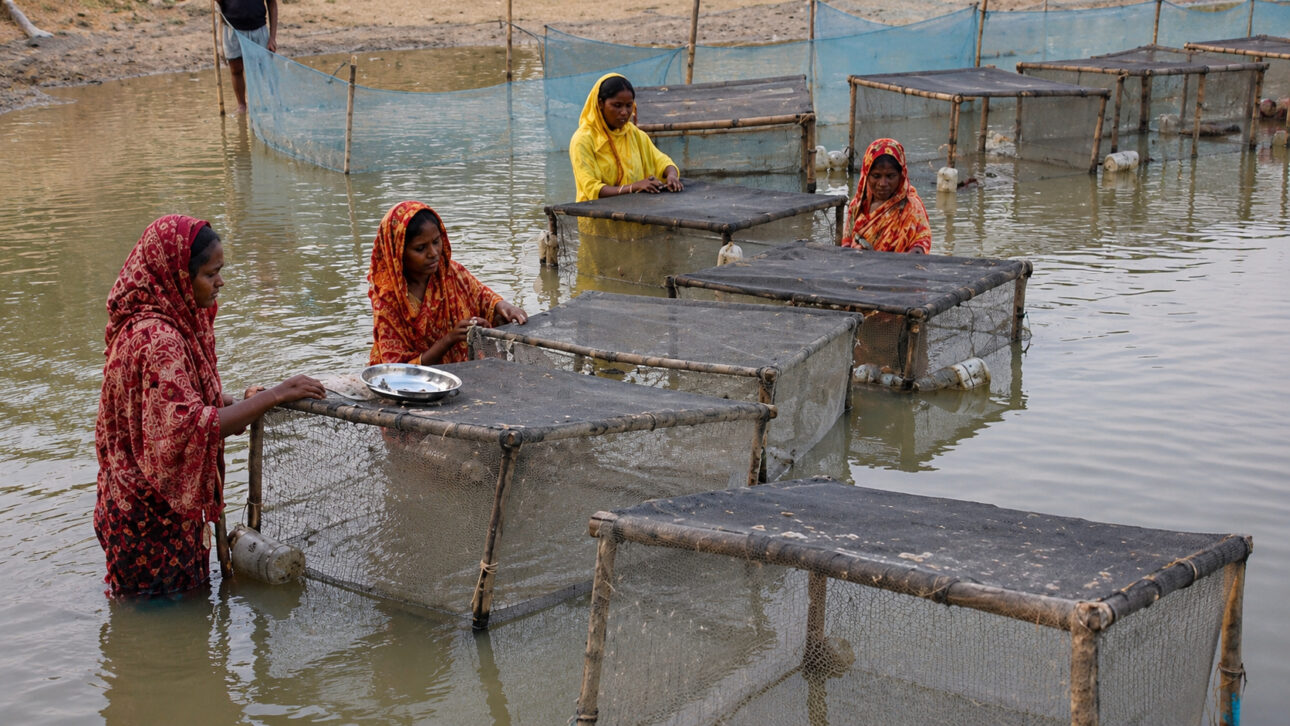
These banks have little organic matter and do not function as a common field. The sand alone offers few nutrients for the plants, which would prevent cultivation without specific preparation.
The solution consists of concentrating the fertile materials where each seed will be planted. In this way, farmers do not need to cover entire hectares with soil, manure, or compost.
The planting takes advantage of a resource that already exists beneath the surface: the moisture present in the deeper layers of the sand. This combination creates conditions for the roots to grow even in an apparently unproductive environment.
Holes with manure and compost replace the correction of the entire land
The process begins with the opening of the cavities. Each hole needs to reach a wetter part of the sandbank and receive the necessary materials to nourish the plant.
Manure and compost provide nutrients to the seeds. Thus, each cavity functions as a small fertile area surrounded by sand, without the need to modify the entire terrain.
After the seeds germinate, the pumpkin vines spread across the surface. The plant manages to occupy a larger area than the space initially prepared.
The technique transforms concentrated points of organic matter into a plantation distributed across the bank. With this, temporary areas left by the rivers start to produce food before the next flood.
More than 100 thousand tons of pumpkins were harvested
The project began in 2005 and gradually expanded the agricultural use of the sandbanks. More than 20 thousand families participated in the initiative recorded by FAO.
The FAO, United Nations agency for food and agriculture, accounted for more than 4 thousand hectares cultivated and a production exceeding 100 thousand tons of pumpkins since the start of the work.
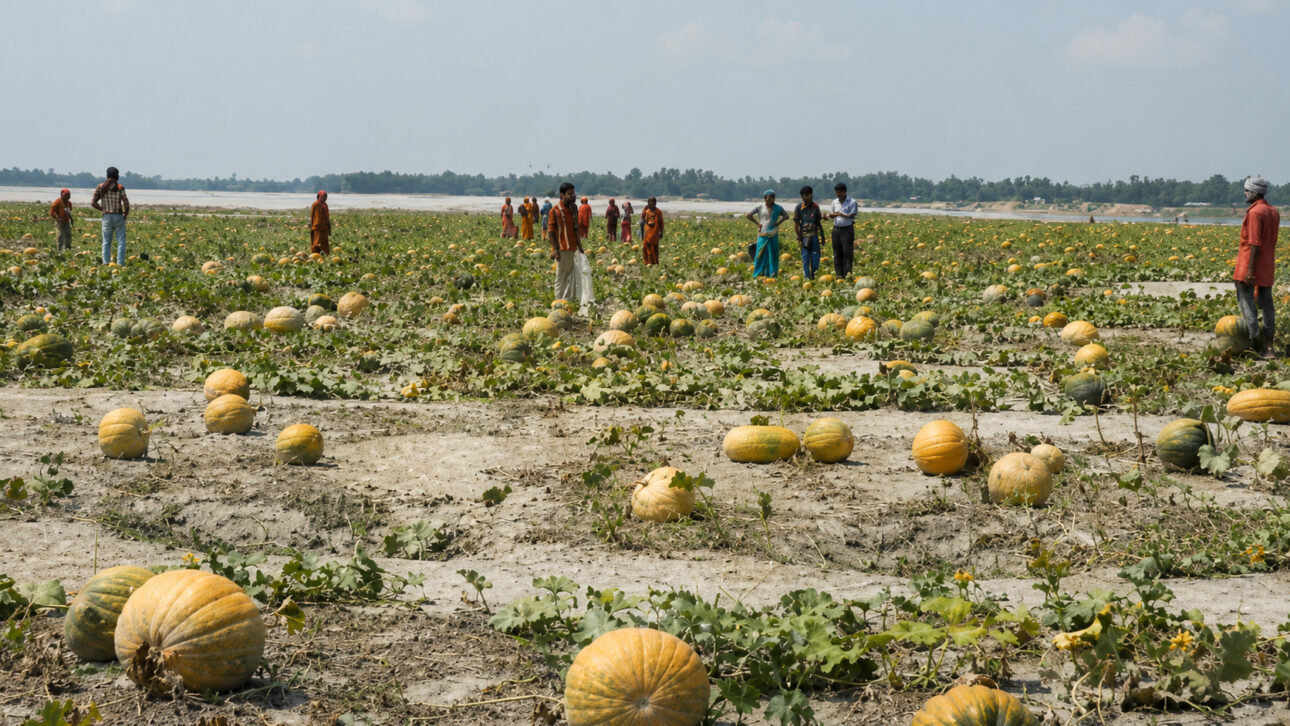
The numbers show that the method surpassed the local experiment phase. The cultivation began to occupy a significant area and provide a substantial amount of food from lands that remained unused.
Practical Action, a development organization involved in the project, also connected producers to markets. The commercialization allowed part of the harvest to enter sales networks, in addition to meeting the consumption of participating families.
Pumpkins remain available after the river returns
The choice of pumpkin has an important advantage. Once harvested, the fruit can have storage for many months, as long as it remains in suitable conditions.
This duration allows for better organization of sales and consumption. Farmers do not need to sell all their produce immediately after removing the fruits from the sandbank.
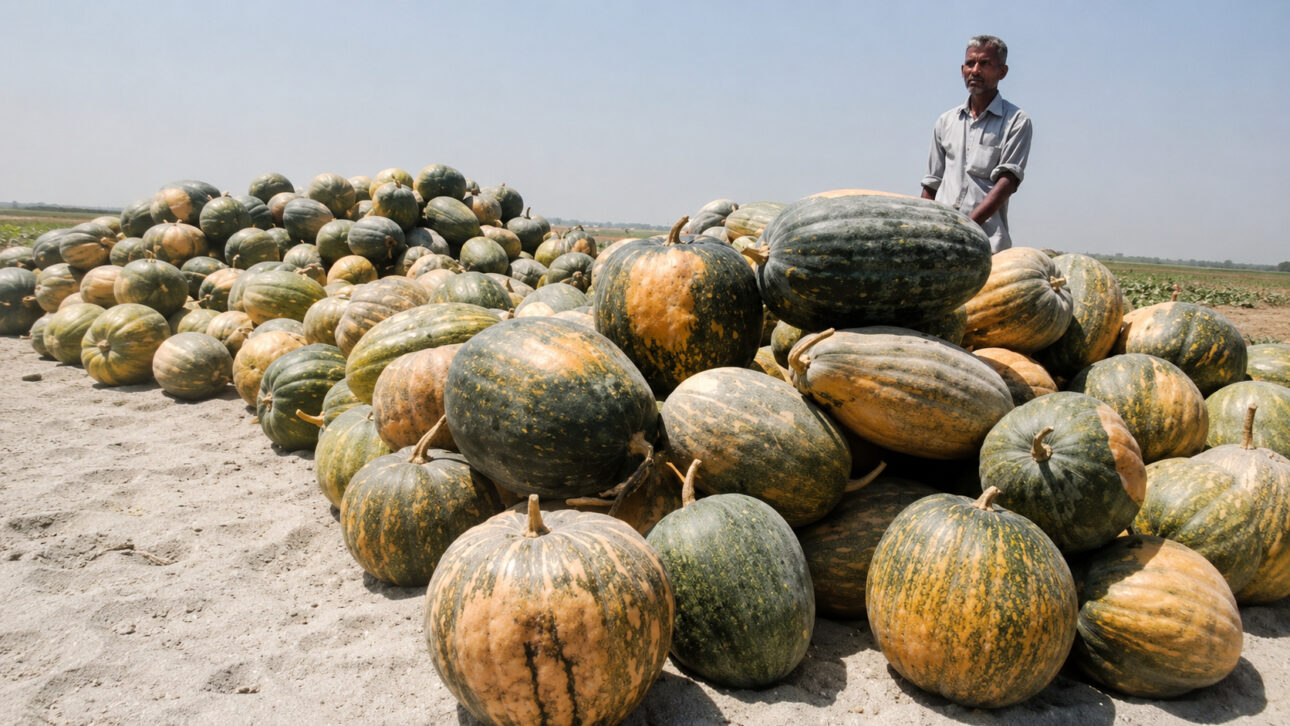
When the rains return and the water covers the land again, some of the pumpkins may still be stored. In this way, the harvest remains useful even after the plantation disappears.
Storage also reduces the dependency on an immediate sale. Producers gain more time to decide when to use or sell the fruits obtained during the dry season.
Cultivation should not be confused with floating gardens
Bangladesh is also known for floating gardens, but they use a different technique. In this system, vegetables grow on structures built to remain on the water.
The cultivation of pumpkins occurs directly on sandbanks exposed when the rivers recede. The plants do not float and depend on the period when the land remains uncovered.
This difference helps to understand how the activity works. The sandbank serves as a temporary agricultural area, while the cavities provide the nutrients and moisture necessary for growth.
When the river level rises again, the cultivated space may disappear. Therefore, production needs to follow the natural cycle of floods and water receding.
Success of production increases dispute over ownership
Agricultural utilization also created a conflict. When sandbanks were considered unproductive, there was little economic interest in these areas.
The pumpkin harvest changed this situation. People claiming rights over the land began to dispute access with landless families interested in producing.
A study by Practical Action Bangladesh, a development organization involved in the project, published on the Bangladesh government’s social protection portal, recorded negotiations between producers, authorities, and people claiming rights over the areas.
These agreements can define who plants and how the production will be divided. Therefore, access to the land remains uncertain, even when the bank stays underwater for part of the year.
Next flood could erase the entire cultivated area
The sandbanks change position, size, and shape after each flood. A land used in one season may reappear differently or be completely covered in the next cycle.
This change prevents the creation of a permanent crop. Farmers need to prepare the cavities, cultivate, and harvest within the period when the sand remains exposed.
Even so, the technique initiated in 2005 demonstrated an agricultural application capable of utilizing more than 4 thousand hectares and producing over 100 thousand tons of pumpkins.
The result combines food production, use of organic matter, and temporary utilization of riverbeds. The biggest challenge is ensuring access to the sandbanks before the next flood covers the entire plantation again.
Could a technique capable of producing on lands that disappear every year be adapted to Brazilian rivers? Share your opinion and share this publication.