





 Portuguese
  English
  Spanish
  8 min of reading
  0 comments


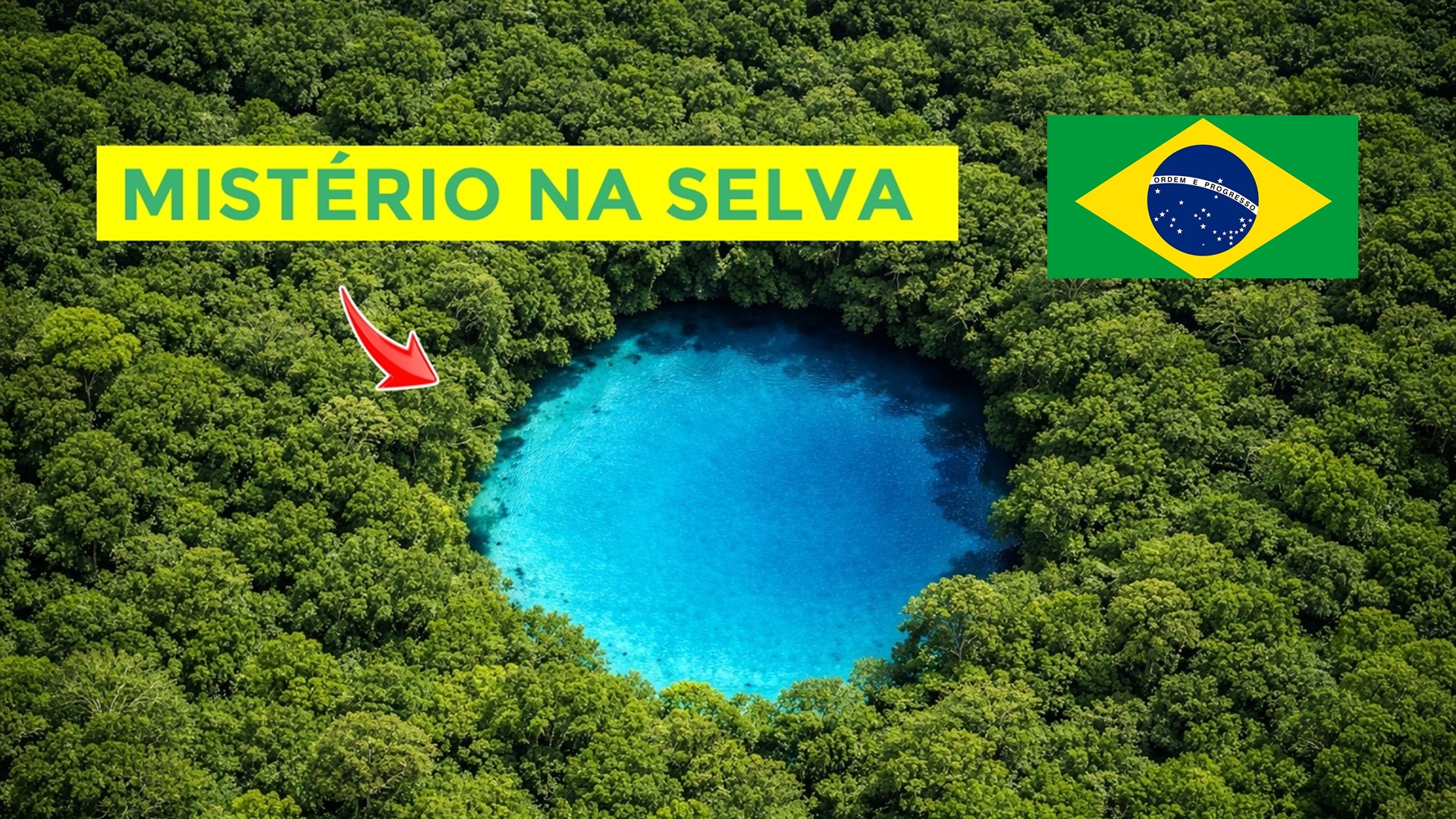
After Identifying an Unexplained Geological Formation Using Orbital Images, Adventurer Ed Stafford Challenged the Dangers of Gold Mining and the Hostility of the Jungle to Document in Person a Lake of Green Water That Might Be the Vestige of a Forgotten Cosmic Impact in the Heart of Brazil.
The Brazilian Amazon, vast and impenetrable, continues to guard secrets that even modern satellites cannot fully decipher from a distance. Ed Stafford, a British explorer globally recognized for his extreme adventures – including the first walk along the entire length of the Amazon River – returned to his “favorite place” in the world with a new mission.
This time, the goal was not just to survive, but to investigate a geographical anomaly identified only through satellite images: a mysterious, perfectly circular and isolated lake hidden deep within the rainforest.
The expedition, documented as part of the series Ed Stafford: Into the Unknown, started from an intriguing scientific premise.
-
Tourists on Everest were poisoned by guides who mixed substances in food to provoke false symptoms of altitude sickness while helicopter operators and hospitals charged inflated rescue fees to insurance companies.
-
Few people know this, but Neil Armstrong, one of the most famous NASA astronauts in history, survived the Korean War after jumping from the plane during his seventh combat mission aboard the USS Essex aircraft carrier of the United States.
-
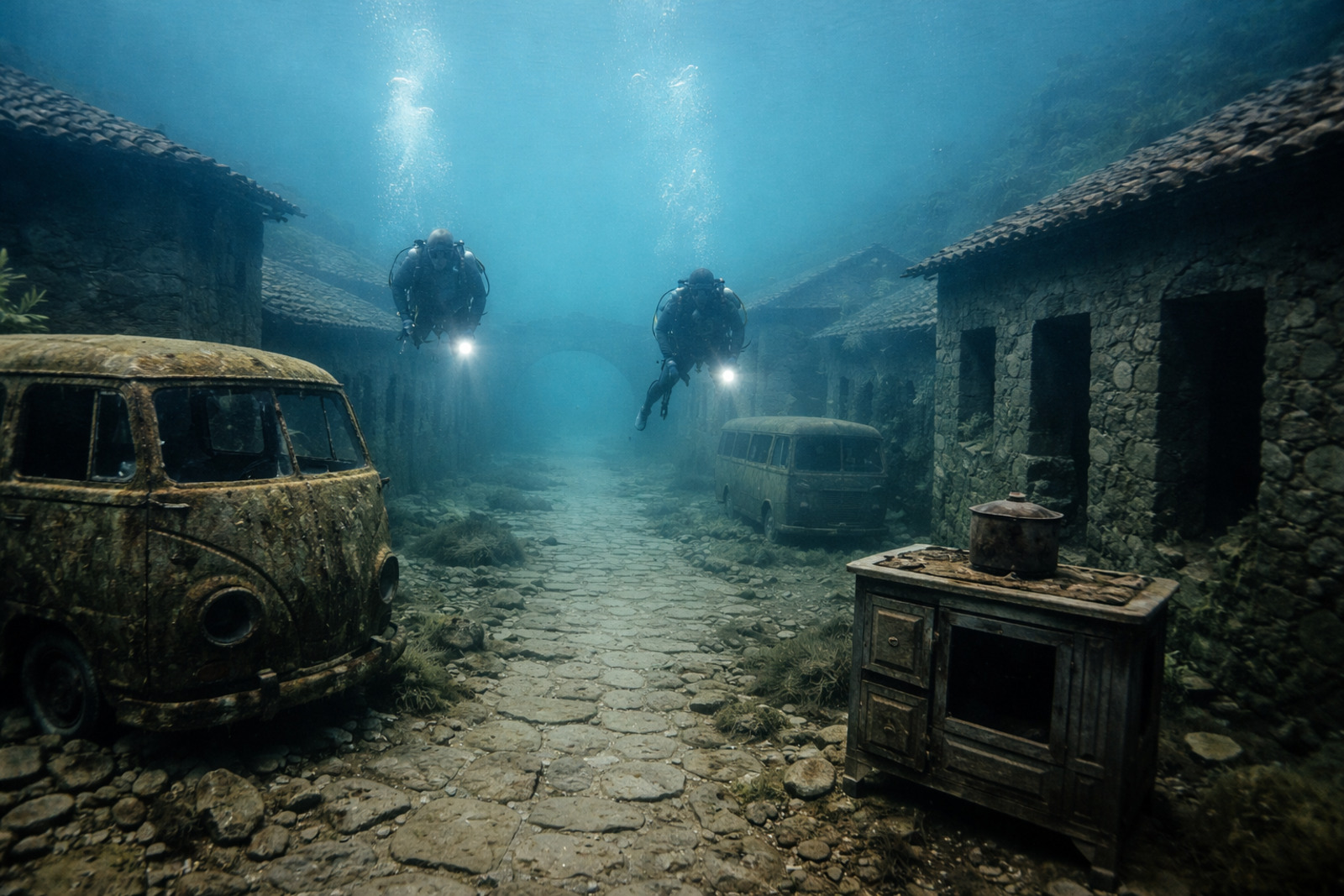
Diving with a camera in Lake Furnas reveals a submerged city with an entire street, almost intact houses, a preserved bridge, a wood stove, a Kombi, and even a bus at the bottom of the largest lake in the Southeast.
-
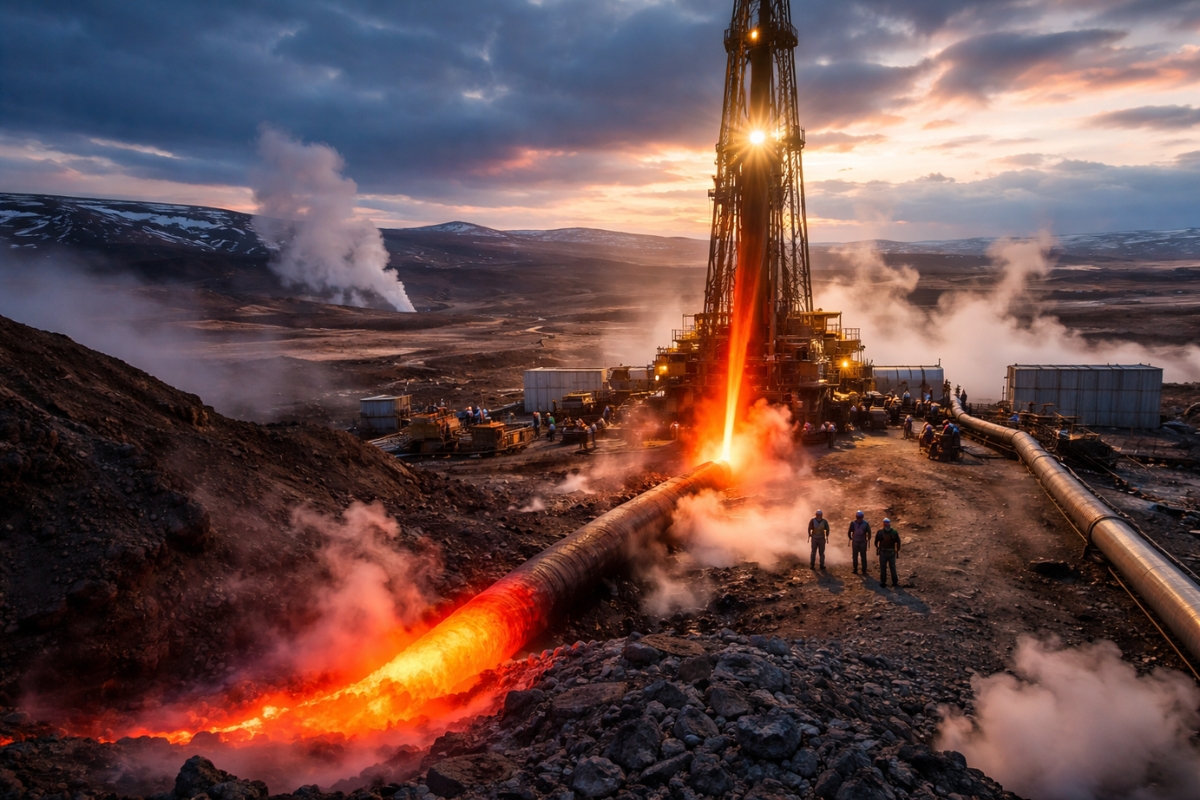
Iceland accidentally drilled into a magma pocket at 2,100 meters and revealed that the extreme heat beneath the crust could pave the way for a new source of continuous energy.

Stafford highlights that there are currently around 1,200 operational satellites in orbit, capturing thousands of images of the Earth’s surface daily. These “space sentinels” often reveal strange and inexplicable shapes that require on-site verification.
Stafford’s initial target was a formation nicknamed “Blue Lake”, located in the western region of Brazil, more than 120 kilometers from the nearest road and miles from any visible water source.
The central enigma lay in the very existence of the pond: a perfect disc shape amid virgin forest, with a coloration that violently contrasted with the surrounding green.
For the explorer, the mission was clear: to reach a place where no digital data could reach and discover what really existed in that blind spot on the map.
Logistics in Alta Floresta and the Gold Route
The journey began in Alta Floresta, in Mato Grosso, described by Stafford as the closest logistical airport point to the target. The trip from London involved three flights and covered about 10,000 kilometers until landing in the humid heat of the heart of Brazil.
The “Blue Lake” would be 250 kilometers to the north, requiring complex navigation along one of the fronts of the Amazon River that cuts through the region.
Immediately after arriving, the expedition encountered the local economic reality, which would dictate the pace and dangers of the journey. While looking for a currency exchange, Stafford noticed that, in the back of the establishment, gold was being bought and sold.
The explorer, familiar with the Amazonian dynamics, was not surprised. “Gold is everywhere in the Amazon,” he noted. The city, and the available river transport infrastructure, revolved around gold mining.
To access the dense forest, Stafford needed to negotiate with local agents of this economy. The strategy was to ascend the river as far as possible before starting the march through the jungle. He sought out a man known only as “General,” a figure linked to a gold extraction cooperative, hoping to secure transport.
During the meeting, while explaining his goal of seeing the “Blue Lake,” he received a discouraging response: the General had never been there, only heard rumors, and warned that the area was on the border of territory controlled by indigenous tribes.
Diving Into the Dark: The Reality of Gold Mining
While the expedition awaited the necessary authorizations to cross indigenous lands and reach the original target, Stafford experienced firsthand the brutality of work in gold mining.
The General’s barge, one of many dredgers that churn the riverbeds in search of ore, became a tense waiting point. Stafford describes the environmental destruction, stating that the rainforest has been consumed at an alarming rate of 4% per year, driven in part by this activity.
Seeking to understand the lives of these men, the explorer volunteered to work a shift as a diver. The experience was described as terrifying. The miners descend to 15 meters deep in black waters, with no visibility, using lead belts and breathing through hoses connected to motors on the surface. Stafford reports hearing gruesome stories: in case of problems with the air hose, there are accounts that, at times, the line is cut and “they don’t even look for the body.”
At the bottom of the river, guided only by touch and a “blue cable” that served as a lifeline, Stafford positioned the dredging tube on the riverbed. Upon emerging, he had to ascend slowly to avoid decompression sickness from the buildup of nitrogen. The experience reinforced for the Briton the “great dangers” that permeate the region, far beyond the natural threats of the jungle.
The Indigenous Impasse and the Change of Course
The expedition soon encountered an insurmountable obstacle. The “Blue Lake” was located near a village, and the tension in the region was palpable. Bráulio, a local biologist who accompanied the group, explained that the invasion of lands by miners and farmers had heightened confrontations. Entering indigenous territory without explicit permission involved risks of real aggression. “The tensions are very real,” Bráulio warned.
While awaiting a response via satellite phone, the group visited a state-funded dam nearby. The project, intended to generate power for a growing population, would require flooding vast areas, including ancestral lands.
Stafford described the shocking contrast between the “jungle, jungle, jungle” and the sudden appearance of the massive concrete structure, symbolizing the pressure of development on the forest.
The final verdict on access to the lake came shortly after: permission was denied. “There are three tribes,” the contact informed, and all said “no.” It was not just a legal barrier, but a risk to the physical integrity of the team. For Stafford, who desperately wanted to reach the original target, the news was a devastating blow, forcing the cancellation of the primary plan.
However, giving up was not an option. Bráulio presented an intriguing alternative: satellite images showed a “brother lake.” It was another circular point, with identical geological characteristics, located 140 kilometers to the southeast.
The big advantage was its location outside demarcated indigenous lands. The disadvantage: it was a place “even harder to reach,” with no nearby rivers to facilitate the approach. Stafford accepted the new challenge, driven by the belief that “everything happens for a reason.”
The Solo Journey: The Forest of Death
The group transported Stafford to the closest point accessible by boat, leaving him on a riverbank where he caught a black piranha for his last meal before isolation. From there on, the journey would be solo, guided by compass and GPS coordinates.
The plan involved a 12-kilometer walk through dense foliage. Stafford carried the heaviest backpack of his life, the most critical item being a 5-liter jug of water. The explorer knew that the amount was insufficient for the expected duration of the march, but the weight prevented him from carrying more. He prayed to find water along the way, but what he initially encountered was a hostile environment he dubbed the “forest of death.”
The vegetation was not the classic humid rainforest, but a tangle of dry bushes and vines that required constant use of the machete. Progress was excruciating: in two hours of maximum effort, Stafford advanced just 727 meters. “This jungle is very slow,” he concluded, as the concern about dehydration grew.
The terrain presented unexpected vertical challenges. Stafford encountered cliffs 10 meters high, impossible to climb with his load. To circumvent, he was forced to follow animal trails — possibly from jaguars or wild boars — that offered the path of least resistance but deviated from the ideal route. Physical and mental exhaustion began to take its toll. After just 2 kilometers and consuming half of his water supply, he described the situation as “a true nightmare.”
The situation reached a critical point the next morning when, while trying to dry his gear, Stafford accidentally burned his only hat in the fire. Without protection from the equatorial sun and with less than 3 liters of water remaining, the risk of sunstroke became a lethal threat. “Today is not my day to die,” he repeated to himself, forcing himself to continue despite the branches now threatening his unprotected eyes.
The Transition: The Forest of Life
The turning point in the expedition occurred when the landscape began to change. Still battling thirst, Stafford spotted taller trees on the horizon. Upon deciding to camp near them, he found a small hole in the ground that was seeping water. “Water beneath my feet,” he celebrated. That improvised well allowed him to refill his bottles and renew his strength.
From that point on, the environment transformed into what he called the “forest of life.” The scrubby bushland gave way to the grand rainforest, with tall canopies blocking the sun and clearing the understory, allowing for walking almost without the use of the machete. Animal life re-emerged; troops of spider monkeys crossed the trees above him, displaying territorial behavior and throwing branches and feces as a warning. Stafford felt invigorated by the raw beauty and the sensation of possibly being the first man to tread that specific patch of woods.
The Discovery: The Green Lake and the Meteor Hypothesis
The final stage was one of the most exhausting of Stafford’s career, but the reward came in the form of a gap of light in the canopy. As he approached, the terrain reading confirmed: the ground sloped abruptly.
Before him was the “brother lake.” The formation was impressive and anomalous. The surface of the water was about 10 meters below the forest edge, as if the earth had been perforated. The color of the water was a milky and opaque green, unlike any other body of water he had ever seen in the Amazon. “It’s not the color of any lake I’ve ever seen,” he stated.
Sitting on the edge of that flooded crater, which he estimated to be about a kilometer in diameter, Stafford observed movements in the water, suggesting the presence of large animals or predators, preserved by the total isolation of the area.
To document the discovery and formulate a hypothesis about its origin, Stafford used a drone. The aerial images revealed the perfect geometry of the lake, reinforcing the theory that motivated the search. Stafford concluded that the most plausible explanation for such a perfectly circular formation, with a constant depth of 15 meters and elevated margins, would be the impact of a meteor.
According to his analysis, the event could have occurred “almost a century ago” — or perhaps a meteor that exploded in the air just before impact — enough time for the forest to heal the edges and integrate the crater into the ecosystem, but recent enough to keep the geological form intact. “People know very little,” Stafford reflected at the end of the mission, holding the collected samples and the images of his “treasure.” The expedition proved that, even in the era of satellite surveillance, the Amazon requires a human presence to reveal its deepest and most fascinating truths.






-

-

-

-

-

18 pessoas reagiram a isso.