





 Portuguese
  English
  Spanish
  4 min of reading
  0 comments


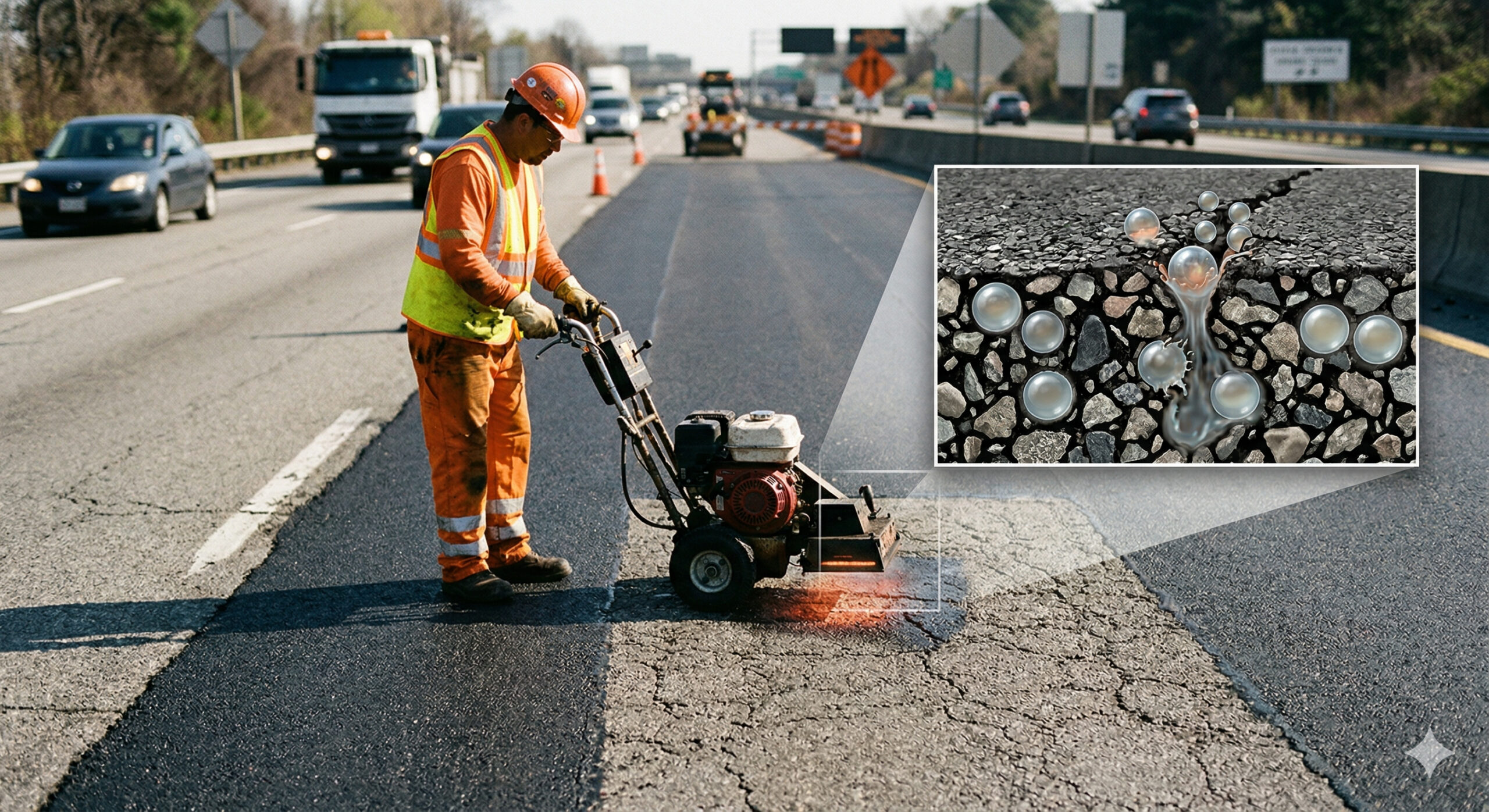
Self-healing asphalt uses microcapsules and heating to repair cracks and can reduce highway maintenance costs.
In 2023 and 2024, researchers from Swansea University, in collaboration with institutions such as King’s College London, advanced the development of a type of asphalt capable of automatically repairing microcracks before they evolve into potholes. According to an official statement from Swansea University, the material is designed to “heal” cracks without human intervention, using microstructures that release regenerative agents when the asphalt begins to degrade
The advancement has also been confirmed by international media coverage. According to a report from The Guardian, the material was able to repair microcracks in laboratory tests in less than an hour, preventing cracks from evolving into potholes and potentially increasing the lifespan of roads by up to 30%
The most relevant fact is that this type of asphalt incorporates microscopic capsules containing recycled oils that are released when cracks appear, allowing the material to “regenerate” itself. This mechanism reduces the need for maintenance and represents a structural change in a sector that traditionally relies on constant and high-cost repairs.
-
Scientists from USP issue a warning about the air in the countryside after a study indicates that breathing outside of São Paulo may conceal silent risks, with evidence that worries experts about health impacts.

-
The change in weather arrives tomorrow: heavy rains and storms return to the Central-South after a hot week, with a cold front along the coast bringing instability between Santa Catarina, Paraná, and the Southeast, affecting capitals strongly until Thursday.

-
The rapporteur of the critical minerals project said today that Brazil will not create a state-owned mining company, but Lula has already discussed the creation of Terrabras with ministers last Friday, and the United States has already invested 565 million dollars in a Brazilian mining company without waiting for a response from the government.

-
Roads made with recycled plastic, crushed tires, and construction waste are already being applied in several countries, reducing tons of waste in landfills and increasing the durability of the pavement by replacing traditional materials.
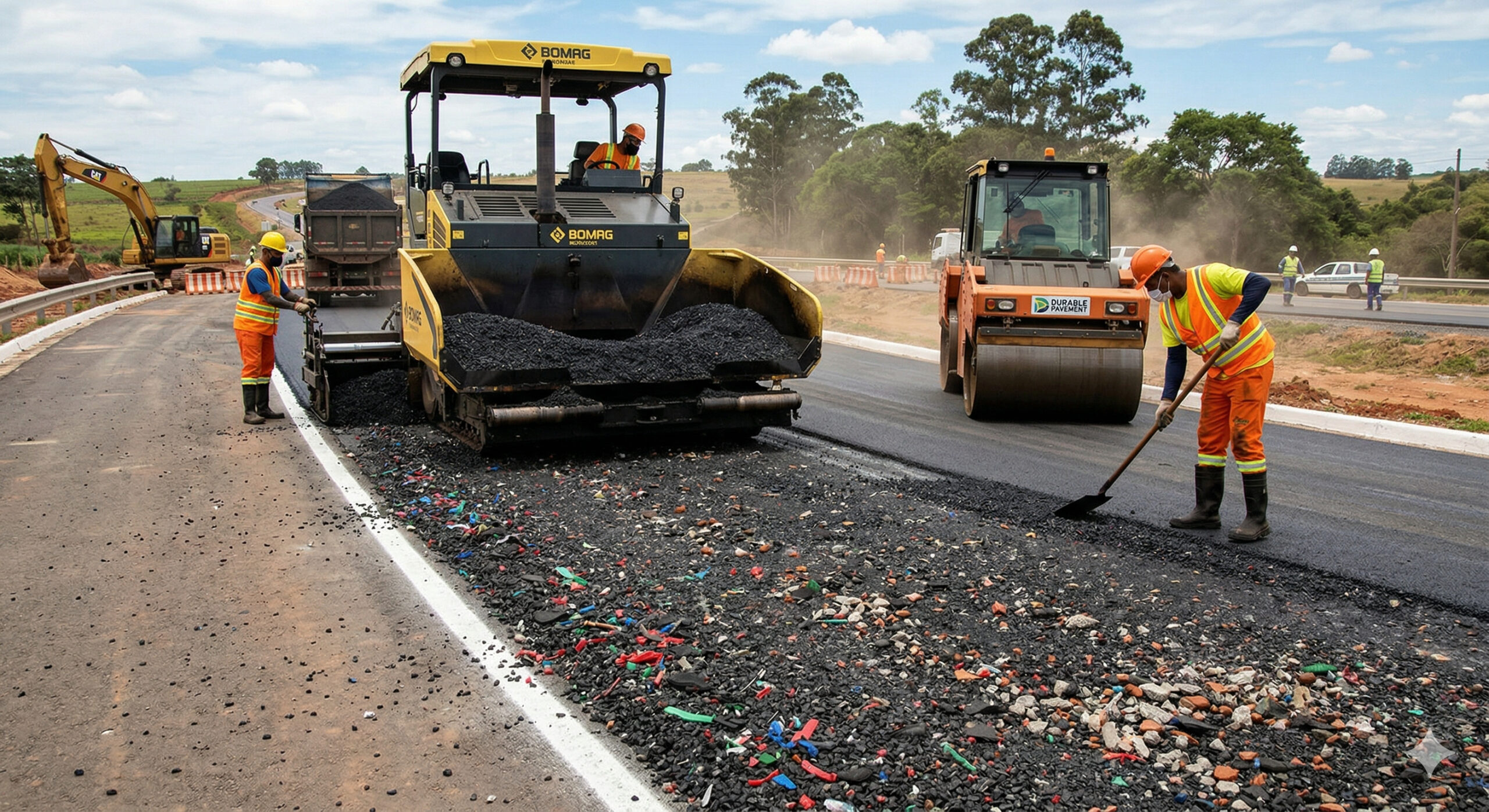

How cracks that lead to road degradation occur
The wear of asphalt begins with microcracks invisible to the naked eye. These small flaws arise due to factors such as temperature variations, heavy traffic, and aging of the material.
Over time, these cracks allow water to enter, weakening the internal structure of the pavement. The process intensifies with cycles of heating and cooling, leading to the formation of potholes and structural failures.
This degradation cycle is responsible for a large part of the road maintenance costs worldwide.
Self-healing technology acts directly on microcracks
The concept of self-healing asphalt is based on the ability to restore the integrity of the material before the damage becomes critical. For this, different approaches are being studied.
One of the main approaches involves the addition of microcapsules containing regenerative agents. When a crack forms, these capsules break and release substances that fill the space, restoring the cohesion of the material.


Another approach uses conductive materials that allow controlled heating of the pavement through electromagnetic induction. This heating causes the asphalt binder to flow again, sealing the cracks. These methods act directly at the source of the problem, preventing small damages from evolving into larger failures.
Use of induction heating accelerates the regeneration process
Induction heating is one of the most promising solutions. In this method, metallic particles are incorporated into the asphalt, allowing the material to be heated by electromagnetic fields.
When activated, the system raises the temperature of the binder, making it more fluid and capable of filling cracks. This process can be carried out in a controlled manner, without the need to remove or replace the pavement.
The ability to regenerate the material without direct physical intervention represents a significant advance in road maintenance.
Advanced materials increase pavement durability
In addition to microcapsules and induction heating, research is also exploring the use of modified binders and advanced materials that increase the resistance of asphalt.
These materials are designed to better withstand mechanical stresses and thermal variations, reducing the formation of cracks. The combination of these technologies creates more resilient pavements.
The result is a material capable of resisting wear while also repairing damage when it occurs.
Cost reduction can transform the infrastructure economy
Highway maintenance represents one of the largest costs for governments and concessionaires. Frequent interventions require high financial resources and cause traffic impacts.
With the use of self-healing asphalt, the frequency of these interventions can be reduced. This means fewer construction works, less traffic disruption, and significant savings over time. The cost reduction is not only in maintenance but also in extending the lifespan of the roads.
The decrease in the need for repairs also reduces the consumption of materials and energy. Each avoided intervention represents less greenhouse gas emissions and lower use of natural resources.

Moreover, the increased durability of the pavement reduces the need for new material production, contributing to a more sustainable approach. This technology aligns with global goals for emission reduction and sustainability in infrastructure.
Applications are still under development and testing
Despite the advancements, self-healing asphalt is still in the development and testing phase. Pilot projects are being conducted to evaluate performance under real conditions.
Widespread adoption will depend on factors such as cost, standardization, and technical validation. However, initial results indicate great potential.
The transition from the laboratory to real applications will be a decisive step for the consolidation of this technology.
Road engineering moves toward smart pavements
The development of self-healing materials is part of a larger trend toward the creation of smart pavements. These systems combine advanced materials with monitoring and preventive maintenance technologies.
The integration of these solutions can transform the way roads are built and maintained, making them more efficient and durable. The concept of pavements that adapt and respond to the environment represents the future of road engineering.
Self-healing asphalt represents one of the most promising innovations in the paving field. By acting directly on microcracks, this technology has the potential to reduce costs, increase durability, and improve road performance.
If applied on a large scale, it can transform road maintenance, reducing interventions, saving resources, and contributing to a more efficient and sustainable infrastructure worldwide.









Seja o primeiro a reagir!