





 Portuguese
  English
  Spanish
  4 min of reading
  0 comments


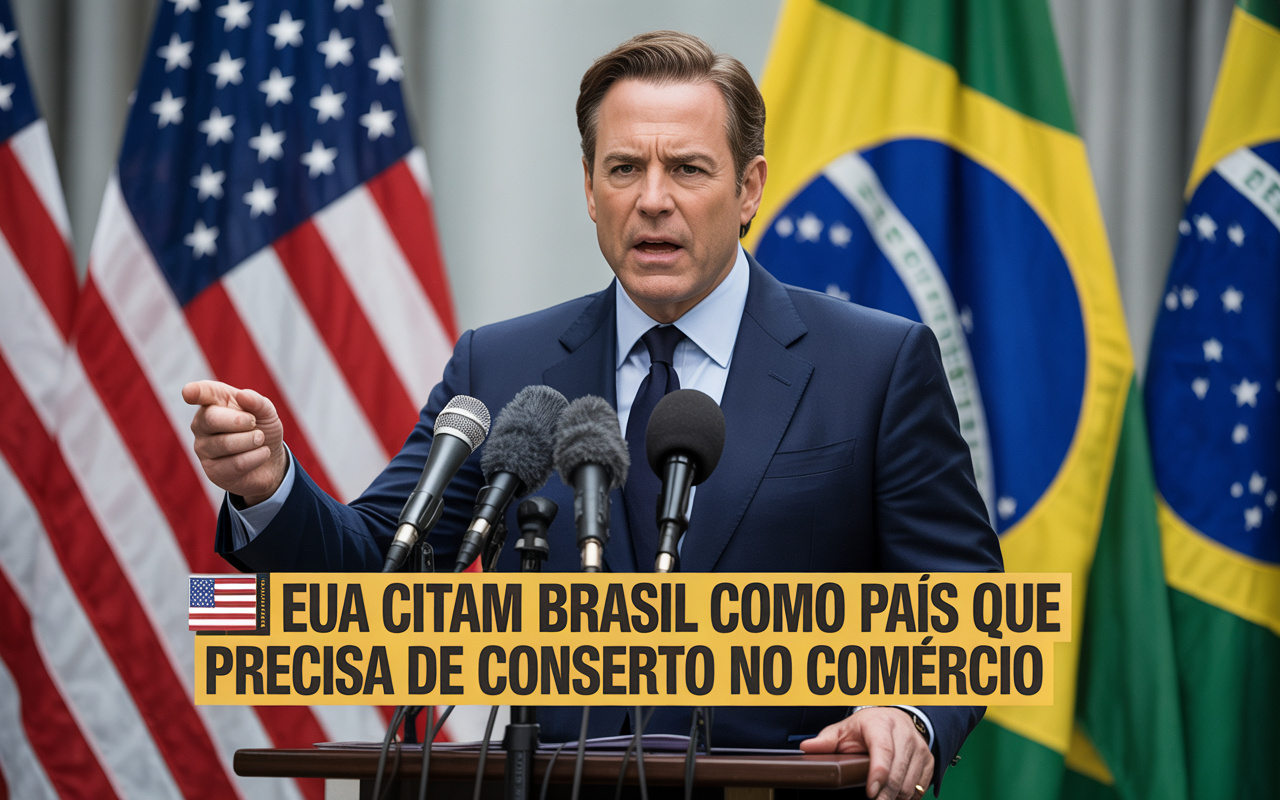
U.S. Secretary Cites Brazil as Country That Needs “Fixing” in Trade Amidst 50% Tariff Imposed by Trump.
In an interview that quickly gained global attention, the U.S. Secretary of Commerce, Howard Lutnick, stated that Brazil is one of the countries that “need fixing” regarding its trade practices. The statement, made to NewsNation on September 27, 2025, also included Switzerland, India, and Taiwan in the list of countries that, according to him, “need to respond appropriately to the U.S., open their markets, and stop taking actions that harm Americans.”
This statement comes amidst heightened trade tensions between the government of Donald Trump and numerous countries, in a move that is being called the “trade war of the century.”
The 50% Tariff Against Brazil
The episode directly involving Brazil began in July 2025, when Trump announced the imposition of tariffs on over 50 countries. For Brazil, the measure was more drastic: an additional 40% surcharge, which, combined with the existing 10%, raised the total to 50%.
-
SUS surpasses Brazil and inspires a revolution in health: agreement with Mexico could bring universal, free, and more accessible care to millions of people outside the country.

-
With a total blockade of software, data, and connected systems, the U.S. has completely closed its doors to Chinese cars and transformed vehicles into geopolitical weapons, creating a new technological battlefield that could reshape the global automotive industry.
-
With US$ 65.8 billion and 34 new ships, the U.S. launches a mega naval plan that prioritizes nuclear submarines, strengthens military logistics, and repositions the strategy for prolonged conflicts in the Pacific.
-
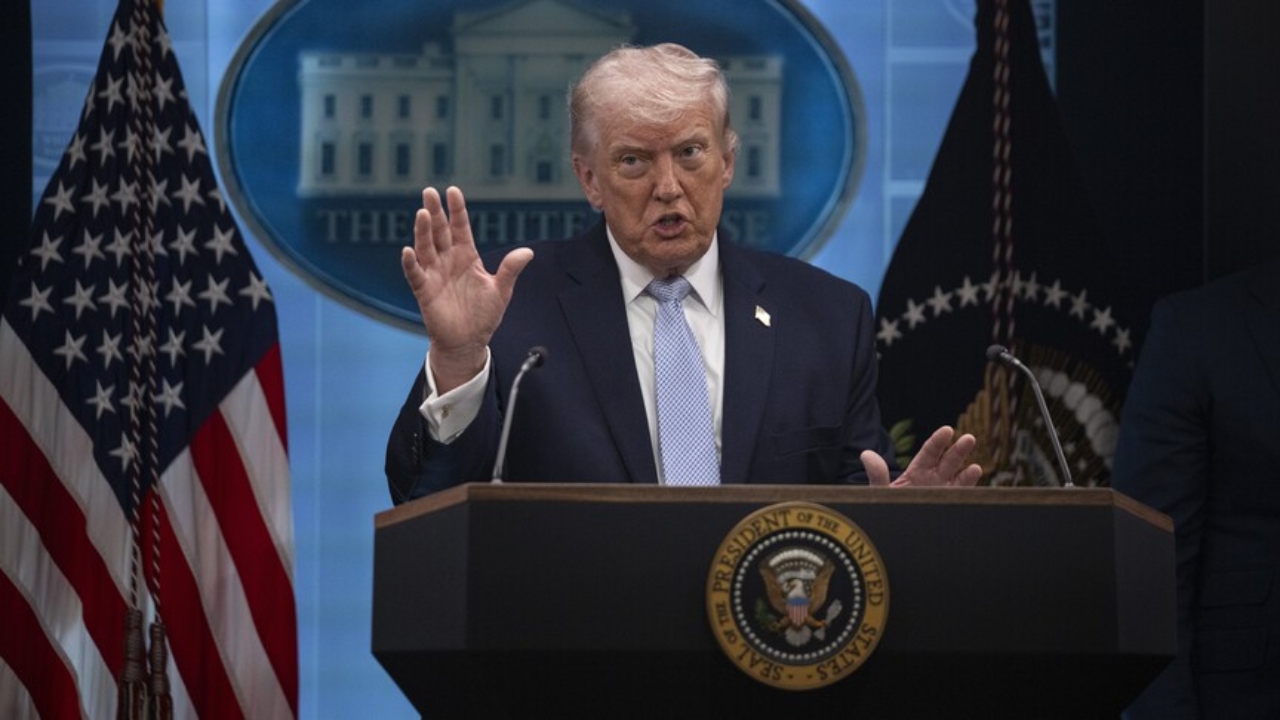
Trump pressures NATO in Europe with threats regarding bases and the use of troops in Spain and Germany to punish allies and change the military balance in the bloc.
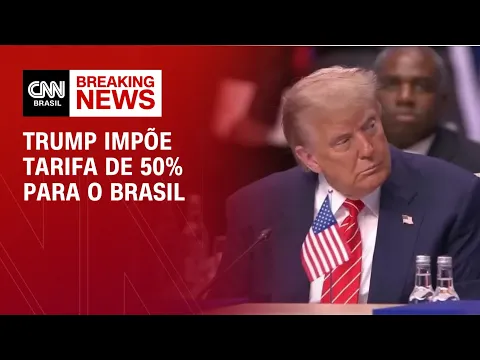

The official justification was to correct a supposed trade deficit. However, official data shows that, since 2009, the trade balance has favored the United States. In the first half of 2025 alone, Americans saw a surplus of US$ 1.674 billion in trade with Brazil.
The contradiction sparked immediate criticism from economists and international trade specialists. Many saw the measure as a political retaliation, especially after Trump’s statements mentioning a “witch hunt” against Jair Bolsonaro in the Supreme Court, which allegedly motivated the decision.
Immediate Impacts on the Brazilian Economy
The tariffs came into effect on August 6, 2025. The list of exceptions — containing 694 items — spared products like orange juice, cellulose, and Embraer aircraft. However, commodities and major balance sheet products, such as beef, coffee, industrial machinery, and seafood, were excluded.
The impact was felt unevenly. For the national economy, projections from banks such as UBS BB and Goldman Sachs indicated a possible drop of up to 0.6 percentage points in GDP.
Small and medium-sized enterprises focused on the North American market were the most affected, suffering from immediate loss of contracts and difficulties in redirecting exports.
The “Brazil Soberano” Program as a Response
On August 13, 2025, the Lula government launched the “Brazil Soberano” program to cushion the impacts of the tariff hike.
The package included a credit line of R$ 30 billion with reduced interest rates, expanded export insurance, and tax deferments. Additionally, the government committed to purchasing part of the perishable goods that would have been destined for the U.S., preventing greater losses for agricultural producers.
The measure was deemed a “protective cushion” for the most vulnerable sectors, but critics pointed out that it does not resolve the structural problem of dependence on certain foreign markets.
Diplomacy in a Climate of Controlled Tension
The Brazilian government’s stance was to confront without completely breaking away. Lula stated that the tariff hike “would not go unpunished” and that Trump and the American people “would suffer the consequences,” while at the same time rejecting direct phone conversations with the Republican.
Nevertheless, during the UN General Assembly, Lula and Trump had a brief interaction. The American president remarked that he had “excellent chemistry” with Lula and intended to schedule a bilateral meeting. The Itamaraty confirmed that negotiations are underway, but still without a defined format.
Brazil on the List of U.S. Targets
By citing Brazil as a country that needs “fixing,” Lutnick reinforces Washington’s strategy of using tariff pressure as a negotiation tool.
The statement was considered controversial precisely because it places Brazil — the largest economy in Latin America and a historical partner of the U.S. — in the same group of countries facing tougher trade barriers.
While India and Canada received lower tariffs (25% and 35%, respectively), Brazil ranked at the top of the list, alongside nations like Mexico and Germany. China, on the other hand, managed to secure a 90-day truce, indicating that Trump’s policy has varying degrees of intensity depending on the geopolitical interests at stake.
What to Expect Moving Forward
Experts believe that Lutnick’s statement is part of a strategy to maintain high pressure. The aim would be to force Brazil to open sensitive sectors, such as technology, pharmaceuticals, and defense, in addition to influencing the internal political debate.
Although the impact of the tariff hike may not be devastating for Brazil’s GDP as a whole, sectoral effects are already being felt. Producers of beef and coffee report increased stocks and difficulties accessing new markets. The agribusiness sector, key to the economy, is pressing the government for a quick solution.
Direct negotiations between Lula and Trump could determine the next steps. If there is flexibility, some tariffs may be reduced. But if the deadlock continues, Brazil may intensify its approach to alternative blocs, such as BRICS+ and Mercosur, strengthening trade agreements outside the North American sphere.
Howard Lutnick’s declaration, by placing Brazil as a country that needs to be “fixed,” symbolizes a new phase of uncertainties in global trade relations. For Americans, it reinforces their dominant position. For Brazil, it is yet another test of diplomatic and economic resilience in a scenario where politics and trade go hand in hand.
The outcome of this tension goes beyond the economic impact: it is a dispute for prominence in global trade and the redefinition of Brazil’s place in global chains in the coming years.









Seja o primeiro a reagir!