





 Portuguese
  English
  Spanish
  5 min of reading
  0 comments


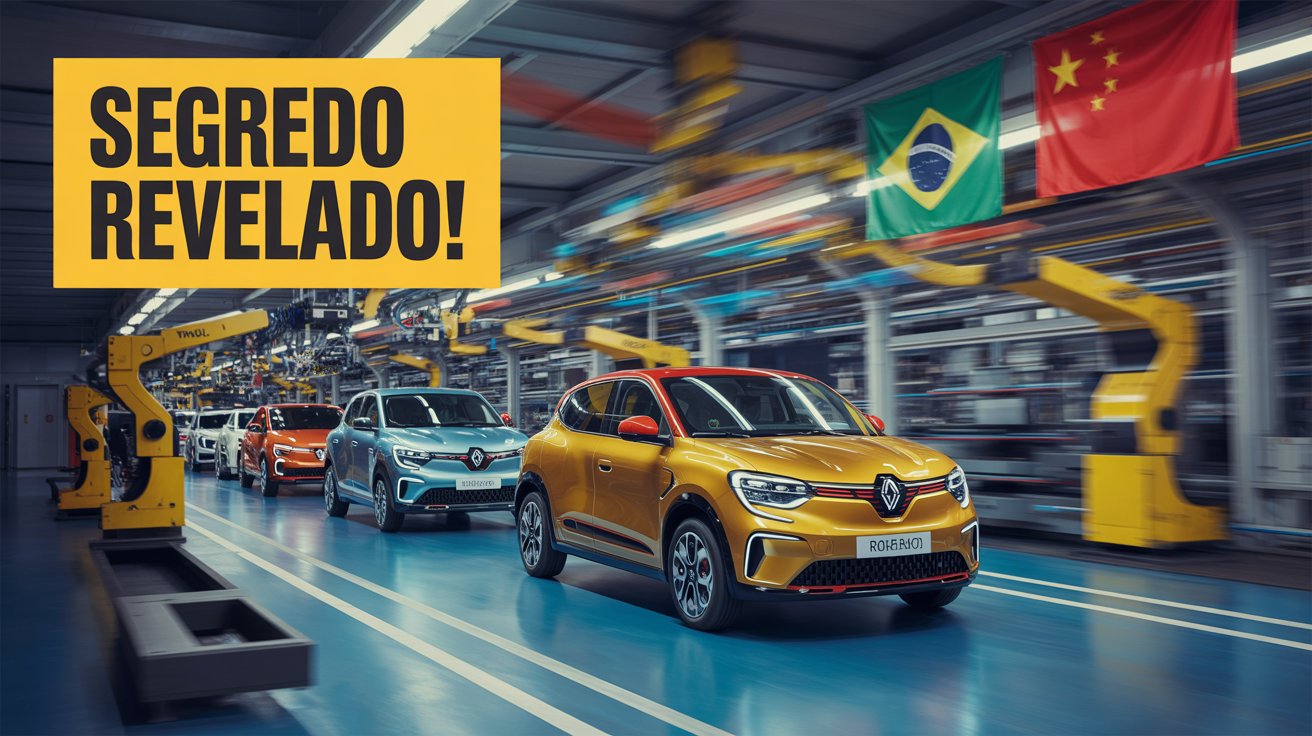
Global Strategies Accelerate Launches And Expand Renault’s Presence With Chinese Innovation, Billion-Dollar Investments And New Models In Brazil.
A Renault, one of the leading global automakers, has revolutionized its development processes by adopting industrial practices from China, which allowed for a drastic acceleration in the creation of vehicles, such as the new electric Twingo.
The French automaker managed to reduce the development cycle of new cars from up to four years to just 23 months, thanks to the integration of methods and strategic partnerships with Chinese suppliers.
The most notable advance so far is the electric compact Twingo, developed in collaboration with a Chinese company, whose agile production exemplifies the new dynamics of innovation in the international automotive industry.
-
“No one will make us change the Pix,” says Lula after the US report.

-
Lula responds directly to Trump and says that Pix is from Brazil and will not change under pressure from anyone, after a report from the United States pointed out the Brazilian payment system as an American trade barrier.

-
Amazon has just announced a new fee on all deliveries, and your online purchases will become more expensive starting April 17, including for those buying from the United States here in Brazil.

-
He sold his share for R$ 4 thousand, saw the company become a giant worth R$ 19 trillion, and missed the opportunity of a lifetime.


According to Ivan Segal, global sales director of Renault, this move marks a historic reversal: after three decades in which Western automakers served as a reference for Chinese ones, European brands are now seeking inspiration from Eastern methods to enhance their competitiveness.
He emphasizes that the entry of Chinese manufacturers into Western markets is seen as a positive factor for the global automotive sector, providing opportunities for technological evolution and productive efficiency.
To monitor and learn from this transformation, Renault maintains a team of 150 professionals in China, dedicated to closely observing how local suppliers achieve high standards of productivity and agility.
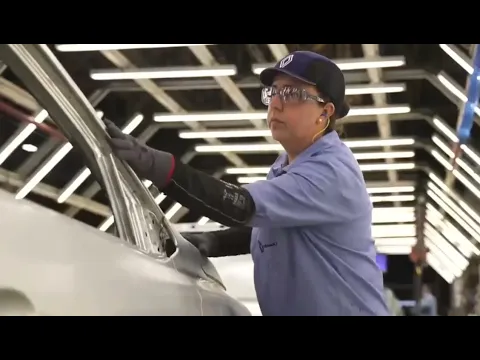

Chinese Industrial Practices Transform The Automotive Sector
Renault’s global strategy, aligned with the so-called “International Game Plan”, is also advancing into emerging markets.
In Brazil, the automaker has formed a joint venture with Geely, a Chinese giant in the sector, and is studying the local production of electric models.
The agreement is part of a robust investment plan, projected to amount to R$ 5.1 billion between 2021 and 2027.
Among the main bets is the launch of the Boreal SUV and the expansion of the Kardian utility vehicle, which have positively impacted the brand’s performance: in just the first half of 2025, Renault’s national sales grew by 9% compared to the same period the previous year.
Ivan Segal, who took over as global sales director of Renault a year ago, has a significant background in the automotive industry, with experience at brands such as Citroën and Volkswagen.
Recently, the executive was in Brazil to present the Boreal SUV, a premium vehicle aimed at repositioning Renault in markets outside Europe, elevating the standard of its products in more valued segments.
Internationalization And Balance In Global Sales
In its strategic planning, Renault seeks to balance the volume of vehicles sold both inside and outside Europe by 2027.
Currently, about 40% of the brand’s global sales occur in international markets.
The expectation is that this percentage will reach 45% by the end of the year and surpass 50% in the following years, as the International Game Plan advances and new models are launched in regions such as Latin America, Turkey, South Korea, and Argentina.
According to Segal, the goal is not only to gain market share but to increase profitability and ensure the sustainability of the business and its network of dealers.
The renewal of the European portfolio, focusing on segments C and D — considered more sophisticated — has already increased the share of these categories from 15-20% to over 40% in continental sales in just four years.
Renault intends to replicate this model in emerging markets, investing in higher-value vehicles and expanding the brand’s global presence.
Brazil At The Center Of Renault’s Strategy
Brazil occupies a prominent position in Renault’s international planning, ranking as the brand’s second-largest market, behind only France.
The automaker also maintains a strong presence in countries such as Turkey, Argentina, and South Korea, which are key destinations for exports and the launch of new models.
The Kardian SUV was first launched in Latin America and soon expanded its presence to other markets such as Turkey, Morocco, and Argentina, where it contributed to a 98% increase in semiannual sales.
In Brazilian territory, the competitiveness of the sector is recognized as a constant challenge.
Despite this, Renault has managed to increase its market share, driven especially by the acceptance of the Kardian.
According to Segal, Brazil is characterized by intense competition among automakers, but local performance serves as a showcase for the implementation of the company’s global strategies.
Strategic Alliances And Industrial Decentralization
In the face of a global scenario of rising protectionism, with countries like the United States adopting high tariffs on imported vehicles, Renault is betting on the decentralization of production and the creation of industrial hubs in different continents.
The diversification of factories, including units in India, Colombia, Turkey, Morocco, and South America, is seen as an alternative to navigate tariff fluctuations and ensure flexibility in the face of international political and economic changes.
The partnership with Geely, although still in the process of approval by regulatory authorities in France, China, and Brazil, is considered strategic for Renault’s expansion in the country.
The goal is to enable industrial collaborations and joint product development, especially electric vehicles, thus enhancing the brand’s competitiveness in the national territory.
However, so far, joint production has not been officially confirmed, pending legal and regulatory procedures.
The Impact Of The Chinese Method On Automotive Innovation
The rise of Chinese automakers in the global automotive market is recognized as a stimulus for innovation.
With competitive prices and advanced technology, Asian brands have gained ground in various countries, forcing traditional manufacturers to reevaluate processes and invest in modernization.
Attentive to this movement, Renault has reinforced its team in China to identify trends and incorporate practices that can accelerate production and reduce costs without compromising quality or safety.
The example of the electric Twingo, developed in just 23 months thanks to synergy with Chinese partners, symbolizes a new era for European automotive engineering.
According to Renault’s management, the exchange of knowledge between East and West drives significant advancements, making it possible to offer consumers more innovative, accessible, and sustainable vehicles.
With an increasingly aligned portfolio to global demands and an expansion strategy focused on markets outside Europe, Renault positions itself as a protagonist in the transformation of the automotive sector, betting on efficiency, innovation, and international collaboration.
In light of such deep and rapid changes, could the growing presence of Chinese technologies and methods define the future of the global automotive industry?
Is the Brazilian consumer prepared for this revolution in the way vehicles are produced and consumed?






Seja o primeiro a reagir!