





 Portuguese
  English
  Spanish
  8 min of reading
  0 comments


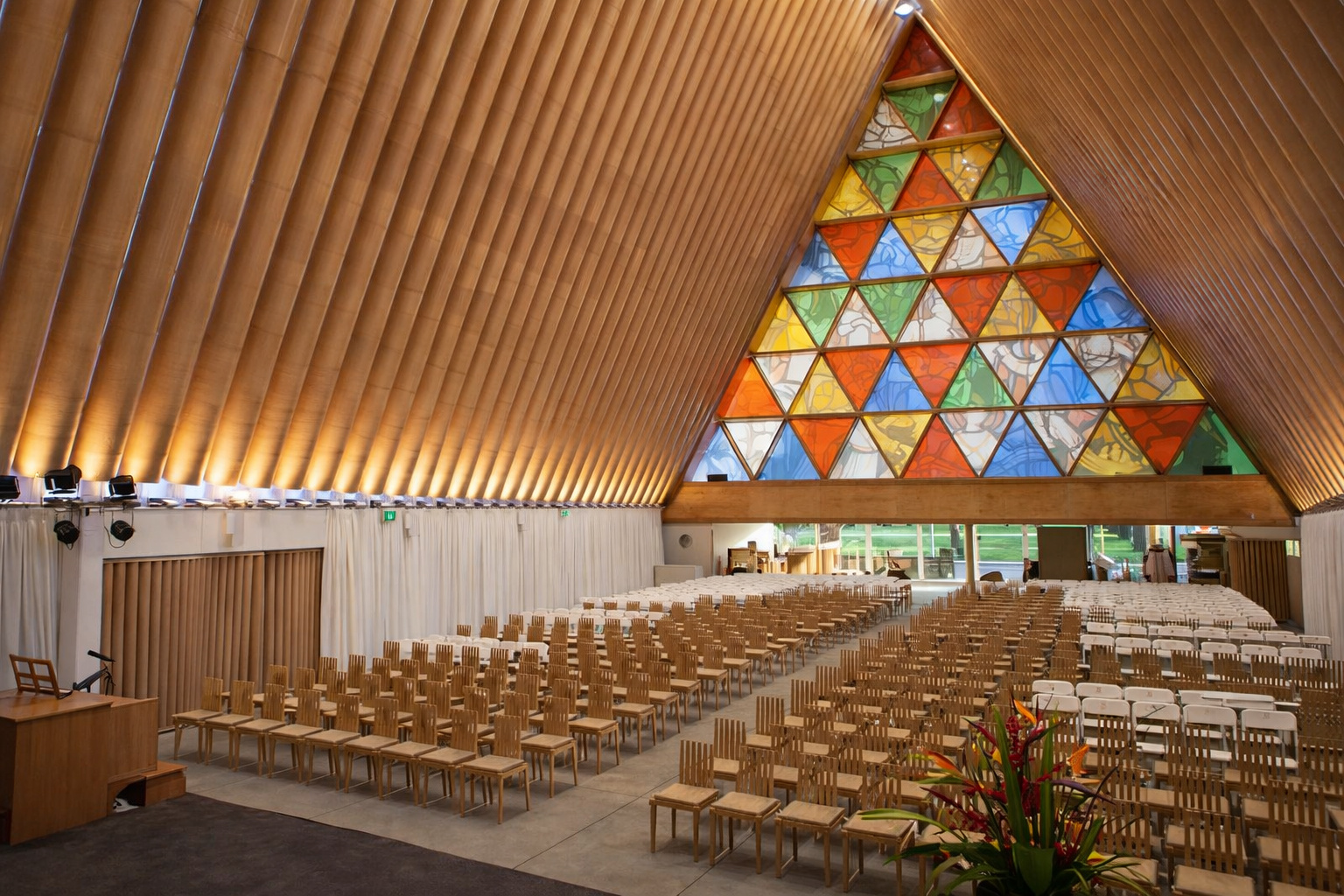
With 98 Reinforced Cardboard Tubes, Shigeru Ban Builds the Cardboard Cathedral in Christchurch for NZ$ 5.9 Million — One of the Most Earthquake-Resistant Buildings in New Zealand.
On February 22, 2011, at 12:51 p.m., Christchurch experienced a 6.3 magnitude earthquake that devastated the city in New Zealand, killing 185 people and destroying numerous buildings, including the iconic Anglican cathedral ChristChurch Cathedral, built in 1864. The Gothic revival cathedral, a replica of one in Oxford, England, had been one of Christchurch’s most famous landmarks, appearing on postcards, souvenirs, and tea towels for over 147 years.
The first earthquake, magnitude 7.1, on September 4, 2010, had already cracked and broken windows of the building, but it was the second tremor in February 2011 that caused irreparable damage to the structure that had been the spiritual and social center of the city for generations. The Anglican Diocese faced an urgent dilemma: the population needed a place for worship and civic events while the city was still suffering from seismic aftershocks, totaling 11,000 earthquakes of magnitude 2 or higher since September 2010.
Reverend Craig Dixon Invites Japanese Disaster Architect to Design Temporary Cathedral That Also Serves as Event Center
Reverend Craig Dixon, marketing and development manager of the cathedral, read an article about the Japanese “emergency architect” Shigeru Ban, who had designed a cardboard church after the earthquake in Kobe, Japan. Dixon invited Ban to Christchurch to discuss building a temporary cathedral that could also host concerts and civic events, a concept developed during the visit.
-
Congonhas receives the monorail promised for the 2014 World Cup after more than a decade of delays and becomes the first airport in Brazil with integrated subway.
-
Goodbye, concrete: a new trend in civil construction reduces the weight of the structure by up to 30%, accelerates projects by up to 40%, cuts costs on steel and labor, and improves thermal insulation with EPS.
-
Russian engineers create an innovative propeller blade for aircraft that could completely change the way airplanes and helicopters operate.

-
Couple finishes building PVC chalet on the beach on the last day, with air conditioning and curtains, but discovers the bathroom drain is inverted: water escapes from the drain, risking breaking the floor, and the rush continues before the trip.


Ban, characterized as a “disaster architect,” designed the building pro bono, in collaboration with the local architectural firm Warren and Mahoney, taking only six weeks to create the initial design. It was initially hoped that the cathedral would open in February 2012, for the first anniversary of the earthquake, but regulatory and legal hurdles delayed the schedule.
The Diocese’s decision to demolish the original cathedral generated controversy, with the Great Christchurch Building Trust taking the church to the High Court, questioning the legality of using insurance to build the temporary cathedral, with the judge confirming the illegality in April 2013.
A-Frame Structure Rises to 24 Meters, Using 98 Cardboard Tubes with 60 cm Diameter, Weighing Up to 120 kg Each and Measuring Up to 20 Meters Long
The cathedral adopts the A-frame style, rising 24 meters above the altar, with 98 equally sized cardboard tubes, measuring 60 centimeters in diameter, weighing up to 120 kilograms each and measuring up to 20 meters in length.
The architect initially wanted the cardboard tubes to be the exclusive structural elements, but local manufacturers were unable to produce sufficiently thick tubes, and importing the material was rejected. The solution reinforced 96 tubes with laminated wood beams, forming 12 main portals 21 meters high that define the sloping roof planes.

Two enormous steel tube frames, placed at both ends, stiffen the main structure, while the repetition of the portals creates the succession of characteristic triangular arches. Lateral pressure is countered by the mass of 8 shipping containers of 6 meters, positioned at the base of the building, four on each side, on a concrete slab.
Each Tube Receives Waterproof Polyurethane Coating and Fire Retardants Developed by Shigeru Ban Since 1986, Before Sustainability Became a Buzzword
The tubes are coated with waterproof polyurethane and fire retardants that Ban has been developing since 1986, years before sustainability became a buzzword in architecture. The coating protects the interior, while the 5-centimeter spaces between the tubes allow light to filter into the cathedral, creating a unique atmosphere.
Empirical tests conducted by Ban confirmed the compressive strength of the tubes at approximately 10 MPa, comparable to laminated wood when reinforced with adhesives and coatings, maintaining a fraction of the weight of equivalent steel elements. The chemical treatment allows durability for decades, mitigating environmental degradation and fire risks.

The semi-transparent polycarbonate roof protects the structure while allowing natural light to pass through, replacing the traditional Gothic rose window with triangular pieces of colored glass, designed by longtime collaborator Yoshie Narimatsu, featuring 49 triangular panels, each 2.1 meters high.
Foundation That Resists Liquefaction of Alluvial Soil Typical of Christchurch During Earthquakes
The foundation faces the challenges of Christchurch’s alluvial soils, prone to liquefaction during earthquakes, through a 900-millimeter deep floating concrete slab, with approximately 40 kilometers of steel embedded, designed to keep the building stable even if the ground beneath becomes compromised during a tremor.
The slab effectively distributes loads, while 8 steel shipping containers, positioned on top of the slab, anchor the structure, elevating the cardboard tubes above a possible settlement of the ground and increasing overall resilience against seismic and ground-related risks. Located in the open and exposed area of Latimer Square, the construction incorporates wind resistance through the laminated structure of the tubes, capable of withstanding environmental loads, with rigid steel frames at the ends for greater structural stiffness.
The compact triangular footprint minimizes disturbance on site, preserving adjacent green spaces for public use and supporting the city’s post-earthquake emphasis on maintaining urban parks accessible during recovery efforts.
Construction Began on July 24, 2012, After the Site Blessing in April, and the Building Opened to the Public on August 6, 2013, Becoming the First Significant Structure of the Reconstruction
The site was blessed in April 2012, and construction began on July 24, 2012, initially expected to be completed by Christmas 2012, but delayed several times to July and finally August 2013. The exposed cardboard that became wet before the building was fully closed had to be removed and replaced, delaying the schedule.
The cathedral opened to the public on August 6, 2013, with the dedication service held on August 15, becoming the first significant building inaugurated as part of Christchurch’s reconstruction. By February 2013, the original budget of NZ$ 5 million had increased to NZ$ 5.3 million due to rising costs, ultimately reaching approximately NZ$ 5.9 million at completion.
More than 17 suppliers and contractors donated approximately NZ$ 1 million additional in time, labor, and materials for the construction. Ban donated his architectural expertise, and the use of simple building materials allowed for a much faster and more accessible completion than that of a traditional church.
The Building Meets 130% of New Zealand’s Seismic Code, Making It One of the Most Earthquake-Resistant Buildings in Christchurch
The cathedral was built to meet 130% of the seismic standards in New Zealand, making it one of the safest earthquake-resistant structures in Christchurch, as declared by the authorities.
Ban, who has developed recycled tubes as a building material for emergency aid since 1986, stated that “buildings made of concrete are easily destroyed by earthquakes, but cardboard tube buildings can survive without damage.” The structure has a capacity for 700 people and serves not only as a place of worship but also as a space for conferences, concerts, and fashion shows.
The geometry was defined from the plan and elevations of the original cathedral, with a gradual change at each angle of the cardboard tubes, creating an iconic shape. The furniture, including chairs, pulpit, and baptismal font, was designed by Shigeru Ban, using wood and cardboard tubes, maintaining the overall atmosphere of the cathedral.
Designed for a Lifespan of 50 Years as a Temporary Structure, the Cathedral Quickly Became One of the Most Iconic Buildings in New Zealand
The cathedral was explicitly designed as a temporary solution, with an estimated lifespan of 50 years, but quickly became one of the most iconic buildings in New Zealand, offering citizens a symbol of resilience and hope. Ban previously stated that “if a building is loved, then it becomes permanent,” a prediction that has proven true.
Even before its completion, the new structure was already beginning to replace the old neo-Gothic cathedral as the symbol of the city, appearing in national television advertisements among iconic scenes from cities across the country.
Officially called the Transitional Cathedral, the structure — conceived as temporary — currently represents the centerpiece of Christchurch’s identity, and all indications suggest it will remain an Anglican cathedral for the foreseeable future. Initially controversial, with some residents arguing that the church should save resources for a future permanent cathedral, since its opening it has become an absolute success.
Lonely Planet Names Christchurch Among Top 10 Cities to Visit in 2013, Citing the Cardboard Cathedral as a Reason That Makes the City Exciting
In October 2012, Lonely Planet named Christchurch one of the “top 10 cities to visit in 2013,” citing the construction of the Cardboard Cathedral as one of the reasons that made the city an exciting place. The rapid completion of the work contrasted sharply with the rest of Christchurch, where, three years after the second tremor, lots of swept gravel were the dominant feature of the city center — ghostly reminders of buildings lost forever, but not yet replaced.
While the center was a symphony of work teams hammering during the day, the nights quickly gave way to the haunting silence of deserted streets, broken only by the banging of loose tarps on numerous abandoned buildings.
The cathedral served as the first major sign of new life, capturing the collective imagination and helping the city rise again by providing a space for the community to gather once more, while reconstruction gradually gained momentum as insurance claims were settled and new projects approved.
Project Wins Display Architecture Award at the World Architecture Festival 2013, and Dezeen Names Building as the Most Significant of 2013 in 21st Century Architecture
The cathedral won the award in the Display Architecture category at the World Architecture Festival 2013, recognizing its structural ingenuity. In a retrospective published in January 2025, Dezeen named the cathedral the most significant building of 2013 in 21st-century architecture, praising its rapid deployment as a pro bono response to the 2011 earthquake and the incorporation of resilient and temporary design principles.
Key innovations include the use of 98 industrial-strength cardboard tubes, forming a triangular A-frame supported by steel shipping containers and concrete foundations. This configuration reaches 24 meters in height and fully meets New Zealand’s seismic codes, providing empirical validation of the load-bearing capacity of cardboard in areas subjected to events up to magnitude 6.3. The modularity of the design allows for disassembly and relocation, marking it as Shigeru Ban’s largest cardboard tube structure to date.
Ban Donated the Design Pro Bono, and the Project Serves as a Reminder of How Japan and New Zealand Were United in Loss and the Potential of Reconstruction
For some, the most striking factor in Ban’s choice of cardboard is that the new cathedral replaces a structure from the Gothic revival era, in a city nicknamed the “garden city” for its traditional architecture, which bears similarities to cities in England.
Architectural critic Thomas Barrie wrote that “the innovative construction of the building and its impact as the first major sign of new life seem to have captured the collective imagination, and the now-permanent structure appears destined to become a lasting symbol of Christchurch’s renaissance.”


Barrie added that “Ban’s project serves as a reminder not only of how Japan and New Zealand were united in loss but also of the potential that can still be unlocked in the common task of reconstruction.” The Wizard of New Zealand, one of the Diocese’s most vocal critics for wanting to demolish ChristChurch Cathedral and who had been a daily speaker at Cathedral Square, called the design “kitsch,” but the opinion did not prevent the building from becoming a beloved symbol in the community.









Seja o primeiro a reagir!