





 Portuguese
  English
  Spanish
  4 min of reading
  0 comments


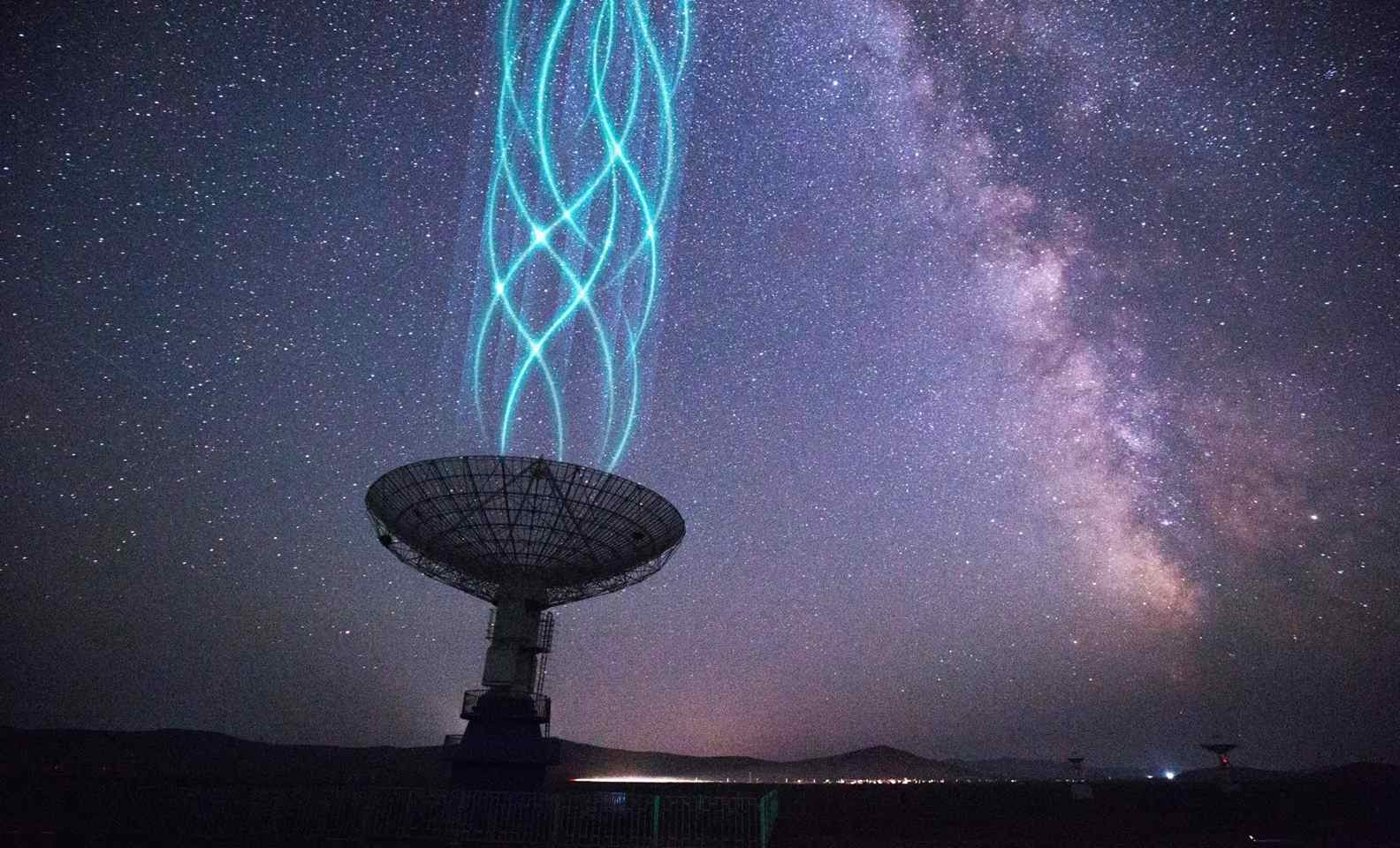
Study Published in The Astronomical Journal, Conducted by Researcher from École Polytechnique Fédérale de Lausanne, Analyzes Why Alien Signals May Have Reached Earth Without Being Detected, Considering Technical Limitations, Rarity of Technosignatures and the Enormous Distances of the Milky Way
For decades, scientists have been investigating possible alien signals through radio waves, laser pulses, and other technosignatures. A recent study published in The Astronomical Journal questions why these signals, even if they reached Earth, may not have been detected.
The Scientific Search for Alien Signals and Technological Technosignatures
The search for evidence of aliens has mobilized researchers and observatories for many years. Scientists are looking for signals known as technosignatures, which represent possible technological manifestations produced by extraterrestrial civilizations.
Technosignatures can take different measurable forms. Among them are artificial radio transmissions, laser flashes, or even infrared heat associated with large engineering projects that could indicate technological activity beyond Earth.
-
Scientists are developing a self-repairing asphalt that can close microcracks on its own before they turn into potholes, a technology that could drastically increase the lifespan of roads and reduce billions in maintenance worldwide.

-
Scientists from USP issue a warning about the air in the countryside after a study indicates that breathing outside of São Paulo may conceal silent risks, with evidence that worries experts about health impacts.

-
The change in weather arrives tomorrow: heavy rains and storms return to the Central-South after a hot week, with a cold front along the coast bringing instability between Santa Catarina, Paraná, and the Southeast, affecting capitals strongly until Thursday.

-
The rapporteur of the critical minerals project said today that Brazil will not create a state-owned mining company, but Lula has already discussed the creation of Terrabras with ministers last Friday, and the United States has already invested 565 million dollars in a Brazilian mining company without waiting for a response from the government.


For any signal of this type to be detected, two conditions must occur simultaneously. The signal must physically reach Earth, and at the same time, the instruments used by researchers must have sufficient sensitivity to capture it.
Even if alien signals have crossed the Solar System at some point, that does not guarantee they have been perceived. They may have been too weak, too fast, or confused with the background noise present in space observations.
Technical Limitations May Hide Alien Signals
The detection of possible alien signals directly depends on how accurately scientific instruments are configured. Telescopes and detectors need to be tuned to capture different wavelengths and signal intensities.
If the equipment is not adjusted to the correct frequency, even a technological emission could go unnoticed. This means that an extraterrestrial signal could have crossed the region of the Solar System without generating any detectable alert.
This scenario has been debated by researchers for years. Many scientists consider it possible that some signals have been recorded in previous observations but were not identified as anything unusual.
Still, the study conducted by Claudio Grimaldi suggests another relevant possibility. According to the analysis, the actual number of alien signals that pass by Earth may be lower than many imagine.
EPFL Study Proposes New Statistical Approach
Claudio Grimaldi, a theoretical physicist at École Polytechnique Fédérale de Lausanne, developed a study published in The Astronomical Journal using statistical methods to analyze the probability of detecting extraterrestrial signals.
The research models factors that directly influence this detection. Among them are the lifespan of technosignatures and the distances from which these signals could have been emitted by technological civilizations.
The results indicate that for the detection of alien signals to be considered likely in the present, a large number of signals would have had to have passed by Earth without being previously perceived.
The analysis suggests that this scenario becomes less likely when considering the number of potential technological sources in the galaxy. In some situations, this number could even exceed the estimated amount of habitable planets in certain regions.
Types of Alien Signals Analyzed in the Research
The study also differentiates two main types of technosignatures. The first includes omnidirectional emissions, such as residual heat generated by large extraterrestrial engineering projects.
This type of emission tends to spread over vast distances in space. Nevertheless, its detection depends on extremely sensitive instruments capable of distinguishing this signal from other natural phenomena.
The second type involves directed signals, such as laser beams or technological beacons emitted with great focus. These signals may be more concentrated but also require highly precise detectors to be identified.
Even with modern space observation technologies, capturing this type of emission remains a challenge. The sensitivity necessary to register such specific signals still poses a significant obstacle.
The Size of the Galaxy Complicates Detection
Another factor considered by the study is the dimension of the Milky Way. The galaxy is about 100,000 light-years in diameter, which limits observational capacity even with advanced telescopes.
Current instruments can only monitor a small portion of the sky. This means that a large part of space remains out of reach of the systematic observations conducted by researchers.
In this context, alien signals may be rare and appear at specific moments. Even if detectable transmissions exist, only a few signals might reach Earth at a given time.
Identifying these events depends not only on appropriate technology but also on precise targeting of observations. Detecting extraterrestrial signals requires instruments to be observing exactly the right area at the right moment.
Nature of the Signals May Complicate Identification
In addition to the distances involved, the very nature of the signals can make their detection difficult. A directed laser pulse, for example, can arrive at Earth extremely weak after traveling great distances.
As these beams are narrow, there is a possibility that they may completely pass outside the field of view of the detectors. This would significantly reduce the chances of identification in alien search programs.
On the other hand, omnidirectional signals may be broader, but they also face obstacles. They can blend with other natural cosmic signals present in the space environment.
This combination of technical and astronomical factors helps explain why clear evidence of extraterrestrial civilizations has not yet been confirmed. Even if signals exist, the probability of detecting them at the right moment remains very low.









Seja o primeiro a reagir!