





 Portuguese
  English
  Spanish
  3 min of reading
  1 comment


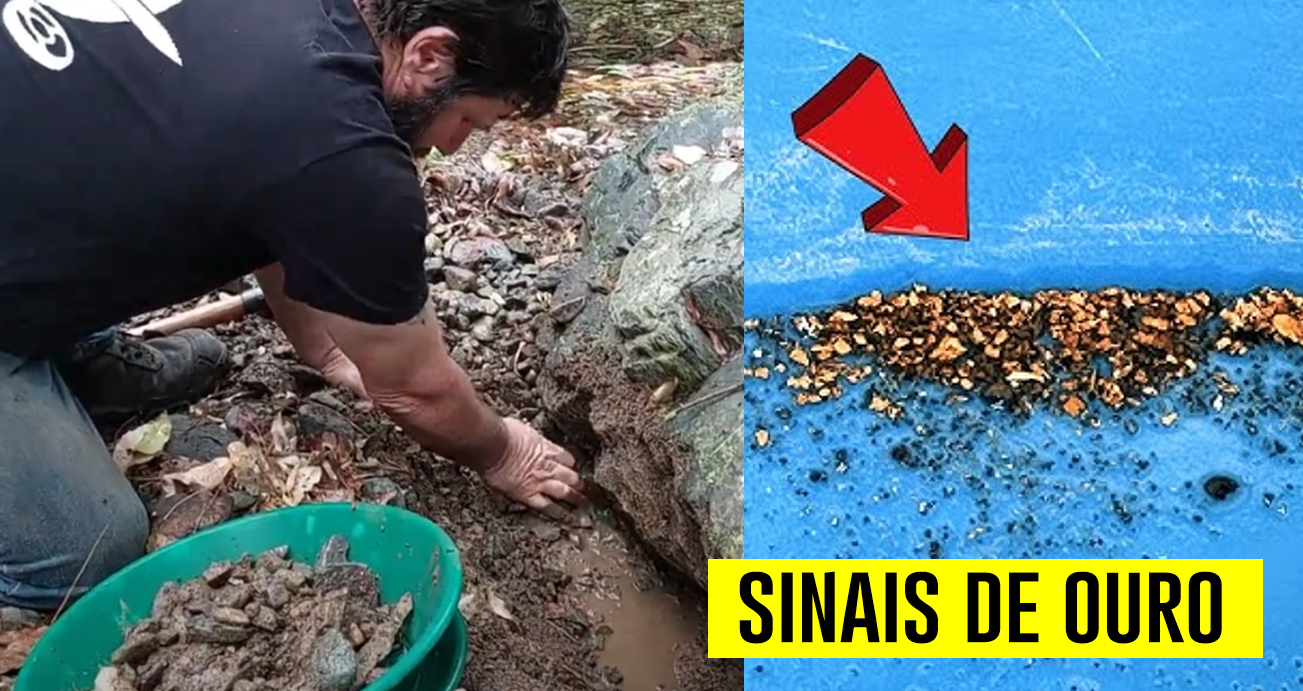


There Are Natural Signs That May Indicate the Presence of Gold in the Soil. See How to Identify if Your Rural Property May Hide This Treasure
Gold has always sparked humanity’s interest, whether for its beauty, economic value, or even for its use in industry.
In Brazil, a country with vast mineral wealth, many rural properties may contain gold deposits, often unknown to their owners.
But how can you identify if there is gold on your land? What are the signs and methods to verify this possibility?
-
Rare earths are in everything, from cell phones to bullet trains, and what almost no one realizes is why they have become the target of such a delicate global war.

-
Brazil extracts 26.3 million tons of ore from what was previously treated as waste, transforming residues into wealth, producing over 3 million tons of sand, and demonstrating how national mining is relearning to generate value.

-
A $3.5 billion megaproject in Latin America pumps desalinated seawater at 1,050 liters per second over 194 km to keep a copper supermine in the Andes operational for another 20 years.

-
A hidden mine in the Andes valued at nearly R$ 1 trillion is starting to attract global attention, containing copper, gold, and silver, and raises an intriguing question: why do Argentina and Chile need to act together to exploit this gigantic wealth?
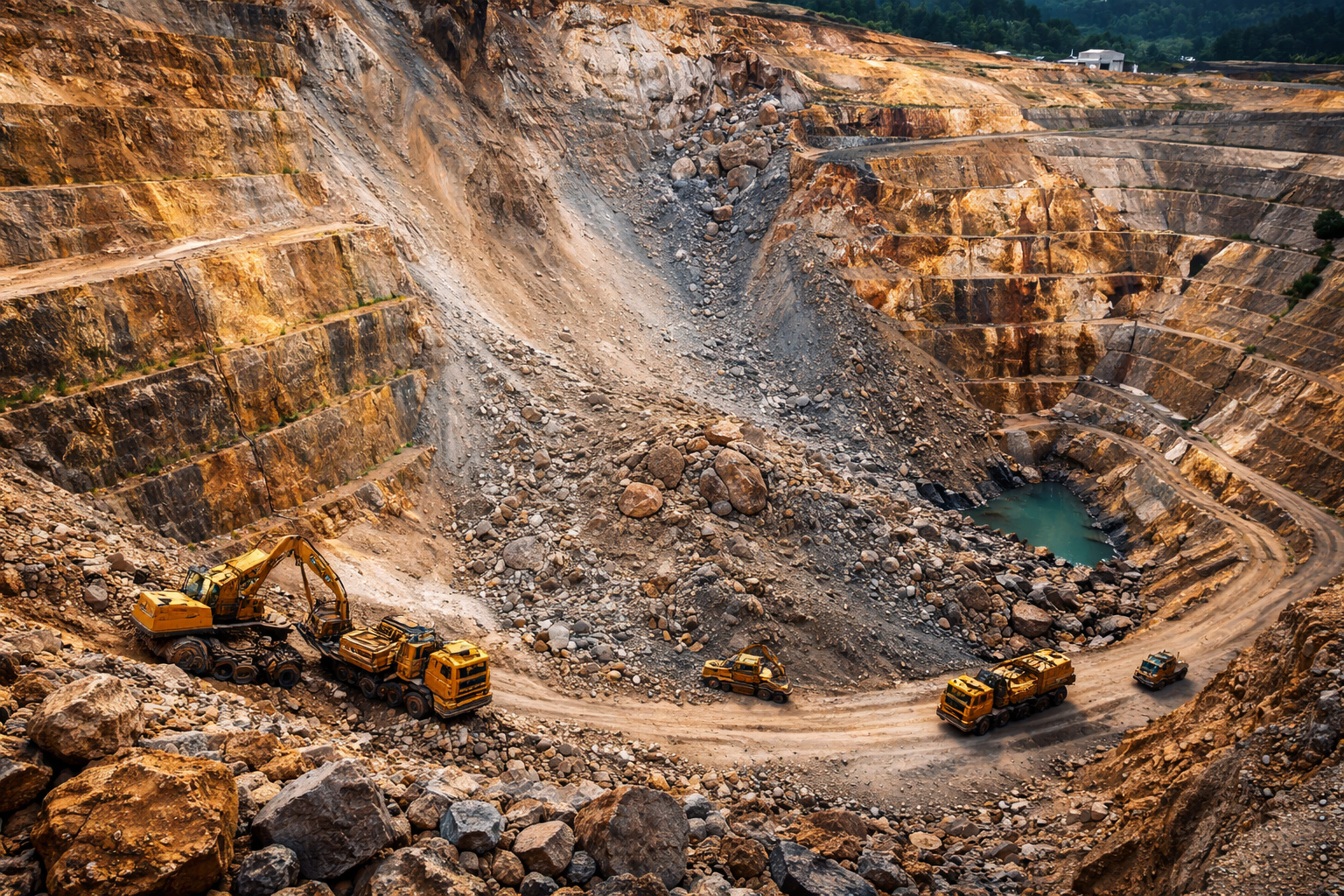

Natural Indications of Gold Presence
According to the Geological Service of Brazil (CPRM), one of the first signs of gold presence on a property is the occurrence of quartz, especially in rock formations with white or pink veins.
Gold is often associated with these veins, embedded in small quantities, making it a target of interest for prospectors and mining companies.
Another important indicator is the presence of black sand in riverbeds. As highlighted in the study “Placer Gold Deposits of the World” (Levson, 2001), magnetite and hematite, dark and heavy minerals, tend to accumulate alongside gold in rivers and streams.
The formation of alluvial deposits, where the current slows down and allows heavy sediments to accumulate, is a classic environment for finding gold naturally.
Additionally, sulfide-rich rocks may indicate the presence of microscopic gold. Minerals such as pyrite (referred to as “fool’s gold”) and chalcopyrite often contain small amounts of the precious metal, requiring chemical processes for extraction.
Soil Conditions and Vegetation
The type of soil can offer valuable clues about the existence of gold. According to research, reddish or purple soils, rich in iron oxides, may indicate the presence of mineral deposits at depth.
This phenomenon occurs because the chemical alteration of these soils reveals the presence of minerals such as gold and copper.
Vegetation can also be an indicator. According to a study published in the journal Geology of Ore Deposits, some gold-bearing areas exhibit abnormal plant growth, either due to limited development (due to heavy metal toxicity in the soil) or due to the emergence of species adapted to mineral-rich environments (Roberts & Sheahan, 1988).
Historical Context of the Area and Prospecting
One of the most important factors when investigating the presence of gold on a rural property is the geological history of the area.
If the area has previously been the target of mining exploration, there is a good chance that unexplored deposits still remain. In Brazil, states like Minas Gerais, Pará, Goiás, and Mato Grosso are known for their gold production.
To confirm the presence of the metal, it is advisable to conduct geological tests, such as soil and rock analyses. Specialized companies or government agencies can perform detailed studies using magnetometers and fluorescence spectrometers, which help detect heavy metals non-invasively.
Legal and Environmental Aspects
If the presence of gold is confirmed, it is essential to observe the current legislation. In Brazil, mining can only be conducted with authorization from the National Mining Agency (ANM).
Moreover, any extraction activity must comply with environmental regulations, preventing soil and water body degradation.
Many small-scale owners turn to artisanal mining, but this activity can lead to serious environmental impacts.
The use of mercury, for instance, is a common practice for separating gold, but it poses severe consequences for wildlife, flora, and even human health, as highlighted in the study by the Oswaldo Cruz Foundation.
The presence of gold on rural properties is a real possibility but requires knowledge and caution. Indicators like the presence of quartz, black sand, sulfides, reddish soils, and a mining history are some of the main signs that may indicate the occurrence of this precious metal.
However, precise confirmation depends on deeper analyses, whether through laboratory tests or specialized geological studies.
Additionally, any attempt at extraction must follow environmental and regulatory norms to avoid legal issues and irreversible environmental impacts.
If you suspect your property may contain gold, the best strategy is to seek technical and legal advice before making any decisions. After all, mining can be profitable, but it also brings challenges that go far beyond simply discovering a gold deposit.









❤️Aqui você pode tirar a roupa da garota e vê-la nua) Confira ➤ Ja.cat/gosea