





 Portuguese
  English
  Spanish
  9 min of reading
  1 comment


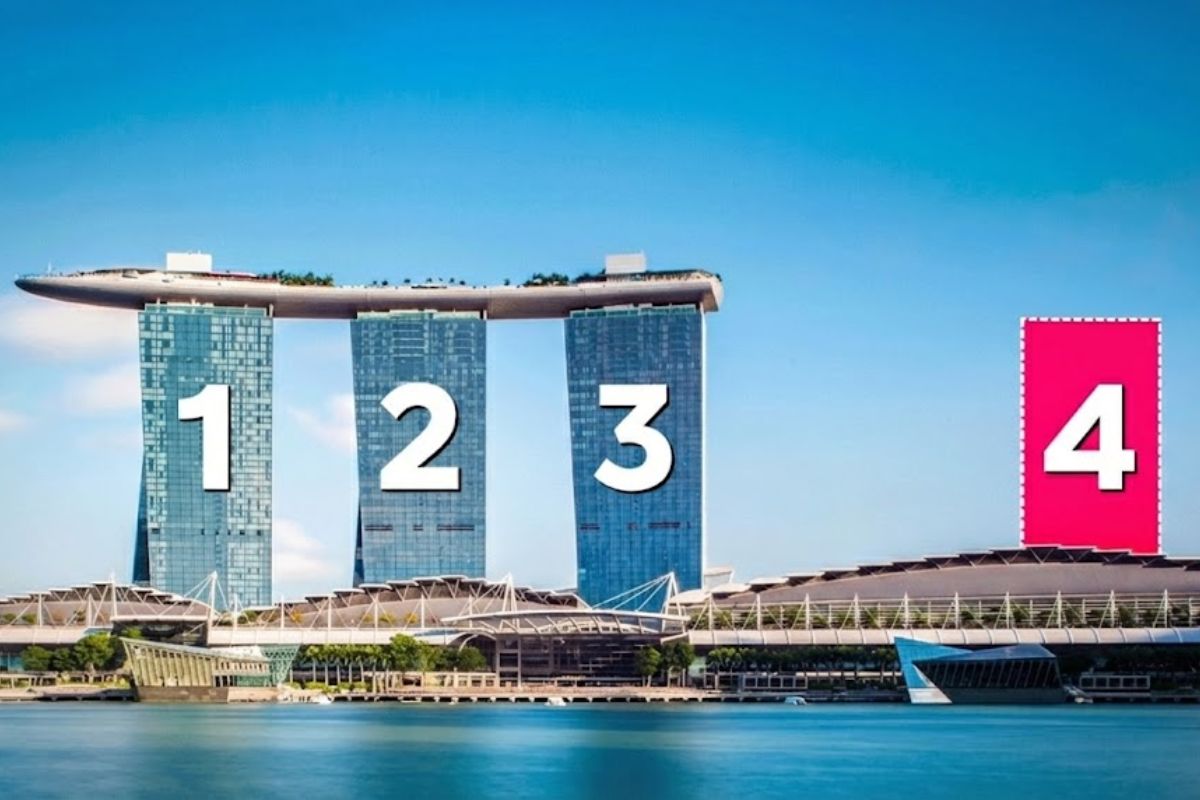


Singapore Approved an US$ 8 Billion Package to Redesign the Marina Bay Sands, Create the 55-Story IR2 Tower, Add 570 Suites, 23 Mansions, Arena for 15,000 People, and New Casino, Elevating the Focus on Ultra-Rich and Facing Criticism of the New Skyline Design of Singapore Today.
Singapore has decided to allocate US$ 8 billion to the Marina Bay Sands to reposition its most iconic building as a magnet for the world’s wealthiest guests, with a fourth tower, arena, and casino, and an explicit ambition to compete with Dubai, Hong Kong, and Bangkok.
The project is not just about “more rooms.” It is a strategic shift, moving away from traditional luxury tourism and targeting the ultra-rich, the private jet crowd, price-blind shoppers, and the demand for exclusive experiences, in an expanding and increasingly competitive Asian market.
A Symbol Built to Impress Since 2010

When the Marina Bay Sands opened its doors in 2010, it was not treated like an ordinary casino hotel.
-
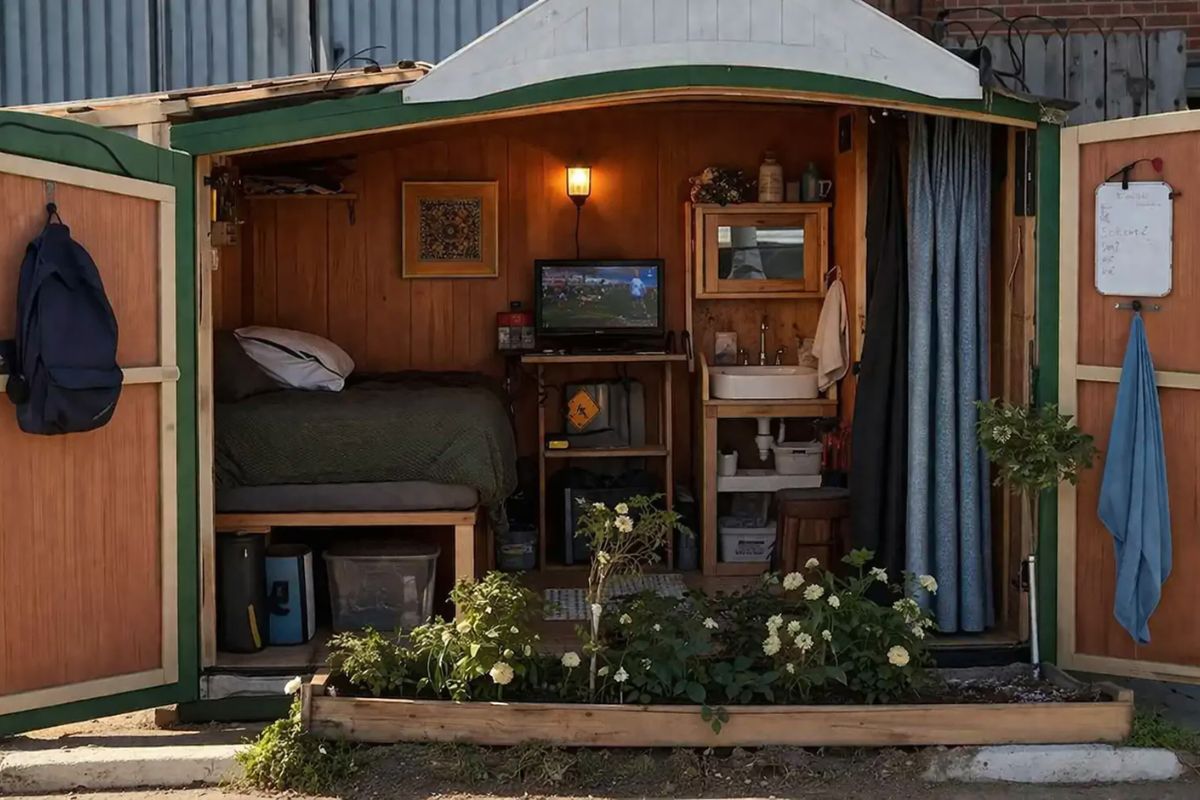
A homeless person in Los Angeles built their own wooden house with a garden at the entrance, a bed, a television, and a bathing area, and is now selling identical mini houses for $150 to other homeless individuals who prefer anything over returning to plastic tents.
-
The lack of labor in the construction industry is already well-known, but a less visible effect worries companies: the loss of knowledge during the execution of projects, points out a specialist.
-
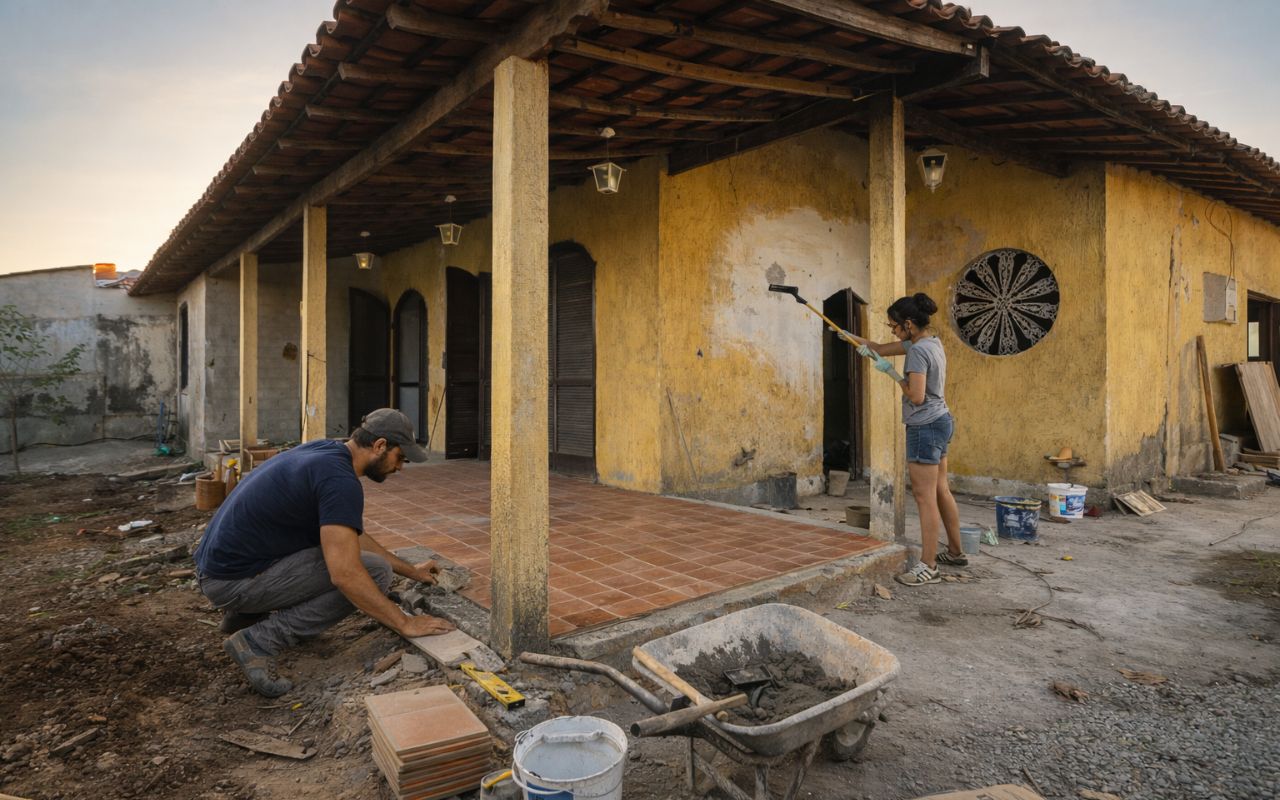
Couple faces challenges and transforms abandoned house from 1976 with a complete renovation, creating a modern, functional, and welcoming home.
-
Three partners left the nightclub, convinced the bank, and decided to build the largest model railway in the world; Miniatur Wunderland became a success in Hamburg, with 12 sections and expansion planned until 2028.
It was born as a statement of Singapore’s intentions, erected on reclaimed land in Marina Bay and designed to be instantly recognizable in any photo from around the world.
The original complex became famous for its three towers connected at the top by the SkyPark, a structure that became a postcard image: a platform resembling a surfboard with an infinity pool and a cantilevered observation deck that became one of the most visited spots, even by people not staying at the hotel.
The building was conceived to be a destination in itself, not just accommodation.
The Size of the Original Complex and the “Domino Effect” in the Market

The scale of the Marina Bay Sands was already outside the norm. The original complex brought together 2,560 rooms, a casino, a convention center, a shopping mall with two cinemas, and a lotus-shaped museum, the ArtScience Museum, described as an architectural work in its own right.
This museum was conceived with two exhibition spaces, one inside the flower-shaped structure and another underground, in galleries below a lily garden.
The result was a resort that, upon opening, not only succeeded: it dominated the market and began generating billions in revenue within a few years.
The cited assessment indicates that the Marina Bay Sands is likely the most profitable casino in the world, and the leadership of the company behind the project described it as the most successful resort in history.
In practice, the venture put Singapore on the map as a destination for the ultra-rich, a role that the country shows interest in strengthening.
Why Expand Something That Already Leads in 2024
The expansion seems counterintuitive at first glance because the Marina Bay Sands was already at the top. In 2024, the resort topped global charts of the most valuable casino brands. Yet, the context has changed.
The Asian tourism market is expanding, and the forecast presented is for continuity in the next decade, with an average growth of 6.7% per year. With more money circulating, more countries compete for revenue and the title of the main operating base in Asia, seeking to be the “gateway” between East and West.
Dubai is building mega resorts, Hong Kong has expanded its airport, and Bangkok is constructing on a large scale. In this scenario, the chosen response was straightforward: build more, raise the standard, and protect the position as a premium showcase.
Singapore Decides to Spend More Than Rivals
The strategy gains even more weight when compared to competitors. The Atlantis The Royal in Dubai, opened in 2023, cost over US$ 1.5 billion. Meanwhile, phases 3 and 4 of Galaxy Macau cost a combined US$ 6.4 billion.
By announcing US$ 8 billion to modernize the Marina Bay Sands, Singapore signals its intention to surpass others by the volume of investment and the level of ambition. The recurring logic of the project is simple: bigger and better.
The Engineering Behind the Marina Bay Sands and Why It Is Expensive
The original Marina Bay Sands required engineering solutions that help explain both its fame and costs.
The construction demanded excavation 18 meters deep, almost six stories below the surface, in a swampy area, before erecting towers with unique curves.
The SkyPark, which connects the three towers, is over 340 meters long, taller than the Eiffel Tower. It is composed of 14 steel segments built off-site. Two of the largest segments together form the 66.5-meter cantilever that extends beyond the building’s edge.
The operation of lifting these segments high and fixing them to the towers was described as a feat in itself. It took over 16 straight hours just to raise the pieces to that height.
And the infinity pool at the top is not just a “stylish luxury”: it needs to remain level even with the movement of the towers.
The towers sway with the wind and move over time due to ground settlement. Therefore, the SkyPark has 500 hydraulic jacks making micro-adjustments to keep the pool always perfectly level.
All this engineering reflected on the price: at its opening, the Marina Bay Sands was the most expensive standalone casino ever built, at a cost of US$ 5.7 billion, or about US$ 8.5 billion in current values according to the cited estimate.
The Fourth Tower IR2: What Changes in Practice
The new phase has a working name: IR2, short for Integrated Resort 2, a concept of “everything in one place,” combining hotel with casino, conventions, fairs, retail, and integrated entertainment.
The IR2 will have 55 stories and will add 570 luxury suites. The proposal released by the Marina Bay Sands is that these suites will be more sophisticated and private than those in the other towers.
The central change is the target audience: from wealthy tourists to ultra-rich guests, the kind of visitor who buys time, exclusivity, and access.
In addition to the 570 suites, the tower includes 23 gigantic suites called “mansions.”
There will also be a dedicated casino and an entertainment arena for 15,000 people, as well as new spaces for conventions and exhibitions.
Tower Design: Curved Wings, Rotation, and Calculated Views
The shape of the IR2 is described as unusual.
It will have curved wings that rise from the top to the base, and the entire tower will be rotated 45 degrees in relation to the existing buildings.
This curve and orientation were designed to provide views of both Marina Bay and the Singapore Strait.
The facade will feature terraced gardens that grow as the tower ascends, creating a visual effect of layers of green and staggered volumes.
At the top, the tower will be crowned by the SkyLoop, with over 7,000 square meters, described as overlapping decks in a boomerang shape, curved in opposite directions and fitted together.
These decks are made of panels resembling fish scales, and each panel will be individually illuminated to make the surface glow at night.
The idea is to produce a new luminous icon on the Singapore skyline.
The Arena and the “Las Vegas Effect” in the Heart of Singapore
The arena aims to stand out by direct association with major international projects.
It is being designed by the same architects who created the Sphere in Las Vegas, a detail used to suggest that the IR2 wants to operate at the same level of shows and experiences.
The promise is to create a space for 15,000 people to watch shows against the backdrop of the Singapore skyline, turning the arena into another engine of flow, consumption, and stay within the complex.
How the IR2 Will Fit with the Three Original Towers
The stated goal is for the IR2 to function as an independent icon that complements the three original towers while fitting in and standing out at the same time. A common feature will be the curved silver and glass facade.
The similarities between the SkyPark and the new SkyLoop were also designed to “unify” the visual set, preventing the new tower from appearing as a complete foreign body.
Both projects are attributed to the vision of the same architect, Moshe Safdie, described as someone who seeks to create buildings that become destinations in their own right.
In this package of references, another icon associated with Safdie in Singapore appears: the Jewel, linked to the airport, described as a shopping and entertainment center housing the highest indoor waterfall in the world.
The expansion of Marina Bay Sands has been worked on for several years within this same logic of “destination architecture.”
Changes Since 2019: Location, Functionality, and the Price Jump
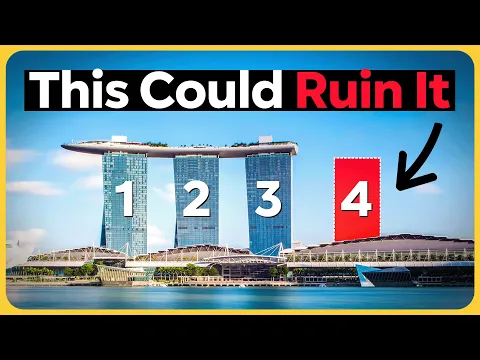

The original project revealed in 2019 placed the fourth tower right next to the other three and planned for more smaller suites. These plans remained unchanged for a few years.
As the decision to build approached, the team proposed a swap of location between the tower and the arena, presented as a practical and design choice.
The change would have facilitated access to the new structures, reorganizing the logic of circulation and arrival.
But the most sensitive change was the price.
In 2019, the expansion was quoted at US$ 3.3 billion. Now, the disclosed number is US$ 8 billion.
Part of this was attributed to the increased costs of materials and labor since the pandemic and inflation, in addition to the increase caused by the shift to ultra-luxury suites.
The Start of Construction, the Timeline, and the Promise of Delivery
The construction of the IR2 began with the groundbreaking ceremony in July 2025. It was there that more people began to notice the project and discuss its design.
The projected opening is in January 2031.
This means it is a medium-term plan with a prolonged impact, both due to the work itself and the repositioning of high-end tourism that Singapore wants to consolidate.
The Controversy: Aesthetics, Symmetry, and Public Reaction
Reactions to the project have been described as mixed. Some online critics believe that the fourth tower will stand out too much and break the symmetry of the original ensemble.
There were even disparaging comparisons, such as that the tower would resemble a “giant dehumidifier.”
In response, the architect argued that, in the end, people will feel that the new structure “has always been there” and defended the idea that the sum of the two sets, the original and the new, will be greater than the sum of isolated parts.
The debate has turned into a clash between the preservation of the icon and the ambition for a new icon.
The Bigger Background: The Continuous Transformation of the South Coast
The expansion of Marina Bay Sands appears as part of a larger package, called the Greater Southern Waterfront, described as a decades-long plan to relocate ports and transform Singapore’s southern coast into a premium real estate area focused on living, working, and spending.
In this context, continuous expansion becomes a policy of identity: the idea that the country is always under construction.
A 2024 statement summarized this mentality with a straightforward phrase: “We never finish building Singapore.”
What’s Really at Stake with This Billion-Dollar Bet
The Marina Bay Sands has already been a symbol of an era when Singapore showed the world it could create an instantly recognizable and financially dominant megaproject.
Now, the IR2 tries to repeat the effect with another ambition: to raise the ceiling of luxury, attract the planet’s wealthiest guests, and maintain Singapore as a privileged entryway between Asia and the West.
At the same time, the country accepts the cost of controversy: altering the main postcard, risking criticism about the design and betting that, when the work is complete, the new ensemble will be seen as inevitable, not as a mistake.
In your opinion, is Singapore right to redesign its biggest symbol to pursue the ultra-rich, or could this fourth tower weaken the identity of the Marina Bay Sands on the country’s skyline?







I’m sure it’s the best strategy to build IR2 now ; to complement T5 Changi Airport. Focus towards UHNWIs ✍️