





 Portuguese
  English
  Spanish
  3 min of reading
  0 comments


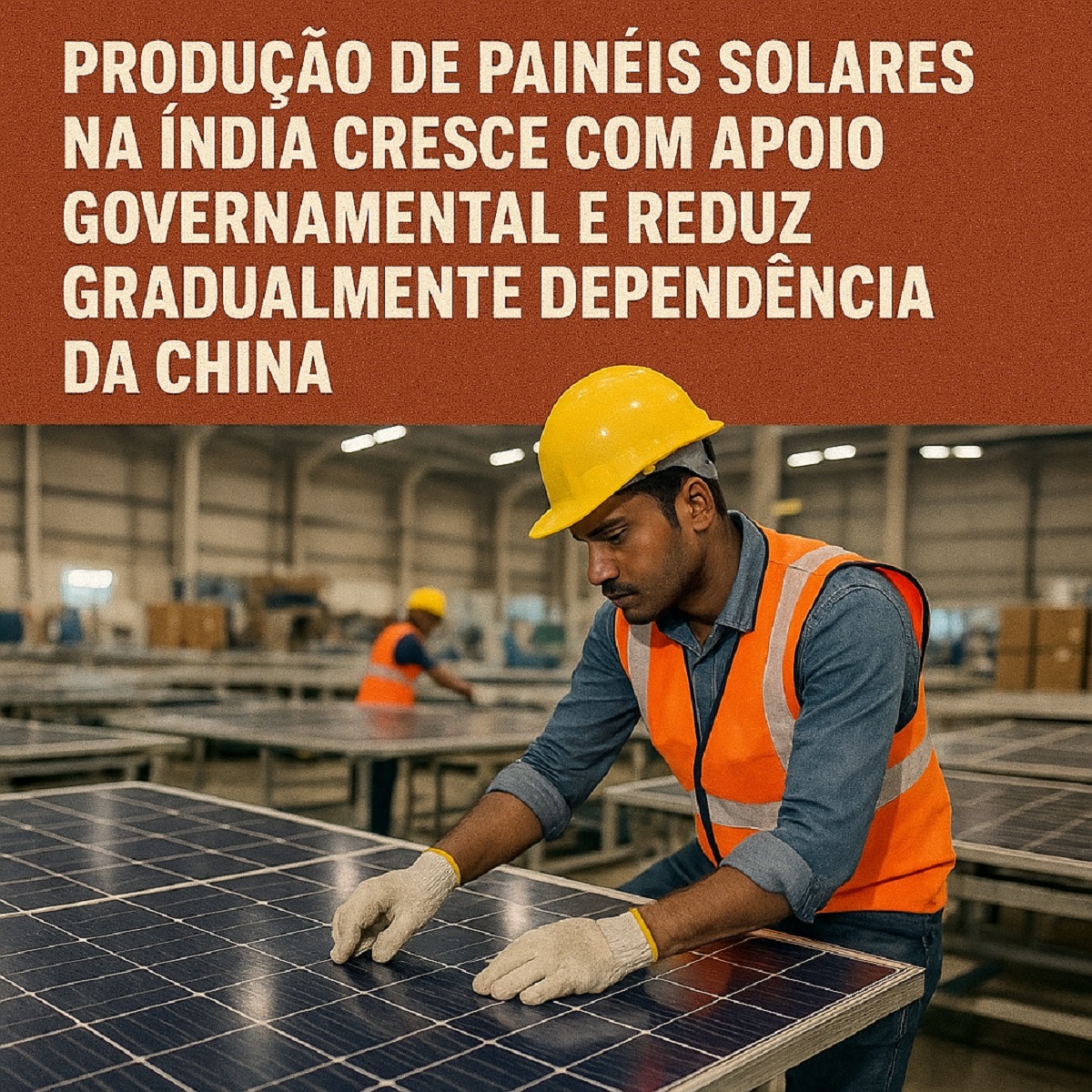
This Content Presents Official Data, Regulatory Milestones, and Energy Goals That Explain How India Is Strengthening Its Solar Industry Until 2030
India has been implementing public policies to strengthen its solar energy production chain. Therefore, the country seeks to reduce its dependence on imports from China. In 2022, the Indian government initiated a cycle of investments and industrial incentive programs. As a result, national production capacity has gradually begun to grow. These measures aim to increase domestic competitiveness, ensure energy security, and support international environmental commitments.
Public Policies Accelerate National Production Capacity
According to PV Magazine, solar module production capacity in India rose from 38 GW in 2023 to 74 GW in 2025. Meanwhile, solar cell production reached 25 GW. According to the Ministry of New and Renewable Energy of India (MNRE), this growth is due to the exemption of interstate tariffs for projects commissioned by June 2025, the authorization of 100% foreign direct investment in the renewables sector since 2022, and financial support through the Production Linked Incentive (PLI), which has been in effect since 2021. Additionally, private companies have also expanded their operations. TP Solar Ltd., from Tata Power, inaugurated a 4.3 GW plant in Tamil Nadu in March 2025, as reported by the Press Trust of India.
Imports from China Are Still Relevant, but Lose Market Share
Data from Mercom India Research shows that, in 2020, China accounted for over 90% of India’s solar panel imports. In 2024, this share dropped to 65% for solar modules and 56% for photovoltaic cells. This outcome is linked to the Atmanirbhar Bharat Initiative, launched in 2020 by the Indian government, which promotes domestic production of strategic technologies. Additionally, the implementation of anti-dumping tariffs and subsidies for the domestic industry between 2021 and 2023 helped reduce external dependency. Still, China remains an important supplier of raw materials and components not produced locally, such as wafers and polysilicon.
-
Europe records strong euro economy with solar energy in March and sparks curiosity about which country leads growth that redefines the energy market and reduces costs.

-
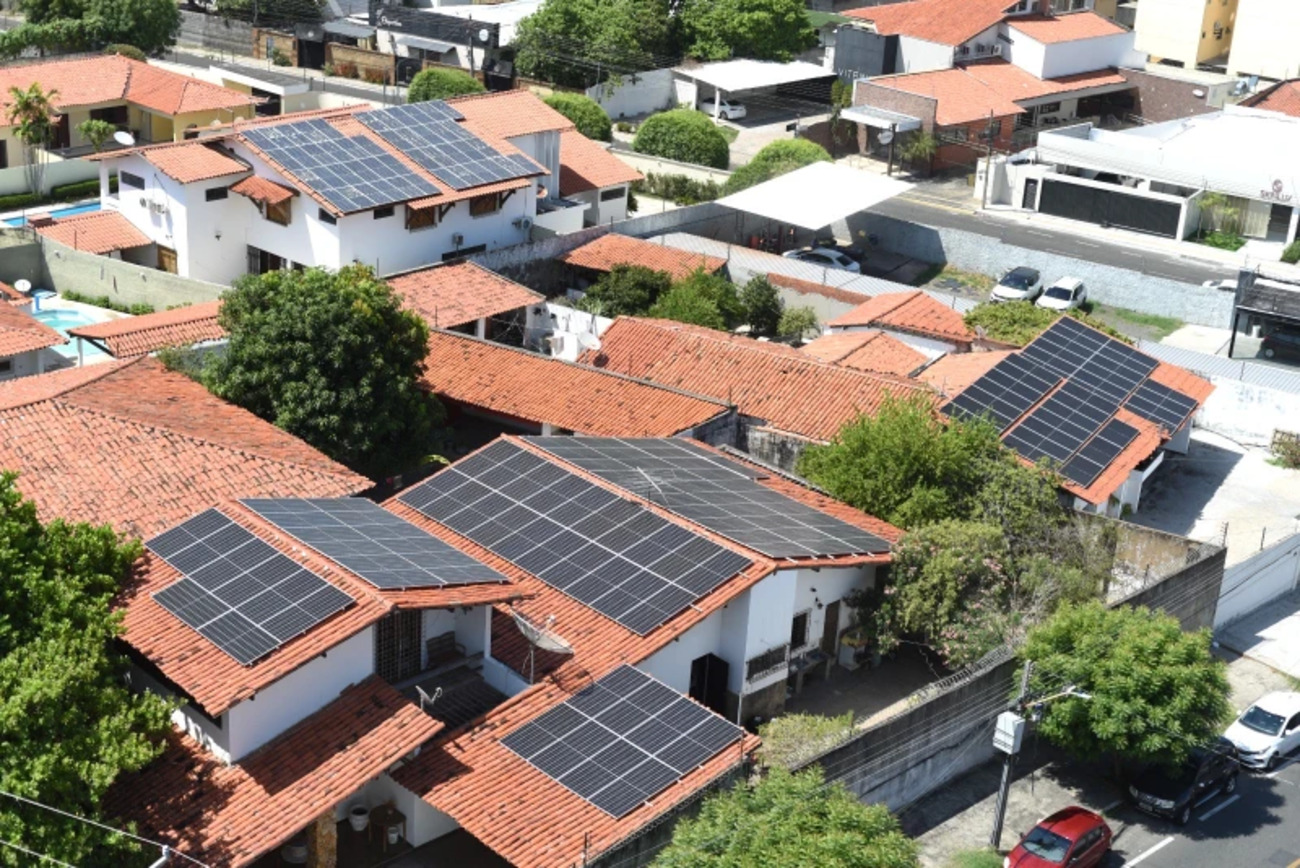
Piauí reaches a historic milestone in energy transition: State records nearly 160,000 households powered by solar energy and leads growth in the Northeast.
-
Argentina debuts its first 100% solar-powered highway and transforms an entire road into a showcase of clean energy.

-
Minas Gerais reaches a historic record and surpasses the power of Itaipu, but network costs generate debate: Understand why solar energy in MG impacts the electricity bill of those without panels.

Established Goals and Climate Commitments Guide Actions
The National Electricity Plan (2023) sets a target of installing 280 GW of solar capacity by 2030, with an estimated annual increase of 30 GW. Furthermore, the government aims to create skilled jobs in the renewable sector, develop regions with lower industrial infrastructure, and expand clean energy in rural areas through the PM-KUSUM program, which has been in effect since 2019. At COP26 in November 2021, India committed to achieve 500 GW of non-fossil capacity by the end of this decade.
Technical and Logistical Challenges Still Need to Be Overcome
Despite the advancements, the sector faces bottlenecks. According to the 2023 technical report from the Central Electricity Authority (CEA), national production of wafers and polysilicon is limited. There are also frequent delays in land approvals for plants, and the transmission network requires investments and improvements. The Adani Group has been investing since February 2024 in building an integrated production chain in Gujarat. The initiative, with a budget of US$ 3 billion, aims to reduce these deficiencies.
Growth Prospects Are Aligned with Policies and Internal Capacity
According to the International Energy Agency (IEA), India is one of the economies with the greatest potential for solar expansion. The 2023 Climate Transparency report recognizes that the country has been contributing to mitigate global emissions. Fitch Ratings, in turn, classifies the Indian model as balanced between growth and energy security. Although global leadership in the sector depends on various external and internal factors, the current trajectory demonstrates technical and political consistency, with positive impacts on industrialization and climate commitments.








-

Uma pessoa reagiu a isso.