





 Portuguese
  English
  Spanish
  5 min of reading
  0 comments


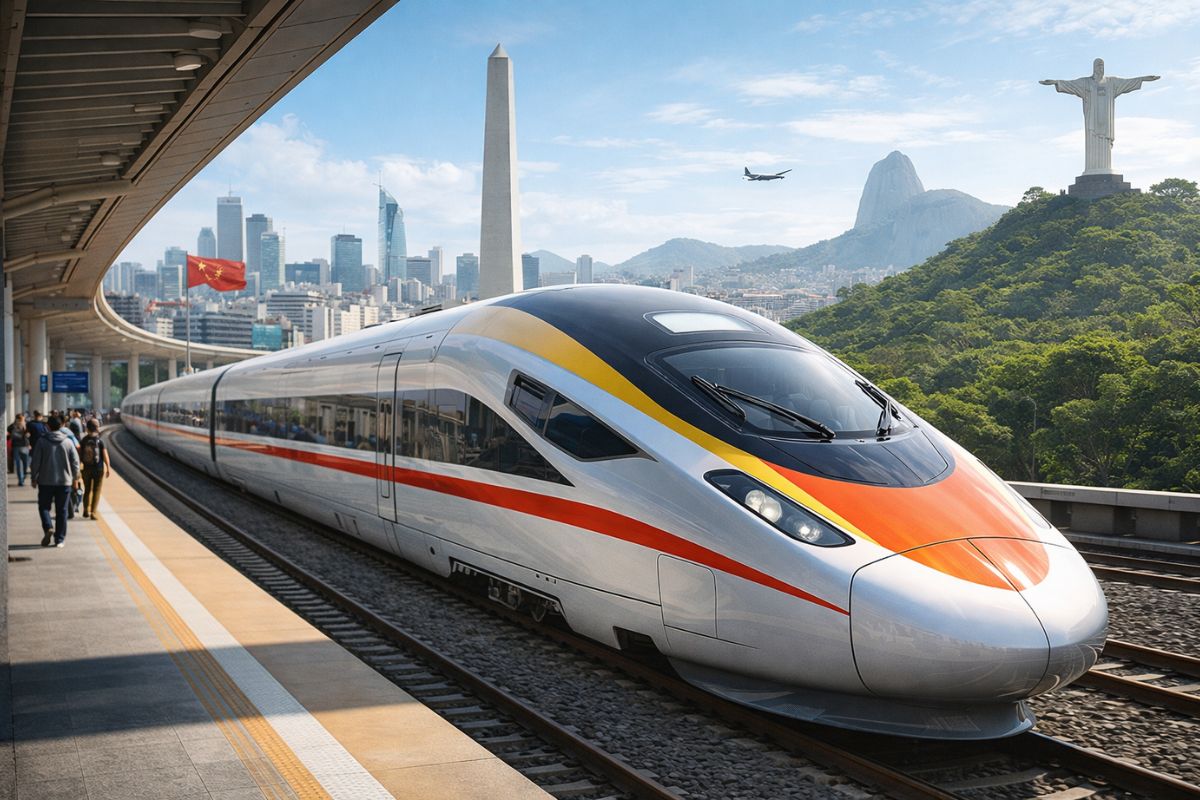
The Lima-Ica train will be the fastest in South America, with an investment of 6.5 billion dollars, Chinese technology, a speed of 200 km/h, and a capacity for 45 thousand passengers per day, connecting the Peruvian capital to Ica in two and a half hours with 15 stations along 323 kilometers.
South America is about to gain the fastest train in its history. The Lima-Ica railway project in Peru plans an investment of 6.5 billion dollars to build a high-speed line extending 323 kilometers that will connect the Peruvian capital to one of the country’s most important tourist regions. The train will reach speeds of up to 200 kilometers per hour and reduce a journey that currently takes four and a half hours by car to approximately two and a half hours by rail.
The project has support from Chinese capital and is expected to take between six and seven years to complete. David Miranda, Director of Infrastructure Management at the Ministry of Transport and Communications of Peru, indicated that the technical dossier will be finalized in 2027 and construction completed in 2032. Although China is seen as the main investor, non-binding technical proposals have been received from Germany, Canada, South Korea, Spain, France, India, Japan, and the United Kingdom. The fastest train in South America will face competition among global powers in the race for the contract.
What the Lima-Ica train will deliver in numbers and infrastructure

The scale of the project is impressive. The train will have 15 stations distributed along the central Peruvian coast, connecting communities from Villa El Salvador and Lurín to Cañete, Pisco, and Paracas.
-
Naval reform transforms 40-year-old sailboat purchased for $5,000 into a residential yacht: structural repair of hull/keels, Awlgrip painting, engine replacement with Beta Marine, autopilot, sealing of chain plates, and complete interior retrofit for $25,479.

-
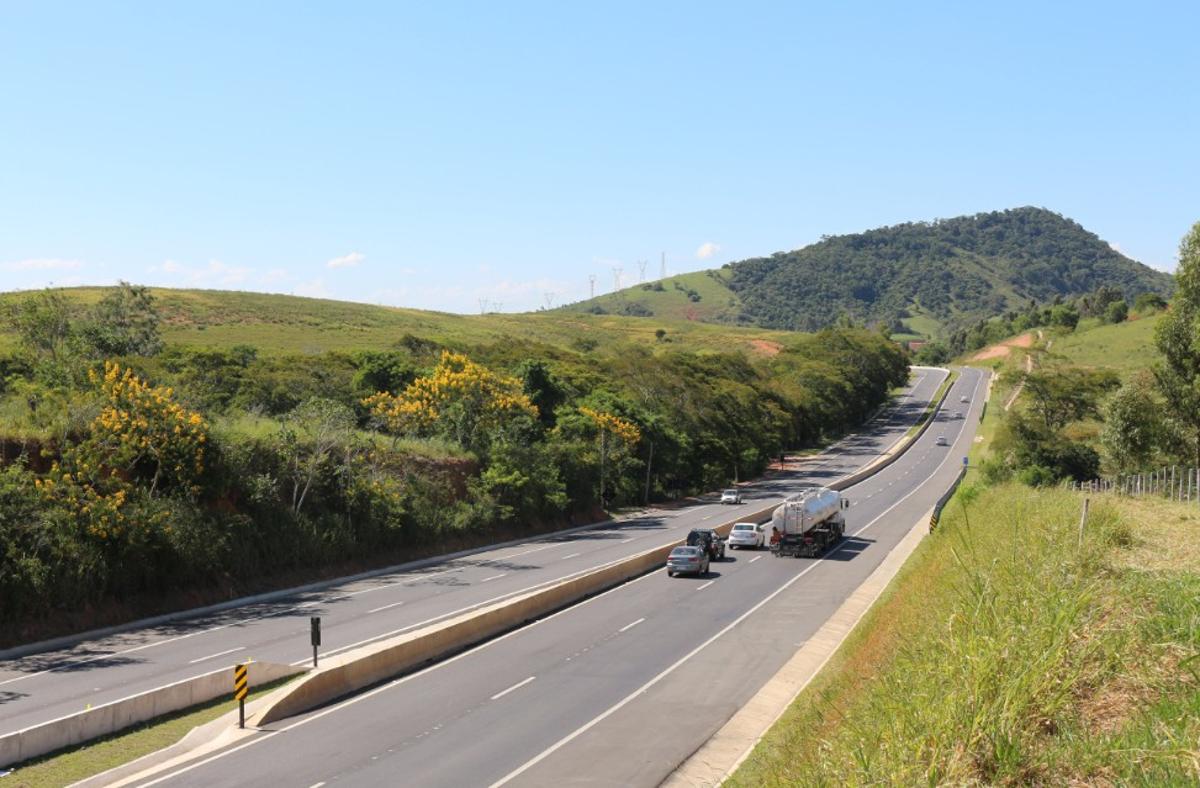
Firjan proposes to ANTT the acceleration of works on BR-101 in Northern Fluminense to improve logistics, urban mobility, and regional competitiveness.
-
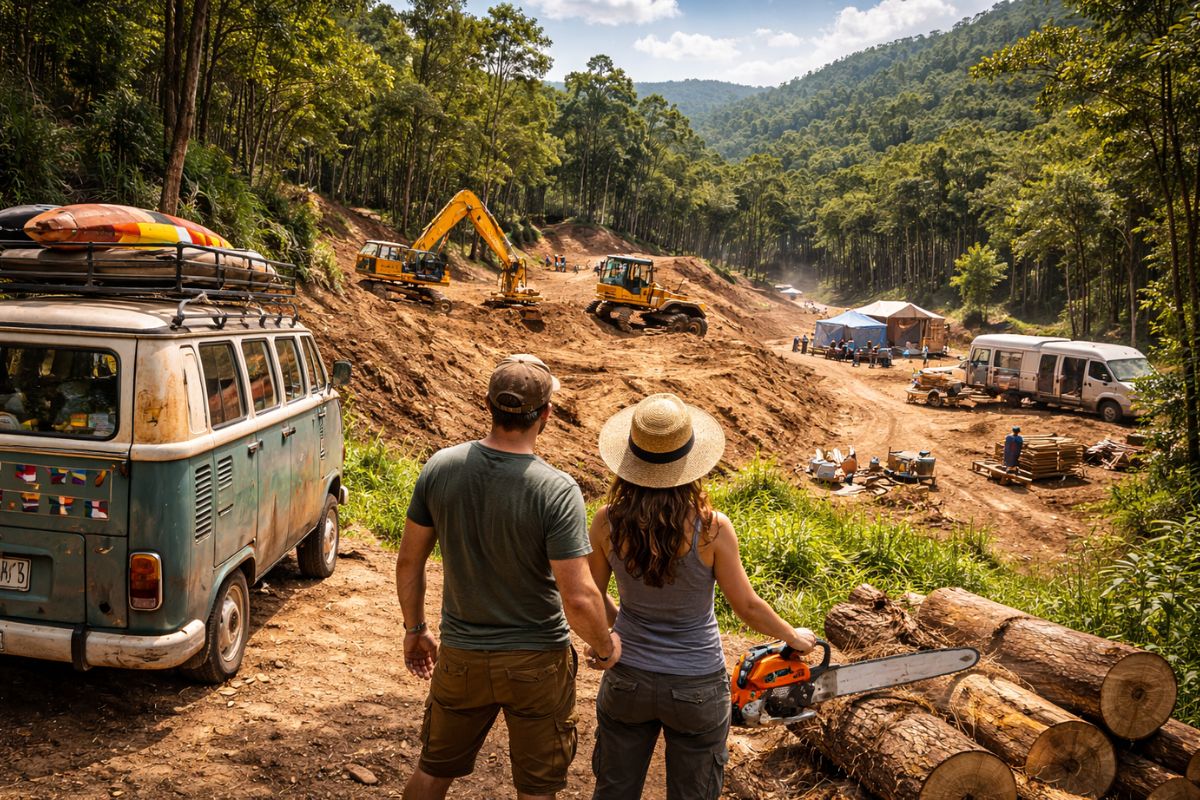
Couple that traveled by Kombi through many countries moves forward with the land in the south of SC: machines level the refuge in the woods, reinforce embankments, set up a construction camp, and train chainsaw operators to speed up the building process.
-
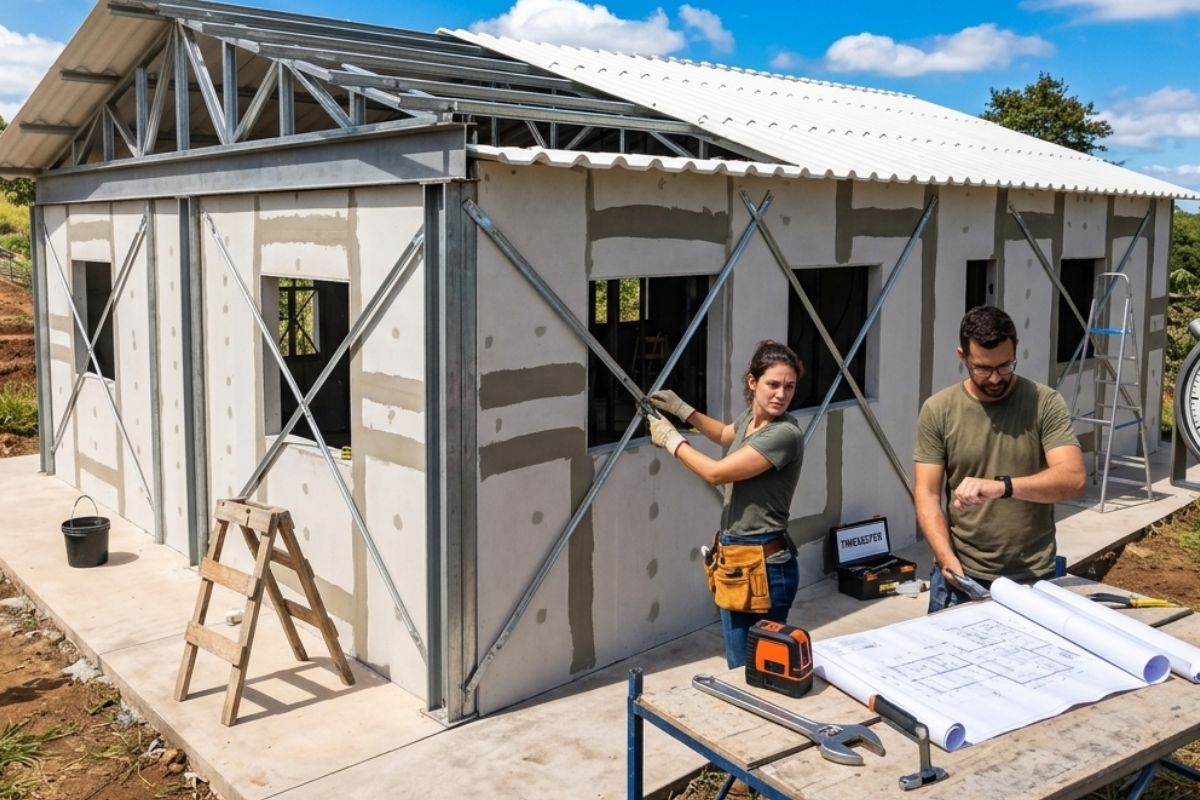
Couple leaves the city and builds a steel frame house in the countryside: sandwich roof, beams and columns secure the roof, X-braces prevent the walls from moving, and the 3-month deadline tightens.
To overcome the geographical challenges of the region, 47 kilometers of viaducts and 32 kilometers of tunnels will be built to ensure the operability of the line in areas where the topography required complex engineering solutions.
The railway will have the capacity to transport approximately 45 thousand passengers per day, alleviating congestion on the South Pan-American Highway, which currently handles all traffic between Lima and Ica.
The train will also offer direct access to Pisco Airport, creating a multimodal connection that combines rail and air transport in a single route. For a country that has never had a high-speed train, the project represents a generational leap in transport infrastructure.
The 20 thousand jobs and the economic impact of the train in the region
The construction of the train will generate nearly 20 thousand direct jobs over the years of work. The Ministry of Transport and Communications of Peru reported that the project will benefit approximately 12 million people, with six million directly, due to the proximity of the stations, and another six million indirectly, through the economic impact generated in the communities around the line.
It is a number that transforms the train from an infrastructure project into a regional development policy.
The train is also expected to attract additional investments in the tourism and commerce sectors. Ica is internationally known for its deserts, the Ballestas Islands, the Huacachina oasis, the Paracas National Reserve, and its wineries.
With a fast and reliable rail connection to the capital, the flow of tourists to the region is expected to grow significantly. Access to rural areas along the route should also improve, benefiting communities that currently rely on poor roads to connect to urban centers.
Why China leads the investment in the fastest train in South America


The Chinese involvement in the project is not accidental. China is currently the largest builder of high-speed railways in the world, with over 45 thousand kilometers of lines in operation within its own territory.
The technical expertise and financing capacity make Chinese companies natural candidates for railway projects in countries that do not have a tradition in this area. Peru, which has no high-speed train lines in operation, needs to import both technology and capital.
Although China is the favorite, international competition for the train contract is open. Eight countries have submitted non-binding technical proposals, including railway powers such as Japan, France, Spain, and Germany. Each of these countries has its own high-speed technology and experience in exporting complete railway systems.
The final decision will depend on a combination of cost, financing conditions, execution timelines, and technology transfer. The Peruvian train could end up being built by any of these powers.
The electric train and Peru’s bet on railway sustainability
One of the most relevant features of the project is that the train will be fully powered by electricity. At a time when decarbonization of transport is a global priority, Peru has opted for a railway system that does not rely on fossil fuels to operate.
The electric train will reduce carbon emissions associated with travel between Lima and Ica, which currently occurs mostly by combustion vehicles on the Pan-American Highway.
The project also includes an advanced safety system with real-time monitoring technology, which will ensure not only operational efficiency but also the safety of the 45 thousand daily passengers expected.
Initiatives are planned to promote the use of renewable energy in the train’s operation, reinforcing the project’s environmental commitment. For South America, which has historically prioritized highways over railways, the Lima-Ica train could mark the beginning of a paradigm shift.
What the fastest train in South America means for the continent
If the project is completed on time and within budget, Peru will have demonstrated that South America is capable of building world-class railway infrastructure.
The Lima-Ica train could inspire similar projects in other countries on the continent, where proposals for high-speed trains have existed on paper for decades but have never moved beyond the study phase. Brazil, Argentina, and Colombia have already discussed high-speed railway projects without any advancing to construction.
The challenge now is to turn the project into reality within a timeline that anticipates completion in 2032. Infrastructure projects of this scale in Latin America have a history of delays, budget overruns, and political changes that compromise continuity.
If the fastest train on the continent really crosses the Peruvian coast at 200 kilometers per hour within six years, it will be more than an engineering achievement. It will be proof that the region can compete with Asia and Europe in cutting-edge transportation infrastructure.
What do you think of the fastest train project in South America? Do you believe it will be completed by 2032 or will it face the same delays that affect major works in the region? Leave your comments. Infrastructure projects of this scale deserve public monitoring and debate.






Seja o primeiro a reagir!