





 Portuguese
  English
  Spanish
  5 min of reading
  0 comments


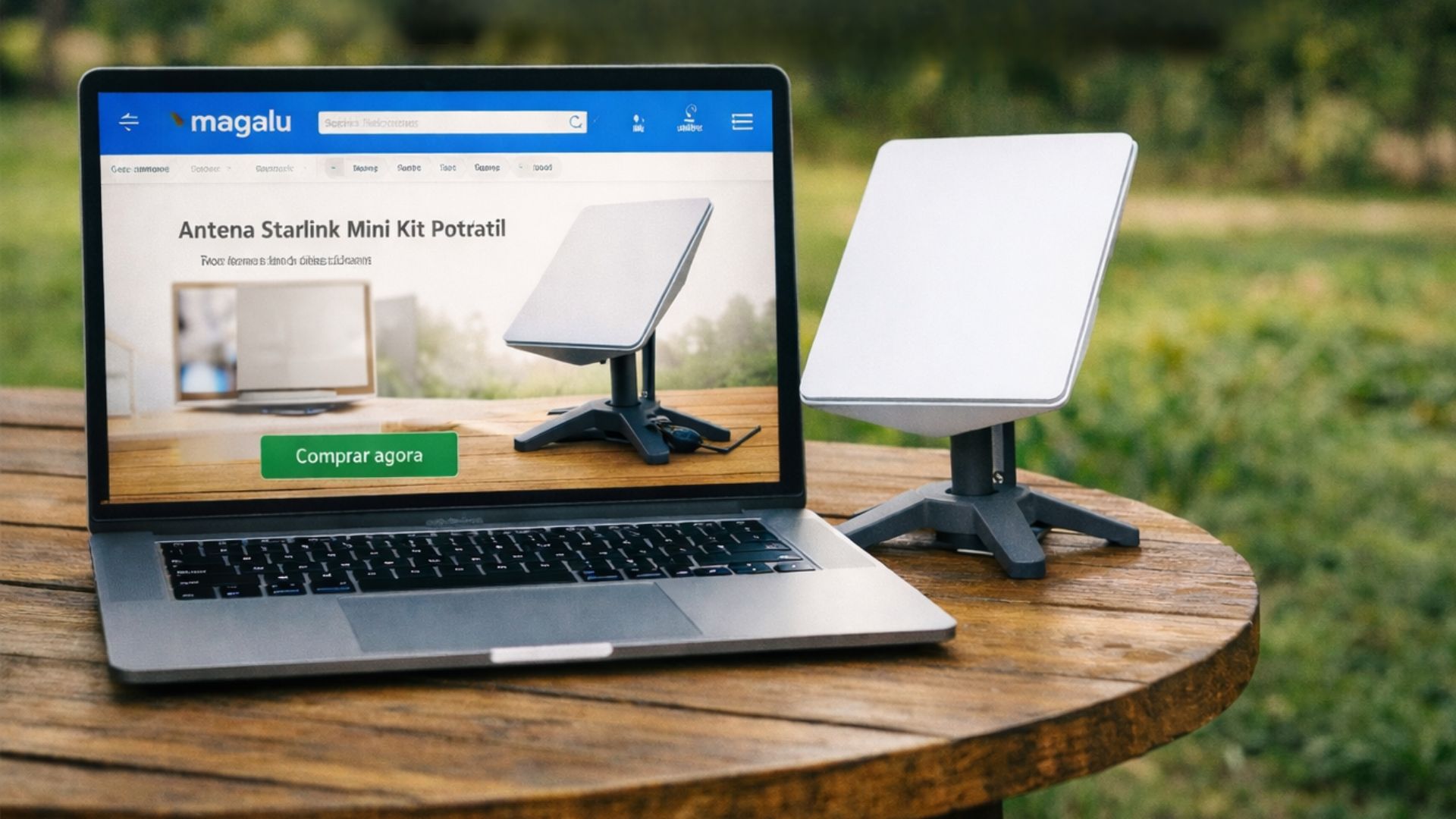
Aggressive offer in digital retail reignites interest in portable satellite internet, promising high speed, low latency, and operation in areas without traditional infrastructure, but requires attention to technical limitations, monthly costs, and differences between disclosed performance and official data.
An offer published by Magalu on AliExpress highlighted the Starlink Mini by announcing the kit for R$ 696 with a coupon, a price associated with a promotional campaign that circulated in digital retail.
The appeal of the offer focuses on the equipment’s proposal: to bring satellite internet to areas where fiber does not reach, with simplified installation and a focus on mobility, including during travel and in remote regions away from urban centers.
Starlink Mini: performance and promise of fast connection
In the Brazilian market, Starlink presents the Mini as a compact and portable kit, designed to fit in a backpack and operate with low latency in scenarios of use outside conventional infrastructure.
-
The most consumed fruit in the world is under pressure: the fusarium fungus tr4 is spreading through Cavendish banana crops, weakening plants, threatening harvests, and prompting experts to intensify research for resistant varieties.

-
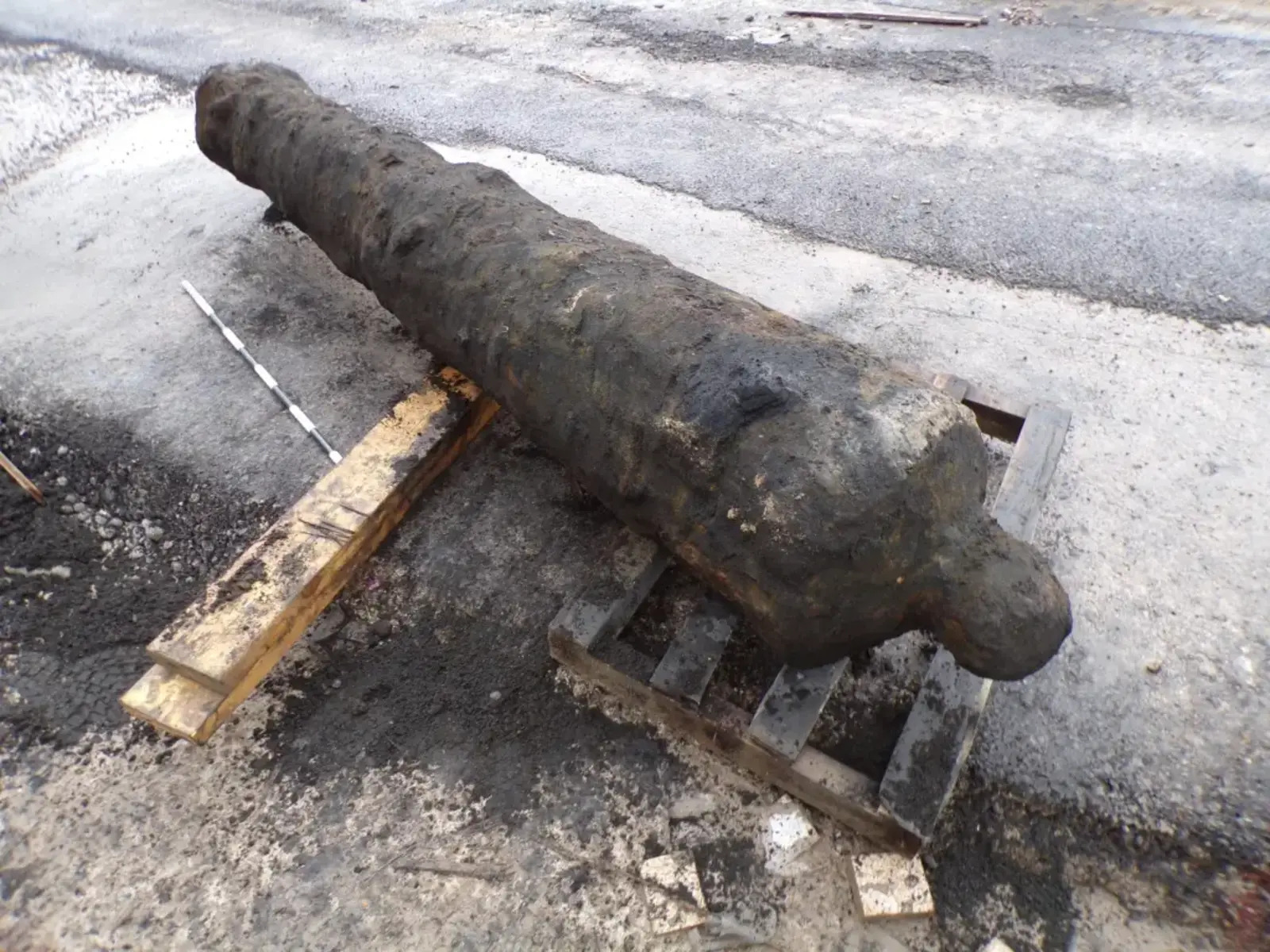
Workers were digging normally and came across a 300-year-old cannon, nearly 3 meters long and weighing over a ton, buried in an old dock area in the United Kingdom.
-
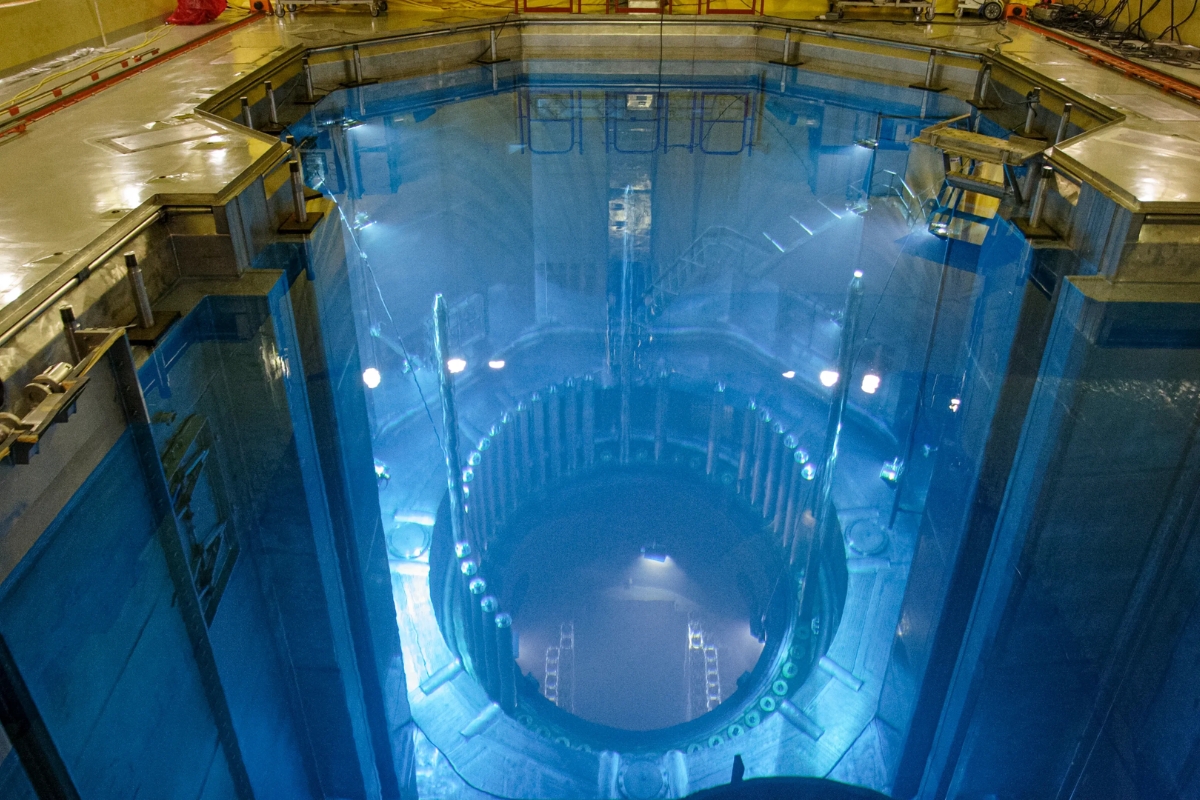
The water cooling system of the nuclear fuel pool in Fukushima has resumed operation.
-
With images from NASA’s Juno spacecraft, researchers detected lightning on Jupiter that is up to 100 times stronger than that on Earth.

The company itself highlights the Mini as a solution aimed at travel and areas with limited coverage, which helps explain the interest from drivers, rural property owners, campers, and users who depend on connectivity outside cities.

On the official Brazilian page, Starlink reports speeds of up to 100 Mbps for the Mini, while the company’s global site states that the network can reach 400+ Mbps in many places, without specifically attributing this ceiling to the portable model.
Therefore, the promise of 280 Mbps for the Mini does not appear clearly in the official references consulted, although the brand maintains the discourse of fast connectivity suitable for streaming, video calls, and simultaneous browsing.
Low latency continues to be one of the company’s main selling points.
Instead of relying on geostationary satellites, which are farther from Earth, Starlink operates with low-orbit satellites, which reduces response delay and improves performance in tasks that are more sensitive to connection time.
Still, in the official sources opened during the check, the company reinforces the concept of low latency, but does not establish, in all materials, a permanent guarantee of latency below 50 milliseconds.
Climatic resistance and energy consumption
Another relevant point for those considering using the equipment on the road, at a site, or on a vessel is the physical resistance of the set.
The technical sheet in Portuguese informs an IP67 rating with the correct cable installed, operation between -30 °C and 50 °C, functioning in winds above 96 km/h, and tolerance to rain of up to 25 mm per hour.
These data indicate a product designed for outdoor use and in less stable conditions than those found in enclosed urban environments.
The specification also shows important differences in relation to the broader promotional discourse.
The average consumption reported for the Mini is between 25 and 40 W, with power supply of 12 to 48 V 60 W and a minimum requirement of 100 W, 20 V/5 A, when used with a specific USB-C cable for cylindrical plug.
In other words, the idea of mobility makes sense, but field use still depends on a compatible power source, appropriate battery, or electrical structure prepared to support the equipment.
In the integrated router, the Mini works with Wi‑Fi 5, dual band 3 x 3 MU‑MIMO radio, one Ethernet LAN port with locking, coverage of up to 112 m², and support for up to 128 connected devices.
Additionally, the equipment is compatible with Starlink’s own mesh systems, but not with third-party meshes, a detail that may weigh in the decision of those looking to extend the signal in larger properties.
Promotional price does not include monthly subscription
The promotional price of the kit alone does not solve the entire cost equation.
After purchase, the connection only works with the separate hiring of a Starlink service plan.
In Brazil, the company maintains a residential offer starting at R$ 149 per month, according to the consulted official page, while the plan aimed at travel appears starting at R$ 315 monthly on the national site.
In a report published when the Mini arrived in the country, it was also reported that the travel plans associated with the equipment cost R$ 315 for 50 GB and R$ 576 for unlimited use, not considering the variable taxation by state.
This commercial design helps to understand why the Mini primarily attracts those who need internet outside the urban axis, but requires attention to the complete budget.
The discount on the hardware may be aggressive in specific retail actions, but the recurring expense remains decisive in determining whether the product is worthwhile in the medium term.
Although Starlink offers greater flexibility than traditional contracts in some modalities, the user needs to consider equipment, plan, available energy, and consumption profile before treating the offer as an automatic solution.
For whom the Starlink Mini makes more sense
The Mini tends to make more sense for profiles that cannot rely on a conventional fixed connection.
This is the case for those who spend long periods on farms, in wooded areas, on road segments, coastal zones, or seasonal properties without reliable terrestrial networks.
In these scenarios, the advantage lies not only in the advertised speed but in the possibility of establishing a functional connection in places where traditional operators often do not deliver stable broadband.
On the other hand, for purely domestic use in urban areas with established fiber optics, the gain needs to be compared carefully.
Starlink remains competitive in coverage and portability, but not necessarily in monthly cost or the full price of the equipment when the promotion disappears.
The company’s own website shows the Mini for R$ 999 upfront in a national offer, and Magalu displayed prices higher than the promotional in recent listings, reinforcing the sporadic nature of the advertised discount.







Seja o primeiro a reagir!