





 Portuguese
  English
  Spanish
  3 min of reading
  0 comments


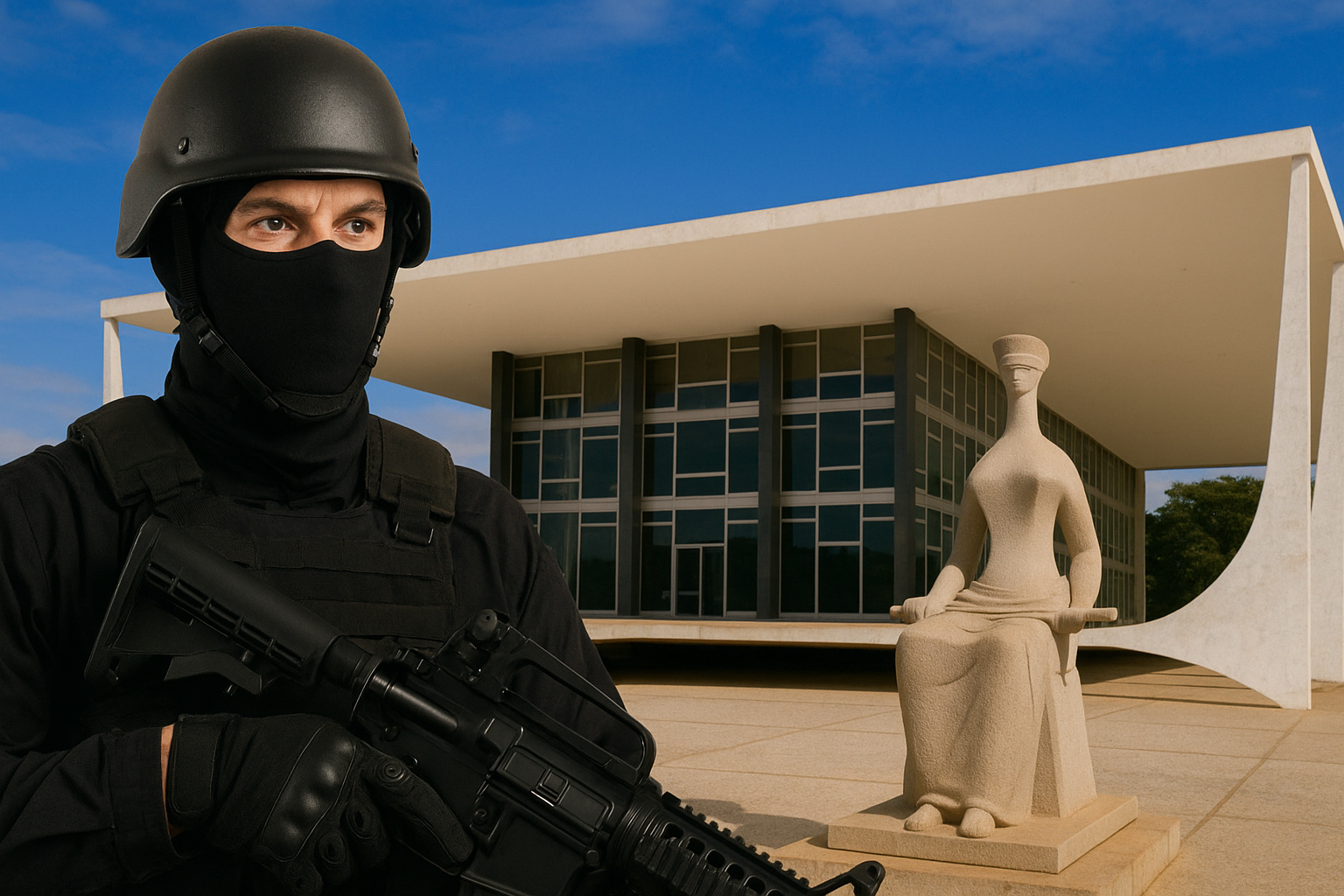
Supreme Court Rules That Only Laws Can Define Minimum Height for Public Security Positions. Understand the Impact of the Decision in Brazil.
Supreme Court Establishes New Rules on Minimum Height for Public Security Positions
The decision, published last Thursday (3), set the minimum height at 1.55 meters for women and 1.60 meters for men. The ruling has general repercussions and thus applies to all similar cases in Brazil.
The case analyzed involved a candidate from the Military Police of Alagoas, disqualified from the physical test for being 1.56 meters tall, below the requirement stated in the announcement.
-
With the arrival of Law 11.788, internships are now recognized as professional experience.

-
The Brazilian Civil Code states that a property owner has the right to cut the roots of a neighbor’s tree that invade their land, as long as it does not harm the tree itself. The owner must notify the neighbor before taking such action.

-
Engineer is sentenced to repay R$ 148 thousand after holding public positions in three municipalities in Rondônia with incompatible schedules, and the decision is upheld by the Court of Justice.

-
Chamber approves project that creates mandatory Life Insurance for police officers, firefighters, guards, and traffic agents.

From now on, states and security agencies will need to adjust their rules in accordance with federal legislation.
Supreme Court Changes Understanding and Reinforces Legality
With the decision, the STF standardizes the criteria for entry into public security careers across the country. Thus, no state can impose its own minimum height rules without legal support.
The Court also considered it unconstitutional to apply the requirement to positions without operational activity, such as healthcare firefighters and military chaplains.
Thus, the Supreme Court ensured that physical requirements are directly linked to the functions performed.
The court reinforced adherence to the principles of reasonableness and proportionality, which are fundamental in Brazilian law.
Alagoas Case Motivated the Ruling
The process began in Alagoas after a candidate was disqualified for not meeting the required height. The defense argued that the state rule was more stringent than that of the Army, violating the right to access public positions.
Furthermore, it highlighted that the average height of the Alagoan population is lower, making the requirement disproportionate.
The STF agreed with the argument and determined that the candidate would return to the competition. For the ministers, the criterion adopted by the state broke the principle of reasonableness.
The decision reinforces the role of the Supreme Court as the guardian of the Federal Constitution and defender of equality in public service.
Fairer and More Inclusive Public Security
By standardizing the criteria, the STF promotes greater equity in access to public security careers.
The measure reduces regional inequalities and ensures fairer conditions for all candidates. Thus, the court strengthens the principle of isonomy, which guarantees equal treatment under the law.
This decision also values merit and technical ability of candidates, putting aside purely physical requirements.
Constitutional law experts assert that the ruling favors a more inclusive and democratic public security.
Practical Effects and Next Steps
As the decision has general repercussions, all levels of the Justice System must follow it.
Thus, new public competitions will need to adjust their announcements in accordance with Federal Law No. 12,705/2012, which regulates entry into the Brazilian Army.
Furthermore, state governments and security agencies must review their local legislations to avoid new legal actions.
The decision creates an important legal benchmark and strengthens legal security throughout Brazil.










Seja o primeiro a reagir!