





 Portuguese
  English
  Spanish
  3 min of reading


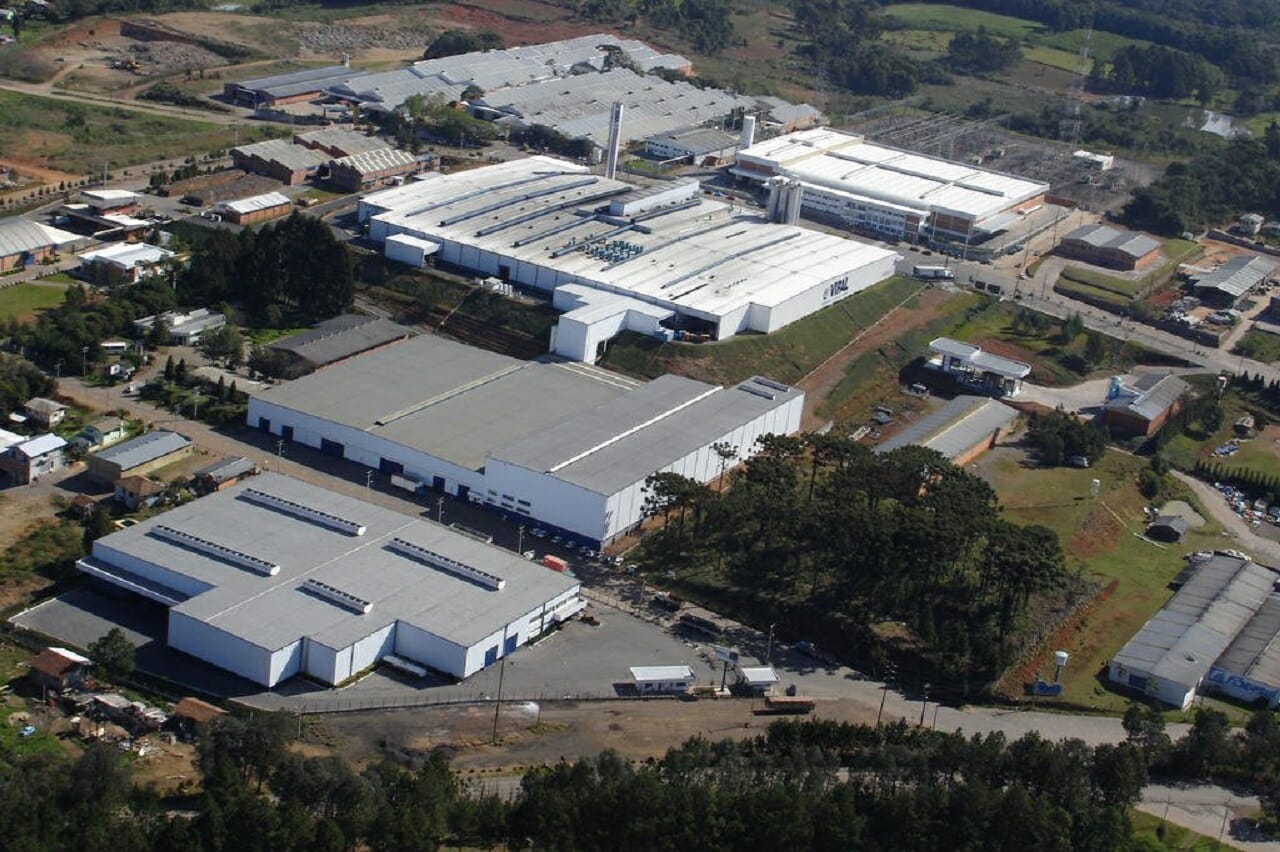
Company Develops Substitute for Petroleum Derivative Using Tree Waste. Product is Produced in Partnership Between Vipal Borrachas, Greenway, and Suzano Papel e Celulose.
A large part of the natural scent of eucalyptus is generated by the wood component called lignin, which acts as a kind of natural glue that helps the tree stand upright. In the pulp industry, however, lignin is a waste product that will now become a great substitute for petroleum derivative using tree waste.
Understand How the Petroleum Derivative Substitute Made from Tree Waste Was Produced
The lignin will become a raw material in a development that united the company Vipal Borrachas from Nova Prata with the Suzano group, a giant in paper and cellulose production, and Greenway, the sustainable business division of CYA, a distributor of chemical products in Brazil.
Lignin is considered a natural aromatic, but this is not related to the scent of eucalyptus. In chemistry, it is a raw material that contains a benzene ring. Usually, those used in the industry are petroleum derivatives. Thus, what Vipal did with Suzano’s raw material and Greenway’s technology was to create a fully sustainable petroleum derivative substitute using tree waste.
-
In Japan, a 150 kg humanoid robot named AIREC has begun testing to assist patients, change diapers, and alleviate a crisis where there is only 1 candidate for every 4.25 positions for elderly caregivers.

-
A cold air mass has already arrived in Brazil and is advancing in the coming hours with temperatures that may approach 0°C in the southern mountains and a risk of frost in the middle of April, surprising those who had not yet felt the autumn of 2026.

-
Equatorial Game aims to reach 120 thousand students with energy efficiency, gamification, and solar energy in public schools across seven states.

-
One of the worst volcanoes in history, which erupted 7,300 years ago, is raising alarms again because its caldera is filling with magma once more in Japan.

Besides homologating the raw material, Vipal has a connection to the origin of this project since in 2017, the company partnered with Suzano and the University of Caxias do Sul (UCS) and began studies on the behavior of lignin as an antioxidant, seeking sustainable ways to replace fossil sources.
From these studies, the solution that is now being used by the company emerged. According to Vipal’s product and process engineering manager, Rodemir Conte, the ability to prevent or delay oxidation processes showed, during the analyses, that lignin could be used as a natural source antioxidant for rubber.
Companies Comment on the Partnership
According to Conte, by being involved in the development of the petroleum derivative substitute since the beginning of the studies conducted six years ago, the company was able to follow the evolution of the work, which allowed a safe assessment of lignin’s protective function in rubber compounds for the production of products for tire repair.
Vipal employs Greenlig FR in the manufacturing of camelback, a compound for internal finishing, and tread bands at its factories located in Nova Prata and Feira de Santana (BA).
According to Greenway co-founder, industrial chemist Henrique Brito, in addition to contributing to the sustainability of Vipal products, the innovation with tree waste enhances the performance of the final product, as it performs similarly to imported antioxidants of petrochemical origin. By being nationally manufactured and locally stocked, the initiative also aids logistical operations.
Meanwhile, the new business manager at Suzano, Ananda Sá Dias, states that lignin belongs to the family of bioproducts developed by Suzano and is an innovative solution as an alternative to fossil-based inputs for high-performance industrial uses, such as those of Vipal. Ananda emphasizes that the product can be used as a natural antioxidant in other applications, such as conveyor belts, hoses, rubber soles, and other rubber artifacts.
About Vipal Borrachas
Founded in the 1970s in Nova Prata, Vipal Borrachas is one of the world’s leading companies in tire retreading capacity. The company is a leader in Brazil and Latin America, with over 250 authorized retreaders, more than 200 of which are in Brazil.
The company has become a specialist in the rubber industry, being the only one with a complete line of retreading and repair products for all types of tires. In addition, it provides products for the industry, motorcycle tires, and inner tubes, as well as producing machines for tire retreading.






Seja o primeiro a reagir!