





 Portuguese
  English
  Spanish
  5 min of reading
  3 comments


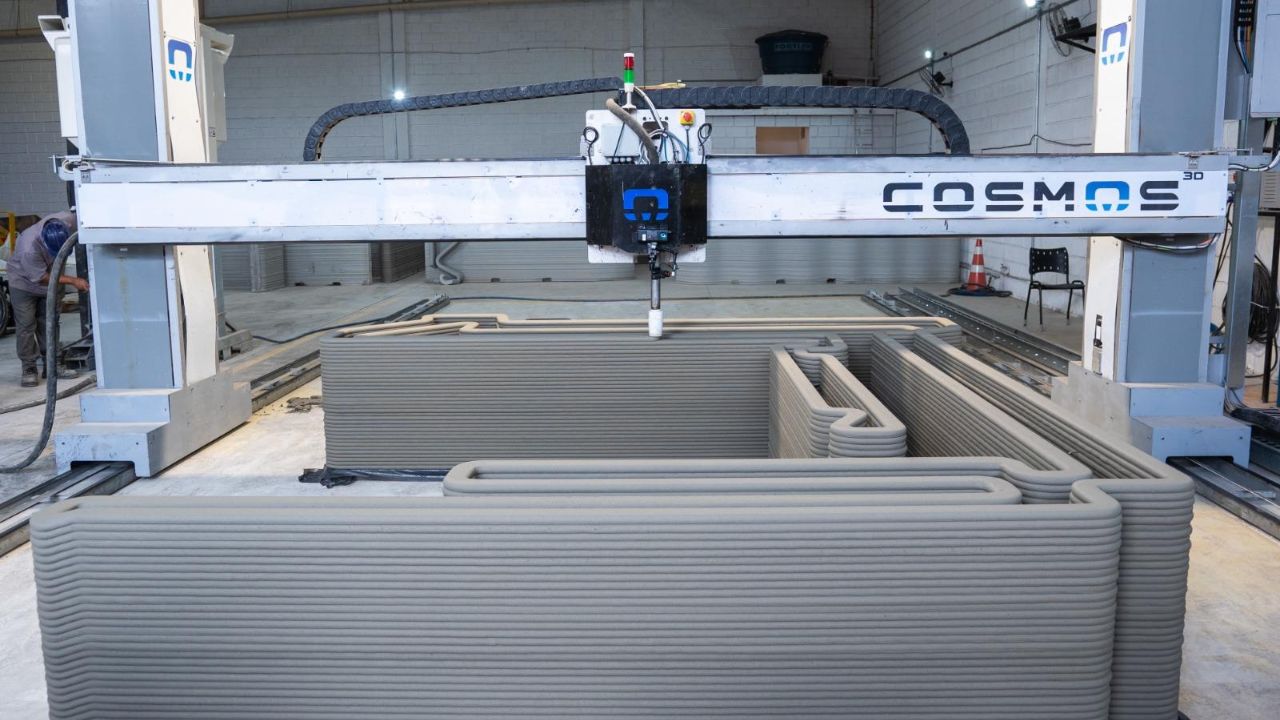


Accelerating Social Housing: Additive Manufacturing Technology Drastically Reduces Timelines and Takes Material Waste to Nearly Zero
The construction industry, one of the most traditional sectors in the world, is undergoing a quiet revolution, driven by 3D printing technology. What once took months to erect can now be completed in days. In Brazil, this innovation has the potential to be the key to accelerating social housing projects, compressing masonry schedules and directly addressing the chronic inefficiency and waste on construction sites.
The promise of building 3D printed houses is bold, but the commercial and technical reality shows that this 3D printing technology is maturing rapidly. While initial marketing spoke of “24-hour houses,” the real metric is the ability of an automated robot to guarantee a masonry structure in less than 8 days, as is already happening in Minas Gerais. More than speed, additive manufacturing technology brings a radical predictability to the project and a material efficiency that the sector hasn’t seen in decades, generating up to 80% less construction waste.
Myths and Facts About Speed: What Does It Mean to Build in “8 Days”?
The main appeal of 3D printing technology (3DCP) is its speed. Headlines of “houses in 24 hours” circulate as a marketing feat, but the engineering reality is more nuanced.
-
Congonhas receives the monorail promised for the 2014 World Cup after more than a decade of delays and becomes the first airport in Brazil with integrated subway.
-
Goodbye, concrete: a new trend in civil construction reduces the weight of the structure by up to 30%, accelerates projects by up to 40%, cuts costs on steel and labor, and improves thermal insulation with EPS.
-
Russian engineers create an innovative propeller blade for aircraft that could completely change the way airplanes and helicopters operate.

-
Couple finishes building PVC chalet on the beach on the last day, with air conditioning and curtains, but discovers the bathroom drain is inverted: water escapes from the drain, risking breaking the floor, and the rush continues before the trip.

The 24-hour period strictly refers to the printing time of the walls. It is the time during which the robotic arm deposits layers of concrete to form the structure. As detailed in pioneering projects, this timeline excludes foundation preparation, which is traditional, and the essential finishes, such as roofing, windows, and electrical and plumbing installations (MEP). The true metric, therefore, is not printing time but rather the total project time.
The real impact of the technology on the timeline is the compression of the masonry phase from months to days. A concrete example comes from the company Cosmos 3D, which operates in Minas Gerais. According to a report by the newspaper O Tempo, the first 3D printed house in the state, measuring 57m², was completed in a total of 8 days, divided into 4 days of printing and 4 days of assembly and finishes. The value lies in the quicker capital turnover for the developer, who gains a predictability of the robotic process, removing the uncertainty of manual labor productivity.
Sustainability: Material Waste Reduced to Nearly Zero
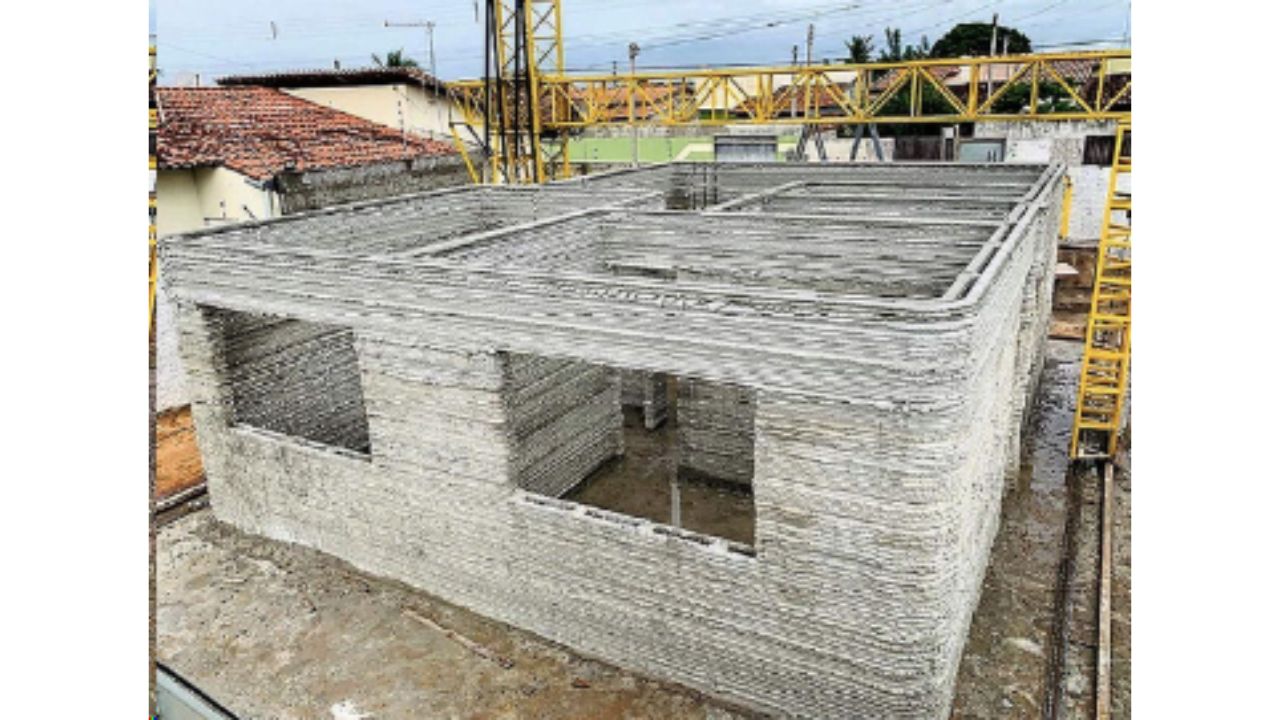
If the real speed of 3DCP is a matter of nuance, sustainability is a proven fact. The construction sector is one of the largest waste generators on the planet, accounting for 80% of global waste. 3D printing emerges as a direct solution to this inefficiency.
The essence of the technology, additive manufacturing, is the core of this change. Instead of cutting materials (subtractive method) or over-ordering, the printer deposits material (microconcrete or special mixtures) layer by layer, directly from a digital model. This precision eliminates cutting waste and the need for wooden forms (shuttering), which are major waste generators. Literature review studies, such as those published on Research Gate, validate that 3DCP can reduce material waste by up to 60%. Other industry studies point to reductions of up to 80%.
Furthermore, innovation in materials is a key point in Brazil. Instead of relying solely on Portland cement (which significantly contributes to CO2 emissions), R&D centers, such as those at UFSC, are focused on “tropicalizing” 3D printing technology. This includes using local and low-impact raw materials, such as soil and clay, seeking not only to reduce waste but also the embodied carbon in the structure.
Market Price: Why Does a Printed House Cost the Same as a Traditional One?
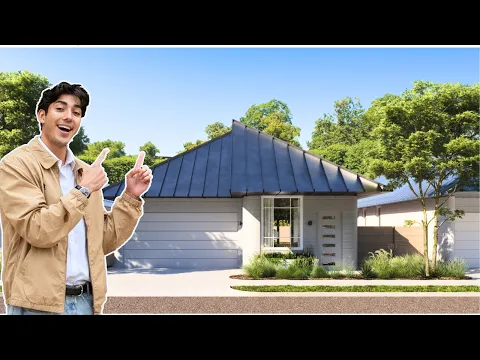

Economic accessibility is the most complex promise. The public has been anchored to the price of “$4,000 houses,” a prototype target that never materialized as a final price to consumers. An analysis of large-scale projects in the U.S., for example, at the “Wolf Ranch” community in Texas, shows that the 3D printed houses from ICON/Lennar are sold for prices ranging between $450,000 and $600,000, according to data from the Eduardo Duran channel.
This apparent contradiction is explained by the market strategy. The cost savings from 3D printing technology are not being passed on to the end consumer but are absorbed by the developer. The production cost reduction, conservatively estimated at about 30% in pilot projects, comes from three factors:
- Labor: Drastic reduction in the need for masons and specialized masonry.
- Waste: Direct savings in material purchases, thanks to additive precision.
- Capital Turnover: Shorter timelines reduce financing costs.
In the Brazilian context, Cosmos 3D demonstrated a 57m² prototype with a cost of R$ 120,000, reported by the newspaper O Tempo. This value is significantly above the $4,000, but it shows an accessible and viable product for the housing market. The company is already targeting this segment, with an announced partnership for the “Minha Casa, Minha Vida” program, signaling that the production savings can ultimately be directed towards the housing deficit in the country.
The Brazilian Bottleneck: Regulation and the Future of Financing
Despite the technical viability and commercial advancement, the mass adoption of 3DCP in Brazil faces a critical bureaucratic barrier: the lack of regulation.
For large-scale housing construction to be viable in the country, it depends on financing from the Caixa Econômica Federal. The Caixa, in turn, requires that new construction technologies (like 3DCP) have safety and performance approval from SiNat (National System of Technical Evaluations of Innovative Products). The problem is that this 3D printing technology is so new that it still does not have established records or guidelines within this system, as indicated in analyses from Research Gate.
This regulatory vacuum creates a vicious cycle: the Caixa does not finance without SiNat approval, and companies cannot generate the long-term and large-scale data that SiNat requires without financing. The current solution for pioneers is to operate under the municipality’s conventional regulations, but this is an insurmountable barrier for government projects and for the industrial scale needed to address the housing deficit. The liberation of 3D printing for social housing will depend on an urgent update of the SiNat regulations.
3D printing technology is not a myth. It is an industrial automation tool that is injecting efficiency, speed, and sustainability into a chronically analog sector. The real value lies in the waste reduction, design freedom, and schedule predictability, from months to a week.
Do you, as a resident, engineer, architect, or investor, believe that this technology will really change the Brazilian real estate market and accelerate social housing? What do you see as the main challenge for 3D printed houses in your municipality? Leave your honest opinion in the comments; we want to hear from those who live this reality or are following this change in practice.








eu acredito. é governo deveria agir mais rápido para solucionar. o que bom barato os gorventates não fas nada.
vamos unir forças e os internautas também pode ajudar a cobrar essas importantes conquistas. Nova era.
Fui diagnosticada com doença de Parkinson há quatro anos. Por mais de dois anos, dependi da levodopa e de vários outros medicamentos, mas, infelizmente, os sintomas continuaram piorando. Os tremores se tornaram mais perceptíveis e meu equilíbrio e mobilidade começaram a declinar rapidamente. No ano passado, por desespero e esperança, decidi experimentar um programa de tratamento à base de ervas da NaturePath Herbal Clinic.
Sinceramente, eu estava cética no início, mas, poucos meses após o início do tratamento, comecei a notar mudanças reais. Meus movimentos ficaram mais suaves, os tremores diminuíram e me senti mais firme ao caminhar. Incrivelmente, também recuperei grande parte da minha energia e confiança. Tem sido uma experiência transformadora. Me sinto mais eu mesma novamente, melhor do que me sentia há anos. Se você ou um ente querido está lutando contra a doença de Parkinson, recomendo muito que você considere a abordagem natural deles. Você pode visitar o site deles em ww w. naturepathherbalclinic.com
Fui diagnosticada com doença de Parkinson há quatro anos. Por mais de dois anos, dependi da levodopa e de vários outros medicamentos, mas, infelizmente, os sintomas continuaram piorando. Os tremores se tornaram mais perceptíveis e meu equilíbrio e mobilidade começaram a declinar rapidamente. No ano passado, por desespero e esperança, decidi experimentar um programa de tratamento à base de ervas da NaturePath Herbal Clinic.
Sinceramente, eu estava cética no início, mas, poucos meses após o início do tratamento, comecei a notar mudanças reais. Meus movimentos ficaram mais suaves, os tremores diminuíram e me senti mais firme ao caminhar. Incrivelmente, também recuperei grande parte da minha energia e confiança. Tem sido uma experiência transformadora. Me sinto mais eu mesma novamente, melhor do que me sentia há anos. Se você ou um ente querido está lutando contra a doença de Parkinson, recomendo muito que você considere a abordagem natural deles. Você pode visitar o site deles em w ww.naturepathherbalclinic.com