





 Portuguese
  English
  Spanish
  5 min of reading
  0 comments


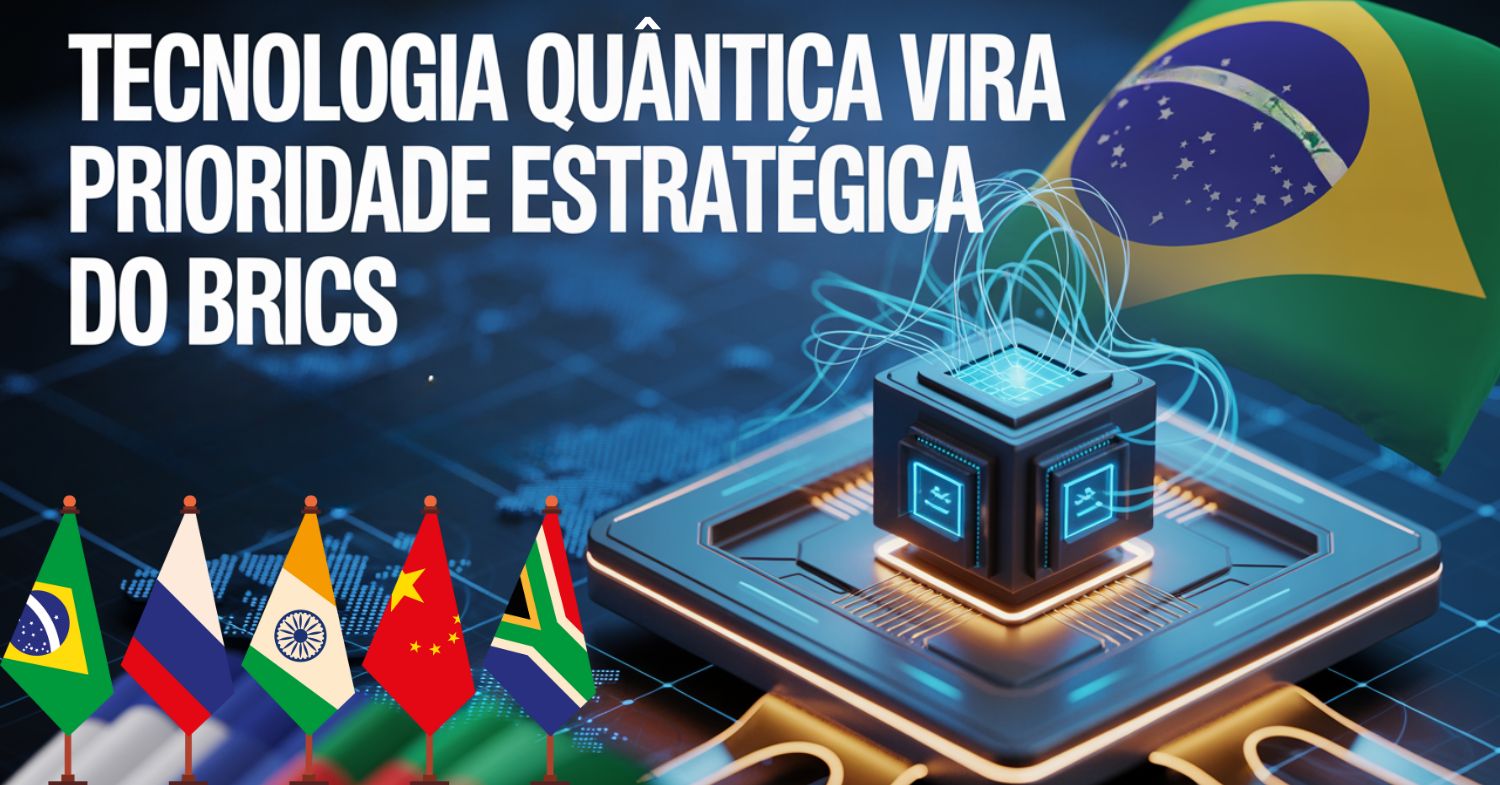
Final Declaration of the BRICS Summit in Brazil Places Quantum Technology as a Strategic Priority and Signals a New Global Race for Quantum Computing, Communication, and Sensors.
The final declaration of the BRICS Summit held in Brazil marked a silent yet profound turning point in the geopolitics of technology. For the first time, the bloc formed by Brazil, Russia, India, China, and South Africa explicitly placed quantum technology as a strategic priority alongside artificial intelligence, industrial innovation, and technological sovereignty. The decision is not symbolic: it repositioned BRICS on the global board of the next scientific and industrial revolution, one that could redefine economic power, national security, and technological leadership in the coming decades.
The text approved by the heads of state makes it clear that the group intends to coordinate cooperation in the development of quantum computing, quantum communications, ultra-precise sensors, and industrial applications, areas currently considered the “Holy Grail” of applied science. Countries that dominate these technologies will have advantages not only economically but also militarily, energy-wise, and informationally.
Why Quantum Technology Has Entered the Core of the BRICS Agenda
Quantum technology has ceased to be an academic experiment and has become a strategic state asset. Quantum computers promise to solve, in minutes, problems that would take classical supercomputers thousands of years to overcome. Quantum communications offer virtually unbreakable encryption. Quantum sensors allow for unprecedented measurements of gravity, time, magnetic fields, and movements.
-
Russia has broken the U.S. maritime blockade to send oil to Cuba and is now loading a second ship while Trump says that “Cuba is next” in a possible military action against the island.

-
Spain challenges the USA and closes its airspace for operations against Iran, raising global tension and provoking the threat of a trade rupture.

-
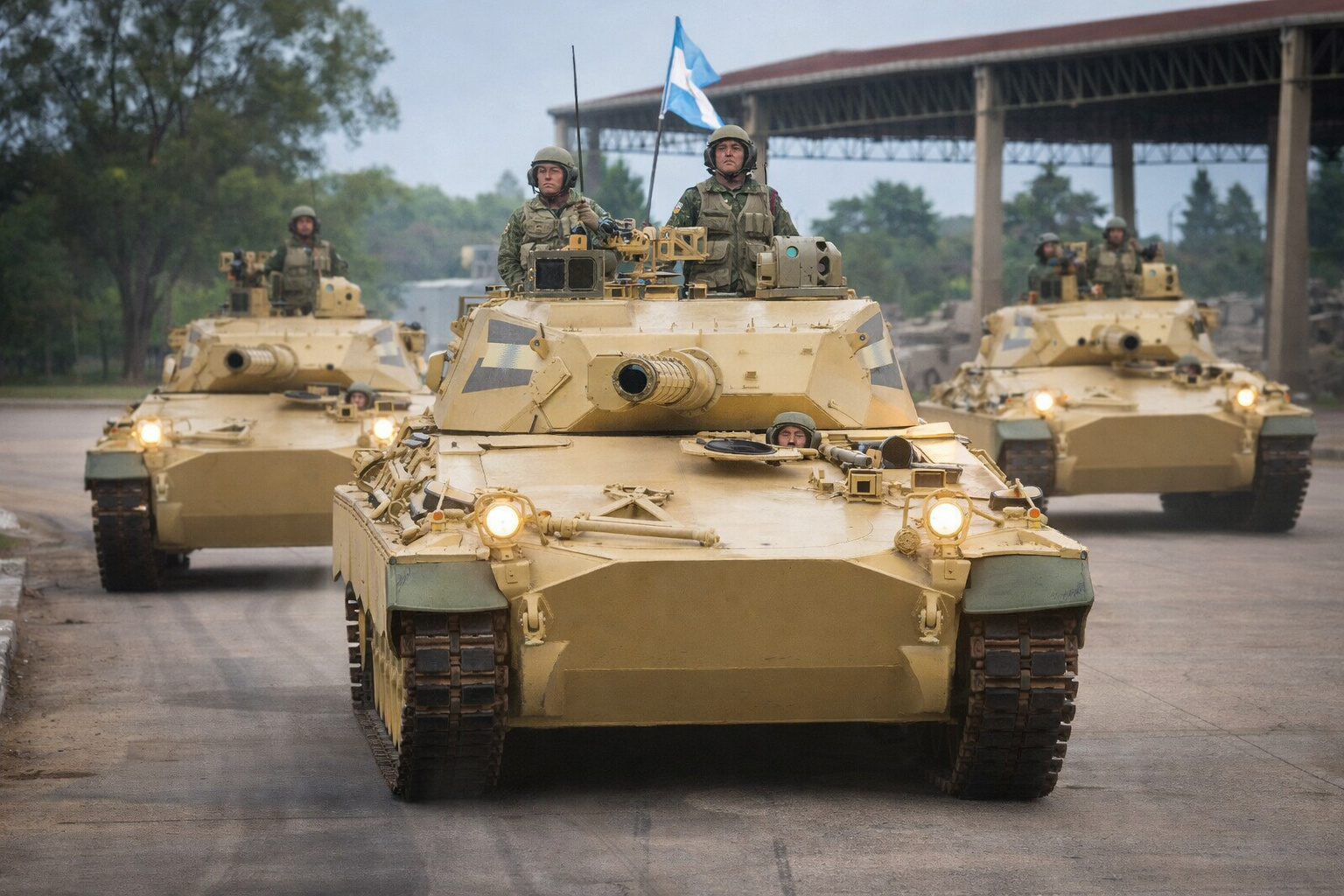
While no other country manufactures tanks in Latin America, Argentina activates the TAM 2C-A2 and raises a curiosity about the technological lag in the region.
-
A Russian ship with 730,000 barrels of oil has just arrived in Cuba while Mexico negotiates fuel sales through private companies: the communist island is desperately seeking alternatives after losing its supply from Venezuela due to American military action.




BRICS recognizes that remaining on the sidelines of this race would mean structural technological dependency on Western powers. The United States, European Union, and Japan are already investing tens of billions of dollars in national quantum technology programs. By elevating the topic to the summit’s final declaration, the bloc signals its intention to compete for this space in an organized manner, reducing asymmetries and creating its own knowledge, hardware, and application chains.
The Role of Brazil in the Bloc’s Quantum Agenda
Brazil emerges as a strategic articulator of this movement. During Brazil’s presidency of BRICS, science, technology, and innovation were placed as central axes of cooperation. The country already has established groups in quantum information, quantum optics, and sensors, operating within federal universities, research centers, and initiatives connected to the industry.
By hosting the summit that formalized the quantum priority, Brazil positions itself as a bridge between academic research, scientific diplomacy, and practical applications. This creates opportunities for attracting investments, forming international networks of researchers, and participating in large-scale joint projects, which is essential in a field where costs and complexity are high.
Quantum Computing: The Heart of the New Technological Race
Among all the topics mentioned in the declaration, quantum computing is the most disruptive. Unlike classical bits, qubits operate in superposition and entanglement, enabling massive parallelism. In practice, this could transform areas such as:
- Logistical and industrial optimization on a continental scale
- Climate modeling and forecasting extreme events
- Development of new materials, batteries, and fertilizers
- Drug discovery and molecular simulation
- Cryptography and information security
For BRICS countries, these applications have a direct impact on agriculture, energy, mining, defense, and infrastructure — key sectors of their economies.
Quantum Communications and Digital Sovereignty
Another central point is quantum communication, especially the quantum distribution of cryptographic keys. Unlike current systems, any attempt at interception alters the quantum state of the information, making espionage detectable.
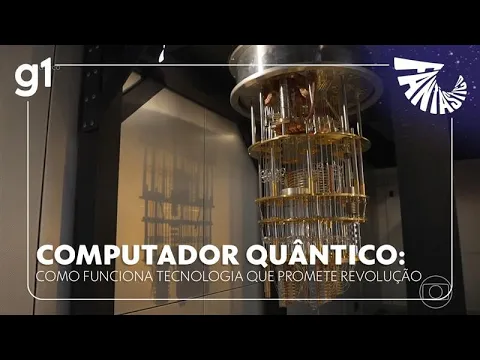
China and Russia have already made significant advances in this area, with quantum satellites and experimental networks. By bringing this topic to BRICS, the bloc indicates interest in sovereign communication infrastructures that are less vulnerable to cyberattacks, technological sanctions, and external surveillance.
Quantum Sensors: Impact Beyond Computing
Less known to the public, quantum sensors can be as transformative as computers. They allow for extremely precise measurements of:
- Gravitational variations, useful in mining and water prospecting
- Magnetic fields, applicable to navigation without GPS
- Time, with atomic clocks more accurate for power grids and telecommunications
- Microscopic movements, relevant for civil engineering and structural monitoring
For countries with vast territories, natural resources, and critical infrastructure, these sensors represent direct gains in efficiency, security, and planning.
Scientific Cooperation as a Geopolitical Strategy
The BRICS decision is not limited to technology itself, but to the way of cooperation. The bloc bets on knowledge sharing, multilateral projects, joint training of specialists, and integration between universities, research centers, and state and private companies.
This reduces individual costs, accelerates collective learning, and creates a technological base less dependent on patents and external platforms. In a global scenario marked by trade disputes and restrictions on the export of chips and advanced equipment, this cooperation gains strategic weight.
What Changes in the Global Competition for Technology
By elevating quantum technology to the status of a political priority, BRICS sends a clear message: the next technological revolution will not be a monopoly of a single geopolitical axis. The movement pressures other blocs to accelerate investments and expands competition for talent, equipment, and supply chains.
For Brazil, the decision creates a rare window. Countries that enter early into frontier technologies not only reap economic gains but also influence standards, norms, and protocols that shape the global market for decades.
A Silent Yet Historic Step
The inclusion of quantum technology in the final declaration of the BRICS Summit in Brazil may seem, at first glance, a technical detail. In practice, it is a strategic milestone. Just as the space race occurred in the 20th century and the digital revolution took place at the end of the last century, those who lead the quantum age will define the limits of technological power in the 21st century.
The decision shows that BRICS does not want just to keep up with the future — it wants to help build it. And this time, Brazil has been at the center of this choice.









Seja o primeiro a reagir!