






 Portuguese


Soil Sinking Driven by Natural Factors and Human Activity is Affecting Major Cities, Compromising Infrastructure, Increasing Flood Risks, and Potentially Doubling Relative Sea Level Rise in Densely Populated Coastal Regions
Regions of Mexico City are sinking by up to 2 centimeters per month due to soil subsidence, a phenomenon capable of compromising buildings, streets, bridges, tunnels, and drainage systems. The issue also affects cities in Asia, the United States, and Brazil and can exacerbate the effects of rising sea levels.
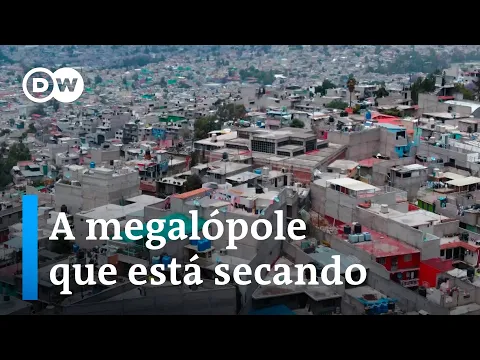

Soil Subsidence Can Cause Cracks, Collapses, and Drainage Issues
Subsidence is the gradual sinking of the ground caused by both natural geological processes and human activities.
-
Amazon to Spend Billions on New Mega Factory in the U.S. to Produce Robots Capable of Working Alongside Employees

-
China Submerges Hollow Sphere to 65 Meters, Turns Lake into Underwater Battery After 100+ Cycles in 10 Days

-
Nuclear Doomsday Submarine Becomes Reality: Russia Launches the Khabarovsk, Designed for Poseidon
-
Rock in Rio Becomes a Telecommunications Laboratory with Over 120 TIM Antennas, 45% Increase in 5G Infrastructure, and 5G Advanced Debut at Major Event as Over 100 Professionals and AI Systems Monitor a Network for 130,000 Daily Attendees


Although it is often barely noticeable on a day-to-day basis, its cumulative effects can significantly alter urban infrastructure.
The case of Mexico City gained attention after a NASA satellite mapping showed that certain areas of the capital are sinking by up to 2 cm per month.
According to Jefferson de Lima Picanço, a professor at the Institute of Geosciences at the State University of Campinas (Unicamp), land subsidence can have significant long-term impacts.
Among the problems cited are damage to streets, bridges, and tunnels, as well as the appearance of cracks and even the risk of house and building collapses.
Another effect occurs in drainage. Subsidence can reduce the drainage capacity of both natural and artificial channels, leaving urban areas more vulnerable to flooding and, in certain regions, to the intrusion of seawater.
Water quality can also be affected. According to Picanço, there is the possibility of changes in water quality and even salinization, while governments, companies, and residents may face additional costs for maintenance and repairs.

Groundwater Extraction is Among the Major Causes
The causes of the phenomenon vary. Among the natural processes are geological faults, tectonic subsidence, and the compaction or consolidation of existing sediment layers below the surface.
Among the human-induced causes, one of the most significant is the extraction of fluids from the subsurface, primarily groundwater, oil, and gas.
In Mexico City, the relationship with water is especially important. The city was built on lakes, and water demand has led to the exploration of groundwater, a process that causes land compaction.
In Asia, the issue is also related to the extraction of groundwater and the weight of urban structures in densely populated cities.
The United Nations Economic and Social Commission for Asia and the Pacific (ESCAP) describes subsidence as a “silent crisis” because it develops slowly and remains largely unseen until its effects become severe.
Cited examples include Jakarta, Indonesia, where the average sinking rate is 13.7 mm per year, and Tianjin, China, with approximately 13.5 mm annually.
Bangkok, Thailand, has a rate of 8.5 mm per year. Although the rates vary, the numbers demonstrate that land movement is not restricted to a single region or continent.
71% of the Coastal Population Lives in Sinking Areas
Land subsidence takes on another dimension when it occurs in coastal areas. A study published in the journal Nature directly links this movement to the relative sea level rise perceived by communities in these regions.
According to the research, 71% of the global coastal population lives in sinking areas.
In affected places, the rate of relative sea level rise can double, reaching approximately 6 mm.
Researchers stated that subsidence accounts for about half of the relative sea level rise currently experienced by coastal populations.
The study also points to the potential for mitigating this advance through reducing human-induced subsidence, especially through regulating groundwater extraction.
New Orleans, in the United States, exemplifies how different factors can act simultaneously. The city is built on young, loosely consolidated sediments, whose compaction contributes to sinking.
This process can be accelerated by groundwater and oil extraction. Studies also indicate that deep tectonic movements may represent a significant share of the subsidence in some areas, even where there is no extraction of water, gas, or oil.
In Brazil, the extraction of materials from the subsurface is also linked to one of the major cited cases. In Maceió, Alagoas, the extraction of rock salt over decades has been associated with land sinking.
Associated with the activities of Braskem, the phenomenon caused damage in areas of the neighborhoods of Pinheiro, Mutange, Bebedouro, Bom Parto, and part of Farol.
The process has led to the evacuation of thousands of properties and affected approximately 60,000 people.
Groundwater Control and Deep Foundations can Reduce Impacts
Besides the most severe damage, subsidence can manifest in everyday problems within properties.
Paulo A. C. Luz, a geotechnical specialist and professor at the School of Engineering at Mackenzie Presbyterian University, highlights that the safety of homes and buildings is among the main impacts for residents.
When there is a risk of collapse, the situation may force families to leave their homes temporarily or permanently.
Different types of sinking within the same area can also compromise the functionality of constructions.
Signs include stuck doors and windows, uneven floors, and difficulties for water to reach drains and drainage systems.
According to experts, reducing subsidence requires controlling land use, proper management of groundwater extraction, and oversight of mining activities.
In areas with soft clay subsoil, one of the suggested measures is to control the construction of high-rise buildings and require deep foundations supported by firmer layers.
Tokyo is presented as an example of controlling aquifer extraction. Strict regulations have reduced land subsidence rates, and currently, the city’s water supply comes from surface water reservoirs.
Another strategy involves so-called sponge cities, a concept that utilizes permeable pavements, green areas, rain gardens, and modern drainage systems to enhance water absorption and improve the urban capacity to cope with extreme events.
There are also measures directly targeting aquifers. Shanghai, in China, injects Yangtze River water back into the soil using old pumping wells, a method that should be combined with reduced groundwater extraction.
According to experts, Shenzhen and Chongqing in China, as well as San Salvador in El Salvador, also adopt artificial recharge measures.
In the construction sector, guidelines include monitoring buildings, deep foundations, structures capable of withstanding small movements without cracking, and flexible sanitation networks that allow pipes to adjust to soil shifts without breaking.
This report was prepared based on information, studies, and statements provided in the foundational material, including data from NASA, Unicamp, Mackenzie Presbyterian University, ESCAP, and research published by the journal Nature, with figures and statements preserved as per the consulted content.


