





 Portuguese
  English
  Spanish
  3 min of reading
  0 comments


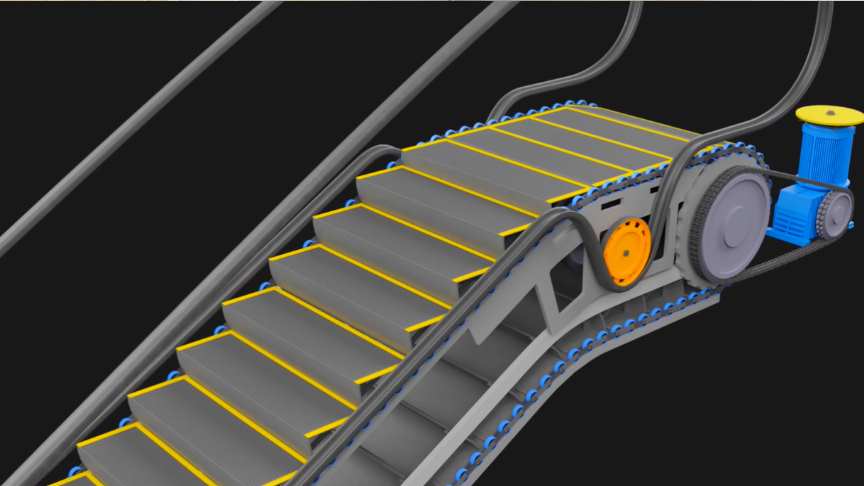
The Escalator Is One of the Most Fascinating Transportation Systems. Understand How Its Engineering Ensures Efficiency and Safety.
Escalators are essential elements of urban mobility, found in shopping malls, subways, airports, and commercial buildings.
They facilitate the movement of large numbers of people, replacing or complementing conventional stairs and elevators.
But have you ever stopped to think about how this seemingly simple machine works? We explore the mechanism behind it, its components, and its relevance in everyday life.
-
In Kenya, engineer Nzambi Matee created “bricks 2.0” using packaging plastic: a mixture with sand, heated and pressed; they are 5 times more resistant, already have official licensing, and are being used in streets and construction projects.

-
More than 20,000 positions could be opened, and thousands of technicians are starting to be trained in Brazil, as the expansion of data centers creates an urgent race for professionals to keep the internet, cloud, and artificial intelligence running 24 hours a day.

-
China approves the 15th Five-Year Plan 2026-2030 to become a global power: prioritizes brain implants, 6G with AI, humanoid robots, flying cars, quantum technology, and nuclear fusion, while strengthening defense and the economy.
-
HONOR X80i arrives with a massive 7,000 mAh battery, a 120 Hz AMOLED display with a brightness of 6,500 nits, and the new Dimensity 6500 Elite chip, promising up to 22 hours of video playback and impressive performance in casual gaming.


The Basic Operation
An escalator is essentially a conveyor belt in the form of steps, powered by an electric motor. Unlike a regular conveyor belt, the steps are designed to remain level as they ascend or descend.
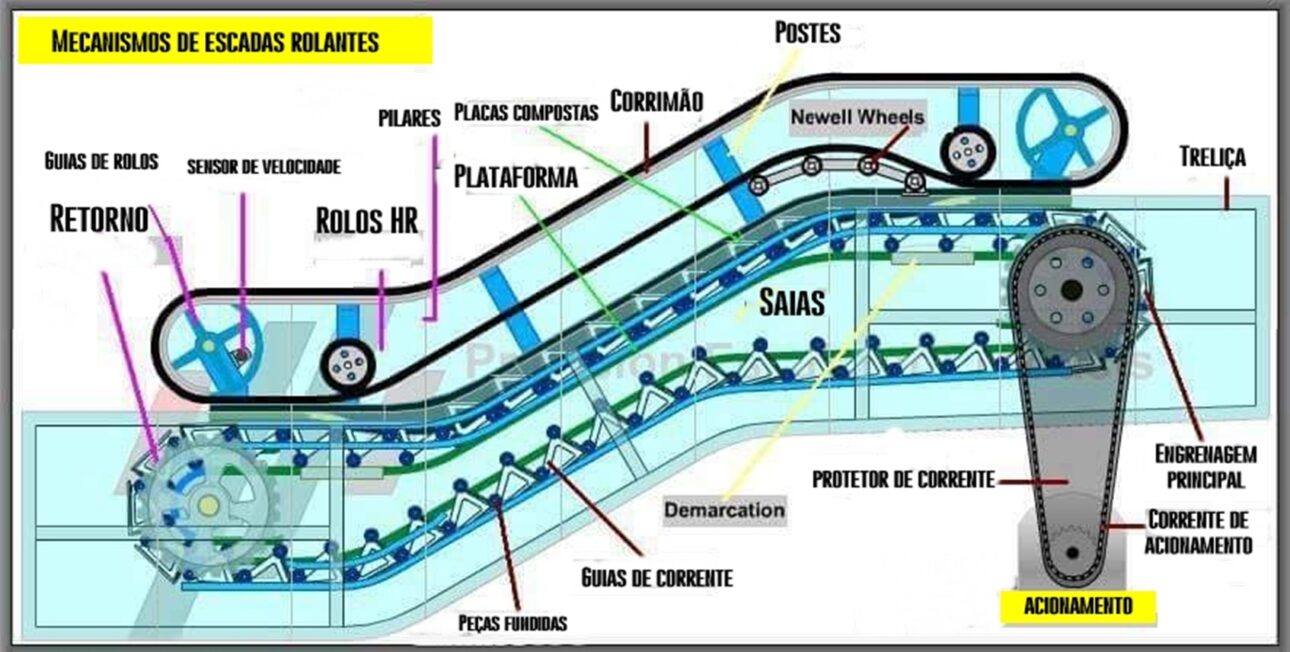
This mechanism operates through a set of gears and chains that connect the steps to a guiding rail.
The main components of an escalator include:
- Steps: Metal, with grooves for better grip and painted edges for safety.
- Handrail: Driven by the same motor as the steps, ensuring synchronization with the escalator’s movement.
- Chains and Rails: Responsible for guiding the steps and keeping their movement smooth.
- Motor and Gears: Typically located at the top of the escalator, providing the necessary power for movement.
- Truss: Metal structure that supports the entire mechanism.
The Engineering Behind It
The secret of how escalators work lies in the strategic positioning of the rails. Each step is connected to two wheels, one at the front and another at the back. The upper rails keep the front and rear level throughout the straight trajectory, allowing the steps to remain flat for passengers.
When the escalator reaches the end of its run, the steps disappear into the structure, rotate, and return to the starting point at the bottom of the escalator. This circular motion is continuously maintained by the motor and gear set.
Efficiency and Usage
Escalators are designed to be highly efficient, moving a large volume of people quickly. In high-traffic areas, such as subways, they are arranged in patterns that optimize pedestrian flow, and they can be installed side by side or in a zig-zag, depending on the available space.
One advantage of escalators over elevators is that they allow a continuous flow of people, eliminating the need to wait. Additionally, their use is not restricted by weight or capacity limits like elevators.
Safety and Accident Prevention on Escalators
Although they are safe, escalators can pose risks if used improperly. According to data from the US Bureau of Labor Statistics and the Consumer Product Safety Commission, around 30 deaths and 17,000 serious injuries are reported annually in the United States due to incidents involving escalators and elevators.
Some measures to enhance safety include:
- Avoid running or jumping on the steps.
- Stay in the center and hold onto the handrail.
- Be careful that loose clothing or shoelaces do not get caught in the steps.
- Supervise children and the elderly when using the escalator.
To prevent accidents, modern escalators are equipped with safety sensors that can stop operation in case of obstructions or mechanical failures.
Innovations and the Future
With technological advancements, new versions of escalators have been developed to further optimize urban mobility. Recent innovations include:
- Sustainable Escalators: Models that use more efficient motors and recyclable materials to reduce environmental impact.
- Moving Walkways: Without steps, these walkways facilitate the transportation of people with luggage or shopping carts in airports and shopping centers.
- Spiral Escalators: Designed for compact environments, they allow transportation between floors without taking up much space.
Escalators are indispensable machines in the modern world, providing accessibility and convenience in large spaces. Their operation is based on an ingenious mechanism that combines steps, rails, and motors to ensure safe and efficient transportation.







-

-

3 pessoas reagiram a isso.