





 Portuguese
  English
  Spanish
  5 min of reading
  0 comments


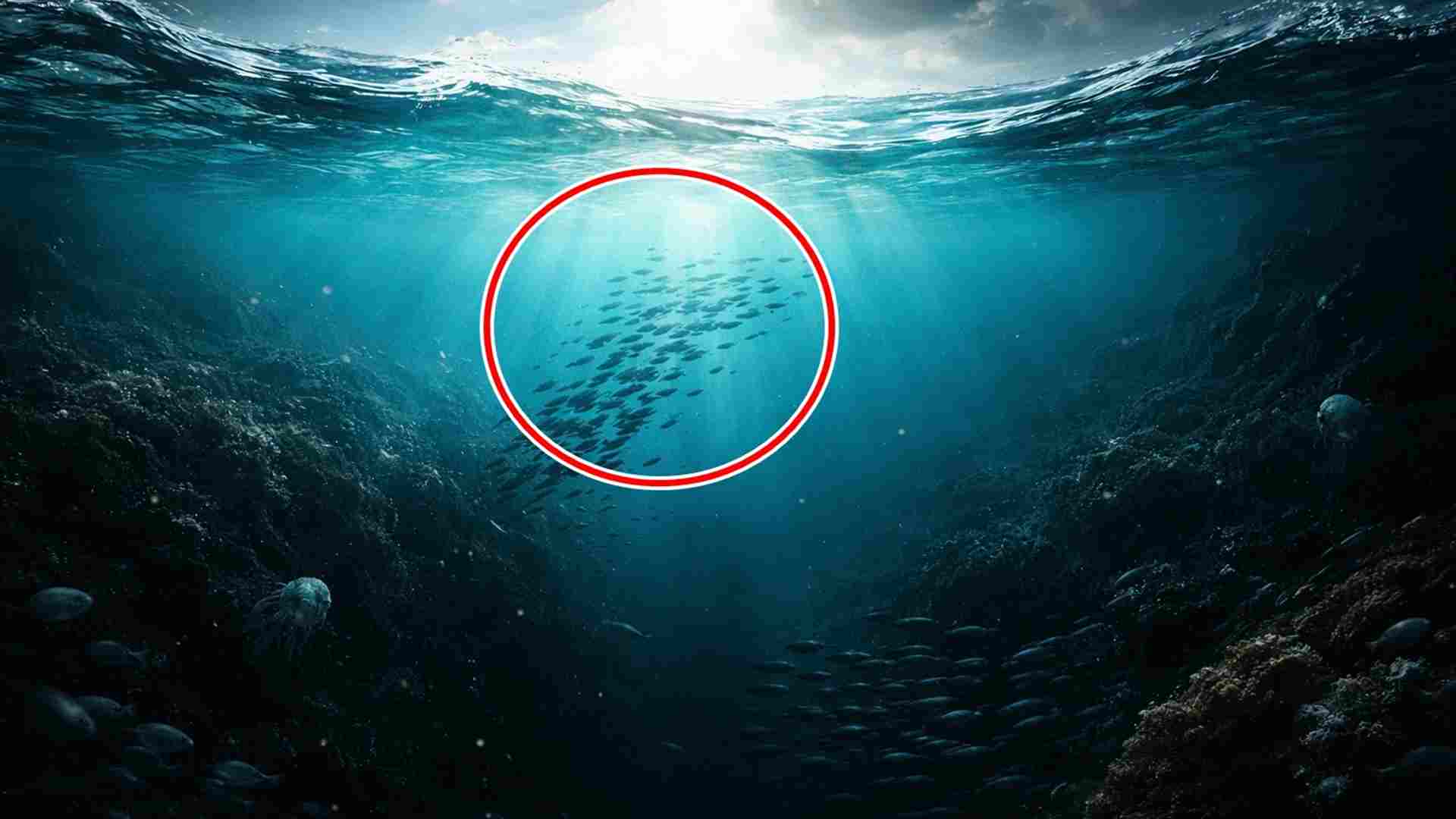
The darkening of the oceans is a growing reality, affecting everything from the microscopic life of phytoplankton to large marine predators. A study reveals that 1/5 of the world’s oceans are becoming more opaque, altering ecosystems and the carbon cycle.
The phenomenon of ocean darkening has gained attention among marine scientists, particularly following a recent study conducted by Tim Smyth and his team at the Plymouth Marine Laboratory in the United Kingdom.
The study revealed that large areas of the oceans are progressively becoming more opaque, hindering light penetration at the surface and affecting the balance of marine ecosystems.
This phenomenon can have significant implications for marine life and global climate, as light is a crucial factor for the biological processes that sustain marine biodiversity.
-
An engineer designs a solar plane to fly on Mars at an altitude of 1,000 meters and a speed of 300 km/h, covering 16,000 kilometers in a Martian year, 900 times the distance traveled by the Ingenuity helicopter in three years on the planet before experiencing a rotor failure, and NASA is already funding the feasibility study.

-
A new phenomenon of contactless magnetic friction intrigues scientists and questions a theory that has been valid since the 17th century.

-
An impressive phenomenon in Northern Brazil causes rivers of different colors to flow side by side, revealing secrets about sediments, currents, and biodiversity.
-
While many schools are still struggling with the basics, a teacher in China went viral for having elementary school students build a two-stage rocket using plastic bottles, water, and pressurized air in a science class that caught the attention of the entire world.


What is causing the darkening of the oceans?
The darkening of the oceans can be observed in both coastal regions and the open ocean. In coastal areas, changes in land use and pollution from fertilizers have been the main contributors to the reduction of the optical quality of the waters.
The increase in agriculture and deforestation influences the amount of dissolved and suspended substances in river waters, which are transported to the sea during flood periods. These materials, which include dissolved organic matter, color the waters and hinder light entry.
Additionally, the increase in nutrient concentrations in coastal waters, especially due to the use of fertilizers in industrial agriculture, has driven the growth of phytoplankton, which in turn contributes to the darkening of the waters.
These phytoplankton, as they proliferate, block sunlight, creating a dense layer that prevents light from penetrating the deeper layers of the ocean.
Impacts of ocean darkening on marine ecosystems
The effects of ocean darkening on marine ecosystems are complex and encompass different levels of the food chain.
At the bottom of the chain, phytoplankton, which are responsible for photosynthesis and oxygen production, have their capabilities limited as light becomes scarcer in the deeper layers. This can compromise the primary productivity of the ocean, affecting the entire marine food chain.
Zooplankton, such as copepods Calanus, which play a crucial role in energy transfer to the species that feed on them, also face challenges. These organisms perform a daily vertical migration, rising to the surface at night to feed and descending during the day to escape predators that rely on sight.
However, the reduction in light penetration may restrict this migration, compressing the available habitat for these organisms and intensifying competition for resources.
This phenomenon may also affect species that rely on sight to hunt, such as small fish and larger predators, such as tunas. If light cannot penetrate the waters as efficiently, these species may be forced to hunt in more restricted and shallow areas, which could alter the balance of ecosystems.
The impact of ocean darkening on the carbon cycle
In addition to affecting marine biodiversity, ocean darkening may also influence the global carbon cycle. Zooplankton, by migrating to the depths of the ocean, help transport carbon to the deeper layers, where it is stored for long periods. This process is known as the “biological pump” and is essential for reducing carbon dioxide levels in the atmosphere.
However, with the reduction of vertical migration of zooplankton, the carbon that would previously be transported to the depths may remain in the upper layer, where it can be returned to the atmosphere through respiration.
This may reduce the efficiency of the ocean as a carbon reservoir, exacerbating climate change and contributing to the increase in global temperatures.
Changes in environmental conditions and the role of global warming
Global warming has been one of the main drivers of the changes observed in the oceans. The rise in sea water temperatures, the increase in the frequency of marine heatwaves, and changes in salinity affect ocean circulation patterns.
These changes can, in turn, influence the distribution and intensity of phytoplankton blooms, which are one of the direct causes of water darkening.
Scientists believe that global warming is altering the favorable conditions for phytoplankton growth, creating more stable surface water layers that limit the vertical mixing of waters.
This process concentrates nutrients and light in the upper layers, facilitating excessive phytoplankton growth and contributing to the darkening of the waters.
What can be done to reverse the darkening of the oceans?
While scientists are still investigating the best ways to combat ocean darkening, some solutions are already being tested, especially in coastal regions. One of the most promising efforts involves improving land management, particularly regarding the use of fertilizers and the preservation of natural vegetation.
The AgZero+ program, which brings together scientists and farmers, seeks to develop more sustainable agricultural practices, such as the smart use of fertilizers and the adoption of nature-based solutions, like agroforestry, to reduce the amount of pollutants that reach rivers and, consequently, the oceans.
In the open ocean, the challenges are much more complex. Even if global emissions are reduced to zero, it may take decades, if not centuries, for the ocean to recover. Restoring the clarity of open ocean waters depends on much broader changes in ocean circulation patterns and global climate conditions.
The future of the oceans and their recovery capacity
Despite the difficulties, there are reasons for optimism. The ocean has a remarkable capacity for recovery when environmental conditions are restored. An example of this is the kelp forests along the California coast, which, after intense marine heatwaves, recovered more quickly in protected areas where natural ecological relationships, such as the balance between predators and prey, were preserved.
The expansion of marine protected areas is seen as one of the best strategies to ensure that marine ecosystems recover more quickly.
These areas function as ecological recovery zones, allowing species and habitats to regenerate. In a warming world, these areas may be crucial in helping marine ecosystems withstand climate shocks.
In summary, ocean darkening is a concerning phenomenon, but not irreparable. If we take steps to reduce pollution and protect marine habitats, we have the chance to restore the health of the oceans and ensure that they continue to play their vital role in regulating the climate and sustaining life on the planet.
This article was based on information from Tim Smyth, a marine scientist at the Plymouth Marine Laboratory, who led the study on ocean darkening and its impacts on marine ecosystems.








Seja o primeiro a reagir!