Portuguese
 Spanish


Research published in PNAS shows that thymine acts as a molecular sunscreen, absorbing UV rays and directing genetic damage to areas where it is much easier to repair
Researchers at Texas A&M University have discovered how DNA’s evolution overcame ultraviolet radiation on early Earth. In a study published in PNAS, the team showed that thymine, a chemical component found only in DNA, absorbs harmful sunlight and directs damage to areas that are easier to repair.
But how does thymine protect genetic material?
For decades, scientists have tried to understand why DNA replaced RNA as the primary genetic archive of living things. While RNA uses uracil in its structure, DNA uses thymine.
That substitution seemed risky. Thymine undergoes more changes when exposed to the Sun’s ultraviolet (UV) rays, a critical concern before Earth had an ozone layer to filter the radiation.
-
Chinese scientists discover light itself can hinder space travel at 75% of light speed

-
Museum specialist Hanneke Jacobs found the first piece of jaw of a new 7-million-year-old civet of at least 20 kg on an island 265 km west of Abu Dhabi, the first animal of its family ever found in Arabia.

-
Public-school students in Paraíba state, Brazil, create rocket with 3D-printed parts to restore deforested parts of the Caatinga with native seeds

-
China advances in humanoid and quadruped robot chips with 700 TOPS platform and new tech headquarters



Tests led by Professor Peter Rentzepis’s team showed why this evolutionary choice was made. Thymine does not prevent light from causing damage, but it controls where that damage occurs.
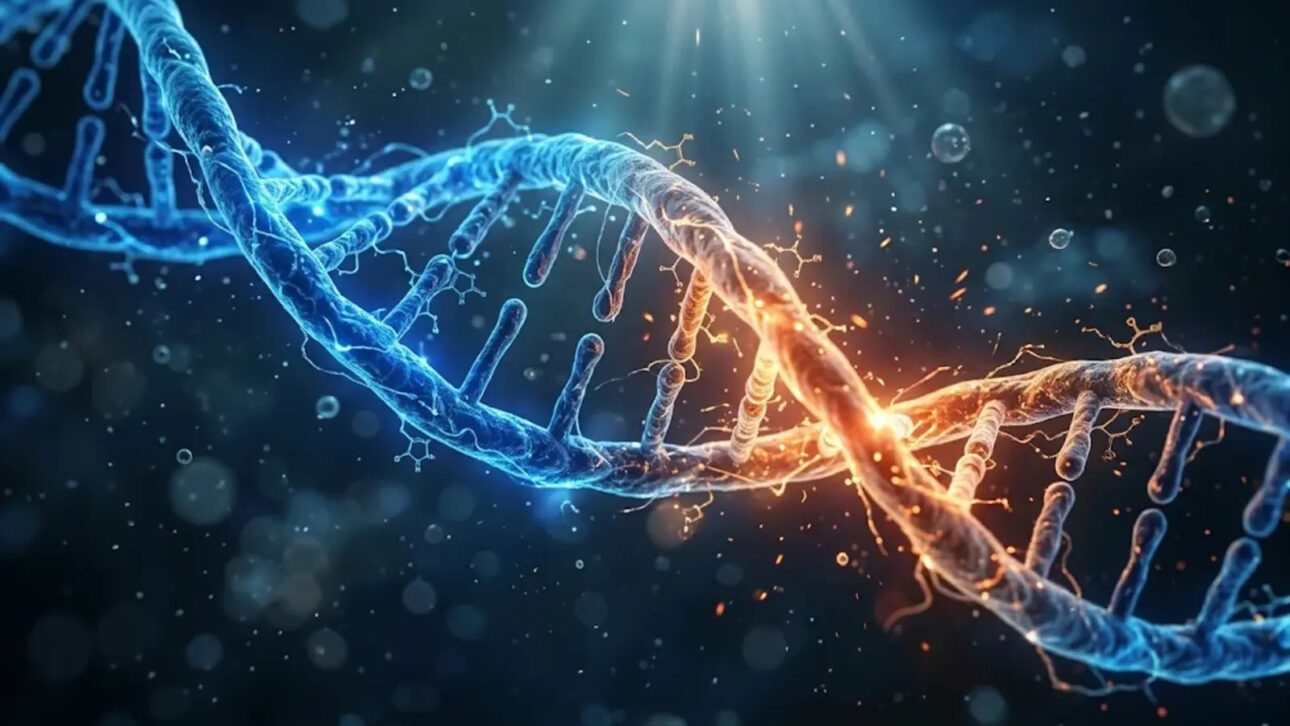
By absorbing solar energy, it concentrates changes in the genetic bases themselves, sparing more vulnerable parts of the molecule and making later repair easier.
“We found that thymine tends to direct UV damage into a more reversible form, suggesting that the earliest genetic molecules may have survived intense sunlight not by avoiding damage, but by controlling it and making self-repair easier“, said Keyvan Khosh Abady, a research assistant on the study.
The substance acted as a molecular sunscreen, the researcher said. The survival of the earliest organisms depended more on their ability to repair damage than on withstanding radiation without being affected.
Using light to test DNA’s evolution
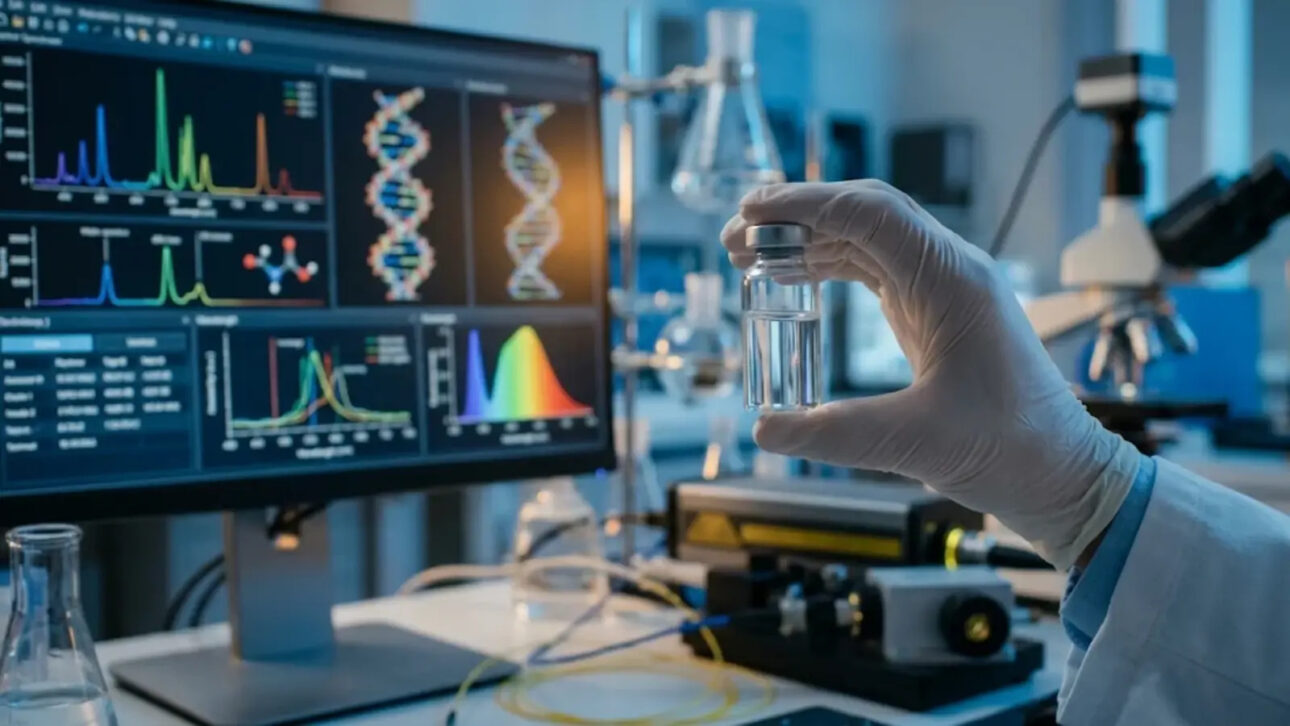
To observe this behavior, the group reproduced early Earth’s UV radiation in the laboratory and applied controlled doses to samples of thymine and uracil.
The analysis used biophotonics techniques, a field of science that investigates biological materials by observing how they react to light.
The scientists used three specific methods: absorption spectroscopy, fluorescence and Raman spectroscopy. These tools measure how each molecule absorbs, emits or scatters light energy.
In addition to Rentzepis, of the Department of Electrical and Computer Engineering, and Khosh Abady, the study also involved researcher Negar Karpourazar.
Applications in water treatment and microorganism detection
The experiments produced a new set of reference measurements on the optical behavior of these molecules.
These records serve as a light signature. In practice, they help identify disease-causing microorganisms more quickly and accurately.
“The distinct spectral signatures we measured could support applications in the faster, more sensitive detection of pathogens and in monitoring the effectiveness of UV disinfection in inactivating microorganisms, particularly in water treatment systems”, Khosh Abady explained.
With these parameters, water treatment plant operators will be able to verify more confidently whether the radiation used actually neutralized harmful agents.
Next steps investigate the components’ extraterrestrial origins
After explaining how DNA dealt with solar radiation, researchers at Texas A&M University are now turning to an earlier stage in biological history.
The group’s next goal is to find out which chemical reactions brought thymine, uracil, and other basic building blocks together to form the first genetic systems.
The team also plans to test whether all these ingredients originated on Earth or whether some arrived on the planet aboard meteorites.
“We hope to explore whether the basic chemical components of life formed and combined entirely on Earth, or whether some were brought to our planet from elsewhere by meteorites and later incorporated into the first genetic systems”, Khosh Abady said.
Article prepared based on data and information from: ScienceDaily.