





 Portuguese
  English
  Spanish
  3 min of reading
  0 comments


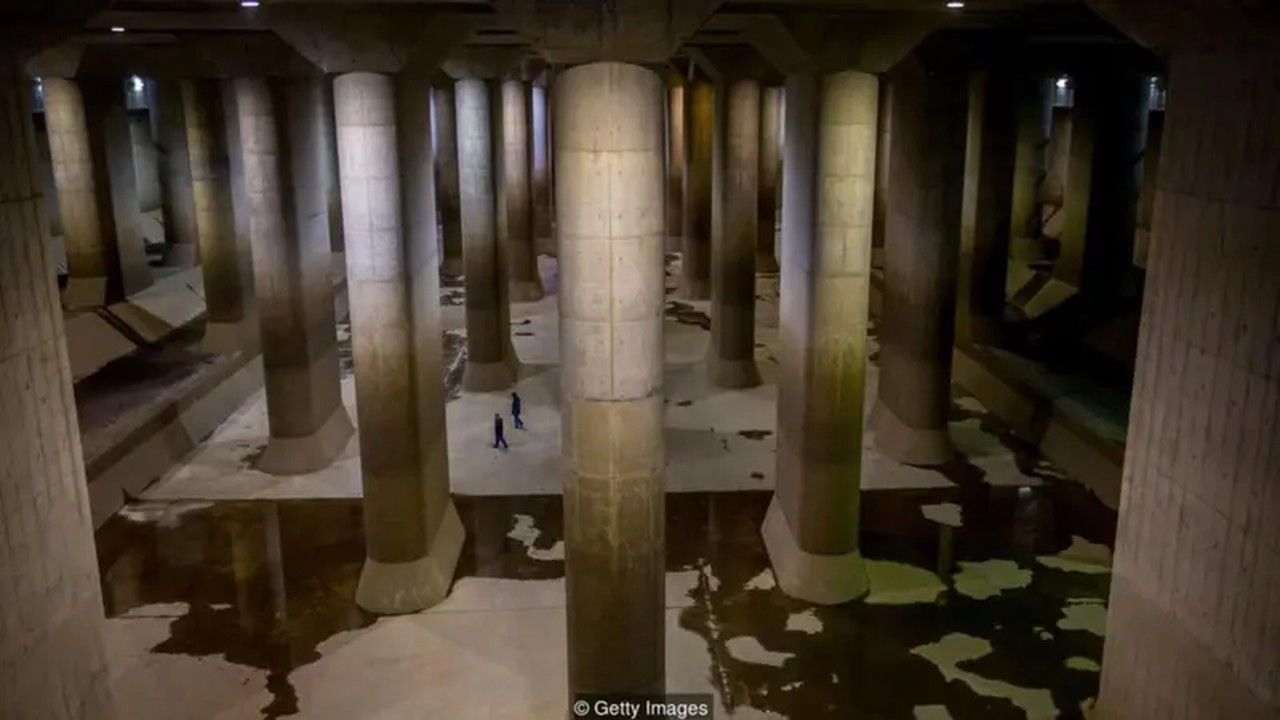
Tunnels And Sensors That Monitor And Divert Up To 670 Thousand m³ Of Water In Real Time, Preventing Tragedies And Serving As A World Example Of Urban Resilience
After the typhoon of 1958, which left more than 1,200 dead, Japan realized that it was not enough to raise levees or open narrow channels. It was necessary to coexist with water and anticipate its paths. Hence, a macro-strategic urban drainage plan was born, treating each neighborhood, reservoir, and sensor as part of a single system.
Tokyo does not react to flooding; it anticipates, stores, and redistributes.
The Underground Heart: The Main Chamber And The Colossal Shafts
In the underground of the metropolitan area lies the core of the system, known as G-Cans (Tokyo Metropolitan Area Outer Underground Discharge Channel). It integrates six pillars:
-
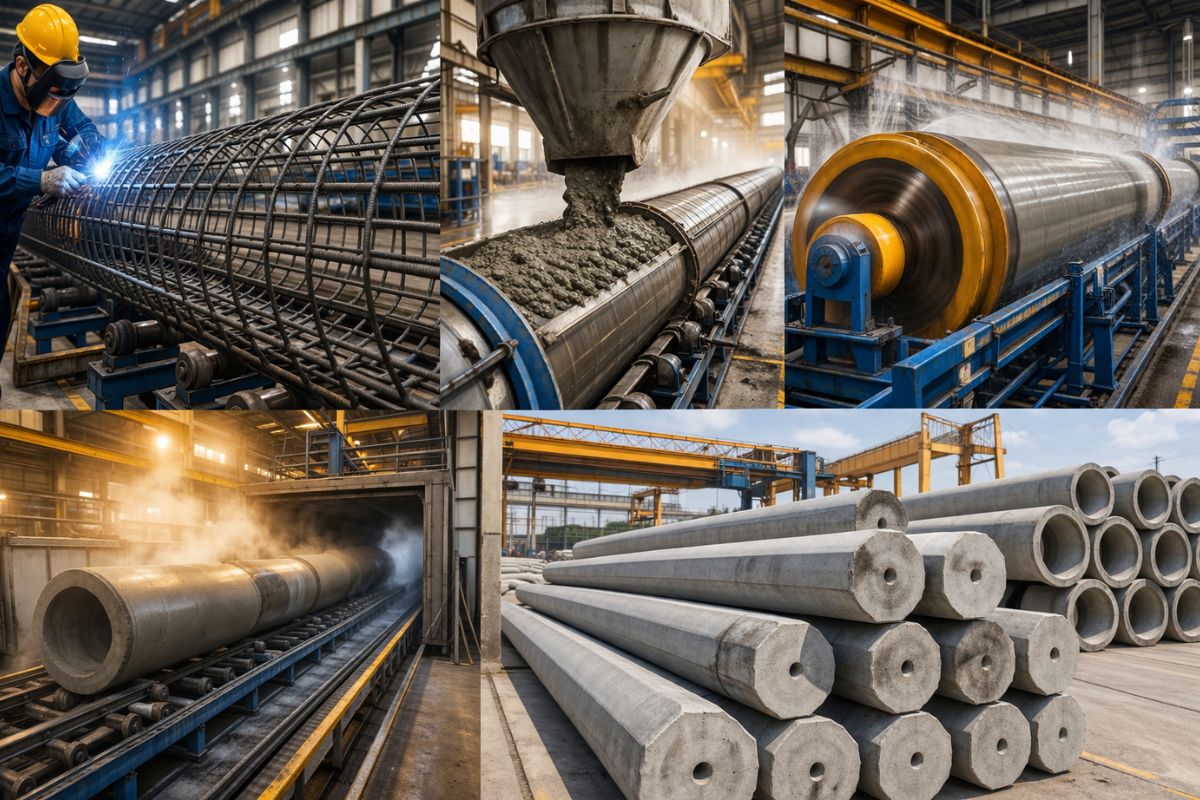
The factory shows how PHC piles and precast tubes are made; steel turns into a welded cage, high-strength concrete enters the mold, spins in centrifugation, cures in steam, and is ready in hours.
-
Small house with natural light becomes a trend in sustainable architecture and reveals how smart designs reduce energy consumption and enhance comfort in compact spaces.

-
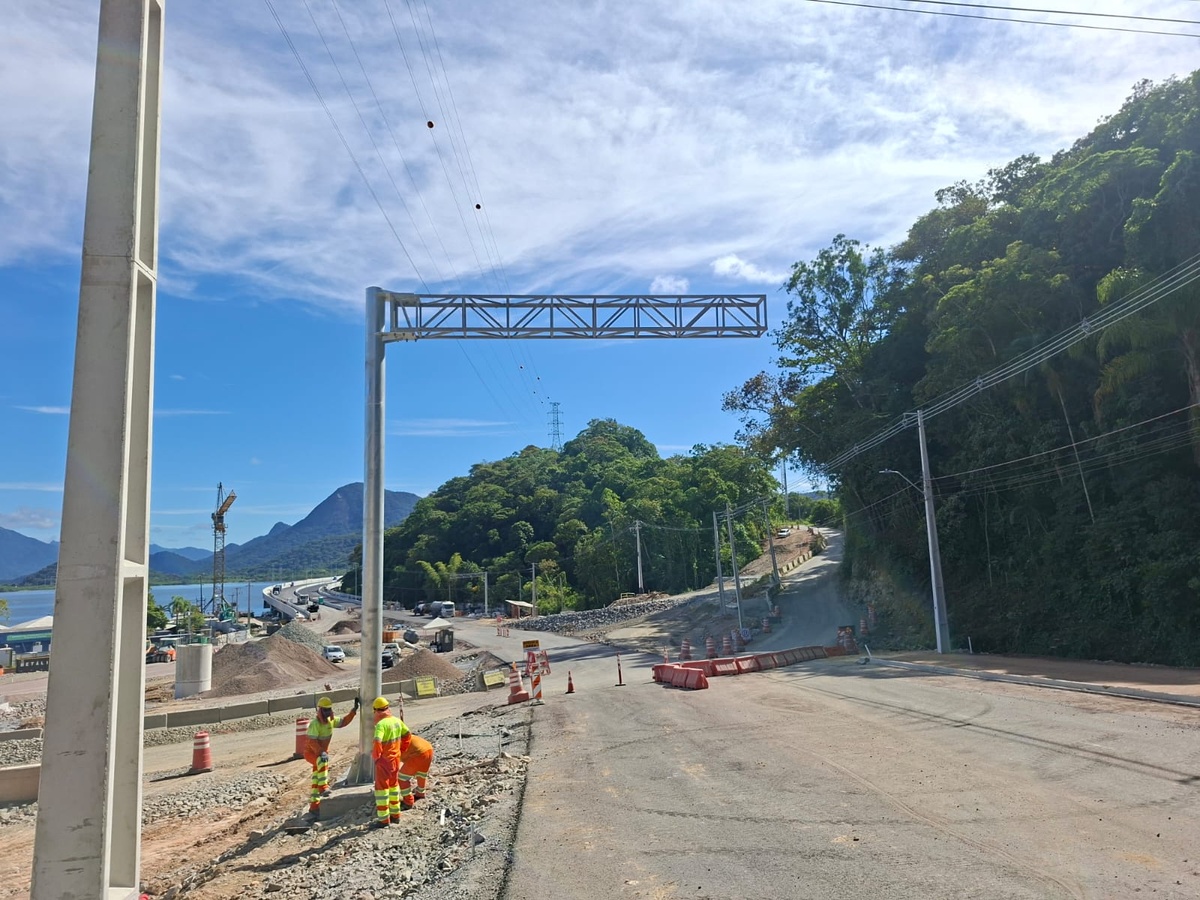
Guaratuba Bridge enters the final phase with high-standard road signage implemented by IASIN and inauguration scheduled for April 2026.
-
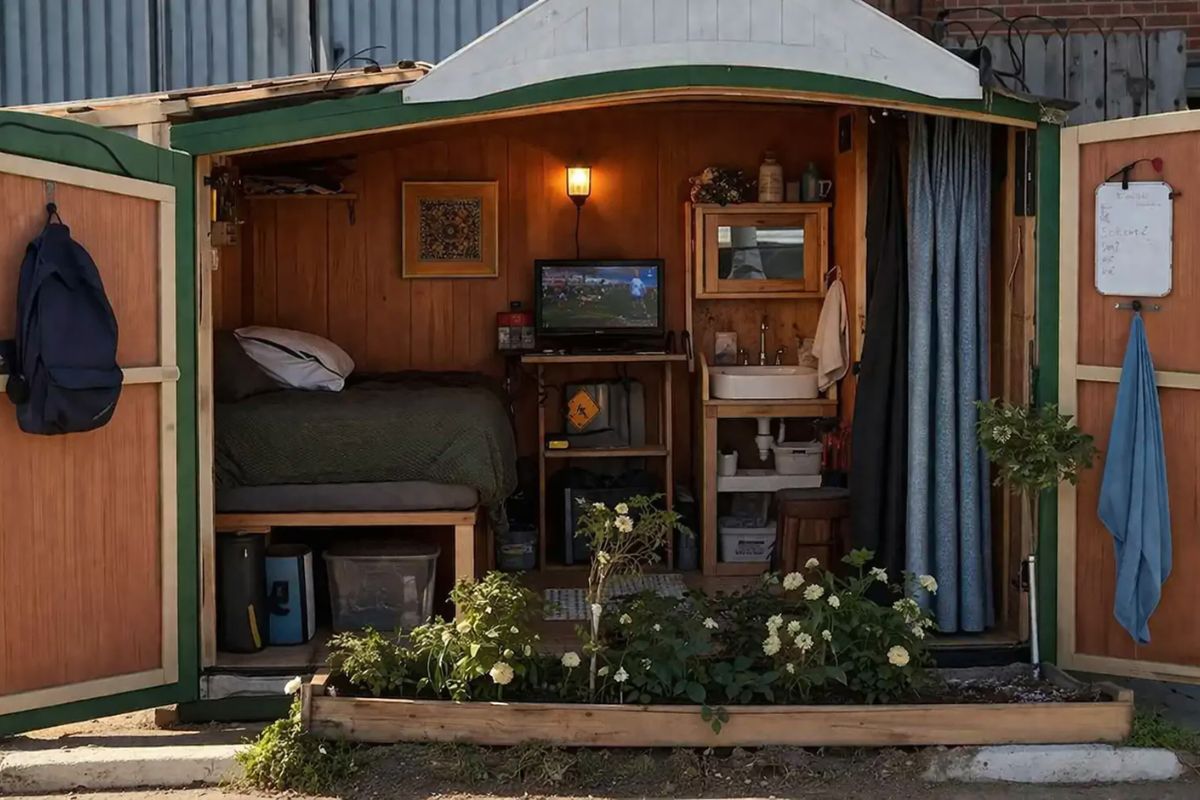
A homeless person in Los Angeles built their own wooden house with a garden at the entrance, a bed, a television, and a bathing area, and is now selling identical mini houses for $150 to other homeless individuals who prefer anything over returning to plastic tents.
- G-Cans: five shafts about 60–65 m deep and 32 m in diameter, connected by 6.4 km of tunnels and a Main Chamber measuring 177 m x 78 m x 18 m.
- Reservoirs distributed along urban rivers.
- Mobile levees and automated gates with flooding sensors.
- Auxiliary underground channels to alleviate overloads.
- High-capacity pumping stations.
- Real-time climate and hydrological monitoring centers.
The Main Chamber can hold up to 670,000 m³ — roughly 268 Olympic swimming pools — supported by 59 reinforced concrete columns (about 18 m tall each). Four turbines of 14,000 horsepower connected to centrifugal pumps displace 200 m³/s to the Edo River at a lower elevation. In practical terms: it has the capacity to empty an Olympic swimming pool every 12 seconds. All of this is controlled by sensors for level, pressure, vibration, and structural integrity, which automatically adjust gates and flow rates.
Technology, Maintenance And Continuous Operation
The construction required techniques such as vertical excavation and shield tunneling, which minimized impacts on the surface. After its completion in the 1990s, the system began to be inspected with drones and underground robots capable of detecting micro-cracks in concrete or welds. Spread-out sensors monitor water level, pressure, ground vibration, and structural integrity, feeding algorithms that adjust gates and turbines in real time.
Building is just the beginning; maintaining and operating it well ensures that the city is protected during critical times.
The Global Contrast And The Lesson For Brazil
While Tokyo created an integrated ecosystem, many metropolises still rely on isolated solutions. New Orleans, for example, depended on levees that broke during Hurricane Katrina in 2005, resulting in collapse. In contrast, Tokyo would create multiple layers of defense to prevent the same scenario.
In Brazil, cities could adopt reservoirs in green areas, auxiliary drainage tunnels, detention shafts, and climate monitoring centers. The Japanese lesson shows that smart infrastructure is as important as concrete.
The Future: Cities That Breathe
Since 2006, it is estimated that the system has prevented billions in damages and thousands of evacuations. Now, Tokyo plans to further digitalize operations, connecting global weather forecasts to automated local responses. Other capitals like Jakarta, London, Singapore, and New York are already studying adaptations.
Cities that “breathe” and react in real time may be the way to face the extreme climate events intensifying around the world.
Where do you believe that underground engineering could save more lives and prevent greater damages in Brazil?
Leave your opinion in the comments.





Seja o primeiro a reagir!