





 Portuguese
  English
  Spanish
  5 min of reading
  0 comments


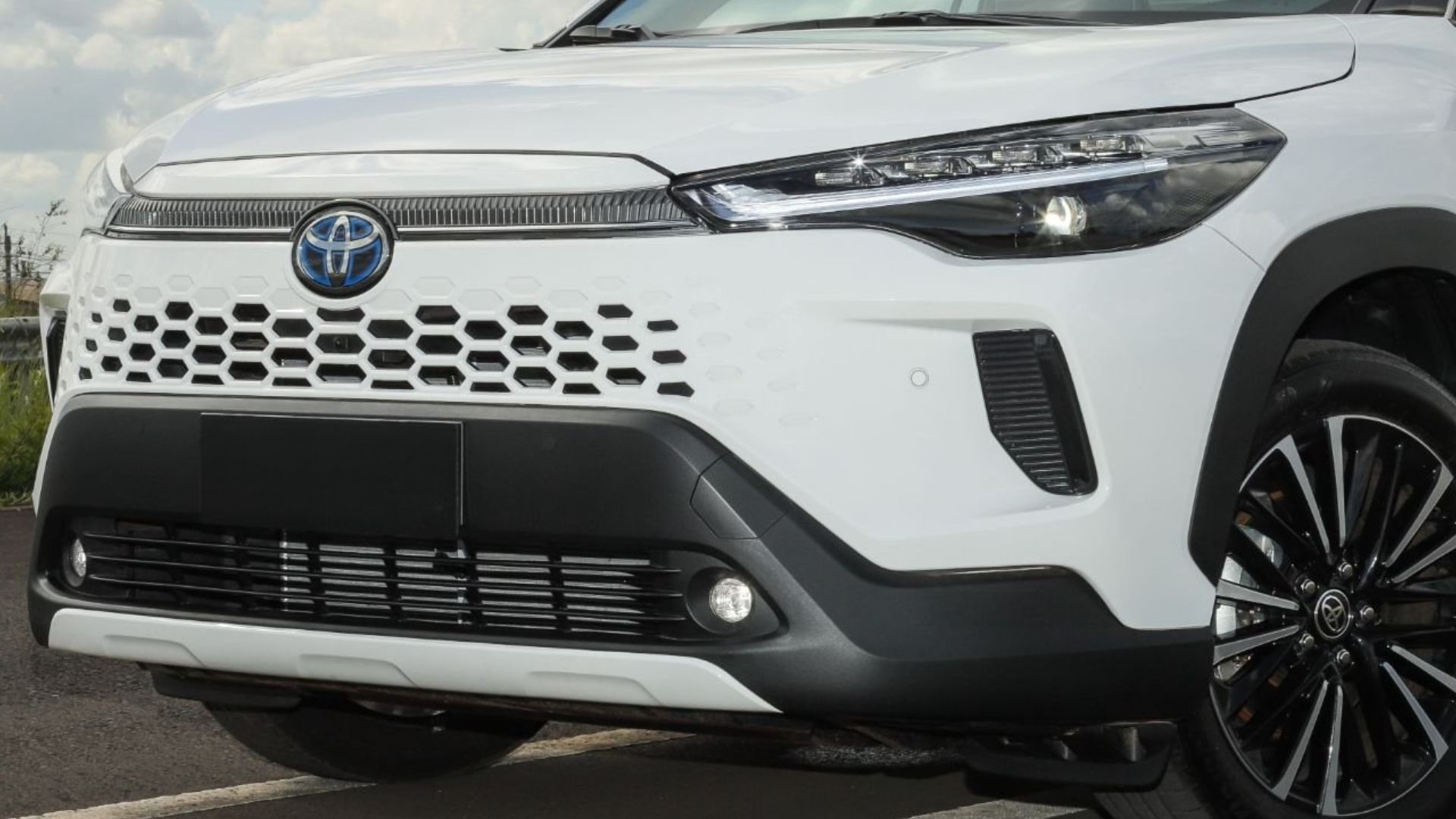
Toyota Prepares New Medium Pickup Based on the Corolla Cross, with Flex and Hybrid Versions, to Compete in an Expanding Segment in Brazil and the United States, with Launch Expected Still This Decade.
Information published this Tuesday (02) by the Autoesporte portal shows that Toyota has decided to launch a new monocoque medium pickup to compete with Ford Maverick, Fiat Toro, and Ram Rampage.
In a recent interview, the head of planning and strategy for the brand in North America, Cooper Ericksen, stated that the project “is no longer a question of ‘if’, but of ‘when’,” and that the internal discussion is now focused on the launch schedule.
Specialized publications in the U.S. indicate targets of 100,000 to 150,000 units annually in that market, where the Maverick and Hyundai Santa Cruz will be the main targets.
-
Less than a Tera TSI, up to 710 km of range and charging in 9 minutes: the new BYD Song Ultra expands the Chinese brand’s bet on increasingly faster, more technological, and competitively priced electric SUVs.

-
With a 1.0 engine producing 75 hp and costing less than R$ 70,000, Fiat’s car returns to the podium as the cheapest in the country; a temporary promotion for the 2026 Like version reduces the price of the Fiat Mobi.
-
With a mild hybrid system of 48 V, 176 hp and a price of R$ 175,990 in the Sahara version, the new Jeep Renegade changes mostly on the inside, improves slightly in fuel consumption, and remains almost the same car.
-
With a 293.5 cm³ engine and a range of up to 400 km with a 14.1-liter tank, the Honda CB 300F Twister 2026 has up to 24.7 hp, an initial price of R$ 25,150, and already exceeds R$ 29,000 in the Fipe Table.

Decision Made and Target Audience
The confirmation of the program places Toyota directly in the medium pickup segment, a range that has gained traction with more accessible and efficient products.
The manufacturer targets customers looking for mixed, urban, and road use, with a bed capacity that does not sacrifice fuel efficiency and a wide safety package.
In this context, the new pickup will operate below traditional mid-range lines, offering an entryway for those wanting a utility vehicle with the profile of a passenger car.
Shared Platform with Corolla Cross and RAV4
The chosen architecture is TNGA, already used in Corolla, Corolla Cross, and RAV4.
The pickup will take advantage of components and solutions from the medium SUV, but it will feature a longer wheelbase to accommodate the bed and double cabin.
The design will follow the latest visual identity of the brand, aligned with the RAV4 and Prius, featuring a sharper front end, horizontal lighting units, and clean surfaces.
The aim is to deliver car-like drivability while maintaining enough robustness for moderate loads and daily use.
Engine Option: 2.0 Flex and Plug-in Hybrid on the Radar
For the entry-level versions in Brazil, the pickup should employ the 2.0 Dynamic Force flex four-cylinder engine with Otto cycle, paired with a CVT that has mechanical gearing for startup.
In this arrangement, the setup reaches up to 175 hp and 20.8 kgfm with ethanol, similar to what is already seen in the Corolla and Corolla Cross.
The more sophisticated configuration is likely to introduce in the country the flex plug-in hybrid (PHEV) architecture from Toyota, combining the 2.0 aspirated Atkinson cycle engine with an electric motor and a 13.6 kWh lithium-ion battery, featuring external charging and an electric range of approximately 50 km.
This system is the same concept applied in the Prius Plug-in Hybrid and, when combined with the 2.0 engine, can achieve up to 223 hp combined power, working with e-CVT transmission.
The adoption of hybrid technology aims to deliver reduced fuel consumption and lower emissions without sacrificing urban performance.
Strategy for Brazil: Production and Positioning
In the Brazilian market, the pickup will be positioned below the Hilux and will have direct competitors including Fiat Toro, Ford Maverick, and Ram Rampage, as well as future models from BYD, Volkswagen, and Renault.
Production is expected to be at the Sorocaba (SP) plant, one of the pillars of the R$ 11 billion investment plan until 2030 announced by Toyota to increase capacity, generate jobs, and expand the offering of flex hybrids in the country.
In parallel, the automaker is executing the expansion of the Sorocaba complex, a move that integrates factory reconfiguration and creates a base for new products within this architecture.
According to industry sources, the start of local production could occur as soon as the second quarter of 2026, if the industrial schedule progresses as planned.
Although the company has not detailed the product, the new pickup fits within the scope of the nationalization of hybrid models and makes sense in the effort to increase market share in a growing niche that consolidates margins.
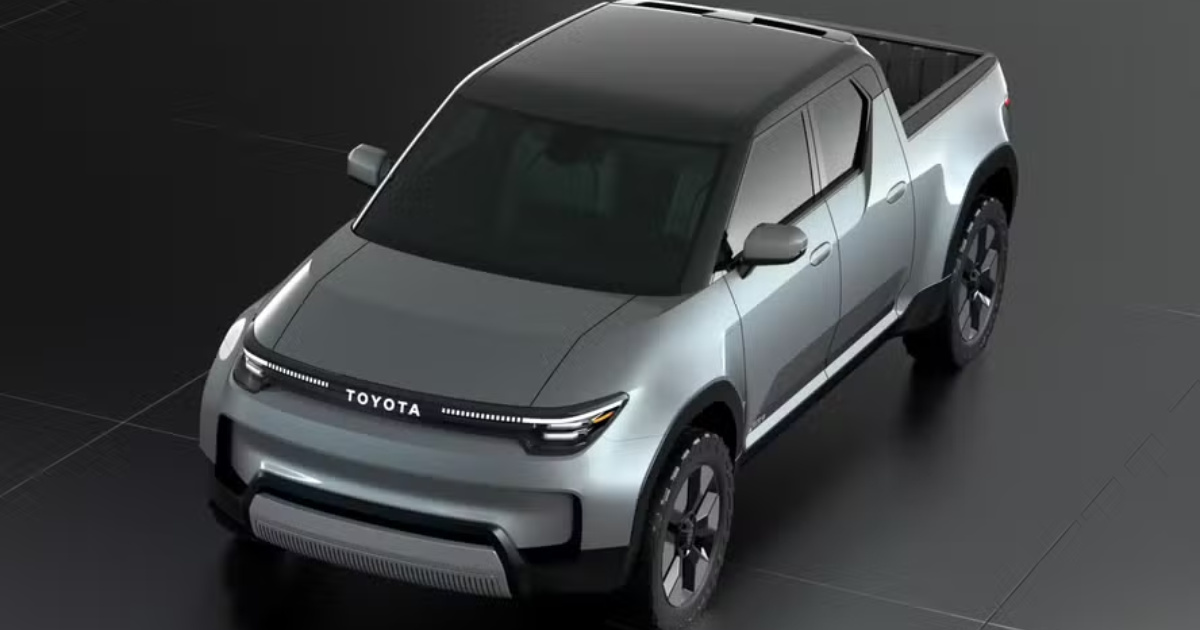
United States: Targets and Launch Window
For North America, Toyota is working with an annual volume between 100,000 and 150,000 units, a number compatible with the performance observed by Maverick and Santa Cruz.
Executives and press reports indicate that the commercial launch in the North American market is expected to occur starting in 2027, positioned below the Tacoma.
The focus will be to attract buyers who need a light utility vehicle, a more contained price, and efficiency, without the complexity and cost of larger pickups.
“Corolla Cross of Pickups”: Portfolio Logic
The bet repeats the strategy that the Corolla Cross has consolidated among medium SUVs.
By using a known platform, an established supply chain, and already certified engines, Toyota reduces risks, accelerates development, and maintains reliability as a differentiator.
Meanwhile, the arrival of the flex PHEV paves the way for a broader electrified portfolio, capable of addressing distinct charging infrastructure realities in Brazil and abroad.
Dimensions, Cabin, and Daily Use
Although final measurements have not been disclosed, the expectation is for a double cabin comfortable for four or five occupants and a bed sized for daily tasks, leisure, and small professional loads.
The larger wheelbase compared to the SUV should enhance stability and internal space, while the driver assistance package should include traction and stability controls, emergency automatic braking, and semi-autonomous driving features, aligned with what the brand already offers in its current lines.
What Remains for Toyota to Confirm
Although the automaker has publicly acknowledged that the pickup is on the way and is working on volumes and timelines, final power data, load capacity, dimensions, and version catalog remain pending official announcement.
The brand has also not detailed thus far the exact mix between flex and plug-in hybrid versions for Brazil, as well as internal timelines for validating components and local suppliers.
With the decision made and the segment on the rise, the question that remains is simple: among hybrid efficiency, versatility of use, and competitive pricing, which of these factors will be decisive for you in choosing a medium pickup?






-

-

-

-

-

20 pessoas reagiram a isso.