





 Portuguese
  English
  Spanish
  3 min of reading
  0 comments


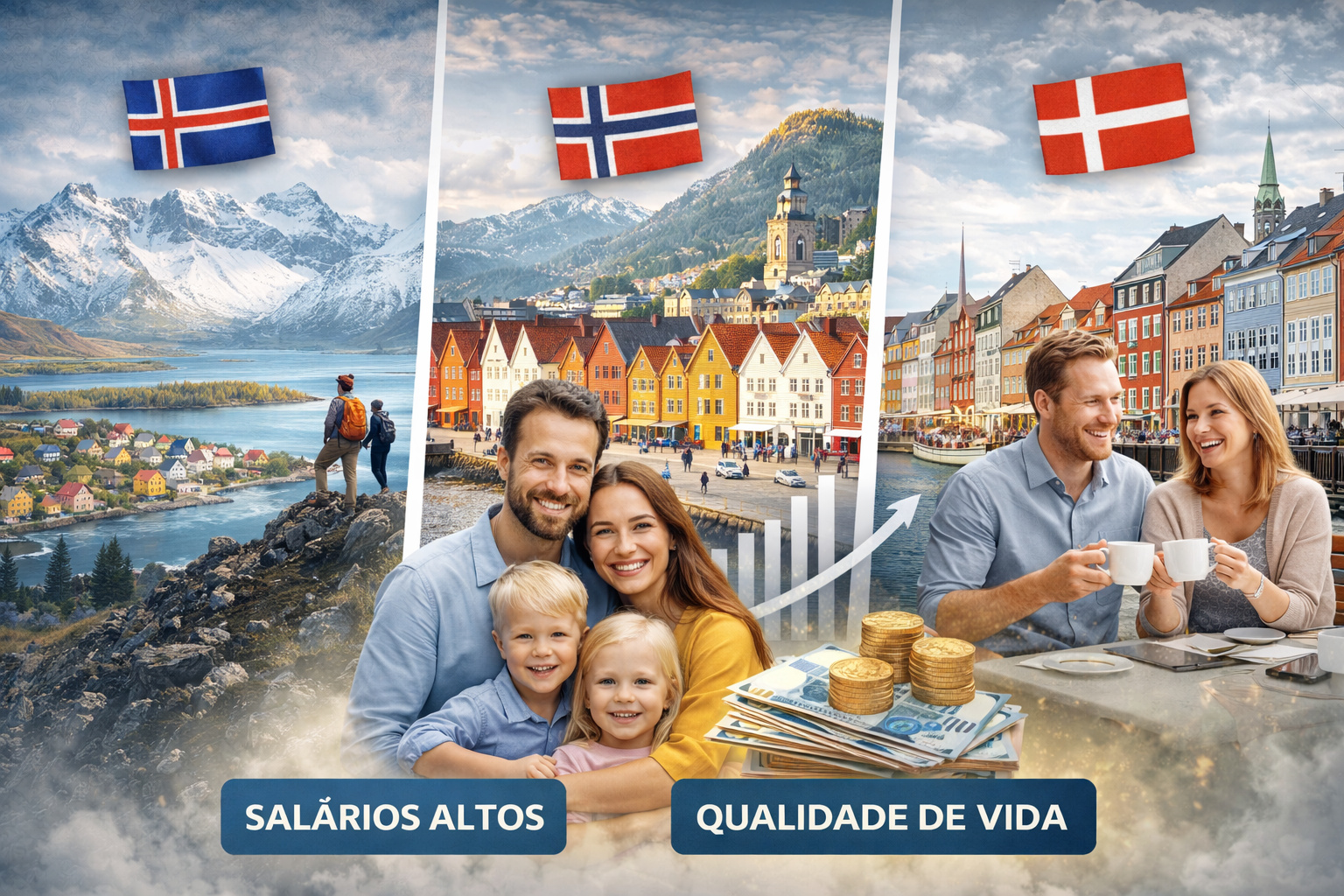
How Iceland, Norway, and Denmark Offer High Salaries and Quality of Life
While in Brazil long working hours do not always guarantee financial stability, some countries in Europe have adopted models that attract global attention. Iceland, Norway, and Denmark offer high salaries, strong social protection, and a quality of life that surprises foreigners — including Brazilians.
But living in these places is not just a matter of desire: it involves high costs, challenging weather, and clear immigration rules.

Iceland: Few Inhabitants, High Salaries, and Extreme Weather
Where it is: island in the North Atlantic, between Greenland and continental Europe
Neighboring countries: has no land borders; the closest are Ireland and Norway (by sea)
Language: Icelandic
Climate: subpolar oceanic, with long, cold, and windy winters
-
“No one will make us change the Pix,” says Lula after the US report.

-
Lula responds directly to Trump and says that Pix is from Brazil and will not change under pressure from anyone, after a report from the United States pointed out the Brazilian payment system as an American trade barrier.

-
Amazon has just announced a new fee on all deliveries, and your online purchases will become more expensive starting April 17, including for those buying from the United States here in Brazil.

-
He sold his share for R$ 4 thousand, saw the company become a giant worth R$ 19 trillion, and missed the opportunity of a lifetime.


- Average salary: around € 4,500 to € 5,000/month
- Rent (1 bedroom, capital): € 1,500 to € 2,000
- Monthly food expenses: € 600 to € 800
Benefits:
- universal public health
- extensive parental leave
- high-quality education
- reduced work hours (trials with a 4-day workweek)
How to Move:
Brazilians need a prior job offer or a study visa. In-demand professions include tourism, technology, engineering, and services. The cost of living is high, but salaries usually compensate.

Norway: Wealth, Security, and Strong State
Where it is: northern Europe, Scandinavian Peninsula
Neighboring countries: Sweden, Finland, and Russia
Language: Norwegian
Climate: cold temperate to subarctic; harsh winters in the north
- Average salary: € 5,000 to € 5,500/month
- Rent (1 bedroom, major cities): € 1,200 to € 1,800
- Monthly food expenses: € 700 to € 900
Benefits:
- excellent public health
- free education
- robust unemployment insurance
- strong worker protection
How to Move:
A work visa with an approved contract is required. Areas such as oil and gas, engineering, IT, and healthcare are in high demand. English is widely accepted in the professional environment, but learning Norwegian helps with integration.

Denmark: Balance Between Work and Personal Life
Where it is: northern Europe, between Germany and Scandinavia
Neighboring countries: Germany (land border) and Sweden (bridge)
Language: Danish
Climate: temperate oceanic, with cold winters and mild summers
- Average salary: € 4,500 to € 5,000/month
- Rent (1 bedroom, Copenhagen): € 1,200 to € 1,700
- Monthly food expenses: € 600 to € 800
Benefits:
- public health and education
- generous parental leave
- strong family support
- balanced work culture
How to Move:
Programs like the Positive List facilitate visas for skilled professionals. IT, engineering, healthcare, and research are strategic fields. English is common in the workplace, but Danish is important for daily life.
Despite high earnings, these countries have a high cost of living, significant taxes, and harsh weather. The model works because there is a return on public services, security, and predictability. For Brazilians, cultural shock exists — but for those who plan, the move can be worthwhile.
Planning is the Key
Living in Iceland, Norway, or Denmark requires financial planning, professional qualification, and understanding local rules. It is not an “easy paradise,” but a different model, demonstrating how public policies and social organization can transform daily life.








-

Uma pessoa reagiu a isso.