Portuguese
  Spanish


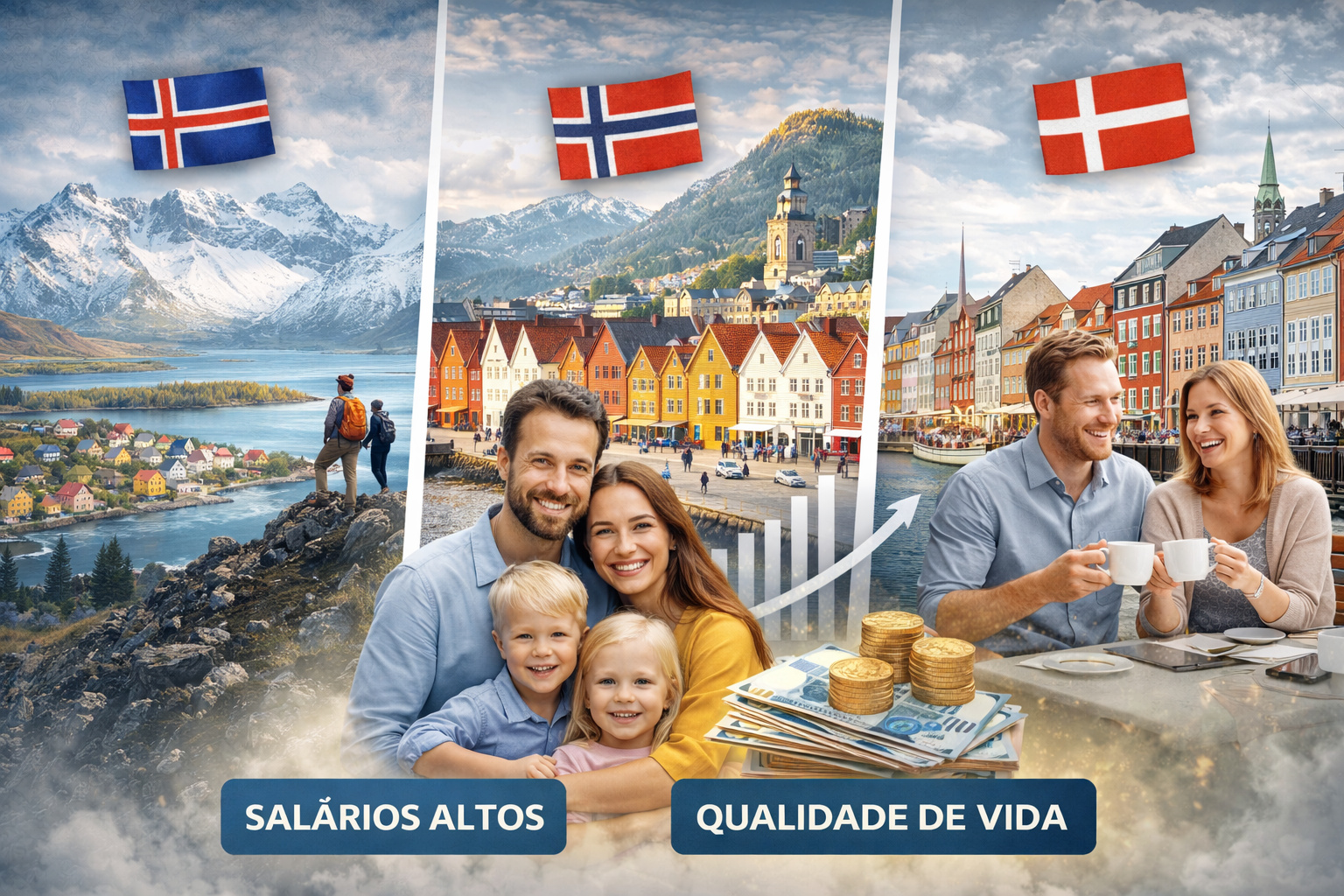


How Iceland, Norway, and Denmark Offer High Salaries and Quality of Life
While in Brazil long working hours do not always guarantee financial stability, some countries in Europe have adopted models that attract global attention. Iceland, Norway, and Denmark offer high salaries, strong social protection, and a quality of life that surprises foreigners — including Brazilians.
But living in these places is not just a matter of desire: it involves high costs, challenging weather, and clear immigration rules.

Iceland: Few Inhabitants, High Salaries, and Extreme Weather
Where it is: island in the North Atlantic, between Greenland and continental Europe
Neighboring countries: has no land borders; the closest are Ireland and Norway (by sea)
Language: Icelandic
Climate: subpolar oceanic, with long, cold, and windy winters
-
To erect the “Baleia” building on the richest avenue in Brazil, he bought 35 houses, paying with trips to Disney, a truck, and even an apartment, waited over 20 years, and today the complex is valued at R$ 2.5 billion.

-
The land belonged to her great-great-grandfather and was worth R$ 25 per square meter during the pandemic; the couple sold 250,000 m² for the nearly R$ 30 billion project that is transforming the “neighbor of Jericoacoara,” and today a house in the region goes for R$ 4.2 million.

-
Labor shortage reaches the truck drivers’ area: Brazil is already facing a deficit of 120,000 drivers, 65.1% of transport companies feel the impacts, and Mercedes-Benz strengthens training in the face of the new generation of technological trucks.
-
An important sector in Brazil is suffering from a labor shortage, requiring the qualification of 14 million workers by 2027, leading companies to invest R$ 5 million to train professionals and address the technical deficit.




- Average salary: around € 4,500 to € 5,000/month
- Rent (1 bedroom, capital): € 1,500 to € 2,000
- Monthly food expenses: € 600 to € 800
Benefits:
- universal public health
- extensive parental leave
- high-quality education
- reduced work hours (trials with a 4-day workweek)
How to Move:
Brazilians need a prior job offer or a study visa. In-demand professions include tourism, technology, engineering, and services. The cost of living is high, but salaries usually compensate.

Norway: Wealth, Security, and Strong State
Where it is: northern Europe, Scandinavian Peninsula
Neighboring countries: Sweden, Finland, and Russia
Language: Norwegian
Climate: cold temperate to subarctic; harsh winters in the north
- Average salary: € 5,000 to € 5,500/month
- Rent (1 bedroom, major cities): € 1,200 to € 1,800
- Monthly food expenses: € 700 to € 900
Benefits:
- excellent public health
- free education
- robust unemployment insurance
- strong worker protection
How to Move:
A work visa with an approved contract is required. Areas such as oil and gas, engineering, IT, and healthcare are in high demand. English is widely accepted in the professional environment, but learning Norwegian helps with integration.

Denmark: Balance Between Work and Personal Life
Where it is: northern Europe, between Germany and Scandinavia
Neighboring countries: Germany (land border) and Sweden (bridge)
Language: Danish
Climate: temperate oceanic, with cold winters and mild summers
- Average salary: € 4,500 to € 5,000/month
- Rent (1 bedroom, Copenhagen): € 1,200 to € 1,700
- Monthly food expenses: € 600 to € 800
Benefits:
- public health and education
- generous parental leave
- strong family support
- balanced work culture
How to Move:
Programs like the Positive List facilitate visas for skilled professionals. IT, engineering, healthcare, and research are strategic fields. English is common in the workplace, but Danish is important for daily life.
Despite high earnings, these countries have a high cost of living, significant taxes, and harsh weather. The model works because there is a return on public services, security, and predictability. For Brazilians, cultural shock exists — but for those who plan, the move can be worthwhile.
Planning is the Key
Living in Iceland, Norway, or Denmark requires financial planning, professional qualification, and understanding local rules. It is not an “easy paradise,” but a different model, demonstrating how public policies and social organization can transform daily life.