





 Portuguese
  English
  Spanish
  3 min of reading
  0 comments


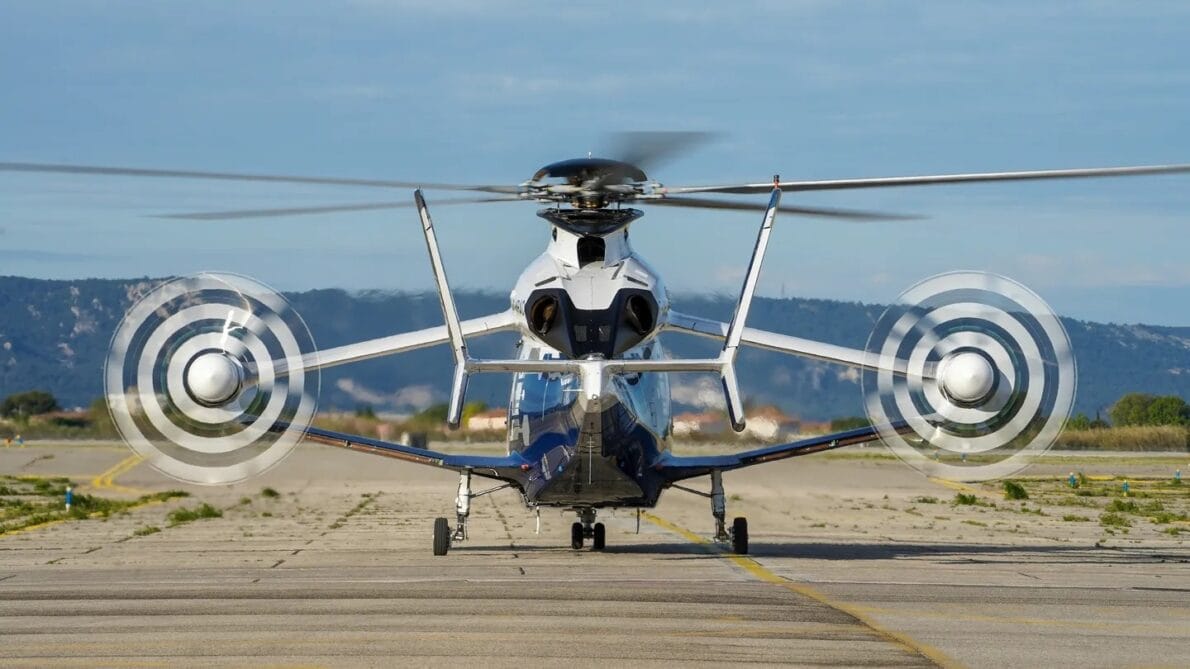
Airbus Creates Hybrid Aircraft That Could Be The Future Of Aviation: Meet Racer, Capable Of Exceeding 400 Km/h.
Airbus has developed an aircraft that is half plane and half helicopter at the same time. Unveiled in France last week, Racer features not only a main propeller but also two rotors pointed forward. This means the vehicle can take off vertically, as well as fly at high speeds.
Learn The Goal Of Airbus With The Racer Aircraft

With a maximum speed exceeding 400 km/h, the half-plane, half-helicopter aircraft is faster than the fastest military helicopters. For example, the Black Hawk and the Chinook, both produced by US companies, reach speeds of up to 295 km/h and 302 km/h, respectively.
The idea behind Airbus is to implement Racer in search and rescue missions, as well as intercity transport. In the future, the plan is to use the aircraft for search and rescue missions alongside eVTOL, also known as flying cars.
-
American Airlines starts selling trips as if they were flights, with check-in and baggage check at the airport, but on short routes, passengers board luxury buses connecting cities to major hubs in the U.S.

-
São Paulo surprises the world with a colossal railway network project that promises over 1,000 km of tracks, R$ 194 billion in investments, and 40 projects connecting the capital to the interior with fast and sustainable trains.
-
The world’s largest escalator, measuring 905 meters in China, reduces urban travel time from 1 hour to about 20 minutes and transforms mobility in mountainous regions with an engineering solution adapted to the terrain.

-
A R$ 300 million logistics giant is taking shape in Serra with over 100,000 m² and raises a question: how can this transform e-commerce and distribution in the state?


Besides being faster than traditional helicopters, the half-plane, half-helicopter aircraft is more economical, emits less pollution, and produces less noise while flying. The aircraft is part of the European program Clear Sky 2, which encourages the development of air vehicles with lower carbon dioxide (CO2) emissions.
According to the company responsible for the project, the model reduces fuel consumption and CO2 emissions by 20% compared to conventional aircraft of the same weight. Thanks to its lateral wings, the model also experiences less vibration, making it more comfortable than any other helicopter.
Racer Cost R$ 1.1 Billion To Build
So far, there is only one demonstration unit in the world. It cost 200 million euros, around R$ 1.1 billion, to build and conducted a test flight at Airbus Helicopters’ base in Marignane, in southern France.
About 150 industry executives, politicians, and representatives of the European Union were present, according to Reuters. For the half-plane, half-helicopter aircraft to be sold to the general public, Airbus needs to attract the interest of potential buyers first. For now, the aircraft exists more as a very promising idea.
Julien Guitton, who leads the program, spoke of the pride his team felt during the first ground tests on the runway. Guitton states that this is an incredible moment in the life of any engineer or worker. Preparing for the maiden flight of a new aircraft, especially one with such a high level of innovation, is a unique and extraordinary experience.
Racer Aircraft Began Testing In 2010
The final adjustments of the hybrid aircraft, half plane and half helicopter, were carried out by a very close-knit team of no more than 50 engineers and workers on site, supported by the entire company and numerous partners.
It was a coordinated operation that reflected the entire philosophy of the new aircraft: high performance and cost efficiency. According to Guitton, the goal of Racer is not just to achieve the highest possible speed but to offer enhanced operational capabilities at the right price for missions where speed can be a significant advantage.
The key to this success lies in the aircraft’s ‘composite’ formula, which has been successfully tested with the X3 demonstrator since 2010. Racer combines a unique architecture (special fuselage aerodynamics, helicopter rotor, fixed wing, and propulsive propellers) with innovative engine power management and an autopilot that knows how to make the most of this combination.








-

Uma pessoa reagiu a isso.