





 Portuguese
  English
  Spanish
  5 min of reading
  0 comments


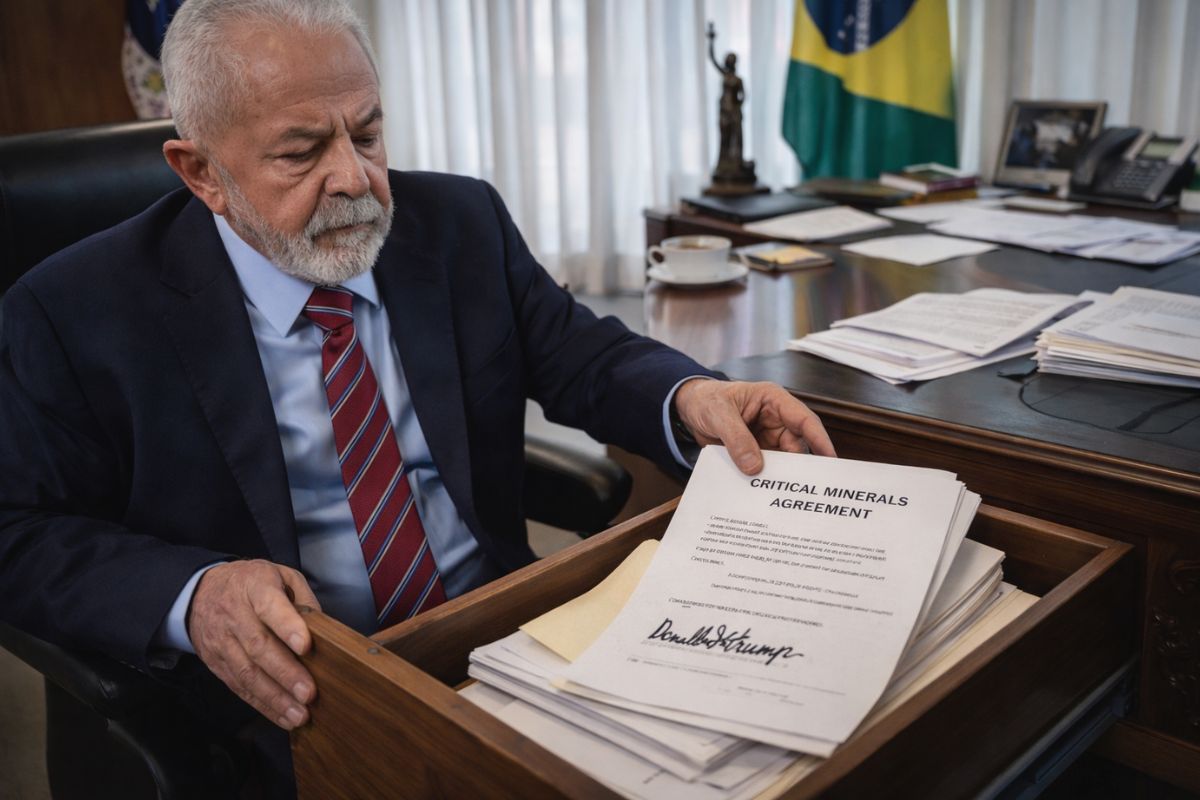
The US proposal includes minimum price definition, project financing, refining investments, and possible technology transfer, but Lula wants details before signing anything while the governor of Goiás has already closed a parallel agreement with American companies and was criticized by the Planalto
There is a document on Lula’s desk that could redefine the relationship between Brazil and the United States for the coming decades. Trump sent a formal proposal for cooperation in the critical minerals sector to the Brazilian government, and the paper is in the president’s drawer, waiting. Without a signature. Without a deadline. Without hurry, at least on the Brazilian side.
The information was published by the Diário do Comércio on April 9, 2026, and reveals a geopolitical chess game that goes far beyond diplomacy: whoever controls critical minerals in the coming years will control the technology industry, the energy transition, and the planet’s military race.
And Brazil is sitting on one of the largest reserves in the world.
-
R$ 7 billion forgotten in the FGTS may finally be released after failures in the 2025 measures, while millions of workers find out they may have unclaimed money.
-
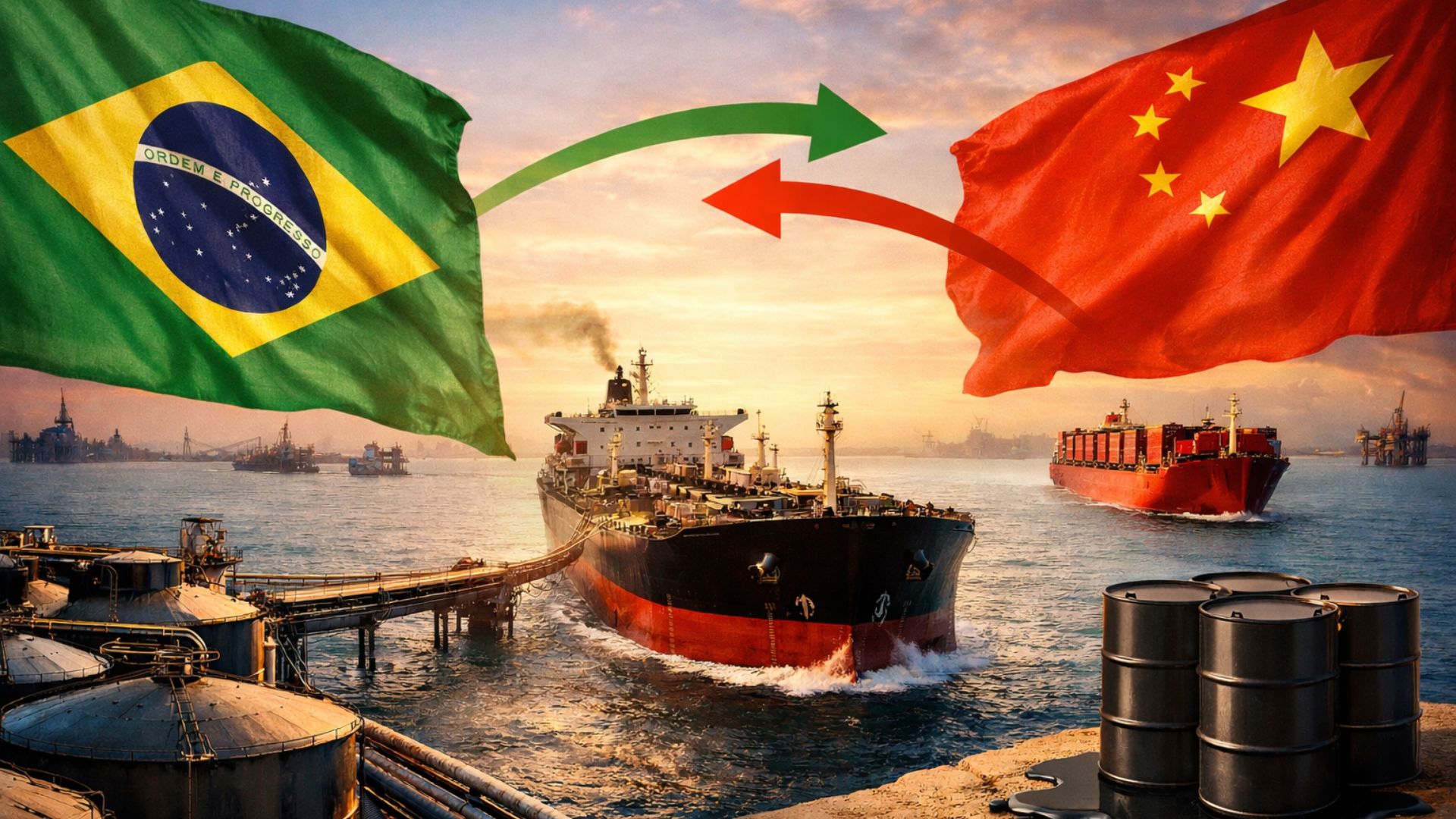
Brazil’s oil exports soar with record purchases from China, potentially generating a new cycle of economic growth, increasing external revenues, and consolidating the country as a global strategic supplier.
-
São Paulo has connected its two airports by rail for the first time in history, and now you can travel by train from Congonhas to Guarulhos for just R$ 5.40. However, the journey requires four transfers, takes about two hours, and only operates during a narrow time window that almost no one can use.

-
The savings of Brazilians are depleting: savings accounts recorded the third consecutive month of withdrawals, with over R$ 41 billion taken out in the first quarter of 2026, the largest outflow in an entire year.
What do the United States want from Brazil?
The answer is straightforward: rare earths and strategic minerals. These materials are essential for manufacturing everything from electric car batteries and wind turbines to computer chips, guided missiles, and medical equipment. Without them, the high-tech industry simply stops.
Today, China dominates more than 60% of global rare earth production and uses this as a tool of geopolitical pressure. The United States knows that relying on a single supplier, especially a strategic rival, is a vulnerability that can be costly. That’s why Washington is knocking on the door of every country that has significant reserves. And Brazil is one of the priority targets.
The proposal sent to Lula, according to the Diário do Comércio, includes points such as minimum price definitions for the minerals, financing for exploration projects, investments in refining within Brazilian territory, and possible technology transfer. The negotiations are conducted by technical teams from both countries, with participation from the USTR, the agency responsible for the commercial representation of the United States.
It seems like a good offer. So why hasn’t Lula signed?
Why is Brazil holding the document?
Because the government considers the proposal too generic. According to the Diário do Comércio, the internal assessment of the Planalto is that there is still no structured offer that justifies moving forward to a formal agreement. Lula wants concrete numbers, defined deadlines, and guarantees that Brazil will not become just a supplier of raw materials while the Americans handle processing and value addition.
This is the government’s red line: Brazil is willing to negotiate minerals, but will not accept exporting rock to import chips. The strategy advocated by the Planalto prioritizes the internal processing of resources before international sale. In other words, Brazil wants to refine, add value, and sell finished products, not raw ore.
It is a position that makes strategic sense. Countries that export raw materials get stuck at the bottom of the production chain. Countries that process and refine capture most of the value. The difference between exporting raw lithium and exporting lithium batteries can be 10 to 50 times in the final price.
What does the Caiado case have to do with it?
While the federal government held the document in the drawer, the governor of Goiás, Ronaldo Caiado, signed a memorandum of cooperation with American companies in the critical minerals sector. The agreement was made parallel to federal negotiations and generated a political crisis.
Lula publicly criticized the initiative, stating that negotiations on strategic minerals are the responsibility of the Union, not the states. In practice, Caiado jumped the diplomatic queue and negotiated directly with the Americans something that the president himself was still evaluating.
The episode exposed a fracture: while the federal government tries to negotiate cautiously and extract the maximum concessions, governors and businessmen push for quick agreements that bring immediate investment, even if with less favorable conditions for the country in the long term.
What is at stake for each side?
For the United States: reducing dependence on China for critical minerals is a matter of national security. The race for alternative sources has already led Washington to sign similar agreements with Australia, Canada, and African countries. Brazil, with its reserves of niobium, lithium, rare earths, graphite, and manganese, is a key piece on this board.
For Brazil: the opportunity is real, but the risk is also significant. Accepting a generic agreement could mean opening the doors to large-scale exploitation without capturing the value that these resources are worth. Refusing or delaying too long could mean that the Americans close agreements with other countries and Brazil loses the window.
For Lula: the challenge is both political and strategic. Signing quickly pleases the market and brings Brazil closer to the US at a time of tariffs and trade tensions. Holding back and negotiating better could yield a much more advantageous agreement, but risks irritating Washington when Brazil is already facing the threat of 10% tariffs on its products.
What happens now?
The document remains in the drawer. The expectation is that the matter will be discussed directly between Lula and Trump in future agendas, according to the Diário do Comércio. But there is no set date or indication that the signature is near.
Meanwhile, technical teams continue to meet, the Americans continue to push, and the minerals remain underground in Brazil, waiting for someone to decide if they will leave the country as rock or as technology.
Lula’s drawer holds more than just a piece of paper. It holds a decision that could define whether Brazil will be a protagonist or a supporting actor in the biggest technological race of the century. And drawers do not stay open forever.
With information from the Diário do Comércio.








Seja o primeiro a reagir!