





 Portuguese
  English
  Spanish
 5 min of reading
  0 comments



Report On Argentinian Television Reveals Accelerated Growth Of Young Migration To Southern Brazil, Driven By Formal Rural Work, Salaries In Brazilian Real, Housing Offer, And Lack Of Economic Opportunities In Border Argentinian Provinces
The departure of young Argentinians toward Southern Brazil in search of work has ceased to be an isolated movement and has begun to take on structural shapes, combining empirical reports, official data, and noticeable economic impacts on both sides of the border.
Part of this phenomenon was recently depicted by an Argentinian TV channel, which showcased interviews with workers, intermediaries, and local representatives directly involved in this migratory flow.
In the report aired in Argentina, local authorities reported that the movement intensified primarily from the first days of January.
-
Inflation in March reaches 0.88% according to IBGE and pressures the Brazilian economy, impacting family budgets and requiring more strategic decisions to maintain financial control.

-
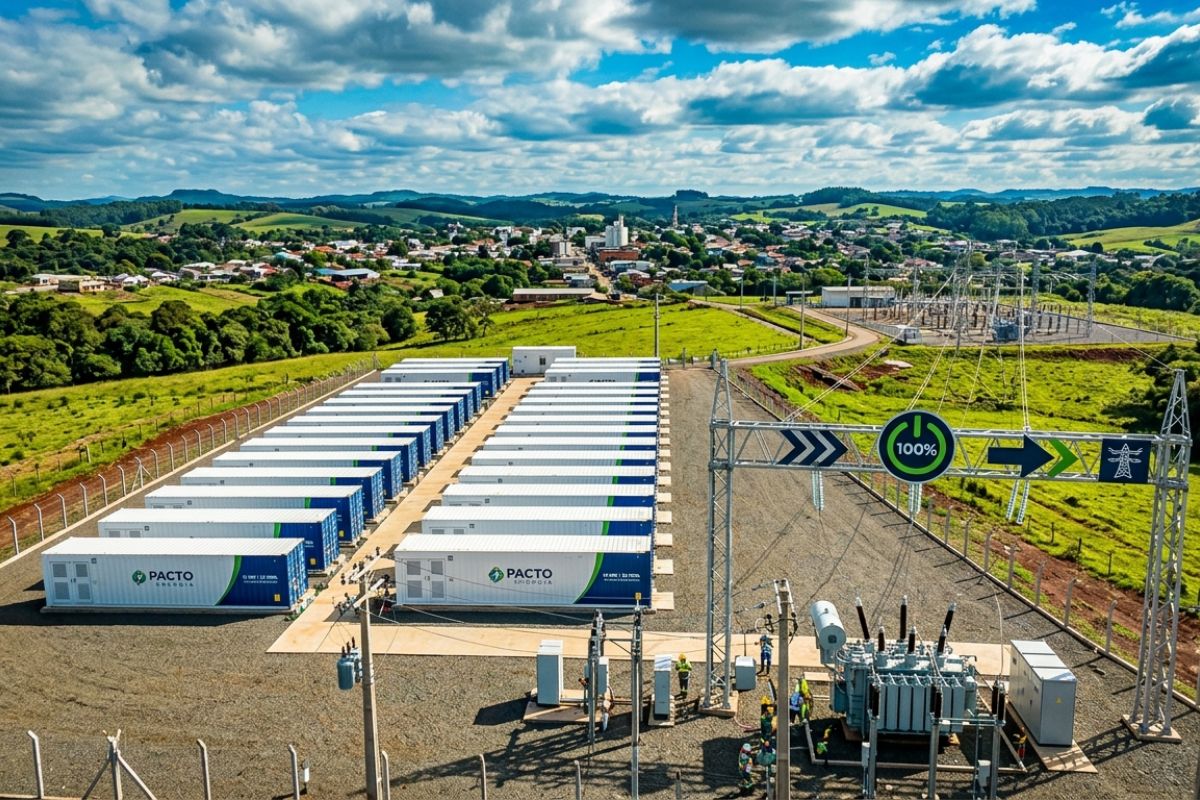
In Paraná, distributor Pacto connects 100% of the load in Coronel Vivida to batteries: a BES of 10 MW and 20 MWh costs just over R$ 30 million and lowers the local tariff now.
-
With a dependence of up to 80% on gas imported from the United States, Mexico is responding with a robust energy strategy, betting on shale gas, creating a scientific committee, and preparing to expand natural gas production to reduce vulnerability and strengthen its energy security in the coming years.

-
The United States proposes to Brazil a critical minerals agreement with a minimum price to combat Chinese dumping and priority for investment, but the Planalto is blocking the signing out of fear of upsetting China and due to electoral calculations in a year of competition.

According to testimonies, young people from different provinces, especially Misiones, began to leave their hometowns in organized groups to work in Brazil, attracted by higher salaries, housing offers, included meals, and shorter workdays.
The narratives indicate that the flow began more discreetly, initially linked to the apple harvest, but quickly expanded to other rural and industrial activities.
With the advance of summer, opportunities arise in the peach harvest, charcoal production, brick manufacturing, and even in metallurgy services, broadening the profile of the workers involved.
Although Argentinian television highlighted the social dimension of the phenomenon, with entire neighborhoods temporarily emptying, official data helps to gauge the real extent of this migration.
Consolidated statistics show that the increase is not recent but has been accumulating over the past two and a half years, with consistent growth in the entry of Argentinians into Southern Brazil.
Official Data Confirms Sustained Growth Of Migration
The most recent report from the Migration Observatory, an agency linked to the Ministry of Justice and Public Security, confirms that Argentina currently holds the second position among the countries sending the most migrants to Southern Brazil. Only Venezuela has higher numbers, leading the flow by a significant margin.
This data represents a relevant change in the migratory profile of the region, traditionally marked by the presence of workers from neighboring countries on a smaller scale.
The survey also reveals that Argentinians rank fourth among foreigners with formal employment in the Southern states, an indicator that reinforces the growing formalization of this movement.
Between January and June 2024, 7,663 Argentinian workers with formal ties were recorded in the Southern region. This number alone already surpasses the total recorded throughout the year 2022 and also 2023, highlighting a clear acceleration of the phenomenon in a short period.
Temporary And Physically Demanding Jobs Concentrate The Flow
The data from the Observatory and the reports from Argentinian television converge in pointing out that most of these workers focus on temporary and physically demanding activities. These are roles traditionally filled by seasonal workers, with contracts tied to specific production cycles and high labor demand during short periods.
Among these activities are agricultural harvests from different crops, which are spread throughout the annual calendar according to the region and type of production.
There is also a significant presence of Argentinians in reforestation tree cutting, which is a labor-intensive job performed in remote rural areas, requiring physical endurance and adaptation to varying climatic conditions.
Another segment mentioned in the official data is poultry catching, an activity that involves handling the animals and placing them in cages before transportation for slaughter. This is an intense job, typically performed in long shifts and controlled environments, demanding speed and physical strength.
Extensive Border Facilitates Worker Circulation
Geography plays a decisive role in intensifying this flow. Argentina has a long and relatively porous border with the Brazilian states of Rio Grande do Sul, Santa Catarina, and Paraná, facilitating frequent, and in many cases, swift movements.
In cities like Uruguaiana and São Borja, in Rio Grande do Sul, the crossing occurs via international bridges with a constant flow of people and goods. In other stretches, especially in rural areas, crossings are made by boats, canoes, or even through dry border zones, where supervision is more difficult and movement occurs daily.
This geographical proximity reduces travel costs and makes temporary work in Brazil a viable option even for short periods, a factor highlighted in the reports aired by Argentinian television.
The Apple Industry As The Main Hiring Pole
Among the most organized segments for hiring temporary foreign labor is the apple industry, especially in Southern Brazil. Industries and medium to large properties have developed specific structures to absorb workers during harvest time, with formal processes for recruitment and hiring.
An example cited in the official data is the company Schio. According to information from their human resources department, the presence of Argentinians began to gain volume in 2023 when approximately 300 workers from that nationality were hired during the harvest period.
In 2024, this number surged significantly to around a thousand Argentinian workers hired formally. This growth represented more than three times the total observed the previous year and established Argentina as the main foreign origin of the temporary labor force for the company in that cycle.
For 2025, the numbers are not yet finalized, as the harvest began in late January and will continue until May. Nonetheless, the company’s expectation is for a reduction, projecting between 300 and 500 workers, below the peak observed in 2024.
Impacts On Both Sides Of The Border
Although most contracts are temporary, the effects of migration are felt both in Brazil and Argentina. In the Southern Brazilian states, rural producers have increasingly come to rely on foreign labor to maintain the pace of harvests and activities in forestry and agro-industrial sectors.
In Argentina, reports from TV indicate growing difficulties in finding workers in certain regions, especially for activities requiring experience, such as specific harvests. Qualified workers temporarily leave their cities, creating local production bottlenecks.
The phenomenon also exposes a growing economic asymmetry between the two countries. The currency difference, combined with the formal job offer with basic benefits, makes Brazil an attractive destination for Argentinians willing to take on physically demanding jobs.
An Structural Movement, Not Episodic
The official data and televised reports indicate that Argentinian migration to Southern Brazil has ceased to be episodic. It is a structured movement, with information networks, intermediaries, documentary requirements, and formal contracts.
The growing formalization differentiates the current flow from previous periods, historically marked by informality. At the same time, it amplifies the challenge for public policies on oversight, integration, and statistical monitoring.
As the Argentinian economy remains under pressure, Southern Brazil consolidates itself as a pole of attraction for temporary foreign workers, in a process that is likely to continue influencing the regional labor market in the coming years.









-

-

6 pessoas reagiram a isso.