





 Portuguese
  English
  Spanish
  4 min of reading
  0 comments


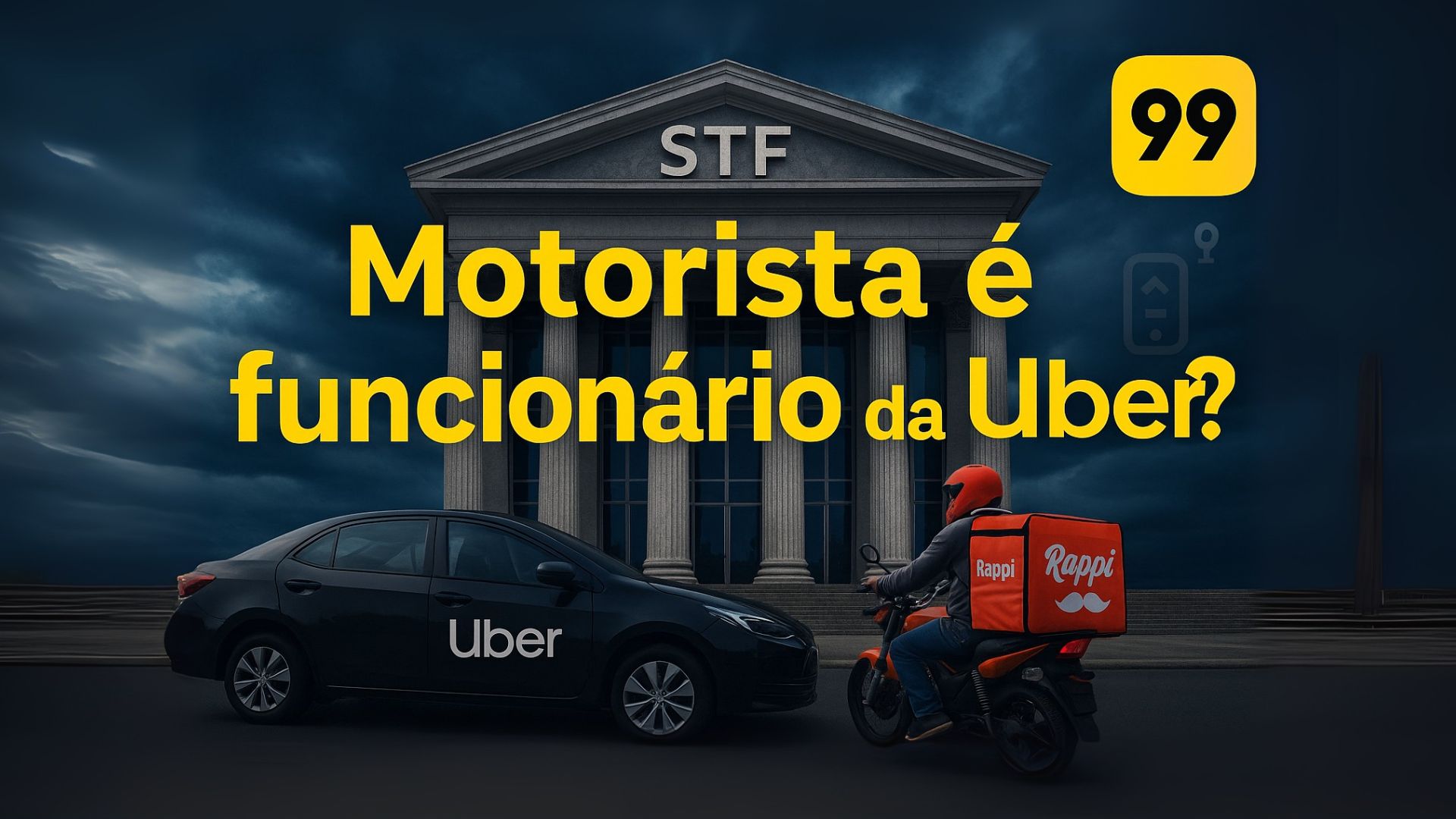
Supreme Court Begins Trial That Could Define The Future Of App Work, Unlock Thousands Of Lawsuits In Court, And Directly Affect Drivers, Deliverers, And Technology Companies Across The Country.
The Attorney General’s Office sent an opinion to the Supreme Federal Court against the recognition of employment relationship between drivers and deliverers of apps and the digital platforms.
The trial on the subject began on October 1, 2025, under general repercussions, and could unlock around 10,000 suspended lawsuits in the country awaiting a uniform guideline from the Supreme Court.
PGR Supports The Supreme’s Jurisprudence And Criticizes Labor Court Decisions
In the document, the Attorney General Paulo Gonet cites precedents from the Supreme itself to assert that the employment relationship does not apply, as a rule, to relationships mediated by apps.
-
Government enacts new law: paternity leave increases from 5 to 20 days with gradual increases until 2029, and Social Security pays the paternity salary; companies no longer bear the absence cost, estimated at R$ 5.4 billion.

-
End of the 1-hour lunch break in the CLT? Current labor law maintains the break, allows for negotiated reductions, and defines rules for working hours and home office in Brazil.

-
Employee Fired After Accumulating 114 Days of Medical Leave in One Year, Labor Court Upholds Company’s Decision

-
Employee Fired While Treating Depression Wins in Court and Vale Is Required to Rehire Him Following Decision Based on the CLT and INSS Benefits


According to him, the Supreme Court’s position is “firm” in admitting hiring through arrangements distinct from the Labor Code when there is no typical subordination.
For the Attorney General’s Office, recent decisions from the Labor Court that recognized the employment relationship challenge free enterprise and diverge from what has already been established by the Court.
What Is Being Tried In The Supreme Court
The plenary is analyzing two appeals that reached the Supreme from cases in which the employment relationship was recognized by the Labor Court.
One involves a deliverer and Rappi.
The other discusses the situation of drivers on platforms like Uber and 99.
The decision will serve as a reference for all courts, as it has binding effect under the logic of general repercussions.
Practical Reach: 10,000 Lawsuits And An Entire Sector At Stake
The uniformity of understanding will define the fate of thousands of individual and collective lawsuits about the so-called “uberization.”
In addition to establishing parameters for future decisions, the trial may influence the business model of the platforms and the legal protection of workers operating through apps.
Supreme Has Already Denied Links In Precedents, But There Is Dissent In The Labor Court
The recent history of the Supreme indicates decisions denying the existence of a formal link in concrete cases, including collegial decisions in 2023 that set aside the Labor Code in these relationships.
In parallel, chambers of the Labor Court have diverged: some dismissed the link; others recognized the employment relationship.
This movement fueled the multiplication of lawsuits and the legal insecurity pointed out by ministers.
Central Arguments: Subordination, Autonomy And Free Enterprise
At the center of the dispute is the presence — or absence — of subordination.
For proponents of the link, elements such as personal service, habitualness, onerousness, and control by algorithms would characterize classic employment.
Platforms argue that they operate as technological intermediaries, offering freedom of schedules, choice of rides, and autonomy, making it incompatible with the labor law regime.
The Attorney General’s Office endorses this last interpretation by emphasizing that imposing a link in such arrangements contradicts the jurisprudence of the Supreme and the free enterprise provided for in the Constitution.
Positions Of The Companies In Dispute
The companies reinforce lines already presented in previous cases.
Rappi claims that labor decisions recognizing the link disrespect the guidance of the Supreme.
Uber states it is a company of technology, not of transport, and argues that the profile of drivers and the dynamics of the service demonstrate autonomy.
This argument, for the platforms, makes it impossible to classify by the Labor Code.
New Management Of The Supreme Court And Work Agenda
The trial marks the first agenda in the plenary under the presidency of Edson Fachin, who took over the command of the Supreme on September 29, 2025.
Defining the theme, one of the most sensitive in labor-constitutional litigation, aims to reduce divergences between courts and provide predictability to a sector involving millions of workers and users.
Next Move: Hearing On “Pejotization”
While deciding on “uberization,” the Supreme Court has also scheduled a public hearing on October 6 to discuss the economic and social impacts of “pejotization.”
This other debate does not address relationships mediated by apps but may establish guidelines for contracts by legal entities in activities where possible fraud or legitimate autonomy is discussed.
The session was called by Minister Gilmar Mendes and will take place days after the start of the trial on apps.
Why The Trial Is Considered A Watershed
In addition to pacifying the jurisprudence, the thesis to be established by the Supreme should guide the actions of the Labor Public Prosecutor’s Office, companies, and unions.
A decision for the link tends to raise costs, create liabilities, and require operational restructuring of the platforms.
The denial of the link, in turn, preserves the current model but does not eliminate demands for intermediary regulation to guarantee minimum rights regardless of the contractual regime.
In any scenario, the Legislative may be called to complement the judicial definition with clearer parameters for technology-mediated work.
In light of this scenario, what should be the balance point between social protection and innovation for platform work to be sustainable for workers, companies, and consumers?








Seja o primeiro a reagir!