





 Portuguese
  English
  Spanish
  6 min of reading
  0 comments


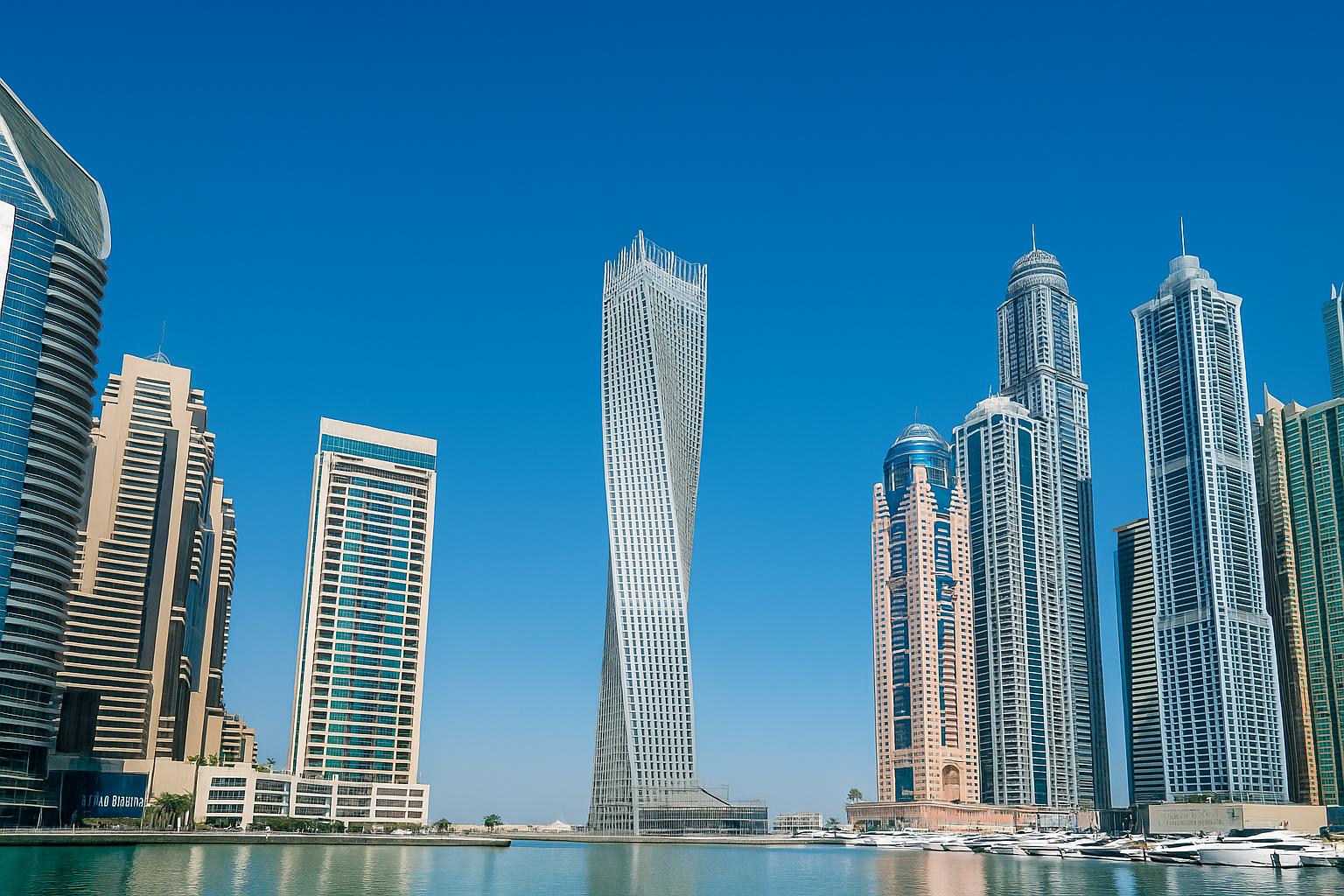
With 75 Floors and Helical Shape, the Cayan Tower Is a Twisted Skyscraper in Dubai Designed to Withstand Hurricanes — but Faces Low Occupancy and Raises Questions About Futuristic Architecture.
The futuristic landscape of Dubai is dominated by towers that challenge traditional engineering. Among them, one building stands out not just for its height, but for the bold spiral movement that twists its structure over 75 floors: the Cayan Tower, one of the most impressive examples of twisted skyscrapers ever built on the planet. Inaugurated with great fanfare in 2013, at an estimated cost of US$ 1 billion, the tower was designed to be a jewel of futuristic architecture. Erected in front of the famous Dubai Marina, the tower rotates a total of 90 degrees along its vertical extension, creating a unique helical shape in the world. However, more than a decade after its inauguration, many of its apartments remain vacant, raising questions about the actual impact of such projects on the local real estate market.
The Cayan Tower and the Concept of “Twisted Skyscraper”
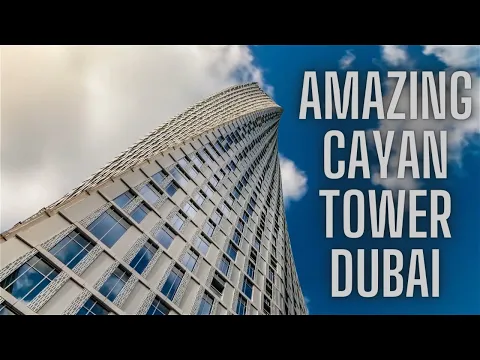

The Cayan Tower is not just a tall building. It is an architectural feat. Each of its 75 floors was rotated exactly 1.2 degrees relative to the previous one, creating the effect of continuous twisting from the ground to the rooftop. It is a relatively new concept in civil construction, challenging not only gravity but also the limits of contemporary design.
Designed by the firm Skidmore, Owings & Merrill (the same firm behind the Burj Khalifa and One World Trade Center), the tower was conceived to withstand extreme winds and high temperatures, common in the Persian Gulf region. The structure is based on a central concrete core and carefully angled peripheral columns, which support the gradual rotation of the facade.
-
Congonhas receives the monorail promised for the 2014 World Cup after more than a decade of delays and becomes the first airport in Brazil with integrated subway.
-
Goodbye, concrete: a new trend in civil construction reduces the weight of the structure by up to 30%, accelerates projects by up to 40%, cuts costs on steel and labor, and improves thermal insulation with EPS.
-
Russian engineers create an innovative propeller blade for aircraft that could completely change the way airplanes and helicopters operate.

-
Couple finishes building PVC chalet on the beach on the last day, with air conditioning and curtains, but discovers the bathroom drain is inverted: water escapes from the drain, risking breaking the floor, and the rush continues before the trip.


This twisted shape is not just aesthetic. According to the responsible engineers, it helps to disperse the force of the winds and reduces structural oscillation — a constant concern in buildings over 300 meters tall.
Technical Data and Prime Location
Located in the most valued area of the city, Dubai Marina, the Cayan Tower is 307 meters tall and houses 495 residential units, in addition to various luxury amenities. The building includes:
- Panoramic view pools
- State-of-the-art gym
- Underground parking for over 600 vehicles
- Meeting rooms, gourmet areas, and exclusive spas
The facade design in golden aluminum and mirrored glass reflects the surroundings, creating distinct visual effects throughout the day. According to the Council on Tall Buildings and Urban Habitat (CTBUH), the project adheres to the most stringent international standards for seismic, thermal, and structural safety.
The Promise: Futuristic Architecture as a Status Symbol
At its launch, the Cayan Tower was announced as a definitive landmark of new futuristic architecture. Dubai, which already had the tallest building in the world (Burj Khalifa), sought with this project to show the world that it could go beyond height — also innovating in the design and aesthetic function of urban architecture.
Announced at prestigious events like Cityscape Global, the tower quickly became a postcard of the city, depicted in advertising campaigns, magazine covers, and films about futuristic urbanism. The expectation was that total occupancy would occur in less than two years, with strong demand from investors from the Middle East, China, and Russia.
Despite the visibility, a significant portion of the apartments in the Cayan Tower remains unoccupied. Reports from Dubai’s real estate market — such as those from JLL MENA and CBRE Middle East — indicate that the building has never achieved an occupancy rate higher than 65%.
The causes are multiple:
- Excess real estate supply in Dubai: the construction boom between 2006 and 2015 generated a number of residential units far exceeding the actual demand of the resident population.
- High prices: apartments in the Cayan Tower are still being sold for prices between US$ 700,000 and US$ 2.5 million, which deters buyers interested in owner-occupied properties.
- Speculative investors: a large portion of initial buyers acquired the units as an investment, with no intention of immediate occupancy or rental.
- High maintenance costs: buildings with unique structures, such as twisted skyscrapers, require constant and specialized maintenance, raising condominium costs by up to 30% above the average of traditional buildings.
These factors explain why, even with global visibility, the tower still has partially empty floors — especially in its higher and more exclusive units.
The Cayan Tower in the Context of Buildings in Dubai
Dubai is home to some of the most ambitious projects in contemporary civil construction. In addition to the Cayan Tower and Burj Khalifa, the city features the Museum of the Future, Dubai Frame, and dozens of residential and commercial towers with bold styles.
However, with the growing concern about sustainability and smart use of urban land, there is an increasing question of whether buildings in Dubai such as the Cayan Tower represent a functional future or merely an aesthetic showcase.
The Dubai Land Department, responsible for regulating the sector, has been promoting more efficient projects in recent years, with lower energy consumption, focused on urban integration and lower operational costs. This movement can already be seen in new developments such as the Dubai Creek Tower and Wasl Tower.
The Impact of the Pandemic and Post-2020 Challenges
The pandemic of COVID-19 exacerbated the challenges of the Cayan Tower. With the decline of tourism and the slowdown of the local economy between 2020 and 2021, many investors abandoned plans to purchase or rent high-cost properties. This resulted in more vacant units and a cycle of low liquidity for owners.
Furthermore, the home office trend and the search for larger spaces in the outskirts of the city shifted some demand to suburban areas, where prices are more affordable and the infrastructure is more suited for family living.
Still, the building remains a powerful symbol of avant-garde architecture and continues to attract curious visitors, architects, and filmmakers from around the world.
The Future of Twisted Skyscrapers
The concept of twisted skyscrapers is not exclusive to Dubai. Cities like Shanghai (with the Shanghai Tower), Malmö (with the Turning Torso), and New York (with the 111 West 57th Street project) have also adopted rotated structures as an aesthetic and, in some cases, functional solution.
The success of these projects, however, directly depends on the relationship between form and function. When aesthetics compromise the operational or economic efficiency of the building, the project tends to become a white elephant. On the other hand, when there is harmony between innovation and viability, the skyscraper can become a lasting icon of the city.
The Cayan Tower, despite its current difficulties, fulfills this role of urban icon — but also serves as a warning about the risks of betting exclusively on design without considering market demands and economic cycles.
The Cayan Tower is more than a building: it is a declaration of architectural ambition, a symbol of the boldness of buildings in Dubai and an experiment in futuristic architecture. Its twisted, innovative, and functional design represents the pinnacle of luxury civil engineering.
However, the occupancy rate falling short of expectations and the high maintenance costs reveal the challenges faced by projects that prioritize visual impact over economic functionality.
As Dubai’s skyline continues to transform with new constructions each year, the Cayan Tower remains a reminder: the future of architecture needs to be beautiful but also habitable.
Official Sources Used to Produce This Article:
- Skidmore, Owings & Merrill (SOM)
- Council on Tall Buildings and Urban Habitat (CTBUH)
- The National UAE
- Architectural Digest
- Dubai Land Department









-

-

2 pessoas reagiram a isso.