





 Portuguese
  English
  Spanish
  3 min of reading
  100 comments


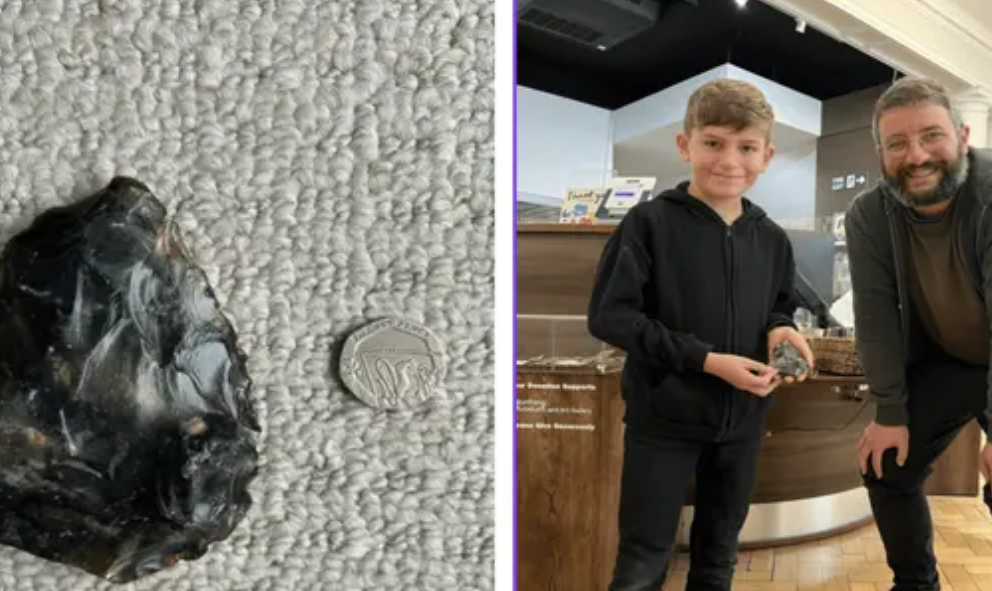


A fascinating discovery occurred when a boy found a stone on the beach that was identified by archaeologists as a prehistoric tool about 60 thousand years ago.
In an event that seems like a movie, young Ben, at just 9 years old, made a discovery of a ”stone” that surprised archaeologists and historians. While playing on a beach in England, the boy found a shiny object that, at the time, seemed like just an unusual stone.
However, three years later, he discovered that it was a Neanderthal hand axe, approximately 60 thousand years old.


How The Discovery Of The Stone Happened
It all started when Ben was just 6 years old. While walking on the beach, the young boy spotted a shiny flint stone that caught his attention. “I thought it was different from other stones”, Ben told BBC.
-
They were brilliant! Scientists discover that our ancestors in China were already making super advanced tools 160,000 years ago, changing everything we knew.
-
Scientists unveil 3 million years of climate secrets hidden in the ice of Antarctica.

-
Ancient farmers created “aggressive plants” that changed nature forever.

-
Astronomers find a “backward” solar system that ignores all the rules of space and leaves scientists scratching their heads!


Fascinated by the find, he took the stone home and kept it in his room, unaware of its historical value.
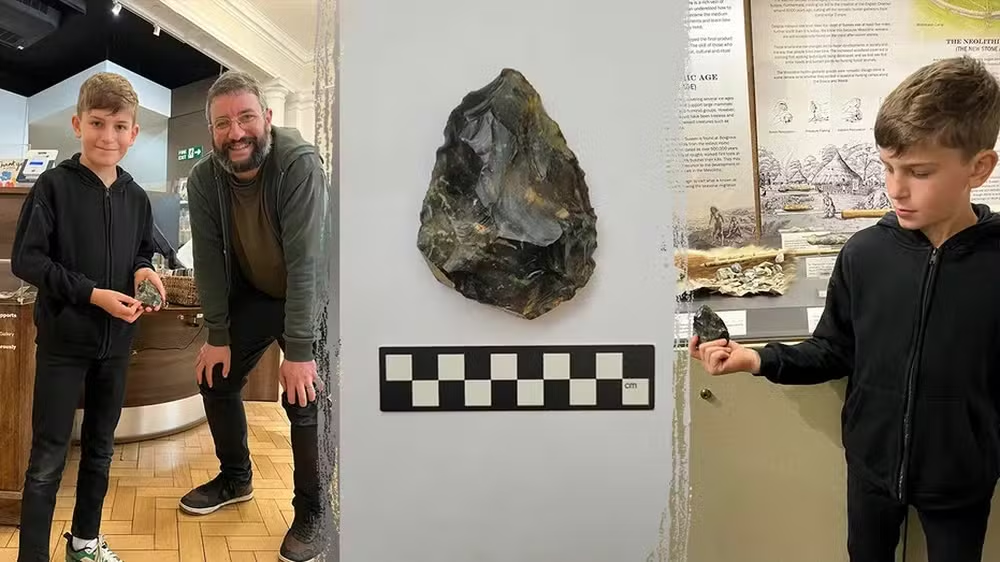
The revelation came three years later, during a visit to the Worthing Museum. Ben was attending an exhibition on the Stone Age and noticed the resemblance between the displayed items and his “special stone“. Intrigued, he brought the object to the museum researchers, who confirmed the significance of the find.
Emotion And Pride
“It was exciting! They said it is the best discovery in 10 years“, Ben reported. He also revealed that although he wanted to keep the axe, he felt that its true home would be the museum, where more people could appreciate it.
“My heart raced when I discovered what it was. Now, it’s in the museum and I’m happy about it“, he stated.
Ben’s mother, Emma Witten, highlighted the impact of the discovery. “It lit up the face of the museum archaeologist. It’s amazing that my son found something so important and that now other people can learn from it.“
The Importance Of The Axe
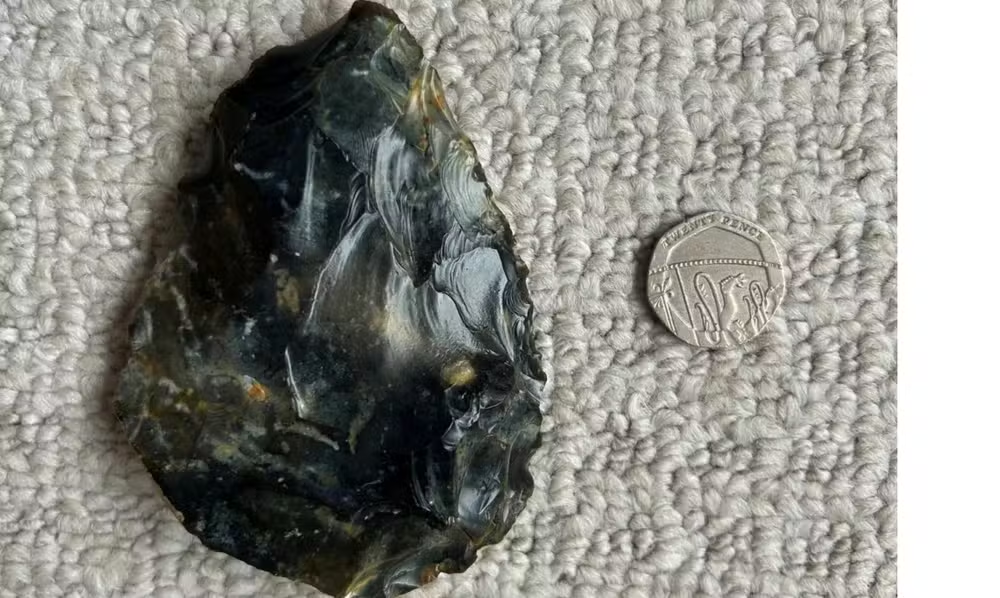
According to specialists from the Worthing Museum, the axe belongs to the end of the Middle Paleolithic, a period that occurred between 40 thousand and 60 thousand years ago.
A museum spokesperson explained that the object was found in the upper gravel of the beach, making it difficult to determine whether it was originally lost there or transported from another place by natural processes, such as river deposits.
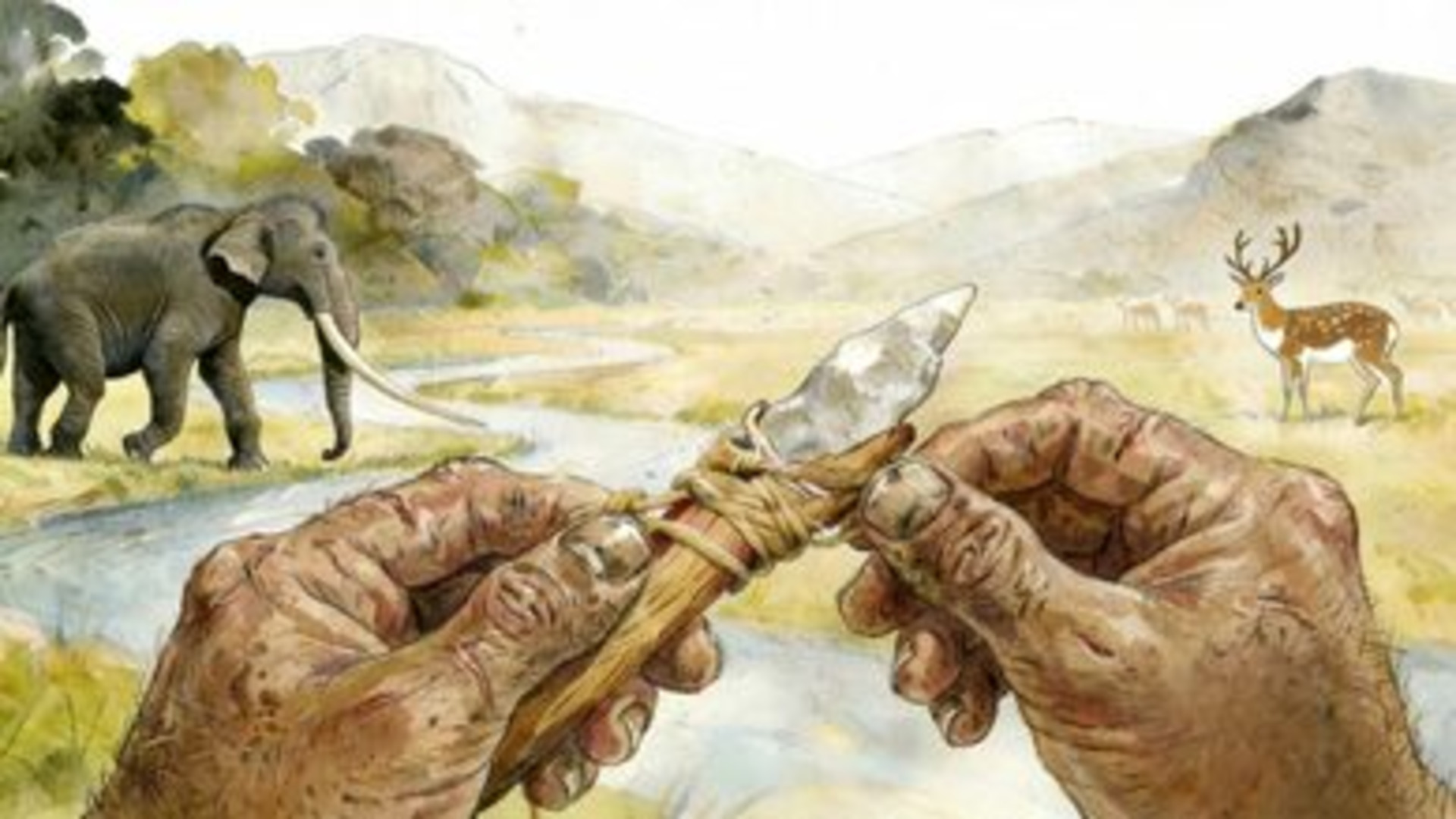
The axe, made of flint, was used by Neanderthals, the “distant cousins” of modern humans.
Who Were The Neanderthals?
Neanderthals were a human species that inhabited Europe, the Middle East, and parts of Central Asia between 400,000 and 40,000 years ago. Equipped with physical characteristics adapted to the cold climate of the time, such as robust bodies, wide noses, and short limbs, Neanderthals also had a cranial capacity superior to that of modern humans, indicating developed brains.
They lived in small family groups and were exceptional hunter-gatherers, using advanced tools and weapons to obtain food.
In addition, archaeological evidence reveals complex social behaviors, such as caring for vulnerable members and funerary practices that suggest beliefs or respect for the dead.
Despite their intelligence and skill, Neanderthals disappeared about 40,000 years ago, partly due to competition with Homo sapiens who arrived in Europe during this period.
Genetic studies confirm that there was interbreeding between the two species, resulting in Neanderthal traits present in the DNA of modern humans.
The extinction of Neanderthals was also influenced by severe climate changes and the consequent reduction of their habitats. However, the legacy of Neanderthals survives not only in our genetics but also in their contribution to the understanding of human evolution and the cultural and social capacities of our ancestors.










Eu tenho uma caixa cheia de pedras arqueológicas, um instituto em São Paulo entrou em contato comigo depois que enviei a eles fotos do objeto achado, imediatamente eles me pediram para envia Los a eles, sabe o que fiz? Jamais enviarei estão todas comigo em casa , são mais de 100 pedras
Se o museu cobrar ingresso para entrar e esse valor de ingresso for alto a fim de além de pagar o funcionalismo também gerar lucro então este achado deveria ter gerado lucro para o garotinho
O assunto não tem nada ver com Lula,mas te um pessoal **** que sempre coloca ele no assunto, vão cuidar de suas vidas seus ignorantes