





 Portuguese
  English
  Spanish
  4 min of reading
  0 comments


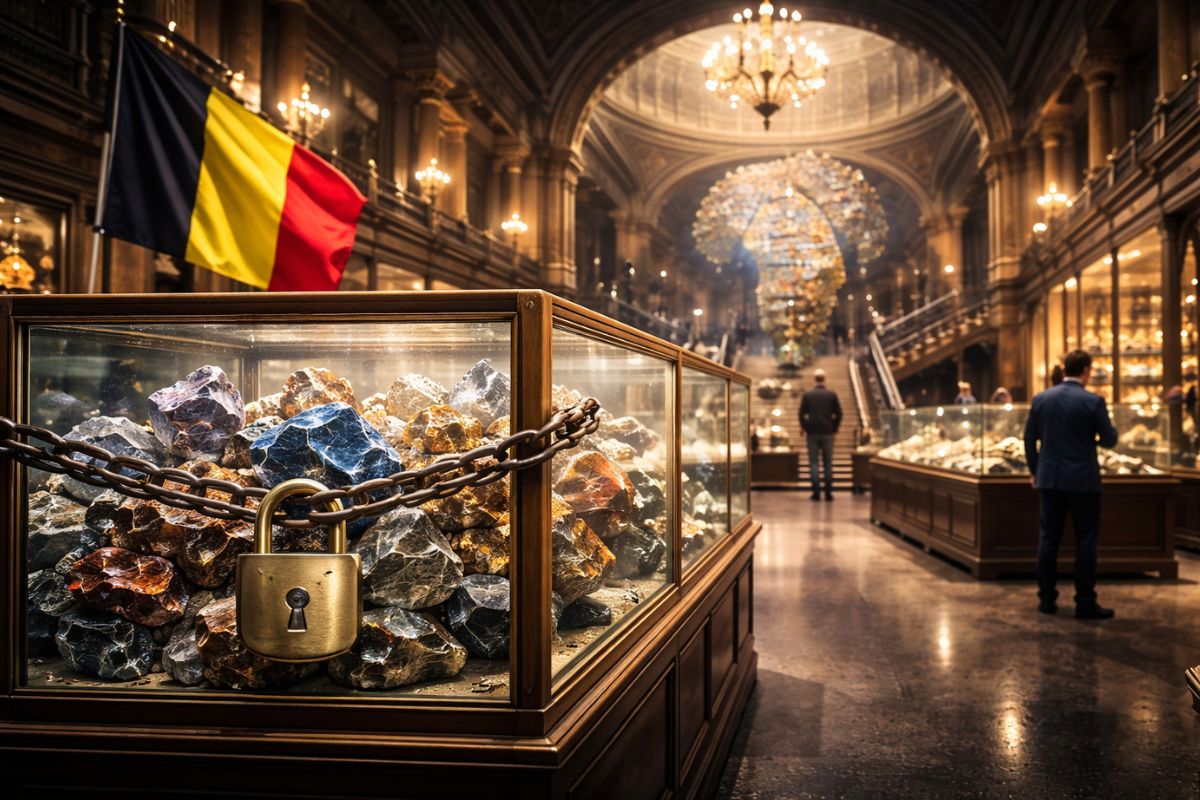
At The Belgian Museum In Tervuren, Nearly Half A Kilometer Of Colonial Geological Archives Still Guides The Race For Critical Minerals In The Democratic Republic Of Congo. An Agreement With KoBold Metals Promises To Use AI To Digitize Maps, But Brussels Vetoes Exclusivity While Kinshasa Pushes For Lithium, Cobalt, And Copper At This Time.
A Discreet Stalemate Between Belgian And Congolese Authorities Has Turned A Scientific Collection Into An Economic Bargaining Chip. The Core Of The Dispute Is Simple And Uncomfortable: Whoever Controls Old Data Controls New Decisions, Especially When That Data Points To Metals That Support Batteries, Electronics, And Power Grids.
The Fight Exposes A Contrast. On One Side, Kinshasa Wants To Accelerate The Conversion Of Colonial Archives Into Searchable Data To Guide Concessions, Investments, And Exploration. On The Other, Brussels Says It Cannot Allow A Private Company To Have Exclusive Access To Public Federal Archives, Even If The Digital Infrastructure Is Externally Funded.
What Is At Stake In The Belgian Museum

The Belgian Museum Mentioned In The Episode Is The AfricaMuseum, In Tervuren, On The Outskirts Of Brussels.
-
Lula responds directly to Trump and says that Pix is from Brazil and will not change under pressure from anyone, after a report from the United States pointed out the Brazilian payment system as an American trade barrier.

-
Amazon has just announced a new fee on all deliveries, and your online purchases will become more expensive starting April 17, including for those buying from the United States here in Brazil.

-
He sold his share for R$ 4 thousand, saw the company become a giant worth R$ 19 trillion, and missed the opportunity of a lifetime.

-
Elon Musk’s Starship megafrocket puts $8 billion at risk, raises alarms in the market, and could affect technology, mining, and space internet startups in the coming years.


There, The Colonial Geological Archives Accumulate Maps, Surveys, And Records Produced Over Decades Of Belgian Rule, Forming A Set That Functions As A Technical Inventory Of Where To Search, What To Drill, And Why To Insist.
The Physical Dimension Becomes A Political Argument: Talking About Nearly Half A Kilometer Of Shelves Is Not Just An Archive Curiosity, It Is A Measure Of The Concentrated Knowledge Scale.
When A Collection Of This Size Remains Outside Of Kinshasa, The Informational Asymmetry Becomes Part Of The Problem, Not Just An Administrative Detail.
Why Colonial Archives Are Worth Billions Today

The Colonial Archives Are Not Neutral Relics.
They Describe, In Granularity, Deposits And Potential Mineralized Corridors In A Country That Is Already Central To The Global Critical Minerals Supply Chain.
In Practice, Each Old Map Can Reduce Uncertainty, Cut Exploration Time, And Guide Decisions That Are Costly When Wrong.
That Is Why “Treasure Map” Appears As A Recurring Metaphor.
The Contemporary Race For Lithium And Cobalt, Combined With Copper And Tantalum Mentioned In The Survey, Has Increased The Value Of Historical Data.
Information Becomes A Capital Multiplier, Especially When Combined With AI Models That Cross Old Records With Current Data.
The Brussels Veto And The Non-Exclusivity Argument
The Position Of Brussels, As Described, Is That The Colonial Archives Remain Accessible To The Public And Researchers, But Cannot Be Fully Privatized By A Foreign Company.
The Minister Of Digitalization, Vanessa Matz, Argues That Access Needs To Occur Within A Scientific Framework, Not Exclusively And In Line With Belgian And European Standards.
The Director Of The AfricaMuseum, Bart Ouvry, Reinforces The Same Line: The Museum Is Not Part Of The Agreement Signed In Kinshasa And, Therefore, Can Release Specific Documents, But Not A Complete Mirror Of The Collection For Exclusive Use.
The Central Point Is Exclusivity, Not The Existence Of Colonial Archives Nor The Legitimacy Of Research.
The Kinshasa Plan With KoBold Metals And AI
From The Congolese Side, The Framework Agreement Signed In July 2025 Was Presented As A Fast Track For Gradually Digitizing The Belgian Museum’s Collection, Using Technology And Private Resources.
KoBold Metals Enters As A Provider Of Infrastructure And As An Interested Party In Feeding AI Systems With Historical Records To Accelerate The Identification Of High-Value Deposits.
The Survey Points Out That KoBold Metals Has Already Invested Over One Billion Dollars In Exploration In The Democratic Republic Of Congo And Is Focused On The Manono Lithium Deposit.
The Ceremony In Kinshasa Took Place In The Presence Of President Félix Tshisekedi, Signaling Political Priority To Shorten The Path Between Data, Discovery, And Project.
What Changes For Lithium And Cobalt In The Global Race
The Conflict Is Not Just A Debate Of Belgium Museum Against Congolese Sovereignty.
It Fits Into The Geopolitics Of Supply Chains And The Effort To Diversify Sources To Reduce Dependencies, With The United States Trying To Expand Alternatives To Processing Dominated By China, As Described.
The Irony Is Operational: While The European Union Finances A Digitization Project At The AfricaMuseum With Gradual Transfer Of Digital Copies To Congolese Authorities, Kinshasa Wants A Faster Pace And A Partnership With Immediate Execution Capacity.
Between Brussels And Kinshasa, Time Becomes The Most Scarce Resource, Because Delays Mean Missed Opportunities In Lithium And Cobalt Exploration.
The Belgian Museum In Tervuren Appears Today As A Knot Between Colonial Past And Data Economy.
The Dispute Over Colonial Archives Is Not Just About Memory: It Discusses Competitive Advantage, Public Governance, And The Type Of Access That Companies Such As KoBold Metals Can Have When AI Transforms Paper Into Billions Decisions, With Brussels And Kinshasa Competing For The Key.
If You Had To Choose One Rule For This Type Of Collection, What Would It Be: Total Open Access, Controlled Access By Brussels, Or Immediate Priority For Kinshasa? And In Practice, Would You Accept That Colonial Archives Define The Next Race For Lithium And Cobalt, Even When The Debate Involves A Belgian Museum And Private Interests?










Seja o primeiro a reagir!