





 Portuguese
  English
  Spanish
  3 min of reading
  17 comments


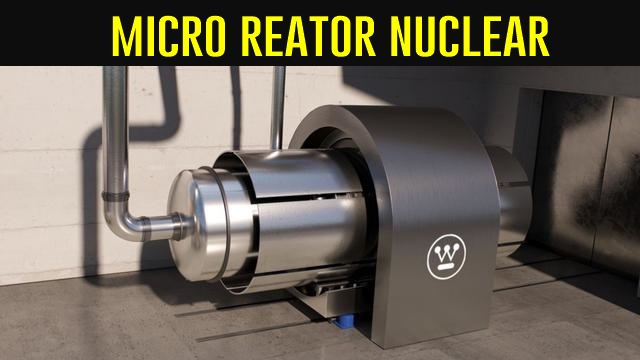


The Development of a Nuclear Micro-Reactor That Operates Without Water Brings a Revolutionary Solution to Provide Electricity to Remote Places, Where Access to Water Is Limited, Changing the Future of Nuclear Energy Generation.
The Westinghouse Electric Company, one of the oldest and most renowned companies in the United States, has achieved a significant milestone in the development of its eVinci nuclear micro-reactor, an innovative project that promises to revolutionize the use of nuclear energy in remote and hard-to-reach areas. The company announced the completion of the Front-End Engineering and Experimentation Design (FEEED) phase, paving the way for future tests that may take place within two years.
The advancement was revealed in a press release, highlighting that Westinghouse is the first reactor developer to reach this crucial stage, which will allow experiments to be conducted at the Idaho National Laboratory (INL), at the Microscale Reactor Experiment Demonstration (DOME) test bed, the first of its kind in the world.
The interim director of the National Reactor Innovation Center (NRIC), Brad Tomer, emphasized the importance of this progress, noting that filing the safety design report for the eVinci test reactor is a critical step for carrying out the experiments.
-
They were brilliant! Scientists discover that our ancestors in China were already making super advanced tools 160,000 years ago, changing everything we knew.

-
Scientists unveil 3 million years of climate secrets hidden in the ice of Antarctica.

-
Ancient farmers created “aggressive plants” that changed nature forever.

-
Astronomers find a “backward” solar system that ignores all the rules of space and leaves scientists scratching their heads!


A Milestone in Micro-Reactor Technology
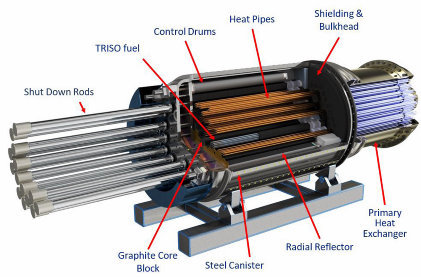
The FEEED process is essential for advancing next-generation nuclear technologies. It allows developers to plan, design, and fabricate experiments intended for testing at DOME, which plays a central role in accelerating clean energy technologies in the U.S.
This phase is also seen as an important precedent for other micro-reactor projects aiming to begin their testing at the DOME laboratory in 2026.
Jon Ball, president of eVinci Technologies, celebrated the progress, calling the project submission a “critical step” in moving the eVinci micro-reactor toward commercial operation. The company has ambitious plans to deploy multiple micro-reactors around the world by the end of the decade, with the ongoing support of INL and the U.S. Department of Energy.
Meanwhile, other companies in the nuclear energy sector, such as Radiant and Ultra Safe Nuclear Corporation, are also working to complete the FEEED process later this year, which promises to further increase competition in the micro-reactor field.
The Potential of the eVinci Micro-Reactor
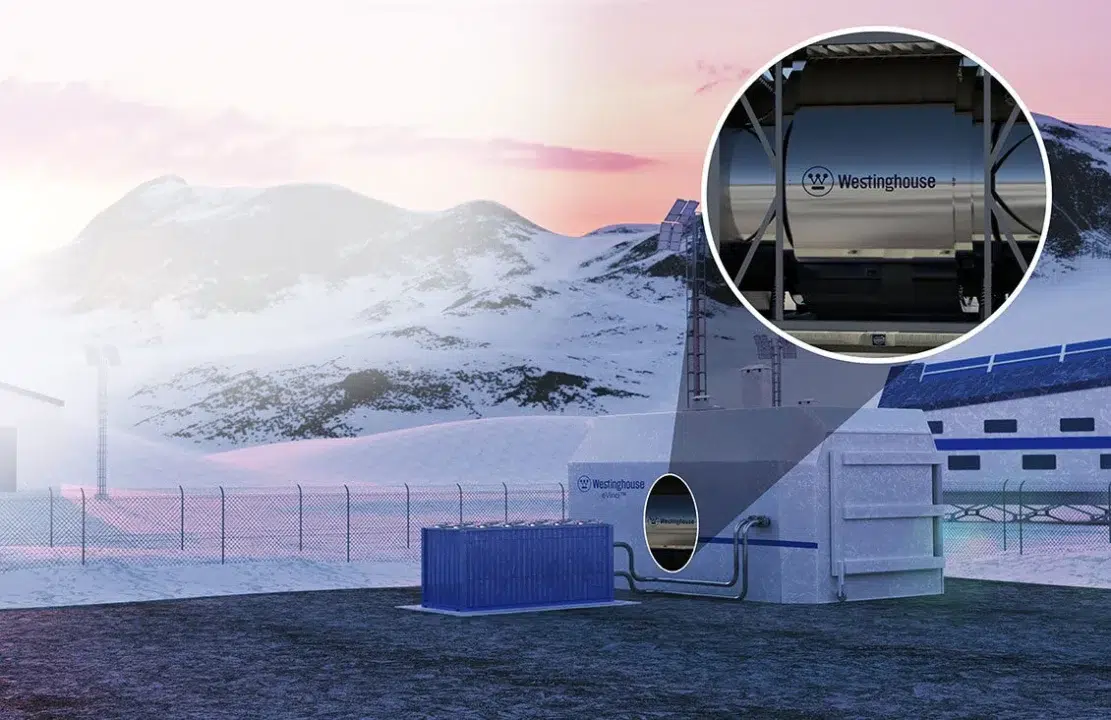
The eVinci micro-reactor stands out for being a next-generation micromodular reactor, specially designed to operate in remote areas where water availability and infrastructure are limited. Its compact and modular size allows for quick deployment and ease of transport, making it ideal for locations such as mining operations and data centers in isolated regions.
The eVinci can operate on sites as small as two acres and can produce up to 5 MW of electricity, with an operation cycle of at least eight years before needing to be refueled. Moreover, it significantly reduces CO2 emissions, eliminating about 55,000 tons of carbon dioxide per year, an important step towards clean energy solutions.
The fuel used in the eVinci, known as TRISO, is more resistant to corrosion, oxidation, and high temperatures than traditional nuclear fuels. This, combined with the shutdown rods that ensure safety during transport, enhances the operational safety of the micro-reactor.
When the fuel is depleted, the reactor can be removed and replaced with a new one, similar to how a battery operates, allowing for continuous energy generation. Long-term storage of nuclear fuel is planned for deep geological repositories (DGR), a widely used solution in the nuclear sector.








Mais um grande salto para a tecnologia, só mais um entre tantas outras. Parabéns a empresa inovadora.
Para saber se a energia nuclear utilizada é limpa ou não, precisa-se saber se o processo é de fissão ou fusão nuclear. Se for o segundo é totalmente limpa, se não… continuaremos a ter resíduos radioativos importantes.
Bom