





 Portuguese
  English
  Spanish
  4 min of reading
  0 comments


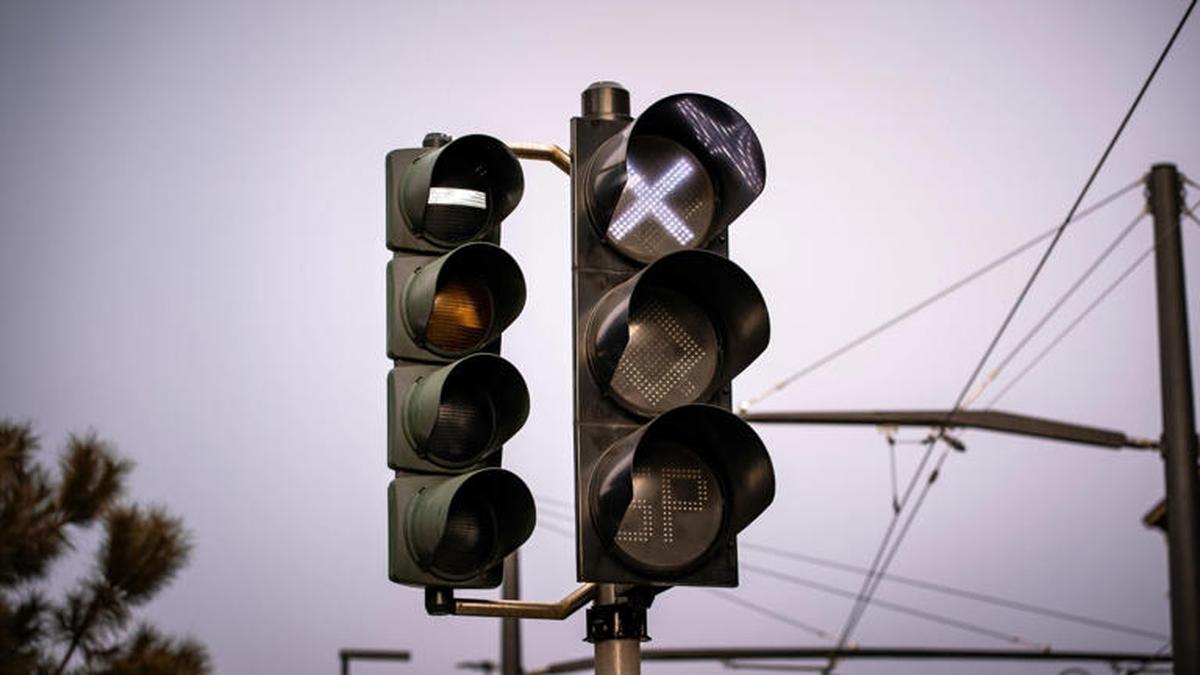
New Technology Proposes a Fourth Color in Traffic Lights to Integrate Smart Vehicles into Urban Control
Researchers from North Carolina State University (USA) are developing an innovation that promises to transform urban mobility. Since 2023, the group has been working on the idea of adding a fourth color to traditional traffic lights — the white light, designed specifically for autonomous cars. The project, which is already attracting interest in countries such as France and Germany, could radically change how intersections are controlled and how vehicles communicate.
Smart Signaling and Traffic Under Autonomous Vehicle Control
Currently, traffic lights operate with three known colors: red for stop, yellow for caution, and green for go. However, with the advancement of autonomous vehicles, this standard may become insufficient. The white light, proposed by the American engineers, would automatically turn on when a minimum number of smart vehicles approached an intersection.
At that moment, the autonomous cars would exchange information with one another and with the traffic light, organizing traffic flow in a synchronized manner. Thus, drivers of regular vehicles would follow the rhythm of these smart cars, making traffic more fluid and safe. As explained by Professor Ali Hajbabaie, the project coordinator, “this approach allows for a reduction in delays and fuel consumption, improving urban transportation efficiency.”
-
Mysterious object on Mars divides NASA and Harvard after Curiosity image reignites suspicions about what was really found on the planet.
-
Giant structures 14 meters beneath Egypt are revealed by satellites and expose a millennia-old secret buried in Buto.

-
Children have been making clay pieces for 15,000 years in Southwest Asia, and fingerprints preserved on 142 ornaments helped archaeologists prove this.

-
New semi-autonomous legged robot technology challenges the limitations of space exploration by operating almost without human intervention on the Moon.
Reduction of Traffic Congestion and Significant Environmental Gains
Tests conducted in 2024 by Hajbabaie’s team demonstrated significant results. With just 10% of autonomous vehicles, it was already possible to observe a decrease of up to 3% in traffic congestion. According to the Society of Automotive Engineers (SAE), when the majority of the fleet becomes autonomous — something expected by the 2030s — this reduction could reach 94%.
Moreover, the system reduces unnecessary stops, which means less fuel consumption and decrease in CO₂ emissions. Thus, the traffic lights with white light align with the global goals of carbon neutrality by 2050, promoting sustainable mobility and energy efficiency. According to the report by the International Transport Forum (ITF), this innovation represents one of the greatest advances in urban transportation infrastructure since the last century.
Ongoing Tests and Initial Practical Applications
The tests are being conducted in industrial and port areas of the United States and France. These locations have high flow of autonomous vehicles, facilitating monitoring in controlled environments. The evaluations have measured the response time of traffic lights, the communication between vehicles, and the safety of human interactions.
According to researcher Sarah Kerman, a member of the American team, “the initial results indicate a remarkable improvement in traffic flow and a more stable communication between vehicles and traffic lights.” Nevertheless, she emphasizes that large-scale implementation still depends on the growth of the autonomous fleet and the global standardization of communication systems (V2X).
Technical and Regulatory Challenges of the Fourth Light
Despite the progress, the implementation of the fourth color faces technical and legal barriers. According to the U.S. Department of Transportation (USDOT), less than 1% of the global fleet is composed of fully operational autonomous vehicles as of 2025. Therefore, immediate deployment is still unfeasible.
Another challenge lies in the international standardization of communication protocols, ensuring that cars from different manufacturers can interact safely and synchronously. Several countries in the European Union and East Asia are discussing joint regulations to enable this integration by 2032, within the Connected Mobility 2030 program.
The Future of Urban Mobility and the Role of the White Light
The white light in traffic lights represents an important milestone toward the integration between humans and machines in cities. This proposal reflects the advancement of artificial intelligence, 5G networks, and connected vehicles, which are already shaping the future of global mobility.
Experts highlight that, just as the electric traffic light revolutionized traffic in the 20th century, this new color could usher in an era of autonomous control and sustainability. However, the transition will require investments in modern infrastructure, driver education, and well-defined regulations.
If the project is approved, the intersections of the future could be orchestrated by algorithms, while drivers simply follow the rhythm of smart cars.
Is society ready to trust traffic to artificial intelligence?








Seja o primeiro a reagir!