





 Portuguese
  English
  Spanish
  3 min of reading
  0 comments


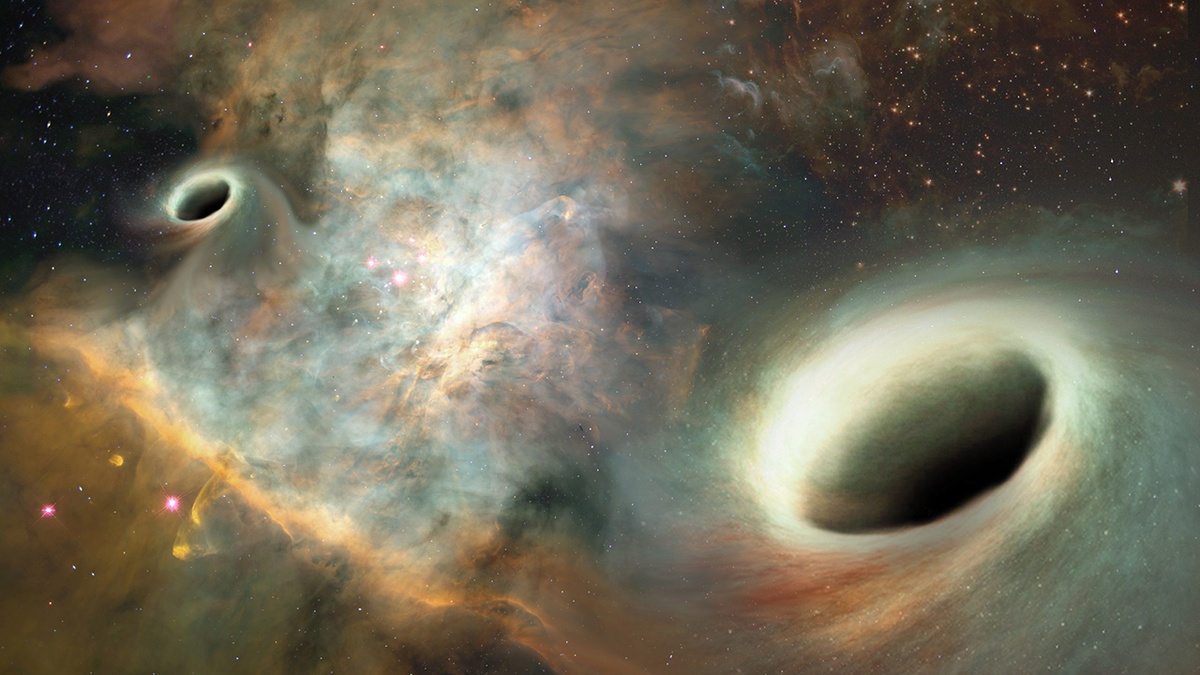
Theory Proposes That The Universe Was Born Inside A Black Hole, Challenging The Big Bang And Offering New Answers About The Origin Of The Cosmos
At first, surprisingly, an alternative theory to the Big Bang suggests that the universe was born in a black hole, within a “parent” universe.
On June 9, 2025, journalist Raphaela Seixas explained that this hypothesis expands on the idea of classical singularity, considered the starting point of the Big Bang.
Thus, the Big Bang would cease to be the absolute origin of time and space. It would become an event internal to a much larger structure.
-
They were brilliant! Scientists discover that our ancestors in China were already making super advanced tools 160,000 years ago, changing everything we knew.

-
Scientists unveil 3 million years of climate secrets hidden in the ice of Antarctica.

-
Ancient farmers created “aggressive plants” that changed nature forever.

-
Astronomers find a “backward” solar system that ignores all the rules of space and leaves scientists scratching their heads!
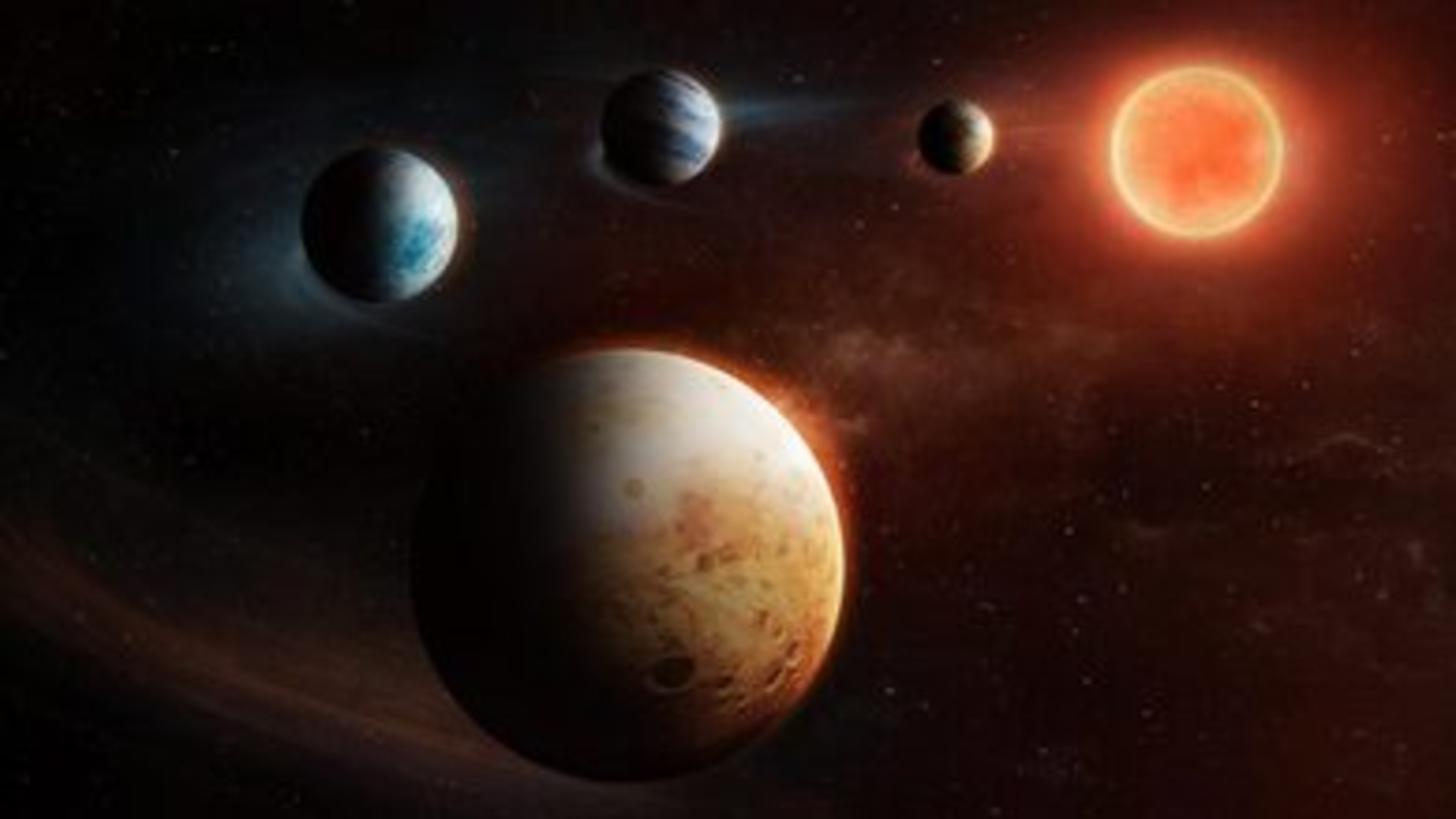

This new perspective proposes that our universe is merely a part of something broader and older.
Hypothesis of Natural Cosmological Selection
Furthermore, the hypothesis called “natural cosmological selection” was proposed by physicist Lee Smolin. It brings bold and challenging implications.
The theory states that black holes generate new universes, called child universes, within themselves.
According to Smolin, these universes inherit the physical laws of their predecessors. Thus, a kind of “cosmic evolution” would occur between black holes and new universes.
Moreover, this approach attempts to answer unresolved questions, such as dark matter and the universe’s extreme flatness.
For Smolin, those universes with laws more favorable to the formation of stars and black holes would be more common, as they reproduce more.
Cyclic Models and Bounce Cosmology
Additionally, other similar proposals explore infinite cycles of expansion and contraction. These ideas are known as bouncing cosmology models.
In them, the universe goes through phases of collapse and rebirth in a constant sequence, as if it were “pulsating.”
Primordial black holes would play an essential role in this process. They act as restart points for each new cycle.
Moreover, loop quantum gravity theory eliminates the initial singularity of the Big Bang. It proposes a cosmic “bounce” instead.
According to a recent study published on June 8, 2025, in the journal Physical Review D, our universe arose this way.
The gravitational collapse of a previous universe, inside a giant black hole, is said to have given rise to the current cosmos.
This energetic transition may explain cosmic inflation and the acceleration of the universe, both attributed to dark energy.
Observational Evidence and Current Limitations
However, these theories still lack observational confirmation. But scientists believe that this may change with future detections.
Models like this predict stochastic gravitational waves. With advancements in measuring instruments, these waves may be detected in the coming years.
At the same time, advocates of the classical Big Bang emphasize its solid foundations. Among these are the expansion of the universe and the cosmic microwave background radiation.
This radiation, first detected in 1965, dates back approximately 380,000 years after the beginning of the observable universe.
Therefore, any alternative theory needs to explain all these data with equal or greater precision.
Perspectives and Future Investigation
At the same time, scientists who support the traditional model of the Big Bang remind us that it has very strong scientific foundations.
For example, it explains well the expansion of the universe and the cosmic microwave background, a type of “echo” from the beginning of the cosmos.
This radiation was discovered in 1965 and emerged about 380,000 years after the birth of the universe.
Therefore, any new theory must explain these same phenomena with the same precision or even better.









Seja o primeiro a reagir!