






 Portuguese
  Spanish


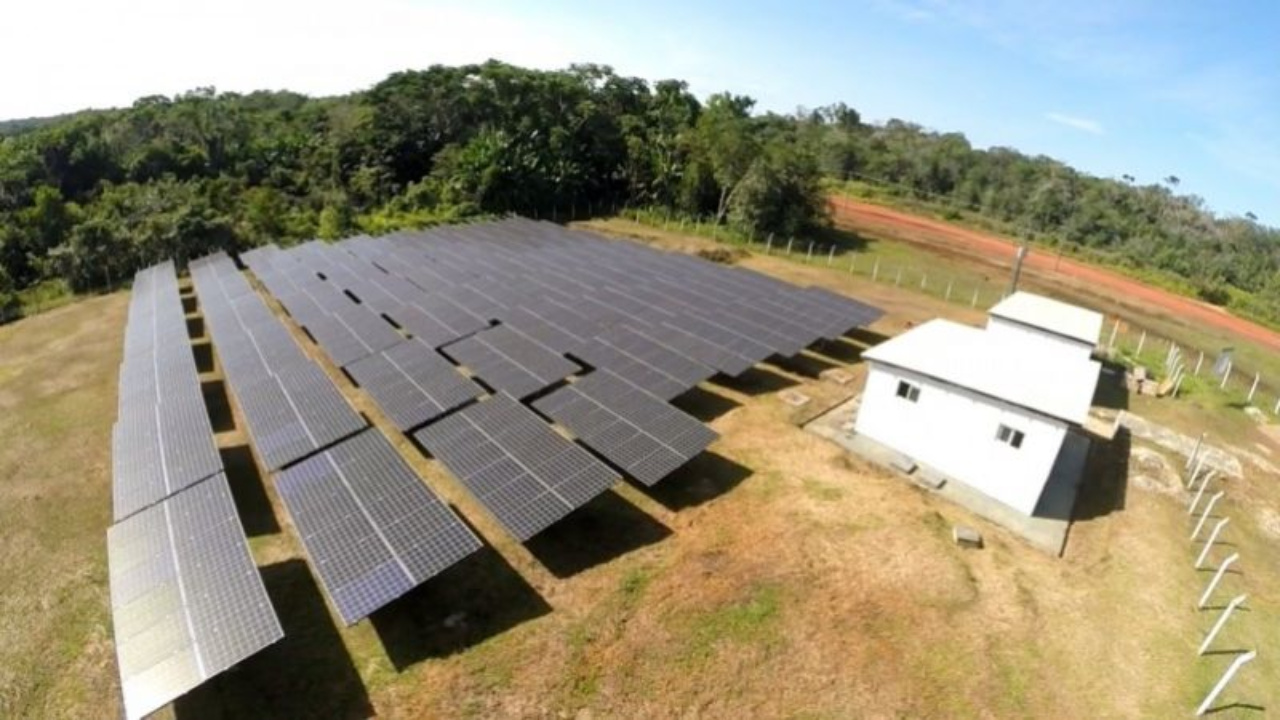
Solar Power Plants Advance As Strategic Solution In The Amazon, Driven By Sustainable Initiatives Presented At COP30. Clean Technologies, Social Impact And New Models Of Renewable Energy Gain Strength In Riverine Communities.
The solar power plants have expanded their presence in the debates about clean energy in Brazil, especially after the highlight given to innovative projects launched during the COP30 in Belém. The growing search for sustainable solutions has rekindled interest in technologies that combine low emissions, energy autonomy, and direct social impact. Among these initiatives, the adoption of hybrid systems that combine hydrogen and solar energy has drawn the attention of specialists and reinforced the role of solar power plants as pillars of the energy transition in the Amazon.
While governments and entities discuss investments in large photovoltaic complexes, local initiatives — many of them applied to riverine communities — show that solar power plants can drive deep transformations in the region.
Solar Technologies Driving Vessels And Inspiring New Energy Models
Although solar power plants are traditionally associated with large land installations, their application in sustainable vessels gained prominence after the presentation at COP30 of the Boto H2 boat, powered by hydrogen and complemented by photovoltaic energy. Although the focus of the vessel is hydrogen, its operation only achieves full performance thanks to the solar panels installed on the roof, which ensure additional autonomy and extend navigation time.
-
Solar energy can increase property value by up to 10% and become a selling point.

-
Solar and wind energy surpass natural gas for the first time in the world and accelerate energy revolution

-
Africa has about 500,000 cell towers and most still burn diesel to operate, while companies rush to cover antennas with solar energy and avoid signal blackouts.
-
Farmers swapped diesel for solar panels in Pakistan, powered irrigation pumps almost cost-free, expanded rice fields, and now groundwater has become a red alert in the countryside.




The model demonstrates the versatility of solar power plants on small and large scales. Even on board, solar technology functions as a mini-plant capable of providing clean and continuous energy in remote areas. This reinforces the importance of hybrid systems — increasingly used in modern solar power plants — combining batteries, hydrogen, and renewable sources to ensure efficiency and energy security.
According to researcher Guilherme Nabeyama, the vessel can navigate for three hours using hydrogen and another three hours powered by solar panels, which, in practice, demonstrates how solar systems can enhance the autonomy of sustainable solutions without increasing emissions. This same principle has been replicated in floating solar power plants and isolated projects that supply riverine villages.
How Solar Power Plants Strengthen Environmental Actions And Improve Public Services
The relationship between energy innovation and social impact became evident with the outcome of the project presented in Belém. Donated to the city hall and incorporated into the actions of Fadesp and the Federal University of Pará, the hybrid system inspired by solar power plants was integrated into the riverine selective collection program.
The arrival of clean technology, previously restricted to large solar power plants, now appears on board vessels used for public services, showing how solar energy can strengthen environmental education initiatives and increase the efficiency of city hall operations.
Rogério Meneghetti, superintendent of Renewable Energies at Itaipu, emphasizes that replacing old and polluting models with sustainable systems makes all the difference. He recalls that the old boat used for riverine collection operated on diesel, generating noise, high costs, and pollutant emissions. Furthermore, the switch to the model integrating principles applied in solar power plants has brought more efficiency to the routine of the “Coleta Mais” program.
This model of reapplying solar technology has been expanded in various regions of the Amazon, where communities face logistical difficulties and high energy costs. Many villages located near rivers, for example, already use hybrid solar power plants for collective supply.
Socioeconomic Impact Of Solar Power Plants In Riverine Communities
In addition to environmental gains, the advancement of technologies inspired by solar power plants has the potential to transform the local economy. Manager Newmar Wegner, from Itaipu Parquetec, stated that similar sustainable initiatives implemented in 55 municipalities in Paraná significantly increased workers’ income: “The collectors began to earn three times more.”
Experts project that replicating models based on solar power plants could generate a similar effect in the Amazon. This is because clean energy reduces operational costs, increases the autonomy of services, and opens space for new productive arrangements that depend on stable and affordable electricity.
Furthermore, solar power plants offer fundamental energy independence in areas where access to the national grid is limited. In this way, selective collection projects, sustainable fishing, food storage, telecommunications, and digital education become viable and continuous.
Solar Power Plants And The Sense Of Belonging: Energy That Generates Pride
For those living by the rivers, the arrival of technologies inspired by solar power plants represents more than efficiency: it symbolizes progress and recognition. Jonas da Silva, a recyclable materials collector who works daily in riverine collection, described this feeling by stating, “We are very happy with this transport that will not pollute the river and will help us in collection. It is a pride for all of us.”
Reports like this show that technology, when applied inclusively, speaks directly to the daily lives of communities and reinforces Amazonian identity. Solar power plants, therefore, cease to be mere energy generation structures and become instruments of cultural and social transformation.








Be the first to react!