





 Portuguese
  English
  Spanish
  6 min of reading
  0 comments


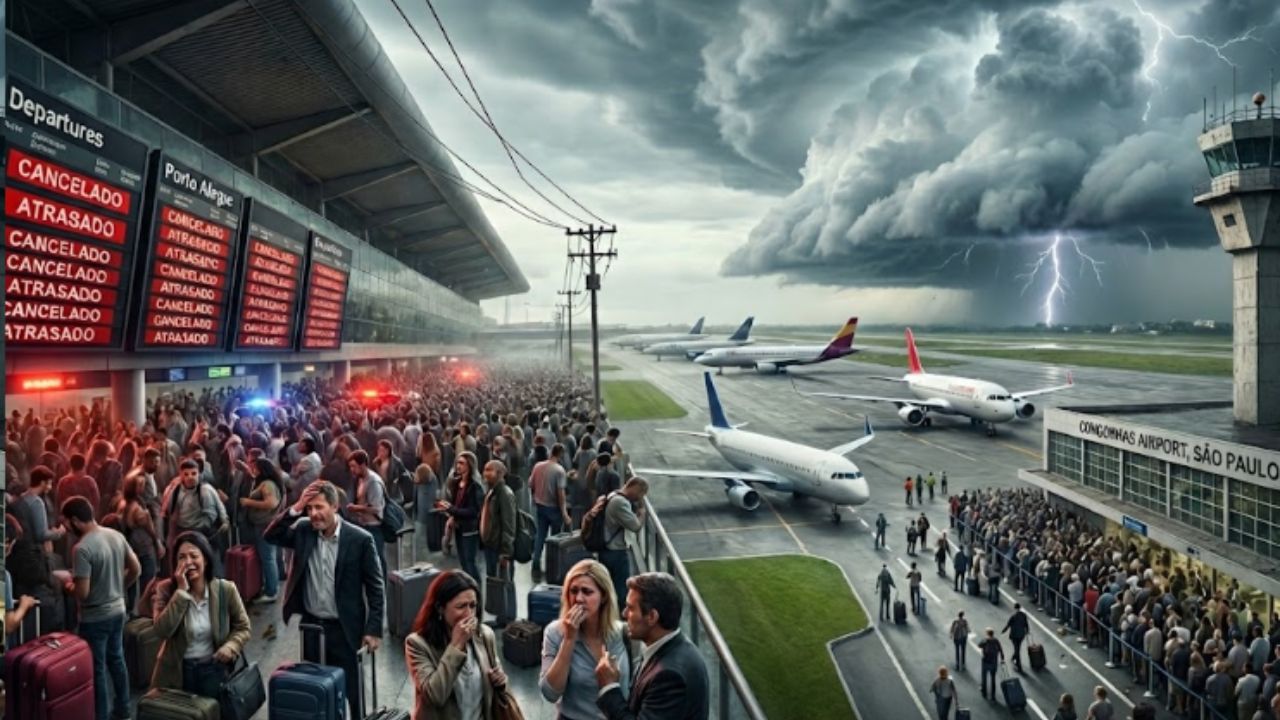
How The Historic Storm Blocked The Airline Network, Spread Canceled Flights And Crowded Congonhas Airport, Guarulhos Airport And Salgado Filho Airport With Giant Lines
The historic storm that hit Brazil’s Southeast was not limited to images of fallen trees and damaged roofs. It turned into a silent collapse within airports, where thousands of people spent hours – and in many cases, days – trapped in lines, without clear information, cascading canceled flights, and a growing sense of abandonment.
In Porto Alegre, São Paulo, and the metropolitan area, what began as an extreme weather event turned into a domino effect on the air system. At Salgado Filho Airport in Porto Alegre, a power outage wiped out the flight display and lit up the alert on the faces of those already coming off a marathon of missed connections. In Congonhas and Guarulhos, the number of cancellations and delays showed that when the weather goes out of control, the passenger is often the last in line for solutions.
Salgado Filho In The Dark: Display Off, Huge Lines And Zero Support
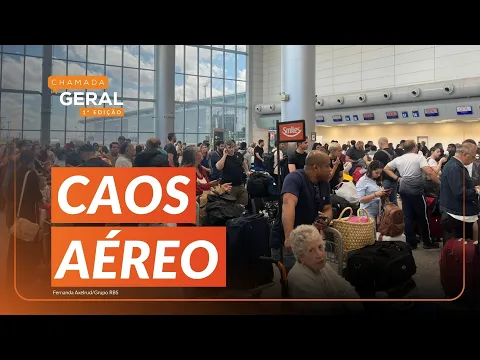
At Salgado Filho Airport in Porto Alegre, the impact of the historic storm materialized in a scene that well summarizes the chaos: falling lights, off display, and lines that seem to go nowhere.
-
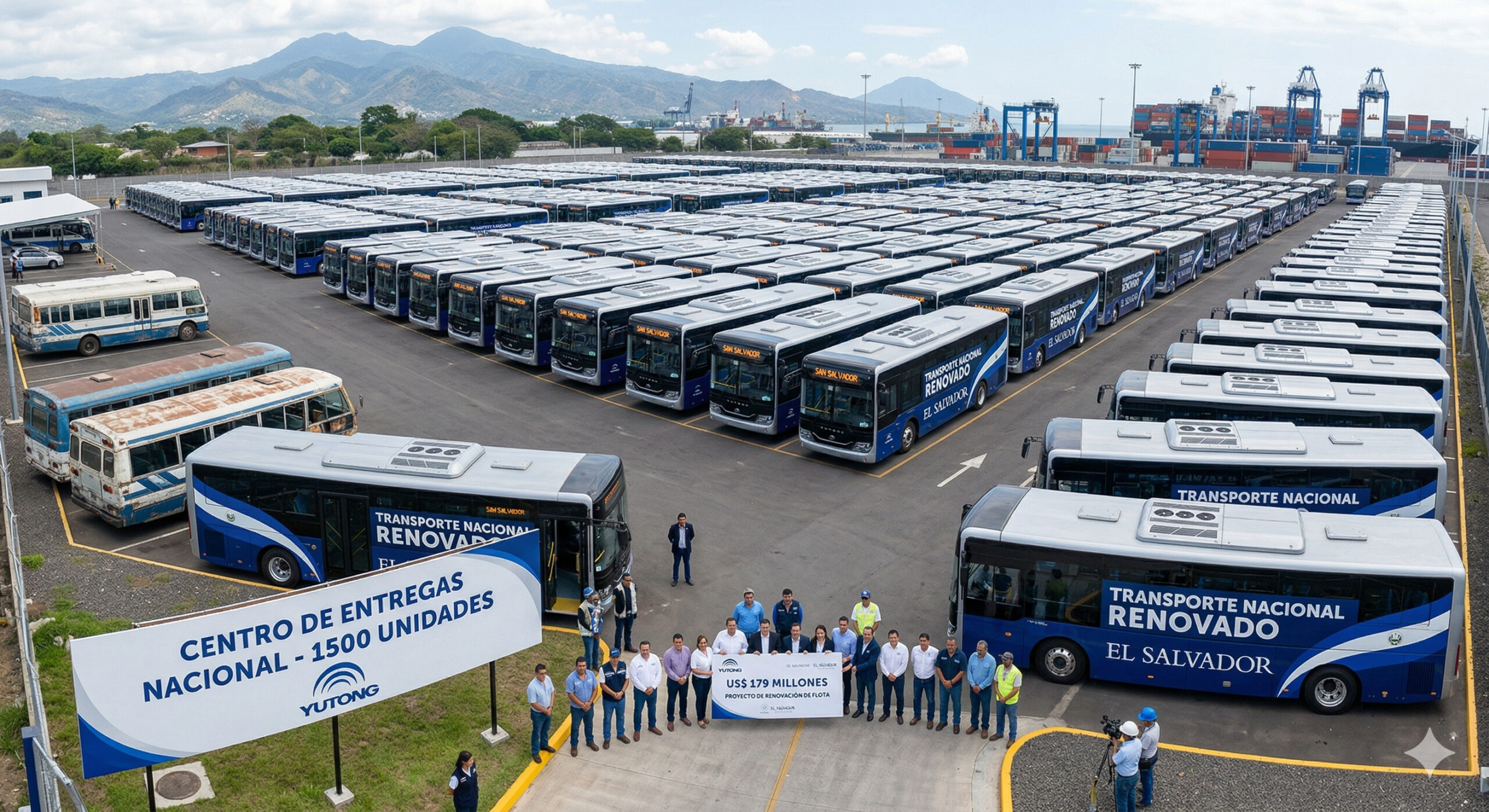
With 1,500 new buses financed by an international agreement, El Salvador is preparing the largest renewal in the history of its public transportation, a plan of $179 million with vehicles from the Chinese company Yutong that could replace practically the entire fleet of the country.
-
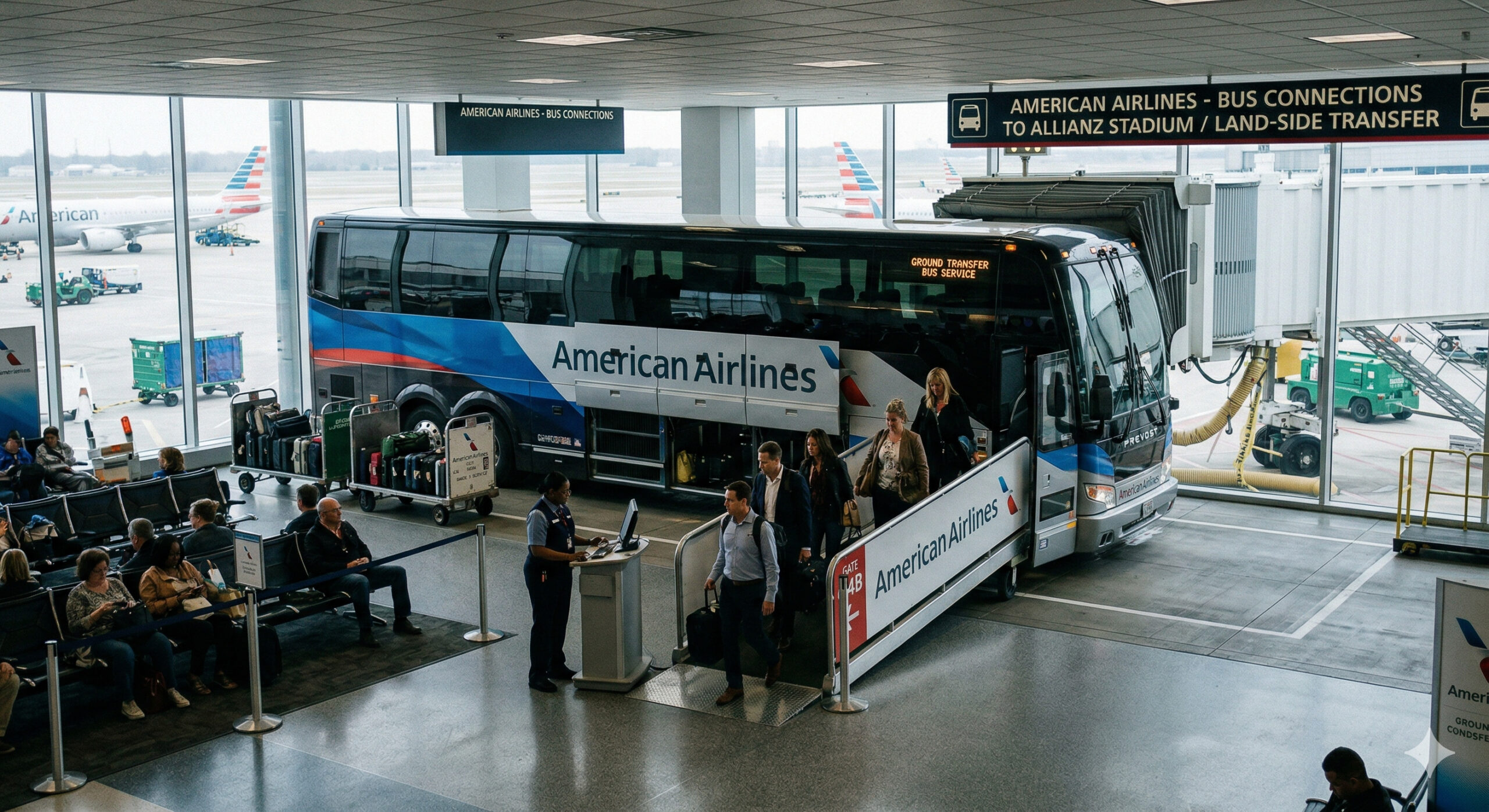
American Airlines starts selling trips as if they were flights, with check-in and baggage check at the airport, but on short routes, passengers board luxury buses connecting cities to major hubs in the U.S.
-
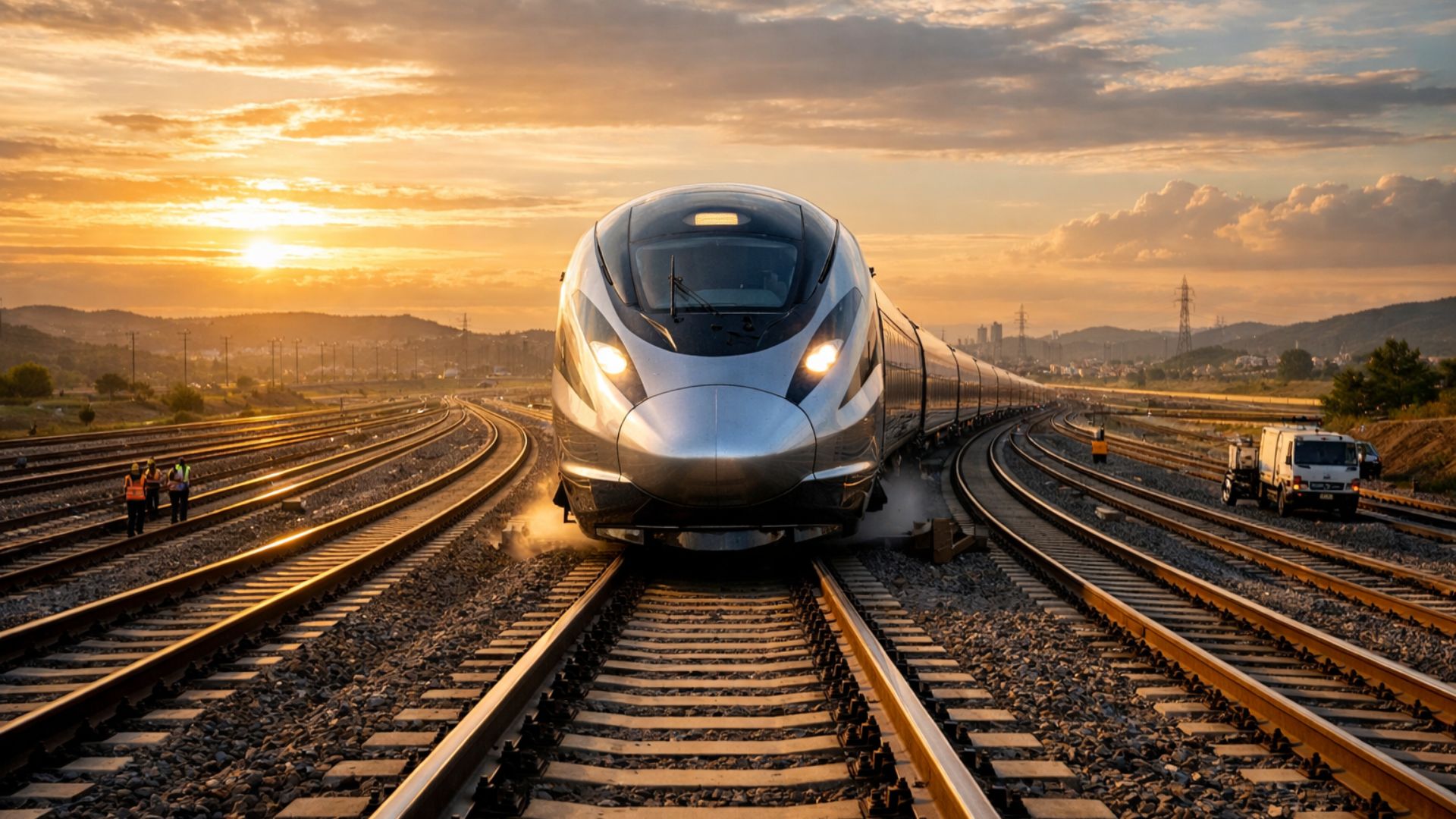
São Paulo surprises the world with a colossal railway network project that promises over 1,000 km of tracks, R$ 194 billion in investments, and 40 projects connecting the capital to the interior with fast and sustainable trains.
-
The world’s largest escalator, measuring 905 meters in China, reduces urban travel time from 1 hour to about 20 minutes and transforms mobility in mountainous regions with an engineering solution adapted to the terrain.
In one of the moments of greatest tension, even the emergency lights failed, increasing the anxiety of those who had already been in the terminal for many hours. When the display was still functioning, the picture of the day was already dramatic: of the 18 flights displayed, 13 were delayed, as well as eight departures and seven arrivals canceled.
More than just numbers, the chaos has a name, face, and story. Rafael Costa, traveling with his wife, two children, and a teenager, left Gramado heading to Fortaleza. The journey, which should have been merely exhausting, turned into a saga. They were to board in Caxias do Sul, but after the entire check-in and luggage dispatch procedure, came the announcement: general cancellation, baggage retrieval, and forced bus relocation to Porto Alegre.
Reaching Porto Alegre around 3 PM the previous day, the family still tried to minimize the exhaustion of the children. Without any effective support from the airline, Rafael had to rent another car and pay for a motel on his own, just to guarantee a few hours of sleep before the rescheduled flight at 10:35 the next morning.
When he returned to Salgado Filho, reality hit again: the rescheduled flight did not take off, the time passed, the line grew, and uncertainty continued. Since around 8 AM, he and his family had been stuck in a huge line, watching time pass and trying to figure out, unsuccessfully, when and how they would finally reach their destination.
Exhaustion, frustration, and a feeling of helplessness made up the combination most often heard in the terminals. Amid exhausted children, irritated parents, and disoriented elderly people, the general impression was that no one knew exactly what was going to happen in the next few hours.
Congonhas In Collapse: Lines Everywhere And Flights Disappearing From The Display
In São Paulo, the historic storm showed its strength especially in Congonhas, one of the busiest airports in the country. There, the scene described is straightforward: lots of lines, many people sitting in any available space, and a succession of cancellations and rescheduling.
According to the responsible concessionaire, 46 flights were canceled in Congonhas in just one day, combining departures and arrivals. And this number is just the visible part of a larger problem. The day before, more than 100 flights in Congonhas had already been affected due to winds nearing 100 km/h, contributing to a total of about 300 canceled flights when including Guarulhos and Congonhas together.
Those in transit felt firsthand what it means to have an airport paralyzed. A couple from Gramado, for example, passed through Porto Alegre, went to São Paulo, and only the next day might have some prospect of making it to Recife. The trip’s itinerary changed completely due to the storm, but once again, clear information was the scarcest item of the day.
Meanwhile, passengers without hotels, vouchers, and alternatives clustered in the check-in areas, using whatever was available: the floor, contested benches, and scarce outlets. The solution for many was simply to “camp” at the airport, waiting hours until a new time appeared on the app or the display.
Guarulhos And The National Domino Effect On Flights
If Congonhas seemed a crowded and tense corridor, Guarulhos turned into a true sea of people. Internal images from the terminals showed lounges filled with passengers, a constant flow of luggage, and a common expression on almost every face: no one knew how long it would last.
From the previous night until dawn, about 137 flights were canceled in São Paulo and the metropolitan area, adding the impact on Guarulhos and Congonhas. This means a series of missed connections, families separated in different cities, canceled commitments, and a long chain of rescheduling that spread across several states.
It is the classic domino effect of an extreme weather event: a historic storm strikes a central axis of the air network, disrupts operations at strategic airports, and within hours, passengers in places like Porto Alegre, Recife, Fortaleza, or any other point on the map begin to feel the impact.
When The Weather Meets A Fragile System

Extreme phenomena like this historic storm help to expose something that is usually hidden behind the routine of takeoffs and landings: the fragility of passenger service structure when something goes wrong.
It is not the wind itself that creates long lines, but the sum of factors:
- Dependence on few air hubs, such as Congonhas and Guarulhos
- Low capacity for rapid response to reroute passengers en masse
- Poor communication, with off displays, outdated apps, and overworked attendants
- Poorly defined support policies, such as lodging, meals, and transportation in crisis situations
In practice, each cancellation turns into a race for information and rights. Those who know the rules generally manage to resolve issues sooner; those who do not know are left in line.
The Human Side Of Chaos: Children, Elderly And Trips That Go Awry
More than a logistical problem, the historic storm revealed a painful human side of aviation in extreme situations.
Parents trying to calm children who do not understand why they have not returned home. Exhausted couples, without showers, beds, or boarding predictions. People who left for vacations rested and returned to routine in the most traumatic way possible: sleeping in hard airport chairs, eating whatever was available, and controlling their anxiety to the limit.
In many reports, the recurring phrase is simply: “no one knows anything”. When the display goes dark and the system fails, trust in the service also drops. And behind the scenes, an uncomfortable question remains: is the system prepared to deal with the next extreme episode or will everything repeat itself?
And Now: What Remains After A Historic Storm?
When the runways are cleared, the lines decrease, and the displays return to normal functioning, the risk is that the historic storm becomes just another forgotten chapter in the news memory. But for thousands of passengers, it will continue to be remembered as the night (or the day) when the airport turned into an improvised dormitory, crisis office, and patience test all at once.
In times of increasingly extreme weather events, planning, transparency, and respect for passengers cease to be a differential and become a basic requirement. After all, no one can control the wind. But it is perfectly possible to control how people will be treated when the wind changes everything.
And you, if you were stuck at the airport because of a historic storm like this, what would you expect from the airlines and the authorities?







-

2 pessoas reagiram a isso.